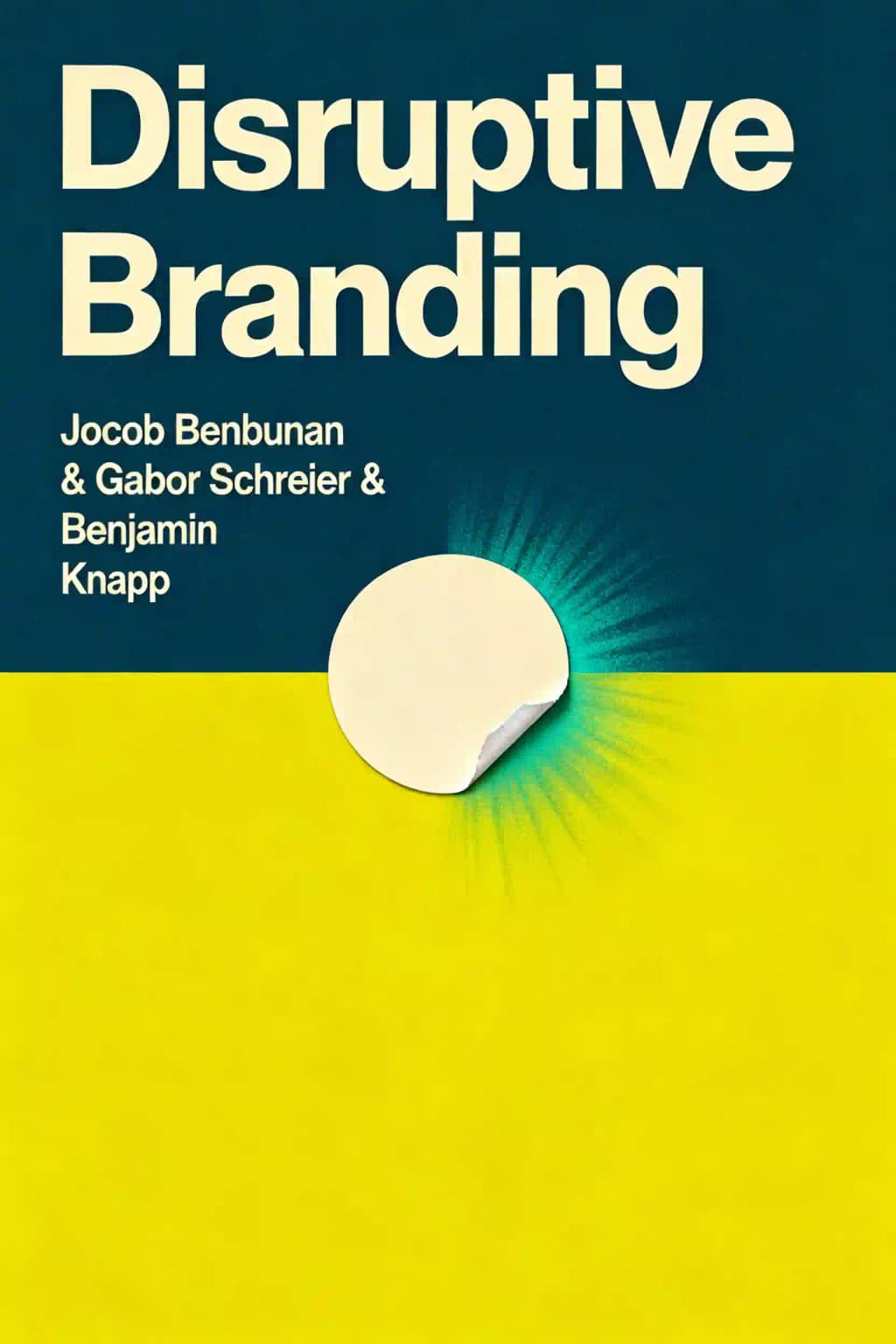
Disruptive Branding
How to Win in Times of Change
Overview of Disruptive Branding
In "Disruptive Branding," Saffron consultants reveal how Nintendo and Airbnb mastered modern brand strategy. What's their secret? Authenticity that drives organizational change. Ever wonder why some brands thrive amid chaos while others collapse? This playbook shows how to become the disruptor, not the disrupted.

Key Themes in Disruptive Branding
- prosumer engagement
- global-local convergence
- brand differentiation strategy
- phygital customer experience
- disruptive innovation mindset
Quotes from Disruptive Branding
Disrupt or be disrupted.
Success often comes from thinking globally while acting locally.
The reality is we haven't been changing at the same rate as our customers.
Everything is a brand today.
Brands must be authentic, relevant and differentiating to disrupt.
Characters in Disruptive Branding
- Jacob BenbunanLead author and branding expert
- Gabor SchreierCo-author and branding professional
- Benjamin KnappCo-author and branding professional
- Don ThompsonFormer CEO of McDonald's
- Nick WoodmanFounder of GoPro and case study subject
About the Author
About the Author of Disruptive Branding
Jacob Benbunan, co-author of Disruptive Branding: How to Win in Times of Change, is a globally recognized brand strategy expert and founder/CEO of Saffron Brand Consultants, a leading agency advising clients like Siemens, Meta, and Vueling.
A Boston University-trained engineer turned branding visionary, Benbunan combines strategic design with innovation to help organizations navigate market shifts, drawing from his 36-year career and collaborations with industry pioneers like Wally Olins. His insights are regularly featured at premier events like Web Summit and Collision, and he serves as a professor at Madrid’s IE School of Architecture and Design.
Gabor Schreier, Chief Creative Officer at Saffron, brings decades of experience shaping brand identities for Fortune 500 companies, while Benjamin Knapp contributes expertise in translating brand strategies into actionable frameworks. Their collective work in Disruptive Branding merges case studies from Airbnb to Nintendo with practical tools for building resilient, experience-driven brands. The book has become a trusted resource for executives and creatives, reflecting Saffron’s reputation for redefining branding across 20+ countries.
Download Summary of Disruptive Branding
Get the Disruptive Branding summary as a free PDF or EPUB. Print it or read offline anytime.
FAQs About This Book
Disruptive Branding explains how brands can thrive in volatile markets by proactively innovating their strategies, experiences, and products. Using case studies like Nintendo and Airbnb, it demonstrates how companies can disrupt industries by aligning brand authenticity with agile adaptation. The book provides frameworks for defining brand strategies, designing customer experiences, and fostering innovation-led growth.
Marketing professionals, business leaders, and entrepreneurs seeking to future-proof their brands will benefit most. It’s ideal for those navigating digital transformation, competitive threats, or organizational change. The practical advice and real-world examples also make it valuable for students studying brand management or strategic design.
Yes, especially for readers seeking actionable insights into modern branding. Reviews highlight its holistic approach, blending theory with case studies from global brands like YouTube and SwissRe. Critics note some concepts may feel familiar to branding veterans, but the structured frameworks and focus on self-disruption offer fresh perspectives.
The book emphasizes brand-led innovation, experience design, and strategic self-disruption. Key ideas include:
- Defining a “brand idea” through employee/customer insights.
- Aligning values with long-term customer expectations.
- Designing multi-touchpoint experiences (products, environments, systems).
- Using disruption as a catalyst for reinvention rather than a threat.
It argues that digital shifts demand brands rethink not just technology but core identities. For example, Airbnb’s success stemmed from redefining travel experiences, not merely digitizing bookings. The book advises integrating digital tools into broader brand narratives to maintain relevance.
A four-step process to build disruptive brands:
- Audit strengths through employee/customer feedback.
- Define a brand idea (authentic, relevant, differentiating).
- Design experiences across products, environments, and services.
- Iterate strategies to preempt market changes.
Some reviewers argue the concepts skew toward common branding principles rather than groundbreaking ideas. Others note the case studies focus on large corporations, offering less guidance for startups. However, most praise its structured approach and actionable takeaways.
While both focus on brand clarity, Benbunan’s work prioritizes adaptation to external disruption, whereas Donald Miller’s StoryBrand emphasizes customer-centric messaging. Disruptive Branding offers more strategic frameworks for systemic change, while StoryBrand targets simplified communication.
Notable examples include:
- Nintendo reinventing gaming through experiential platforms like the Switch.
- Airbnb reshaping travel by branding “belonging” over transactions.
- Orange (telecom) leveraging design to differentiate in saturated markets.
As AI and market volatility accelerate, the book’s focus on agility and brand-led innovation helps companies navigate uncertainty. Its emphasis on authentic differentiation remains critical amid rising consumer skepticism.
- “A brand idea sets forth what makes your brand authentic, relevant, and different.”
- “Disruption isn’t a threat—it’s an invitation to lead.”
- “Great brands design experiences, not just products.”
Benbunan’s engineering training (Boston University) and 30+ years leading Saffron Brand Consultants (clients: Meta, Repsol, YouTube) ground the book in both analytical rigor and real-world application. His academic role at IE School of Architecture and Design further bridges theory and practice.





