Chapitre 1
The Science of Tiny Changes, Massive Results
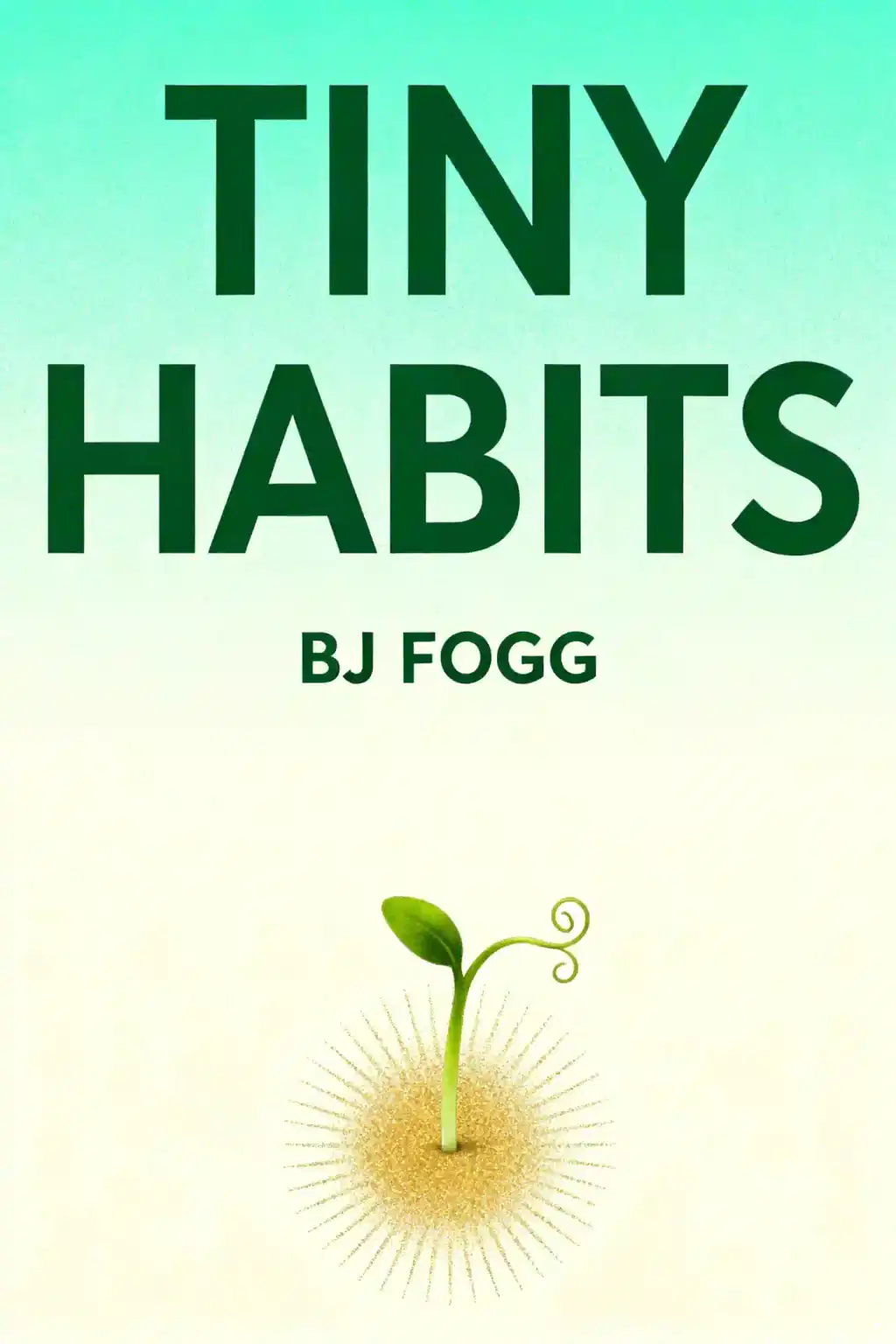
Have you ever wondered why some people seem to effortlessly create positive changes in their lives while others struggle endlessly? In "Tiny Habits," Stanford behavior scientist BJ Fogg reveals the surprising secret: change doesn't require heroic willpower or radical transformation-it happens through tiny, strategic actions that feel almost ridiculously easy. This breakthrough approach has helped over 40,000 people transform their lives and has been named one of TIME's Top 100 New Health Discoveries. Celebrities like Tony Robbins and tech leaders across Silicon Valley have embraced Fogg's methodology, which has quietly revolutionized how behavior change works. The book's insights have become especially relevant in our post-pandemic world, where many are seeking sustainable ways to rebuild habits without the burnout of traditional all-or-nothing approaches.
Chapitre 2
The Behavior Design Revolution: Why Change Isn't Your Fault
For decades, we've been fed a destructive myth: if you can't change, it's because you lack willpower or motivation. Fogg's twenty years of research at Stanford reveals this is fundamentally wrong. The problem isn't you-it's your approach to change.
When we fail to establish new habits, our inner critic attacks. "Why can't I stick with anything?" "What's wrong with me?" But Fogg's research shows that when change efforts fail, it's almost always due to a design flaw in the approach, not a personal flaw in you.
The traditional approach to change relies on motivation-a notoriously unreliable resource that Fogg compares to "a party-animal friend. Great for a night out, but not someone you would rely on to pick you up from the airport." Motivation naturally fluctuates throughout the day and across different contexts. We're typically more motivated in the morning than evening, more disciplined at work than during leisure time, and experience predictable motivation crashes (like Weight Watchers' annual enrollment patterns that surge in January and September but plummet in November).
Instead of fighting this reality, Behavior Design works with human psychology. The approach centers on three simple elements that drive all human behavior: Motivation, Ability, and Prompt (MAP). A behavior happens only when these three elements converge at the same moment. By understanding this model, you can systematically design for successful change rather than relying on willpower or motivation.
Consider Katie's morning social media habit. When she wanted to exercise instead of scrolling in bed, she didn't try to boost her motivation to exercise. Instead, she made scrolling harder by putting her phone in the kitchen at night and getting a separate alarm clock. By removing the prompt (her phone) and decreasing her ability to check social media, she successfully established her morning exercise routine.
This systematic approach to behavior applies universally-from personal habits to parenting challenges to workplace dynamics. When a child keeps kicking an airplane seat, giving them a small gift (like a smiley-face button) can reduce the behavior by addressing motivation. When Denny wanted his partner to wipe down the shower, demonstrating exactly what to do increased ability, making the behavior easy enough to overcome minimal motivation.
The key insight: when troubleshooting any behavior, check for prompts first, then ability, and only address motivation as a last resort. Most behavior failures aren't motivation issues at all-they're problems with prompts or ability that can be easily fixed.
Chapitre 3
The Golden Behavior Formula: Finding What Works For You
The first step in successful behavior change is identifying the right behaviors to target-what Fogg calls "Golden Behaviors." These aren't just any actions; they're behaviors that meet three specific criteria: they're effective for your aspiration, you want to do them, and you can do them.
Most people choose behaviors through flawed approaches: random guessing without methodology (impulsively deciding to bike to work), following internet inspiration (attempting 30-minute meditation after watching a Buddhist monk), or copying what worked for friends (trying hot yoga or waking at 4:30 a.m.). These approaches rely on chance rather than systematic selection.
Fogg's solution is Behavior Matching-the most crucial step in Behavior Design. The process begins with clarifying your aspirations or outcomes. If you wrote "lose weight," ask yourself if that's really what you want-maybe it's feeling better in your clothes or controlling diabetes. Getting clear allows efficient design for what matters most.
Next, explore behavior options by creating a "Swarm of Behaviors"-writing your aspiration in a cloud shape and surrounding it with specific behaviors that could help achieve it. Generate as many options as possible, making each behavior super specific ("crispy")-not just "play with dog" but "play fetch with my dog each evening at home."
The final step is Focus Mapping-plotting behaviors along two dimensions: impact and feasibility. In Round One, evaluate only the impact of each behavior-how effectively it helps achieve your aspiration. In Round Two, assess feasibility by asking "Can I get myself to do this?" considering both motivation and ability. The behaviors in the upper-right quadrant-high-impact actions you actually want to do-become your Golden Behaviors.
This approach follows Fogg Maxim #1: "Help people do what they already want to do." When Fogg applied this to improve his sleep during a stressful period, he generated 25+ potential behaviors, then identified his Golden Behaviors-those with high impact and high feasibility. These included one-time actions (installing blackout shades) and three simple habits (silencing his phone, using a white-noise machine, and crating his dog).
The process felt revelatory-transforming an overwhelming problem into concrete, achievable actions perfectly matched to his real-life capabilities. This matching process consistently produces "aha moments" because it identifies behaviors that converge what you want to do with what you can do-creating the most fertile ground for growing habits.
Chapitre 4
The Power of Tiny: Why Starting Small Creates Big Change
The conventional wisdom about habit formation has it backward. We're told to "go big or go home"-set ambitious goals, push through discomfort, and rely on motivation and willpower. But Fogg's research reveals that making behaviors tiny is the key to sustainable change.
Tiny is mighty for several crucial reasons. First, tiny behaviors don't depend on motivation. When you make a behavior tiny enough-like doing just two push-ups or flossing just one tooth-it falls above the Action Line in the Behavior Model regardless of your motivation level. This means you'll do it consistently even when motivation is low.
Second, tiny behaviors create success momentum. Each time you complete a tiny behavior and celebrate it, you build confidence and positive emotion that makes the next behavior more likely. This creates an upward spiral where success leads to more success.
Third, tiny behaviors can grow naturally. Fogg illustrates this through Instagram's success story-Krieger and Systrom identified photo sharing as a Golden Behavior people already wanted to do, then made it remarkably simple (just three clicks). This approach contrasted with competitors offering complex features, demonstrating how making behaviors easy is more effective than adding features.
To make behaviors tiny, you have three approaches:
1. Increase your skills: Use your initial motivation wave to skill up, like watching proper push-up technique videos when you're feeling inspired.
2. Get tools and resources: The right tools can dramatically reduce friction. Molly struggled with meal preparation until she discovered the mandoline slicer, which transformed her five-hour Sunday food prep into an enjoyable two-and-a-half-hour activity.
3. Make the behavior tiny: This approach has two categories: Starter Step and Scaling Back. A Starter Step is one small move toward the desired behavior, like putting on walking shoes before a walk. Scaling Back means shrinking the behavior itself, like flossing just one tooth instead of all teeth.
The key insight is keeping the bar low-not raising it prematurely. Sarika transformed her breakfast routine by starting with just turning on the burner, which eventually blossomed into making full breakfasts including dosas with chutney. The power lies in breaking overwhelming processes into discrete, manageable steps that create immediate success.
Making behaviors tiny also helps habits survive through challenging periods. Like tiny plants needing just drops of water, habits need minimal maintenance to stay alive. On low-motivation days, Fogg still flosses just one tooth-enough to preserve the habit without guilt. The goal isn't perfection but consistency, keeping habits rooted in your routine regardless of their size during difficult times.
Chapitre 5
The Prompt Revolution: How to Remember What You Want to Do
Prompts are the invisible drivers of our daily lives, triggering hundreds of behaviors we barely notice. Whether natural (rain drops making you open an umbrella) or designed (smoke alarms making you check the oven), prompts tell us to "do this behavior now." The crucial insight: no behavior happens without a prompt.
Most people live on autopilot responding to invisible prompts while struggling to remember things they want to do. The solution isn't better memory or more reminders-it's strategic prompt design.
There are three types of prompts that influence our behavior: Person Prompts, Context Prompts, and Action Prompts. Person Prompts rely on internal cues like bodily urges (hunger, thirst) which work well for survival behaviors but prove unreliable for new habits. Context Prompts are external cues in our environment: sticky notes, app notifications, or reminders from others. While they can work for one-time actions, they often fail for daily habits because we become desensitized to them over time.
Action Prompts-Fogg's preferred type-use existing behaviors as triggers for new habits. He calls these "Anchors" because they attach new habits to already stable routines in your life. The Tiny Habits Recipe follows a simple formula: "After I (ANCHOR), I will (NEW HABIT)." This elegant approach requires no fancy technology or external reminders-just the strategic sequencing of behaviors.
Finding the right sequence for your habits takes some tinkering but is ultimately straightforward. Anchors must be reliable events in your daily life. Research shows mornings contain the most consistent routines, making them fertile ground for new habits, though afternoon and evening routines can also work effectively. The best anchors share three qualities with your desired habit: same physical location, matching frequency, and similar theme or purpose.
For maximum effectiveness, identify the precise moment-the "Trailing Edge"-that marks the completion of your anchor behavior. This specificity makes your prompt more concrete and noticeable. For example, instead of "Brush my teeth" use "Put my toothbrush back into the charger"; instead of "Pour coffee" use "Put down the coffee carafe."
Elena found that refining her anchor from a vague morning routine to "turning off the water after rinsing her bowl" made her counter-wiping habit stick, significantly improving morning interactions with her husband by addressing his pet peeve of crumb-strewn counters.
You can also utilize "Meanwhile Habits" during brief waiting periods-while waiting for shower water to warm up, sitting at a red light, or standing in a grocery line. Brittany, a working mom with five children, created a Meanwhile Habit of "After I buckle my seatbelt, I will push 'play' on my audiobook," allowing her to consume five books monthly during her commute.
Chapitre 6
The Emotion Revolution: Why Celebration Is the Secret Ingredient
Emotions are the secret ingredient that makes habits stick. While finding the right prompts and making behaviors tiny are crucial, it's the positive feelings we generate that truly wire habits into our brains.
Fogg discovered this principle during a difficult period in his life. While dealing with business failure and the tragic death of his nephew, he found that celebrating the simple act of flossing one tooth created an unexpected positive feeling-"like a warm space had opened up in my chest where there had been a dark tightness."
This experience revealed that deliberately creating positive emotions after completing a tiny behavior could wire habits into the brain more effectively. When teaching others the Tiny Habits method, Fogg observed that people who embraced celebration were consistently more successful at creating habits quickly.
The direct connection between emotions and habit formation contradicts the popular myth that repetition alone creates habits. Fogg's research shows habits can form very quickly-sometimes immediately-when strong positive emotions are connected to a behavior. He distills this insight into three words: "Emotions create habits." Not repetition. Not frequency. Not fairy dust.
Celebration is the most effective way to create habit-forming positive emotions-it's free, fast, and universally available. However, many so-called habit experts confuse rewards with incentives. In behavior science, a true reward must be directly tied to a behavior and experienced either during or immediately after the behavior. The timing is crucial because dopamine is released and processed very quickly. A massage after two weeks of running isn't a reward in the scientific sense-it's an incentive.
To discover your natural celebration style, imagine scenarios like getting your dream job, making a perfect shot into a recycling bin, or watching your team win a championship. Notice your spontaneous reaction-that's your natural celebration. Options include saying "Yes!", smiling big, doing a little dance, giving yourself a thumbs-up, or simply thinking "Good job." The key is finding what genuinely creates the feeling of "Shine" for you.
Some people struggle with celebration, feeling awkward or inauthentic. The solution is threefold: understanding that celebration works with your brain's dopamine system, recognizing that celebration is a skill worth practicing, and acknowledging that making any change is worthy of celebration. For those struggling to feel Shine, try celebrating with a child, using physical movements, or imagining you're celebrating someone you love.
Celebration can extend beyond formal habit recipes to reinforce everyday good behaviors that shape our self-conception. Sarah, a single mom who had used Tiny Habits for work efficiency and healthy eating, struggled with washing her face before bed. When she finally did it one night, she celebrated that small victory, telling herself "You're the kind of woman who takes care of herself." This simple celebration helped wire in not just face washing but other evening self-care habits.
Chapitre 7
From Tiny to Transformative: How Habits Grow and Multiply
Fogg shares Sukumar's transformation story, showing how his tiny beginning of just two push-ups after brushing teeth and five-second planks eventually led to significant weight loss and a complete fitness transformation. By age fifty-one, Sukumar was doing fifty push-ups daily and five-minute planks as part of a one-hour workout routine. This dramatic change wasn't another temporary fix but represented a fundamental identity shift that broke his seventeen-year cycle of fitness failures.
Habits scale in two distinct ways: they either grow (becoming bigger versions of themselves) or multiply (spawning related habits). Growth habits expand naturally until reaching their natural boundary-like Sukumar's plank growing from five seconds to five minutes-with expansion happening when the person genuinely wants to do more. Multiplication habits, like the "Maui Habit" (saying "It's going to be a great day" after putting feet on floor in morning), don't necessarily grow larger but instead create ripple effects that inspire additional positive habits.
Success reduces fear and increases motivation, allowing us to attempt increasingly challenging behaviors. When we succeed at small habits, our overall motivation rises dramatically, enabling us to tackle harder behaviors. This dynamic explains why tiny successes often lead to breakthrough transformations in all areas of life.
Behavior change isn't mysterious but rather a system built on learnable skills. Like mastering piano or swimming, these skills improve with practice and make transformation increasingly easier. The Skills of Change fall into five categories:
1. Behavior Crafting: Selecting and adjusting habits for your life, knowing how many habits to adopt at once and when to add more.
2. Self-Insight: Understanding your preferences, strengths, and aspirations, identifying which habits will have meaning to you personally.
3. Process: Adjusting to life's dynamic nature while strengthening habits, knowing when to push beyond tiny and increase difficulty.
4. Context: Redesigning your environment to make habits easier, asking "How can I make this habit easier to do?" and "What is making this habit hard to do?"
5. Mindset: Approaching change with openness and curiosity, embracing new identities through the phrase "I'm the kind of person who..."
Perhaps most transformative is embracing new identities. Humans have a deep drive to act consistently with their identity. When Sukumar began doing push-ups, he gradually shed his "I'm not an exercise guy" identity, eventually becoming comfortable at the gym and joining group classes. Identity shifts boost change by cultivating constellations of related behaviors, not just isolated habits. These shifts often promote change in other areas too, as Sukumar discovered when his exercise success led to healthier eating habits and better dressing.
Chapitre 8
Breaking Bad Habits: A Systematic Approach to Untangling
Just as you can design your way into a habit, you can design your way out using the Behavior Model. Fogg presents the Behavior Change Masterplan-a three-phase system for disrupting unwanted habits. Unlike conventional approaches that emphasize "breaking" bad habits (implying a single forceful action), his method treats unwanted habits like tangled ropes that must be systematically untangled.
The masterplan works in three phases: first create positive habits, then focus on stopping specific behaviors, and finally swap in replacement habits when necessary. This comprehensive algorithm integrates proven change methods but organizes them into a strategic sequence that builds success step by step.
Phase 1 involves creating positive habits unrelated to your problematic behavior. By practicing Tiny Habits in areas like tidiness or creativity, you develop the Skills of Change without emotional baggage. This approach builds mastery over the change process itself while shifting your identity toward the person you want to become, naturally crowding out unwanted behaviors.
In Phase 2, you design for stopping specific habits using the Behavior Model. A common mistake is trying to stop abstract "General Habits" like "stop stressing at work" rather than targeting specific behaviors. Using the Swarm of Behaviors model, write your General Habit in a cloud, then list all the specific habits contributing to it in surrounding boxes. This approach makes the challenge feel more manageable by breaking the tangled knot into individual strands.
To stop an unwanted habit, start by tackling the prompt using three possible approaches: remove the prompt by redesigning your environment (turning off notifications), avoid the prompt altogether (making coffee at home instead of visiting the pastry-filled coffee shop), or ignore the prompt (though this relies on willpower).
If that doesn't work, focus on making the habit harder to do by manipulating the five factors in the Ability Chain: time, money, physical effort, mental effort, and routine. You can increase the time required (having a "no ice cream in the freezer" policy), increase physical effort (removing your desk chair to prevent sitting all day), or make the habit conflict with important routines (establishing a dawn surfing habit that naturally disrupts unhealthy evening behaviors).
Only as a last resort should you try to adjust motivation levels, which is often ineffective for deeply ingrained habits. If previous approaches don't work, scale back your ambitions-stop a habit for a shorter time period, do it for a shorter duration, reduce frequency, or decrease intensity.
In Phase 3, you design for swapping behaviors. When swapping, you must find a new habit that's both easier to do and more motivating than the old one. Remapping means doing your new habit instead of the old one when prompted. For example, if you want to stop snapping at your teenage daughter when she's careless, replace that reaction with sincere praise when triggered by the same prompt.
Chapitre 9
Creating a Culture of Change: How We Transform Together
Social dynamics powerfully drive behavior, and with social media magnifying these influences, it's crucial to understand how they shape our individual and collective actions. The principles of Tiny Habits and Behavior Design enable you to defend against undermining influences and create new habits that lead to more harmonious living.
There are two approaches to facilitating group change: as the Ringleader or the Ninja. The Ringleader openly shares Tiny Habits and Behavior Design principles, explicitly leading the group through the change process. The Ninja applies these principles subtly without announcing them, as Mike did with Chris and the coffee maker. Both approaches follow the same fundamental steps of Behavior Design.
The process begins with clarifying aspirations together, then exploring behavior options, and finally matching the group with Golden Behaviors. After generating potential behaviors, identify which ones to implement by finding those that will have impact, are easy to do, and feel motivating. Focus Mapping works exceptionally well as a collaborative group exercise, creating consensus and priming the group to support each other in implementing the chosen behaviors.
For habits to stick within a group, make the desired behavior as simple as possible. As a Ringleader, ask your team what makes the behavior difficult and address those barriers. Identify weak links in the Ability Chain (time, mental capacity, etc.) and strengthen them. As a Ninja, use the Discovery Question to uncover the real barriers someone faces-like asking your spouse what makes daily exercise difficult, then adapting accordingly.
To establish group habits, help members identify reliable prompts. The most elegant solution is anchoring new behaviors to existing routines: "After I return from lunch break, I will get out my roadblock checklist and write a quick email." While external reminders like notifications can work, they're less effective than using natural routines as prompts.
Celebration is crucial for wiring in group habits. As a Ringleader, you can: teach your group how emotions create habits through celebration; personally provide positive feedback to generate Shine; and encourage group members to celebrate each other's successes. For maximum impact, target the "Power Zone"-where feedback relates to something someone cares about deeply yet feels uncertain about.
The final step in Behavior Design is embracing iteration. As a Ringleader, set proper expectations by explaining that creating habits is like buying shoes-the first attempt may not be perfect. Follow the troubleshooting order based on the Behavior Model: start with the prompt, then ability, and only as a last resort address motivation.
BJ Fogg and Linda, a Tiny Habits coach, demonstrated these principles when hired by a major research hospital to address nurse burnout. They discovered nurses worked under extreme stress-not drinking water during 12-hour shifts to avoid bathroom breaks, skipping breaks entirely, and returning home depleted. Through weekly training sessions, they helped nurses identify daily anchors (parking car, logging onto computers) and pair them with tiny stress-reduction behaviors (deep breaths, sips of water, smiles). Three months after training, research showed statistically significant improvements in stress management and resilience.
Chapitre 10
The Small Changes That Change Everything
Behavior Design isn't just a personal tool but a framework for solving larger problems. When we view behavior as a puzzle to solve, seemingly intractable challenges become manageable. The habits we design and celebrate reach beyond our personal lives to shape our families, communities, and society.
Fogg offers practical ways to create a culture of change through sharing. He encourages readers to engage in conversations about behavior change with others, sharing key maxims like "Help people do what they already want to do" and "Help people feel successful." These principles can be personalized by applying them to oneself.
The most profound transformations described aren't just about forming discrete habits but essential shifts in experience-"from suffering to less suffering, from fear to hope, from being overwhelmed to feeling empowered." By embracing feeling good as a lever for change, people can overcome devastating circumstances and regain control of their lives through "the small changes that change everything."
The quality of life depends on daily choices, and habits are the means to feeling better and creating positive change. Tiny Habits provides readers with a complete system for change, eliminating guesswork and helping filter out noise about habits and behavior. By understanding the science of behavior and applying these principles consistently, anyone can transform their life one tiny habit at a time.