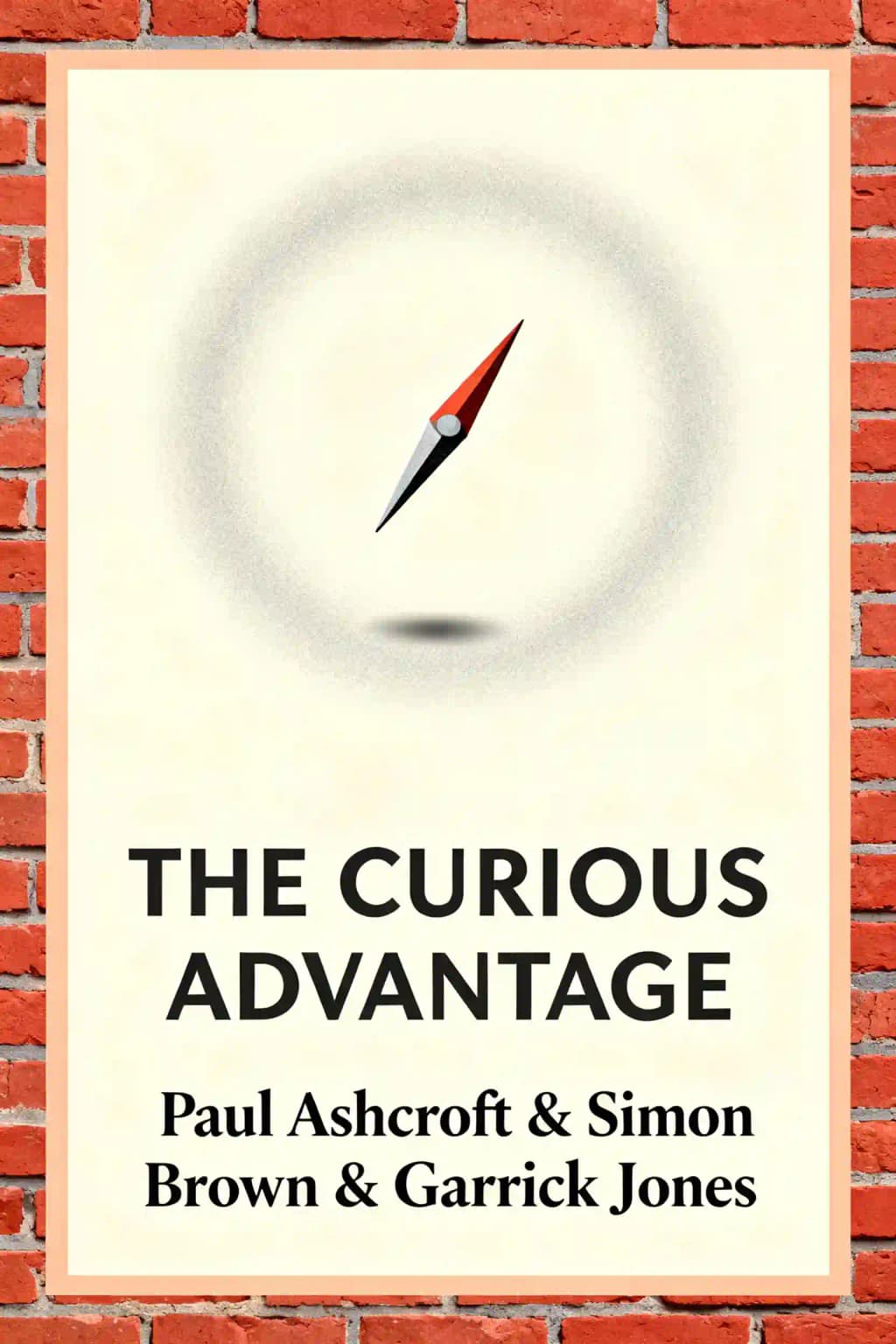
Curious Advantage
Aperçu de Curious Advantage
In "The Curious Advantage," three experts reveal how curiosity drives innovation in the digital age. Microsoft's transformation under Nadella exemplifies their 7C's framework. What if the greatest competitive edge isn't technology or talent, but simply asking better questions than everyone else?
Thèmes clés dans Curious Advantage
- digital age adaptability
- continuous learning culture
- cognitive exploration
- innovation frameworks
- collective intelligence
Citations de Curious Advantage
Curiosity drives us to explore the unknown.
Staying curious is no longer just an option – it's a necessity.
Curiosity thrives in community.
Curiosity sparks creative thinking.
Asking questions is deeply connected to being curious.
Personnages de Curious Advantage
- Paul AshcroftCo-author and expert on curiosity in business
- Simon BrownCo-author and expert on curiosity in business
- Garrick JonesCo-author and expert on curiosity in business
Telecharger le resume de Curious Advantage
Obtenez le resume de Curious Advantage en PDF ou EPUB gratuit. Imprimez-le ou lisez-le hors ligne a tout moment.
FAQ sur ce livre
The Curious Advantage explores curiosity as the critical driver of innovation and adaptability in the digital age. Blending neuroscience, anthropology, and business case studies, it argues curiosity fuels personal growth, organizational resilience, and societal progress. The book introduces the 7C’s of Curiosity framework—a tool for fostering curiosity in individuals and teams—and uses examples like Microsoft’s cultural revival under Satya Nadella to demonstrate its transformative power.
Leaders, entrepreneurs, and professionals navigating digital transformation will gain actionable strategies from this book. It’s equally valuable for educators, lifelong learners, and anyone seeking to harness curiosity for problem-solving. The blend of historical context (e.g., the Great Library of Alexandria) and modern business applications makes it relevant across industries.
Yes—it combines actionable frameworks like the 7C’s model with real-world examples (e.g., Microsoft’s turnaround) to show how curiosity drives success in uncertain environments. Its interdisciplinary approach (neuroscience, anthropology, leadership) offers fresh insights for both personal and professional growth.
The 7C’s model—Context, Community, Curation, Creativity, Critical Thinking, Communication, and Confidence—provides a roadmap for cultivating curiosity. For example, “Context” emphasizes understanding historical patterns, while “Community” focuses on collaborative learning. This framework helps organizations like Microsoft build adaptive cultures.
The book positions curiosity as essential for thriving in digital environments, where rapid change demands continuous learning. Case studies like Satya Nadella’s focus on a “learn-it-all” culture at Microsoft illustrate how curiosity-driven leadership can revitalize organizations and drive innovation.
It references milestones like the Great Library of Alexandria as hubs of curious inquiry, showing how curiosity has propelled human progress. These examples anchor the argument that curiosity is not just a modern skill but a timeless survival mechanism.
The book explains how curiosity triggers dopamine release, enhancing focus and motivation. This biological response makes curiosity a self-reinforcing trait, crucial for learning and adaptation—key themes for navigating digital disruption.
Co-author Paul Ashcroft’s expertise in digital strategy and transformation (via Ludic Group) grounds the book in practical business applications. His work with Fortune 500 companies informs real-world frameworks for embedding curiosity in organizations.
Absolutely. The book emphasizes “conscious curiosity”—deliberate practices like asking probing questions or seeking diverse stimuli—to enhance creativity and decision-making. It provides tools to turn everyday challenges into growth opportunities.
Unlike generic leadership guides, it specifically links curiosity to digital-age survival, using multidisciplinary research and the 7C’s framework. This approach blends theoretical depth (e.g., neuroplasticity) with actionable organizational strategies.
Humor and surprise are highlighted as catalysts for curiosity, breaking mental patterns and making learning more engaging. This aligns with brain science showing playful environments boost creative problem-solving.
While not explicitly focused on remote work, its principles—like fostering curiosity through “Community” and “Communication”—apply directly to maintaining innovation in distributed teams. The emphasis on continuous learning is particularly relevant for hybrid environments.