Chapitre 1
The Insatiable Hunger of the Curious Mind
In a research facility in Atlanta, Georgia, a bonobo named Kanzi demonstrates remarkable language abilities that rival those of a 2.5-year-old human child. He can understand spoken English and communicate through a symbolic keyboard with a 200-word vocabulary. Yet for all his cognitive prowess, Kanzi has a striking limitation: he never asks "why." This absence of questioning reveals the profound difference between human and ape intelligence-our insatiable curiosity.
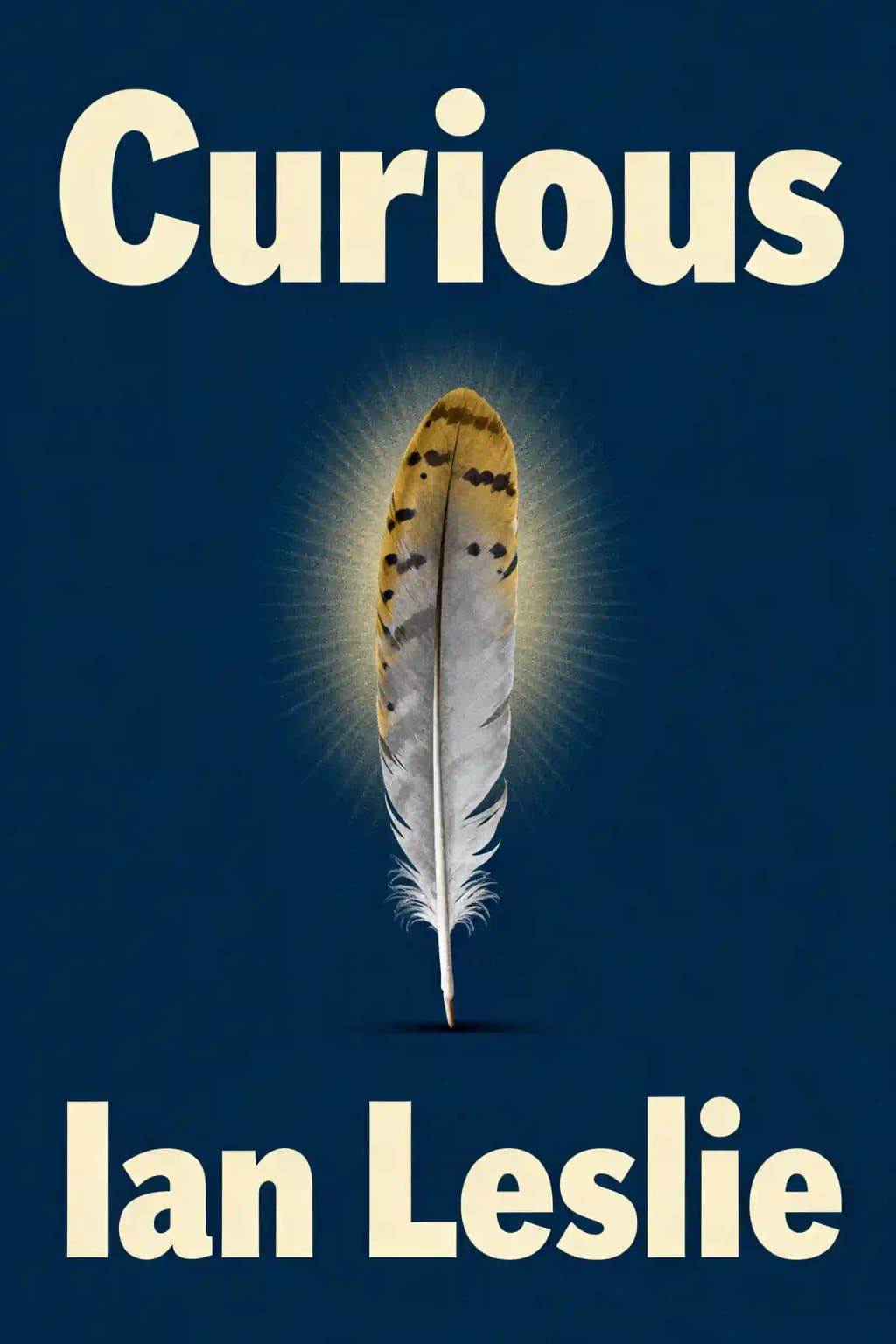
"Curious" by Ian Leslie has become something of a cult classic among Silicon Valley executives and education reformers alike. Bill Gates included it on his recommended reading list, calling it "a fascinating look at how curiosity drives innovation." The book's exploration of how curiosity shapes human achievement resonates deeply in our knowledge economy, where the ability to ask good questions increasingly separates those who thrive from those who merely survive. Since its publication, Leslie's insights have influenced educational approaches from Finland to Singapore, with schools redesigning curricula to cultivate what Leslie calls "epistemic curiosity"-the disciplined pursuit of knowledge that transforms casual interest into deep understanding.
Chapitre 2
The Evolutionary Advantage of Asking "Why"
Humans possess a unique relationship with curiosity. While many animals display diversive curiosity-the attraction to novelty that might help them discover food or avoid predators-only humans develop epistemic curiosity, the disciplined pursuit of knowledge for its own sake.
This distinction becomes clear through three illuminating stories. Ten-year-old Brian Smith's dangerous encounter with his father's loaded gun demonstrates diversive curiosity's irresistible pull. Despite knowing better, Brian couldn't resist the forbidden object, firing it through his apartment window. Edmund Burke described this form of curiosity as "the most superficial of all affections"-perpetually changing objects, easily satisfied yet never fulfilled, marked by "giddiness, restlessness, and anxiety." It's the same curiosity that makes us refresh social media feeds endlessly, hunting for novelty without absorption.
Alexander Arguelles represents curiosity's evolution into something deeper. His lifelong language obsession began with simple fascination but transformed into epistemic curiosity. Despite lacking natural talent, Arguelles mastered dozens of languages through relentless effort, eventually adopting a monastic sixteen-hour daily study routine in Korean forests. His turning point came when he realized he knew "too many languages" superficially, forcing him to abandon some to truly master others.
John Lloyd's journey illustrates curiosity's redemptive power. After fifteen wildly successful years producing hit British comedy shows, Lloyd fell into depression, awakening Christmas 1993 with the painful question "Who am I?" Despite his BAFTA awards and achievements, he felt he "didn't know anything." His remedy wasn't therapy but curiosity-reading voraciously about everything from ancient Athens to French Impressionism. This journey eventually birthed the BBC show "QI," celebrating how everything becomes interesting when viewed from the right angle.
These stories illustrate how diversive curiosity (the impulse to explore) can mature into epistemic curiosity (sustained cognitive effort to build understanding). While diversive curiosity opens doors, epistemic curiosity walks through them, bringing true illumination through the resistance of difficult learning.
Chapitre 3
The Developmental Origins of Curious Minds
At Babylab in London's Bloomsbury district, researchers Teodora Gliga and Katarina Begus study the earliest manifestations of curiosity in infants. Their work reveals that babies are not passive recipients of information but active explorers from birth. By measuring brain activity and attention patterns as babies interact with toys, they can identify the neurological state representing the moment when a baby is most receptive to acquiring knowledge.
Humans mature remarkably slowly compared to other species. While foals walk within minutes of birth and birds leave the nest within months, human babies remain dependent for years. This extended childhood, however, provides a crucial advantage: it gives us time to learn, wonder, and adapt before committing to particular paths. Without the pressure to immediately fend for ourselves, we can focus on understanding both our physical and cultural environments.
Research shows that highly exploratory five-month-olds tend to achieve greater academic success as teenagers, demonstrating how early curiosity shapes future development. But what determines whether a child develops into a highly curious individual? Two key factors emerge: the child's basic cognitive ability and the responses they receive to their early inquiries.
Pointing, which typically emerges around a child's first birthday, represents a crucial developmental milestone-essentially an unspoken question. When adults respond reliably to pointing, babies continue the behavior; when faced with ignorant or unreliable adults, babies stop pointing altogether. Similarly, babbling serves as a sign of readiness to learn, with babies more likely to acquire new words when adults respond meaningfully to their vocalizations.
As children grow older, they begin asking an astonishing number of questions-over a hundred per hour according to psychologist Michelle Chouinard's research. Around age two-and-a-half, children primarily ask "what" and "where" questions seeking facts. Near their third birthday, they begin asking "how" and "why" questions that demand explanations. Harvard professor Paul Harris estimates that between ages two and five, children ask approximately 40,000 explanatory questions.
These questions require complex mental processes: children must recognize their own ignorance, understand that others possess knowledge they don't have, and use language as a tool to transfer that information. When we ignore children's questions or substitute screens for engagement, we risk stunting their innate desire to know.
Chapitre 4
The Psychology of Information Gaps
As we age, our "purely intellectual zeal" diminishes, with curiosity beginning to wane as early as age four. Our brains, initially containing millions more neural connections than adult brains, become more efficient but less open as certain pathways strengthen while others are pruned away. This natural process helps us function effectively, but adults often err too far toward exploiting existing knowledge rather than exploring new possibilities.
Psychologists have struggled to explain curiosity, which seems to combine intellect, emotions, and drives. George Loewenstein synthesized various approaches with his "information gap" theory: curiosity arises when we perceive a gap between what we know and what we want to know. Daniel Berlyne, who studied why people become interested in "the strange, the unusual, the puzzling," made the crucial distinction between diversive and epistemic curiosity. His experiments revealed that people spent the most time examining moderately complex patterns-neither too simple nor too complex-illuminating curiosity's paradoxical nature as being stimulated both by understanding and its absence.
Curiosity exists in a "zone of proximal learning"-the sweet spot between complete ignorance (where engagement is difficult) and complete knowledge (where interest wanes). This explains why people dismissed as incurious may simply lack basic information about a subject, not curiosity itself. The more we know about something, the more curious we become about what we don't know. Someone who knows three state capitals might feel satisfied, while someone who knows forty-seven will focus on the three they're missing.
To feel curious, we must first recognize gaps in our knowledge-a challenge because we typically overestimate what we know. In a University of Oklahoma experiment, students generated solutions to campus parking problems but drastically overestimated how comprehensive their answers were. This "ignorant but happy" effect explains why we become blithely incurious about alternatives when confident in our knowledge.
Curiosity is fundamentally emotional-an information gap isn't just rationally recognized but felt as an itch needing scratching. This emotional drive propels intellectual exploration even when there's no practical need. Leonardo da Vinci captured this emotional complexity when describing his encounter with a cave entrance, torn between "fear of the threatening dark cavern" and "desire to see whether there were any marvellous thing within." This tension between safety and exploration defines human experience.
Chapitre 5
The Digital Paradox: Information Abundance and Curiosity Scarcity
The internet presents a paradox for curiosity. In 1945, Vannevar Bush worried that knowledge was growing too fast for anyone to keep up with traditional information systems. He envisioned a "memex" device that would link information associatively, anticipating the internet's hyperlinked structure. Today, Google and Wikipedia provide unprecedented access to knowledge-from Bach cantatas to economics lectures, Shakespeare's folios to Rembrandt's brushstrokes-much of it freely available to anyone with an internet connection.
Yet despite this abundance, we may be becoming less curious. The web gives answers before we've properly formulated questions, making it too easy to ignore our ignorance. When writer Ben Greenman's son completed a report on anacondas, Greenman asked what the second-largest snake was. His son immediately found the answer online-a stark contrast to Greenman's childhood, when such questions might remain tantalizingly unanswered despite encyclopedia searches.
The internet's ruthless efficiency at answering questions eliminates what Greenman calls "productive frustration"-the delay that allows questions to ripen into genuine interests. Google increasingly provides answers before we even click a search result, becoming "the ultimate spoiler." As filmmaker J.J. Abrams laments, despite mystery being everywhere, our world feels "thoroughly demystified" when we can leap from curiosity to understanding instantly, without the necessary slowing down that true discovery requires.
Technology makes life easier, but there's hidden value in difficulty, particularly in learning. Princeton researchers found students remembered material better when printed in difficult-to-read fonts, while Amsterdam scientists discovered people solving puzzles with distractions displayed greater cognitive agility. Robert Bjork coined "desirable difficulties" to describe how we learn better when learning is hard. The harder we think, the better we remember.
The internet has evolved from a space of exploration (reflected in browser names like "Explorer" and "Safari") to a precision-tooled answer machine. Google never says "I don't know," potentially making us "ignorant but happy." Despite global connectivity, our attention remains stubbornly local-most Americans consume domestic news, and music preferences have become more nationally focused since 2000. This serendipity deficit hampers innovation, which relies on unexpected collisions of ideas.
Chapitre 6
The Historical Pendulum of Curiosity
Our conception of curiosity has fluctuated dramatically throughout history, swinging between vice and virtue. In ancient Athens, curiosity (curiositas) meant pursuing knowledge purely for its own sake. Aristotle valued investigation "not for any utilitarian end"-if knowledge could be practically applied, fine, but that wasn't the point. Greeks believed curiosity's only purpose was soul elevation, finding happiness in free intellectual exploration.
Christianity dramatically reversed curiosity's reputation. Saint Augustine condemned curiositas as sinful for three reasons: it was pointless (knowledge sought merely for knowing), perverted (distracting the mind from God), and prideful (usurping divine authority). During the Renaissance, curiosity regained respectability as political, military and economic imperatives drove investigation of the natural world. The "curiosity cabinet" embodied this new worldview-displaying exotic treasures, scientific instruments and natural wonders as symbols of knowledge and status.
Gutenberg's printing press was a "curiosity machine" that facilitated the rapid exchange of ideas, corroding certainties and igniting new thinking. Francis Bacon called it one of three inventions that "changed the whole face and state of the world." Bacon advocated for a "total reconstruction of sciences, arts, and all human knowledge" built on observation rather than abstract principles.
In the eighteenth century, Bacon's vision became reality as science transformed from monkish knowledge-hoarding to an exciting pursuit for ordinary people. In Britain, amateur invention, naturalist expeditions, chemistry experiments, and discussion groups in homes and coffeehouses became fashionable activities. Today's ambiguous usage of "curious"-meaning both knowledge-hungry and strange or dangerous-reflects this checkered past.
Chapitre 7
The Widening Curiosity Divide
Education has become the primary determinant of prosperity in today's world, with college graduates earning substantially more than those without degrees. As the economic gap between educated and uneducated populations widens, researchers have increasingly examined what factors beyond intelligence influence academic success.
While IQ correlates with academic performance, non-cognitive traits like personality and character significantly impact educational achievement. "Conscientiousness"-encompassing persistence, self-discipline, and what Angela Duckworth calls "grit"-consistently predicts high achievement. But research by Sophie von Stumm covering 50,000 students reveals another equally powerful factor: intellectual curiosity. This "hungry mind" trait-the tendency to "seek out, engage in, enjoy and pursue opportunities for effortful cognitive activity"-forms the "third pillar" of academic achievement alongside conscientiousness and intelligence. Together, curiosity and conscientiousness count for as much as intelligence in determining academic success.
The internet exacerbates socioeconomic inequality through education. Studies show academic motivation declines during college, with today's students studying half as much as those in 1961. Online courses further advantage self-motivated learners. As economist Tyler Cowen notes, in a world of abundant information and global competition, the motivated will thrive while others stagnate. John Dewey recognized curiosity as fragile, requiring cultivation to reach its highest form. The future belongs not to those with the most technology, but to those who choose curiosity.
Chapitre 8
The Power of Questioning
In 1990, community organizer Dan Rothstein discovered that disadvantaged parents in Lawrence, Massachusetts weren't failing their children due to apathy, but because they lacked question-asking skills. Middle-class people absorb this sophisticated ability through osmosis, while others struggle to extract information from officials. Rothstein developed simple principles teaching parents how to construct effective questions, with remarkable results.
Studies consistently show class differences in children's question-asking behaviors. McCarthy's 1930 research found upper-class children asked more questions than lower-class peers starting at age two. Tizard and Hughes' 1984 study revealed middle-class four-year-olds asked more curiosity-based "how" and "why" questions, engaging in "passages of intellectual search" with remarkable persistence and logic. This difference stems not from parents' willingness to answer, but from parental modeling-question-asking is contagious. Parents who themselves ask questions and expand on children's comments create children who question more.
Sociologist Annette Lareau's immersive research identifies two distinct parenting approaches: "concerted cultivation" in middle-class families versus "natural growth" in working-class homes. Middle-class parents organize family life around developing children's talents through activities, intellectual conversations, and encouraging questions. Working-class parents, while equally loving, have fewer resources for such intensive development. Though "natural growth" children often enjoy more carefree childhoods, "concerted cultivation" better prepares children for modern institutions that reward assertiveness and linguistic confidence.
Questions transform curiosity into practical tools for change. Business professor Robert Mittelstaedt cites the Titanic disaster as a failure of questioning-despite receiving iceberg warnings, the ship never requested additional information from nearby vessels. Many disasters stem from unasked questions, often suppressed by fear of appearing foolish. Former Dow Chemical CEO Mike Parker notes that even brilliant leaders fail when they don't ask questions, particularly "dumb" ones that can "unlock a conversation."
Chapitre 9
The Knowledge Foundation of Curiosity
Is knowledge obsolete in the internet age? Jean-Jacques Rousseau argued against forcing "arbitrary knowledge" on children, claiming their natural curiosity is the only teacher needed. His view that adult pedagogy stifles children's natural curiosity became a multi-generational "meme" that influenced progressive education movements throughout the nineteenth and twentieth centuries. Today's technological visionaries have joined this cause, suggesting that in the age of Wikipedia and Google, memorizing facts is unnecessary.
However, this notion fundamentally misunderstands human nature. As a species, we've always depended on the epistemic endowment of our elders. Our unusually long childhood dependency period exists precisely because humans are designed to learn from others. Deliberate teaching of the young isn't a modern perversion but part of our biological heritage across all cultures.
Empirical evidence shows "unguided learning" is largely ineffective-Richard Mayer's analysis of studies from 1950-1980s consistently found traditional instruction outperformed experimental "discovery" classrooms. John Hattie's meta-analysis revealed the three most powerful teaching factors are feedback, quality of instruction, and direct instruction. Without knowledge imparted by adults, children's natural curiosity quickly fades or leads to misconceptions.
Sir Ken Robinson's popular TED talk suggests schools kill creativity by focusing on academic facts rather than self-expression. But this argument is fundamentally flawed. As David Hume noted, creativity starts in combination-new ideas are made from old ones. Facts aren't the enemy of creativity but its essential building blocks. The more existing ideas you possess, the richer your potential combinations become. Successful innovators and artists amass vast stores of knowledge before making breakthroughs. Mozart was twelve years into his career before composing his first enduring piece. Shakespeare's creativity was fueled by his rigorous classical education, including memorization of Latin rhetoric.
In 1946, Dutch psychologist Adriaan de Groot's chess experiment revealed that expertise isn't about abstract thinking skills but domain-specific knowledge. Knowledge forms the foundation of thinking, with our limited working memory relying on vast long-term memory networks of associated facts. The "curiosity-driven" education approach fatally overlooks that knowledge drives curiosity as much as curiosity drives knowledge acquisition. Without schools building knowledge foundations, many children remain unaware of what they don't know, uninterested in their ignorance, and permanently disadvantaged compared to more knowledgeable peers.
Chapitre 10
Seven Practices for Cultivating Lifelong Curiosity
Steve Jobs and Walt Disney transformed everyday life through businesses built on curiosity. Disney pioneered animation, creating iconic characters and films before building theme parks and embracing new technologies. Jobs, who started Apple in his parents' garage, possessed extraordinary epistemic curiosity, interested in everything from calligraphy to Eastern philosophy. This breadth helped him connect disparate cultures-counterculture, business, design, and technology-giving him advantages when industries converged. Jobs criticized Disney CEO Michael Eisner's lack of curiosity about Pixar's success, noting "Curiosity is amazingly important."
To cultivate curiosity, first "stay foolish"-maintain beginner's mind even as you gain expertise. Success often diminishes curiosity, as seen when China rejected Western innovations in the 17th century despite earlier prosperity. Organizations must fight complacency by encouraging questions and embracing uncertainty.
Second, "build the database" by collecting both specific knowledge about your field and general knowledge about life. Young's five-step creative technique emphasizes gathering raw material as the foundation for innovation. Great ideas don't spring from momentary effort but from long-formed habits of mind and accumulated knowledge. Highly curious people with well-cultivated memories experience an augmented reality where everything has additional layers of meaning.
Third, "forage like a foxhog"-combine deep expertise with broad understanding. While the past century rewarded specialization, digital technologies now blur domain boundaries. Innovation often emerges from cross-fertilization of fields, as with Francis Crick applying physics to biology or Picasso combining African sculpture with Western painting. The most valuable thinkers are "foxhogs"-hybrids of Isaiah Berlin's categories of hedgehogs (who know one big thing) and foxes (who know many things).
Fourth, "ask the big why" by exploring deeper motivations. In Northern Ireland, the peace process advanced when negotiators discovered parties needed public renunciation of violence without appearing to surrender. Our culture tends to avoid the murky waters of emotion and causation, focusing on measurable "what" questions instead. But data alone fails to predict complex events like the Arab Spring. Effective decision-making requires both the "what" of data and the human capacity to ask "why."
Fifth, "be a thinkerer" like Benjamin Franklin, who combined thinking and tinkering to explore the world. From investigating why oil calms waves to charting the Gulf Stream, Franklin approached questions by mixing hands-on experimentation with abstract reasoning. Today's knowledge economy often separates abstract thinking from practical craftsmanship, but the greatest innovations come from their integration.
Sixth, "question your teaspoons" by finding interest in everyday objects and experiences. The "Boring Conference" in London celebrates mundane subjects like supermarket self-checkout machines and letterboxes, demonstrating that anything can become interesting through attention. Psychologist Carol Sansone discovered that focusing on present experience rather than future goals makes tasks more engaging-when volunteers made boring tasks interesting, they persisted longer. This principle applies to relationships too-couples who actively seek novelty and learn together maintain greater satisfaction than those who succumb to routine.
Finally, "turn puzzles into mysteries" by embracing open-ended inquiry. William Friedman, the US government's chief code-breaker for thirty years, exemplifies this approach. Though hired to work on wheat propagation at George Fabyan's eccentric Riverbank estate, Friedman soon joined Elizabeth Gallup's Department of Ciphers investigating Shakespeare authorship theories. While he eventually rejected the Baconian authorship claims, at Riverbank he developed his lifelong passion for cryptography. The distinction between puzzles and mysteries is crucial: puzzles command our curiosity until solved, while mysteries invite endless inquiry.
Chapitre 11
The Choice to Be Curious
Born in Iceland around 986 AD, Bjarni Herjolfsson was a merchant captain who set sail to find his father in Greenland but encountered a storm that blew his ship off course. When the skies cleared, they spotted land covered in dense forests and rolling hills-nothing like Greenland. Though his curious crew begged to explore this verdant paradise, Bjarni refused, determined to complete his mission of finding his father. America remained undiscovered.
Even in his own time, Bjarni was criticized for not seizing this opportunity. But curiosity often conflicts with our immediate goals and responsibilities. As Bjarni had promises to keep, we all face moments when curiosity pulls us away from our tasks. Yet curiosity's difficulties are worthwhile. David Foster Wallace argued that practicing curiosity about others frees us from self-obsession and helps us cope with life's frustrations. By imagining others' circumstances-the exhausted mother in the checkout line, the driver rushing a child to hospital-we escape our default self-centered perspective.
In our age of information abundance and attention scarcity, curiosity becomes a choice-a decision to engage deeply rather than skim the surface. As John Lloyd discovered after his depression, "If human curiosity isn't fed then you die inside. A quarter of your desire to be alive is cut away." The truly curious will be increasingly in demand as employers seek people who can do more than follow procedures-they want those with intrinsic desire to learn and ask penetrating questions. Curious learners go deep and wide, making creative connections between fields and thriving in cognitively challenging work. They're least likely to be replaced by machines, as no computer, however sophisticated, can yet be curious.
Science shows that lifelong intellectual curiosity builds "cognitive reserve," slowing mental decline in old age by up to a third. But beyond practical benefits, curiosity offers something more profound-a way of being in the world that transforms ordinary experience into extraordinary discovery. In choosing curiosity, we choose to be fully alive.