Chapitre 1
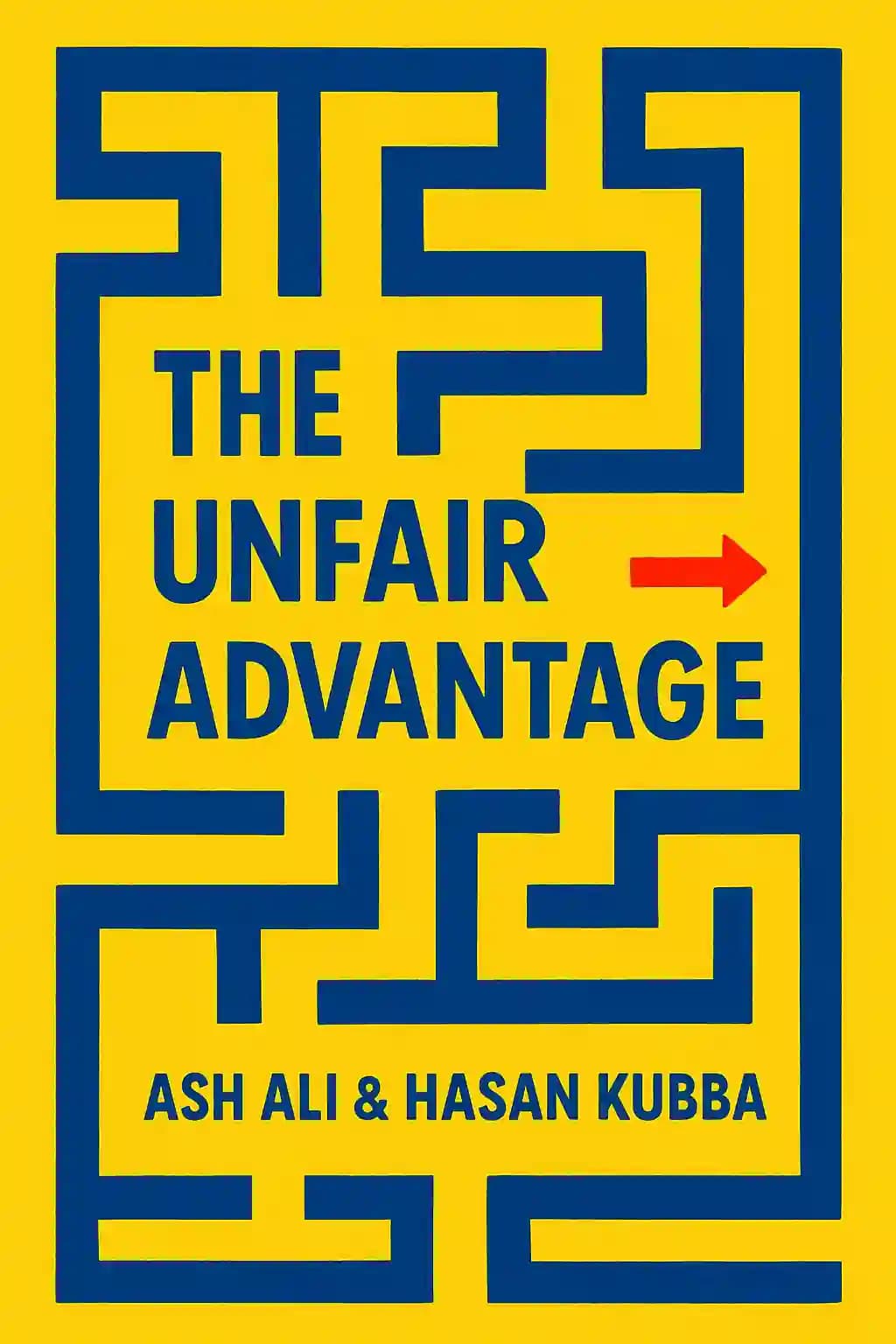
The Unfair Advantage: Leveraging What Makes You Unique
In a world where the startup failure rate hovers around 90%, what truly separates the winners from the losers? Is it simply about working harder than everyone else? The answer might surprise you. "The Unfair Advantage" has become a global phenomenon since its publication just before the pandemic, helping entrepreneurs launch startups, raise millions, and create profitable side hustles. It won Business Book of the Year and has been embraced by underdogs and privileged executives alike. The book's revolutionary concept-that life is inherently unfair, hard work alone isn't enough, and everyone has unique unfair advantages they must leverage-resonates deeply with readers worldwide. Even billionaire Snapchat founder Evan Spiegel acknowledges, "I got really, really lucky. And life isn't fair." This candid admission from one of the world's youngest self-made billionaires reveals the book's core truth: success isn't just about working harder-it's about working smarter by understanding and leveraging your unique advantages.
Chapitre 2
The Myth of Pure Meritocracy: Why Hard Work Isn't Enough
Silicon Valley portrays itself as the ultimate meritocracy-a place where anyone can become a billionaire entrepreneur through sheer hustle and determination. This narrative is, to put it bluntly, complete nonsense. After two decades in the startup world, we've seen distinct patterns of success and failure that reveal a more nuanced truth: while society has become more meritocratic, significant barriers and uneven playing fields remain.
Success isn't awarded solely to the hardest workers but to those who effectively develop and leverage their unfair advantages-competitive edges unique to them that often weren't "earned" through work alone. These advantages might include privileged upbringings, elite education, powerful connections, or simply being in the right place at the right time.
Consider Evan Spiegel's journey to becoming Snapchat's billionaire founder. He grew up in a multimillion-dollar Los Angeles home with powerful lawyer parents, attended elite private schools with $250/hour tutors, and leveraged family connections to enter Stanford and meet influential tech leaders. While his execution was brilliant, his candid acknowledgment that "It's not about working harder. It's about working the system" reveals the book's central insight.
Even LinkedIn co-founder Reid Hoffman, when asked whether his success came from hard work or privilege, answered simply: "MASSIVELY BOTH." This balanced perspective acknowledges that while effort matters tremendously, other factors beyond our control play crucial roles in determining outcomes.
The oversimplified "hard work = success" narrative pushed by motivational speakers creates dangerous mental health consequences as people compare themselves to business celebrities and feel like failures. We need a more balanced mindset-believing hard work matters while acknowledging luck's role. This prevents both worshipping statistical outliers like Warren Buffett and Oprah Winfrey and viewing unsuccessful people as "losers."
As Nassim Taleb wisely notes, "mild success can be explainable by skills and labor. Wild success is attributable to variance." The Serenity Prayer captures this perfectly-accept what you can't change while having courage to change what you can.
Chapitre 3
The MILES Framework: Mapping Your Personal Advantages
Knowing yourself is critical for success, yet entrepreneurs rarely conduct the comprehensive self-audit needed to identify their unique advantages. The MILES Framework helps you discover your unfair advantages across five key categories that determine success. Unlike typical business books that focus solely on strengths, this framework examines both your internal abilities and external circumstances.
The MILES Framework identifies five categories of unfair advantages:
• Money (capital you have or can raise)
• Intelligence and Insight (book smarts plus social and emotional intelligence)
• Location and Luck (being in the right place at the right time)
• Education and Expertise (formal schooling and self-learning)
• Status (your network, connections, and personal brand)
All these advantages rest on the foundation of Mindset, which provides the greatest leverage for change. You don't need all these advantages to succeed-the best strategy is partnering with people whose unfair advantages complement yours.
WhatsApp founder Jan Koum exemplifies how unfair advantages work together. Despite not starting wealthy, he leveraged his programming expertise and privacy-focused ideals from growing up in Ukraine to build a $10 billion success. His technical skills combined with his unique perspective on privacy created an advantage no competitor could easily replicate.
Before exploring each component, establish the right mindset foundation by understanding your deeper motivations-your fundamental "why" that drives your entrepreneurial journey. Your definition of success must come from within rather than chasing external validation, particularly important given the unequal distribution of unfair advantages.
Chapitre 4
Mindset: The Foundation of All Advantages
Mindset is where you can have the most immediate impact. You can transform your perspective instantly by viewing circumstances through a different lens. Simple practices like gratitude can make you happier and more focused without changing external circumstances.
While some self-help books claim you can achieve anything through belief alone, the Unfair Advantage approach balances optimism with reality-"mind over matter, but matter still matters." Understanding success factors, including arbitrary and unearned ones, isn't self-defeating but empowering.
Dr. Carol Dweck identifies two mindset types: fixed (believing abilities are innate and unchangeable) and growth (believing skills can be developed). While growth mindset is superior, it has limitations-saying "I'm not a trillionaire...yet!" ignores real-world constraints. The authors propose a third way: the Reality-Growth Mindset, which acknowledges limitations while recognizing they're more malleable than commonly believed.
Four characteristics define a strong Reality-Growth Mindset:
1. Vision - The ability to clearly imagine and set goals. Oprah Winfrey described having vision at just four years old, knowing her life would be different from her grandmother's. When Ash joined Just Eat, the management team constantly expanded their vision from a 50 million company to 100 million, then 150 million-though even they didn't foresee the eventual IPO's massive valuation.
2. Resourcefulness - As Reid Hoffman perfectly captures: "An entrepreneur is someone who will jump off a cliff and assemble an airplane on the way down." When pioneering new territory, you'll inevitably break things, revealing new perspectives on your business.
3. Constant growth and lifelong learning - Unlike previous generations where a degree might serve for life, today's accelerating technology curve constantly upends entire industries. The future belongs to those committed to continuous learning.
4. Grit and perseverance - Every successful startup requires continuing despite constant rejection and obstacles. Only dogged persistence combined with healthy optimism will carry you through the entrepreneurial journey.
Chapitre 5
Money: The Ultimate Safety Net
Money represents wealth-not just cash but all assets you can convert to money. Having sufficient funds extends your startup's "runway time"-the period before you run out of money-which is critical when businesses can take months or years to become profitable.
In startup terminology, "runway time" represents how long before your money runs out, while "burn rate" is how much you lose monthly. With $5,000 and a $1,000 monthly burn rate, you have five months of runway. More money means longer runway, crucial since startups often take significant time to become profitable-especially hyper-growth companies like Uber that prioritize expansion over immediate profits.
Money provides a critical safety net against failure. As Jay-Z raps, "Even if I fell I'd land on a bunch of money"-wealth cushions against failure. Privileged entrepreneurs can take risks knowing they'll never face homelessness or hunger, explaining why wealthy children commonly become founders. Without this financial cushioning, mastering failure becomes even more crucial.
To determine if money is your unfair advantage, assess whether you have 6-18 months of runway capital, access to investment from friends and family, or the ability to save that amount at your current job. If you lack this advantage, focus on building a business with low startup costs that can become profitable quickly.
Strategies to improve your financial position include minimizing living expenses, learning marketing and sales skills that remain perpetually monetizable, considering raising funding if you have the right team and pitch skills, learning to code (valuable both for creating your own product and for freelance work), and freelancing in in-demand skills while building your startup as a side hustle.
Interestingly, money's relationship to success is complex. Having too little creates obvious challenges, but having too much can breed complacency and less hunger to succeed. Financial constraints often breed creativity and resourcefulness, while excess money can lead to wasteful behavior like throwing cash at problems rather than finding innovative solutions. As they say, "Necessity is the mother of invention."
Chapitre 6
Intelligence and Insight: Your Cognitive Edge
Intelligence manifests in multiple dimensions beyond traditional IQ measurements. While IQ correlates with conventional success metrics across populations, it doesn't predict individual outcomes and fails to measure crucial entrepreneurial qualities like emotional intelligence, social skills, and creativity.
Intelligence can be categorized into several types:
1. IQ (Intelligence Quotient) - While IQ correlates with conventional success metrics across populations, it has limited value for individuals. The measurement itself is controversial-it doesn't account for emotional intelligence, social skills, creativity, or self-awareness. Real entrepreneurial leverage comes from qualities IQ doesn't measure: relationships, adding value to others, and teamwork.
2. Book smarts - Theoretical understanding through formal education or self-directed learning. The Collison brothers exemplify this advantage-Patrick created a programming language at 16 and attended MIT, while John achieved the highest-ever score on Ireland's Leaving Certificate before Harvard. Both became millionaires as teenagers with their first startup before founding Stripe.
3. Street smarts and people skills - Practical intelligence developed through real-world experience rather than formal education. This encompasses social and emotional intelligence, common sense, and "bullshit detection" (reading intentions and understanding incentives). Many startups fail because founders lack emotional intelligence to navigate relationships. Nikola Tesla exemplifies this danger-despite extraordinary technical genius, he died nearly penniless partly due to business naivety.
4. Creative intelligence - The ability to connect ideas from different domains to create unique solutions. Steve Jobs demonstrated this by taking a calligraphy class that later influenced Apple's revolutionary font design. As automation increases, creativity becomes even more valuable since AI can't match human creative thinking.
Beyond intelligence lies insight-seeing beneath the surface to understand elements others miss. While intelligence helps advance your startup, insight is crucial for finding market gaps and inefficiencies. The key is spending more time understanding problems than developing solutions.
Will Shu's Deliveroo journey exemplifies the power of insight. After noticing London's food delivery services were inferior to New York's, he personally worked as a delivery rider for eight hours daily, seven days a week, for nine months. This "undercover boss" approach gave him firsthand understanding of logistics challenges from all perspectives: riders, restaurants, and customers. His former banking colleagues were shocked to see him delivering food, but this commitment provided invaluable end-to-end insights that transformed his business.
Chapitre 7
Location and Luck: Being in the Right Place at the Right Time
Serendipity plays a crucial role in success. Location and luck mean being in the right place at the right time, with location significantly increasing your chances of good fortune. For businesses, location can determine survival regardless of quality-a boutique in a remote area will struggle compared to one in a shopping district.
This explains why businesses cluster together despite increased competition and costs. Examples of powerful clustering include Hollywood (film), Wall Street (finance), Silicon Valley (tech), and Harley Street (medicine)-places that became metonyms for entire industries.
Silicon Valley emerged as the world's premier startup hub through a perfect convergence of advantages. Its origins trace to the 1930s when San Francisco's naval presence attracted tech companies serving military needs. The presence of world-class research universities like Stanford provided a skilled talent pool, while Stanford professor Frederick Terman deliberately fostered local tech growth by leasing university land to startups, including Hewlett-Packard.
The ecosystem accelerated in the 1970s when venture capital firms established themselves on Sand Hill Road, with funding availability exploding after Apple's $1.3 billion IPO in 1980. By 2017, this small geographic area received nearly 45% of all US venture capital investment.
Beyond physical location, timing is crucial for startups. Bill Gross, founder of startup incubator Idealab, found that timing was the most important factor in startup success, accounting for 42% of the difference between success and failure. Team and execution ranked second, while the uniqueness of the idea came last.
For founders, timing means recognizing and riding big waves of societal and technological shifts rather than chasing short-term trends. Examples include Snapchat's founders recognizing Generation Z's shift toward visual communication coinciding with better smartphone cameras, and Just Eat launching as people preferred ordering food via apps rather than phone calls.
With timing, you can be too early (like VR startups after Facebook acquired Oculus), too late (entering an already saturated market), or just right (targeting small but growing markets, like Google, Amazon and Facebook did).
While we can't control all aspects of luck, research by psychologist Dr. Richard Wiseman shows you can create your own luck through mindset. His four principles include:
1. Maximize chance opportunities - Be observant, proactive, and willing to initiate conversations.
2. Trust your intuition and gut feeling - Over 90 percent of self-described "lucky" people trust their gut in personal relationships.
3. Expect to be lucky - Self-fulfilling prophecies are real-you're more likely to notice opportunities if you expect to find them.
4. Turn bad luck into good luck - You can't control obstacles, but you can control how you respond to them.
The authors add a crucial fifth principle: take more action. Meet more people, attend more events, blog about your startup, publish your work, and get feedback. Like rolling dice until you get a double six, nobody counts your attempts in life-only your successes.
Chapitre 8
Education and Expertise: Knowledge as Power
Education continues throughout life, not just in formal settings. While many successful entrepreneurs attended elite universities, others found success through self-directed learning and practical experience. Education provides three key advantages:
1. Knowledge - From basic literacy to specialized expertise
2. Network - Access to smart, driven peers and potential co-founders
3. Signaling - Credentialing that demonstrates your capabilities
Elite universities consistently produce unicorn startups, with Stanford, Harvard, Berkeley and MIT leading the pack-offering both powerful branding and invaluable connections.
An impressive number of top entrepreneurs attended private schools, including Richard Branson, Bill Gates, Mark Zuckerberg, Elon Musk, and Jack Dorsey. Elite universities remain disproportionately filled with private school graduates despite government efforts to increase social mobility.
Specialized technical knowledge creates powerful unfair advantages. Google emerged from Larry Page and Sergey Brin's Stanford PhD dissertation on mapping internet structure, applying academic citation models to search results. Their technical expertise and mathematical knowledge enabled them to solve problems existing search engines couldn't.
Expertise develops primarily through application-learning by doing. While theory provides a foundation, real expertise comes from applying knowledge and getting real-world feedback. Side projects offer ideal learning environments by eliminating bureaucratic barriers and providing direct feedback. For young professionals, prioritizing learning opportunities over salary maximizes long-term growth.
It's never too late to further your education, whether through formal postgraduate degrees, online courses, or evening classes. Your decision depends on your other unfair advantages-if you can afford university and don't have a clear career path, it might be worth it for the connections, status boost, and learning.
You can build expertise through online learning (even YouTube videos), books, mentors who are 2-5 years ahead of you, and most importantly, by doing it yourself. Practice, offer skills for free initially, and teach others to solidify your knowledge. Focus on areas that are both in demand and interesting to you, and find co-founders with complementary expertise.
Chapitre 9
Status: Your Personal Brand and Social Capital
Status represents your personal brand and social standing-how others perceive your ability to add value. It encompasses your appearance, age, gender, credibility, and how you present yourself. High-status people command attention and influence, with others wanting to associate with them. Status includes both outer perception and inner confidence, and is often a key motivation for entrepreneurs seeking significance.
Outer status reflects societal hierarchies-doctors above nurses, CEOs above interns, luxury car owners above those with old vehicles. It's about perceived power and ability to influence, often signaled through prestigious associations. That's why startup founders frequently mention connections to high-status companies ("Ex-Googler") or universities ("Stanford dropout").
Status is deeply tied to bias and prejudice. If you look like a "middle-class white nerdy hacker guy" from Harvard, you're more likely to get investment, find co-founders, and attract strong teams due to pattern recognition. However, being an "outsider" provides powerful insights missed by typical founders.
Tristan Walker and Sara Blakely leveraged their "outsider" perspectives to identify unmet needs. Blakely's journey from failed lawyer to billionaire shapewear founder demonstrates how she transformed rejection resilience from door-to-door sales into entrepreneurial success. Her "aha moment" cutting off tights feet led to Spanx, an insight a man would never have had.
Different environments value different status signals-formal attire impresses banks but looks try-hard in Silicon Valley, while youth decreases credibility at banks but increases it in tech. Cultural capital manifests through dress, speech, and behavior that signal subculture membership.
Inner Status powerfully influences Outer Status through self-esteem and confidence. When you genuinely like yourself, others unconsciously detect it through your body language and behavior. You don't need perfection to succeed-just clear goals, values, and baby steps toward improvement.
Impostor syndrome-feeling like a fraud despite achievements-affects up to 70% of people, especially entrepreneurs. Those common thoughts of "I'm out of my depth" or "I'm going to be found out" are entirely normal. The disconnect comes from comparing your internal struggles to others' polished exteriors, not realizing everyone experiences self-doubt.
When leveraging status as an unfair advantage, be strategic. Highlight impressive credentials when necessary, but avoid constant bragging which actually lowers status. For those lacking traditional status markers, recognize potential prejudices, learn cultural codes of environments you wish to enter, and remember your total value comes from multiple factors. Most importantly, prioritize developing inner status (confidence and self-esteem) before focusing on networking or expertise.
Chapitre 10
Finding Your Path: From Idea to Execution
The social media era glamorizes entrepreneurship while hiding the tremendous difficulties involved. Unlike employment's predictable structure, the startup path involves risk, income instability, stress, and immense effort. Before choosing this arduous path, define success internally rather than chasing external symbols, and make your criteria process-based rather than outcome-based, since you can control your actions but not all outcomes.
Two broad startup categories exist, each with distinct characteristics:
1. Lifestyle startups - These sustain a specific income or work schedule with growth constraints by design or market limitations. They typically don't require external investors, turn profits rather than burn money, and serve local or niche markets. Examples include professional service businesses, niche online retailers, or personal brands with product lines. They "bleed black, not red," focusing on profitability rather than growth at all costs.
2. Hyper-growth startups - These focus heavily on technology in their products or distribution methods. Their scalability comes from digital products and intellectual property that can be mass-produced at minimal cost after initial creation. These companies typically require massive funding and operate at a loss while prioritizing market share acquisition as quickly as possible-what Reid Hoffman calls "Blitzscaling."
The most crucial factor for hyper-growth startups is achieving product-market fit-creating something customers genuinely want. Success typically requires bootstrapping with your own Money, building Status through Expertise, leveraging connections, and ideally relocating to a tech hub.
People often mistakenly believe startups succeed based on groundbreaking ideas, but execution is the true differentiator. Most successful startups aren't completely unique-they're either variations of existing concepts or implementations in new markets. Great startup ideas come from having both insight into a problem and a compelling solution.
When brainstorming startup ideas, begin by visualizing a specific person whose problem you want to solve-often problems people don't realize they have because they've accepted them as unchangeable facts of life. "Scratching your own itch" gives founders a head start in Insight-solving a problem you personally experience means you are the target market.
Building a successful startup is exponentially more difficult as a solo founder. When seeking co-founders, use the MILES Framework to identify your weaknesses and find partners with complementary unfair advantages. Successful partnerships follow this pattern: Koum (technical/visionary) paired with Acton (communicator/fundraiser) at WhatsApp; Zuckerberg (technical/visionary) with Saverin and later Sandberg (commercial/communicator) at Facebook.
Whether building a Lifestyle or Hyper-Growth startup, start small by testing your idea before seeking significant funding. Build a minimum viable product-a simplified version with only core features that solves the fundamental problem you've identified. As LinkedIn founder Reid Hoffman says, "If you're not embarrassed by the first version of your product, you've launched too late."
For startups requiring external funding, create an investable business rather than getting lost in fundraising terminology. When pitching to investors, communication must be crystal clear, concise, and jargon-free. Your pitch needs to answer ten key questions: what your startup does, the problem you're solving, market size, current traction, revenue model, team qualifications, competitors, your unfair advantage, funding amount needed, and how you'll spend the money.
Chapitre 11
Embracing Your Unique Advantage
Life isn't fair-opportunity is distributed unequally through luck and randomness, explaining statistical outliers of incredible success. Yet we must embrace both luck and hard work mindsets as complementary tools. The luck mindset fosters gratitude and compassion, while the hard work mindset empowers us to change our lives through effort and vision.
The MILES Framework helps us audit our unfair advantages: Mindset, Money, Intelligence and Insight, Location and Luck, Education and Expertise, and Status. These factors can be double-edged swords-apparent weaknesses transformed into strengths with the right mindset and startup choices.
Canva founder Melanie Perkins exemplifies how unfair advantages can stack together. At 19, she identified a crucial insight while teaching design programs: students struggled with complex software interfaces. Despite lacking status due to youth, she compensated through persistence and determination to build expertise. After revising their pitch deck over 100 times and securing funding, they launched Canva in 2014, which grew into a billion-dollar unicorn. Her key unfair advantage was her insight-identifying design software problems early through teaching experience.
Success comes from identifying your "whys," choosing the right type of startup based on your advantages, and creating sustainable value. When you identify and act upon your unfair advantages, your startup finds traction and an average life becomes extraordinary.
Remember that unfair advantages aren't static-they develop and change throughout your startup journey, requiring continuous reassessment. The journey isn't about becoming perfect but about leveraging what makes you uniquely qualified to solve specific problems. In doing so, you transform what might initially seem like disadvantages into the very things that set you apart and ultimately drive your success.