Chapitre 1
When Rationality Meets Reality: The Economics of Human Behavior
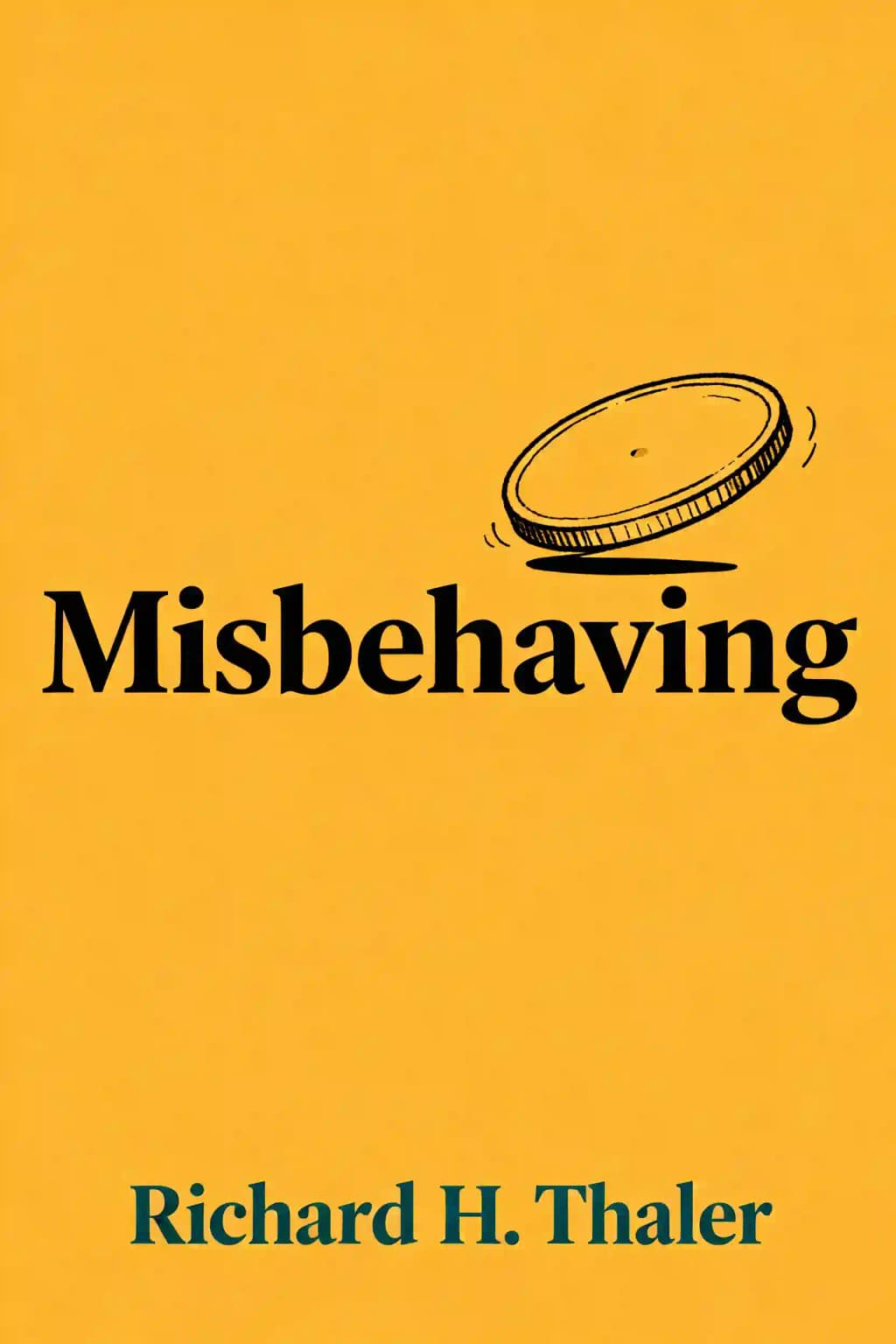
Have you ever wondered why people make seemingly irrational decisions with their money? Why we'll drive across town to save $10 on a $20 item but not on a $1,000 purchase? Why we treat "found money" differently than earned income? These questions fascinated economist Richard Thaler for decades, eventually leading him to pioneer the field of behavioral economics-a revolution that would earn him the 2017 Nobel Prize. "Misbehaving" isn't just Thaler's professional memoir; it's the story of how economics rediscovered humanity. The book has become required reading in MBA programs worldwide and influenced government policy in dozens of countries. Even former President Obama incorporated its insights into his administration's approach to regulation. Through Thaler's accessible storytelling and self-deprecating humor, we discover how supposedly irrelevant factors actually drive our economic decisions-and how understanding these patterns can help us make better choices.
Chapitre 2
The Rational Economic Fiction
Traditional economics has built its foundation on a fictional character: Homo economicus, or what Thaler calls "Econs"-perfectly rational beings who optimize every decision, maintain consistent preferences, and process information without bias. This theoretical construct allowed economists to build elegant mathematical models, but it created a fundamental problem: real humans don't behave like Econs.
Early in his teaching career, Thaler noticed this disconnect when his microeconomics students became upset about a difficult exam where the average score was 72 out of 100. Despite explaining that the numerical scores wouldn't affect the grade distribution, students remained unhappy. His solution? Keep the difficulty the same but change the total points to 137 instead of 100. On the next exam, students got only 70% correct (actually worse than before), but the average numerical score was 96 points-and students were delighted!
This "misbehavior" illustrated how real people deviate from economic theory's idealized model. For four decades, Thaler studied these departures from rational behavior. The problem isn't with people being irrational; we're simply human. The problem is with economic models that replace homo sapiens with fictional Econs, leading to bad predictions with serious consequences.
Economics gained power through its unified core theory built on optimization and equilibrium. But these premises are fundamentally flawed: people can't solve complex optimization problems, their beliefs aren't unbiased, and supposedly irrelevant factors (SIFs) actually matter greatly. Econs wouldn't care about sunk costs, gift-giving traditions, or shopping while hungry-but Humans do.
When Thaler pointed out these inconsistencies, traditional economists dismissed his observations with three standard arguments: 1) The stakes aren't high enough in experiments (people would behave rationally with real money); 2) People learn from experience over time; and 3) Markets eliminate irrational behavior. These defenses became what Thaler calls "the invisible handwave"-vague assertions that markets somehow discipline irrationality without explaining how.
Ironically, when economists Grether and Plott tested the "incentives matter" theory using real money, they found that raising the stakes actually increased irrational behavior. And while learning from experience works for frequently repeated decisions with immediate feedback, many important life decisions-like buying homes, choosing careers, or saving for retirement-happen too infrequently for effective learning. This means we're more likely to make rational decisions for small stakes than large ones!
Chapitre 3
Mental Accounting: How We Think About Money
One of Thaler's most influential contributions is the concept of "mental accounting"-the system of cognitive operations people use to organize, evaluate, and track financial activities. Unlike standard economic theory, which treats all money as fungible (a dollar is a dollar regardless of source or intended use), humans mentally separate money into different accounts with different purposes and values.
This explains why people pay different prices for identical consumption experiences based on context. In one experiment, Thaler asked people how much they'd pay for a beer delivered from either a fancy resort hotel or a small grocery store. Though the consumption experience was identical (drinking the same beer on the same beach), participants were willing to pay significantly more when the beer came from the upscale hotel.
Thaler's framework involves two types of utility: acquisition utility (the value of what you get minus what you give up-standard consumer surplus) and transaction utility (the perceived quality of the deal compared to a reference price). Econs only experience acquisition utility, but Humans are strongly influenced by transaction utility.
This explains why people chase "deals" even when they don't need the item, why retailers manipulate reference prices through "suggested retail prices" and perpetual sales, and why attempts by stores like JC Penney to implement "everyday low pricing" typically fail-consumers become addicted to the thrill of getting deals.
Mental accounting also explains why people struggle to ignore sunk costs-money that's already spent and can't be recovered. Economic theory advises ignoring sunk costs, but this is advice Humans find extremely difficult to follow. We play tennis despite painful injuries because we've paid for a membership, force children to wear clothes they hate because "I bought those dresses, and you are going to wear them!" and sit through terrible movies because we've already paid for tickets.
The sunk cost fallacy persists because mentally accounting for unused purchases feels like taking a loss. Going to an event you've already paid for allows you to "settle the account" without recognizing a loss. Similarly, the more expensive an item, the longer people will endure discomfort (like painful shoes) or keep useless items in their closets.
This mental accounting trick benefits industries like fine wine and vacation time-shares, where initial payments are viewed as investments and future consumption feels "free." Retailers like Costco and Amazon similarly leverage this psychology with membership fees that customers view as investments rather than costs allocated across purchases.
Chapitre 4
The Planner and the Doer: Our Internal Struggle for Control
Why do we remove tempting cashews from the table before dinner? Why do smokers buy cigarettes one pack at a time instead of by carton? Why do dieters not stock ice cream? These examples reveal self-control problems-a distinction between what we want and what we choose that has no meaning in modern economics, where preferences are defined by choices.
To create an economic framework for these insights, Thaler developed a two-self model with mathematician Hersh Shefrin. Their model proposed a forward-looking "planner" who cares about the future, and a present-focused "doer" who responds to immediate temptations. The planner can influence doers through rewards/penalties that preserve discretion, or through rigid rules that limit options entirely.
To illustrate this model, imagine Harry stranded in a remote cabin with only ten energy bars for ten days. The planner wants to distribute them evenly-one bar per day. Without intervention, the present-focused doer would consume three bars immediately, leaving nothing for later days.
The planner has two options: commitment devices (like programmable safes that release one bar daily) or internal control through guilt. Guilt makes consumption less pleasurable, effectively reducing utility with each bite. This explains why willpower requires effort-it diminishes enjoyment.
Perfect rules (commitment devices) produce better outcomes than guilt-based control, but aren't always available or may be too inflexible. Mental accounting-using envelopes, jars, and savings plans-represents another control technique humans employ, deliberately treating money as non-fungible to manage self-control problems.
While the planner-doer model was meant as a metaphor rather than literal brain regions, it aligns with System 2 (planner) and System 1 (doer) thinking described by Kahneman. Most people fall between "sophisticated" (aware of self-control problems) and "naive" (unaware)-we recognize our problems but underestimate their severity, particularly suffering from "hot-cold empathy gaps" when predicting future temptation resistance.
This model explains why commitment devices like Save More Tomorrow (which automatically increases retirement contributions with each pay raise) work so effectively. By committing to future increases, we avoid triggering loss aversion while leveraging our better self-control regarding future decisions.
Chapitre 5
The Fairness Factor: When Markets Meet Morality
Traditional economics assumes people act purely in self-interest, but Thaler discovered that fairness considerations powerfully influence economic behavior. Working with psychologists Daniel Kahneman and Jack Knetsch, he conducted telephone surveys asking Canadians to rate the fairness of various business practices.
When asked whether a hardware store raising snow shovel prices from $15 to $20 after a snowstorm was fair, 82% of ordinary Canadians deemed it "unfair," while only 18% found it "acceptable." Ironically, this price increase is exactly what economic theory prescribes-prices should rise to ensure limited supplies go to those who value them most.
Their research revealed that fairness perceptions depend heavily on framing. For example, people strongly object to auctioning scarce goods like Cabbage Patch dolls (74% found it unfair), unless the proceeds go to charity (79% acceptable). However, even charity doesn't justify auctioning medicine during an epidemic-health care occupies a different moral category than luxury goods.
They also discovered that removing a discount is perceived as much less objectionable than adding a surcharge, though both achieve the same price increase. This suggests businesses should establish their highest intended price as the "regular" price and offer "discounts" rather than adding fees later.
Perceptions of fairness are closely related to the endowment effect-both buyers and sellers feel entitled to established terms of trade and treat any deterioration as a loss. The status quo becomes a powerful reference point, especially when sellers start charging for something traditionally included for free.
This research helped explain a long-standing economic puzzle: why wages don't fall enough during recessions to keep everyone employed. Economic theory suggests that when demand for labor falls, wages should decrease accordingly, allowing firms to lower prices while maintaining profitability. Instead, wages remain "sticky" and companies lay off workers.
The researchers found that cutting nominal wages makes workers so angry that firms prefer layoffs over pay reductions. However, inflation provides a clever workaround. When they asked about a company decreasing wages by 7% during a recession with no inflation, 62% called it unfair. But when they described a company increasing salaries by only 5% during a recession with 12% inflation (effectively the same real wage reduction), 78% found it acceptable.
Smart businesses understand these fairness principles. Nick Kokonas, co-owner of elite Chicago restaurants Alinea and Next, uses variable ticket pricing that varies only modestly (25%) between peak and off-peak times. When economists suggested auctioning reservations to maximize profits, Kokonas rejected this advice, explaining: "It is incredibly important for any business not to charge more than the good or service is worth-even if the customer is willing to pay more."
Chapitre 6
The Endowment Effect: Why We Overvalue What We Own
One of Thaler's most compelling discoveries is the endowment effect-people value what they already own more highly than identical things they could acquire. Richard Rosett, Thaler's department chair, exemplified this with his wine collection-refusing to buy $100 bottles while drinking ones from his cellar he could sell for that price.
To prove this effect scientifically, Thaler, Kahneman, and Knetsch designed an elegant experiment at Cornell. They first established a baseline by having students trade tokens with assigned monetary values. As economic theory predicts, these tokens efficiently changed hands until they reached the students who valued them most.
Then they repeated the experiment with Cornell coffee mugs instead of tokens. Theory predicts the same outcome-half the items changing hands-but if an endowment effect exists, people randomly given mugs would value them more highly than those without, reducing trading volume.
The endowment effect was immediately apparent-those who received mugs wanted median prices of $5.25 to sell, while buyers would only pay $2.25-$2.75. Instead of the predicted 11 trades, they saw only 1-4 transactions across multiple rounds. The same pattern emerged with pens, consistently showing sellers demanding roughly twice what buyers would pay-confirming that losses are about twice as painful as gains are pleasurable.
The endowment effect demonstrates how quickly people become attached to what they have-what Kahneman called the "instant endowment effect." Beyond loss aversion, there's also inertia or "status quo bias"-people stick with what they have unless forced to change. These forces work together to inhibit change, affecting everything from job transitions to public policy.
This effect directly challenges the famous Coase theorem in economics, which states that in the absence of transaction costs, resources flow to their highest-valued use regardless of initial rights allocation. The endowment effect creates a wedge between buying and selling prices that prevents efficient trades, even with minimal transaction costs.
When Thaler presented this evidence at the University of Chicago Law School, economist John Lott aggressively challenged him, suggesting they simply relabel the endowment effect as a "transaction cost"-a desperate attempt to save the theory by making it unfalsifiable. But this misses the point: the endowment effect is a psychological reality that economic theory needs to incorporate, not dismiss.
Chapitre 7
Challenging Financial Markets: The Ultimate Battleground
Financial markets represented the ultimate testing ground for behavioral economics. The consensus among economists was that evidence of misbehavior would be least likely found in these markets, where high stakes and professional traders should theoretically eliminate irrational behavior.
Traditional finance theory rests on two pillars: the "prices are right" assumption (market prices accurately reflect fundamental values) and the "no free lunch" principle (you can't consistently beat the market). Behavioral economists challenged both components, starting with Robert Shiller's groundbreaking 1981 paper demonstrating that stock prices were far too volatile to be rational forecasts of future dividends.
By comparing actual stock prices to the "ex post rational" present value of dividends from 1871 onward, Shiller showed that prices fluctuated wildly while dividend values remained relatively stable-like a drunk weatherman forecasting Singapore's consistently stable temperatures. The October 1987 market crash, when prices fell over 20% without any significant news, effectively settled the debate in Shiller's favor. In a rational world, prices only change in reaction to news, but during that volatile week, the only news was that prices were moving erratically.
Thaler and his student Werner De Bondt provided further evidence against market efficiency by documenting the "overreaction effect." They showed that stocks with the worst performance over 3-5 years (Losers) subsequently outperformed previous Winners by 40 percentage points. This contradicted the efficient market hypothesis, which predicts past performance shouldn't help forecast future returns.
The most compelling evidence came from cases where identical assets traded at different prices-a direct violation of the "law of one price." The Palm/3Com case represents one of the most egregious examples. When 3Com announced plans to spin off Palm in 2000, each 3Com share included 1.5 shares of Palm. Yet when Palm began trading at $95 per share, 3Com should have been worth at least $143 (1.5 x $95), plus something for the remaining profitable business. Instead, 3Com traded at just $82, implying the market valued the remaining business at negative $23 billion!
This violated the fundamental principle that stock prices can never be negative. The mispricing persisted for months because there weren't enough Palm shares available to borrow for short-selling, preventing arbitrageurs from correcting the price discrepancy.
While efficient market defenders dismissed these examples as minor anomalies, Thaler argued they represent the tip of an iceberg of market mispricing. If markets can't get something as simple as Palm/3Com right, it suggests larger disparities can occur at the overall market level, as with technology stocks in the late 1990s and housing prices in the mid-2000s.
Chapitre 8
Nudging for Good: Applying Behavioral Economics
By the mid-1990s, behavioral economists had established two primary goals: empirically documenting anomalies in individual, firm, and market behaviors, and developing formal mathematical theories that incorporated psychological findings. However, a third goal was emerging: using behavioral economics to improve the world.
Retirement savings became a natural starting point for practical applications. Traditional economic theory offered little help in this domain, assuming people already save optimally and offering only one policy tool-the after-tax return on savings-with ambiguous effects. Behavioral economics, by contrast, recognized that "supposedly irrelevant factors" could significantly impact saving behaviors.
Thaler collaborated with Shlomo Benartzi to design the "Save More Tomorrow" program addressing three key behavioral obstacles to retirement saving: inertia (people procrastinate making changes), loss aversion (people hate seeing paychecks decrease), and present bias (people have more self-control regarding future decisions). Their program invited employees to commit in advance to increasing their savings rates with future pay raises, keeping them enrolled until they opted out.
The first real-world implementation came through consultant Brian Tarbox. When employees rejected his suggestion to increase savings by five percentage points, Tarbox offered them the option to increase savings by three percentage points with each raise for four years. Remarkably, 78% accepted this plan, and after four raises, these employees had nearly quadrupled their savings rate from 3.5% to 13.6%.
Both automatic enrollment and Save More Tomorrow have spread widely. By 2011, 56% of large employers used automatic enrollment and 51% offered automatic escalation or Save More Tomorrow. Research published in Science estimated that by 2013, 4.1 million Americans were using automatic escalation plans, collectively saving an additional $7.6 billion annually.
This approach led Thaler and legal scholar Cass Sunstein to develop the concept of "libertarian paternalism"-the idea that organizations can design choice environments ("choice architecture") that nudge people toward better decisions while preserving freedom of choice. Their book "Nudge" caught the attention of political leaders, particularly in the UK where David Cameron's government established the Behavioural Insights Team (BIT) in 2010-popularly known as the "nudge unit."
The BIT's first success came through improving tax collection letters. Building on Robert Cialdini's influence research, they ran increasingly sophisticated experiments with nearly 120,000 taxpayers. The most effective message combined two ideas: most people pay their taxes on time, and you're in the minority that hasn't. This simple intervention increased timely payments by five percentage points, accelerating 9 million in tax revenues.
Two key principles guided their work: First, "If you want to encourage someone to do something, make it easy"-removing barriers to behavior change. Second, "We can't do evidence-based policy without evidence"-emphasizing the importance of randomized control trials (RCTs) to test interventions.
Chapitre 9
The Future of Economics: Embracing Human Nature
After forty years since beginning his List of economic anomalies, Thaler has seen behavioral economics transform from a fringe operation to mainstream economics. No longer considered misbehaving, writing papers where people act like Humans is now accepted by most economists under fifty. Yet developing an enriched economics with Humans at the center remains incomplete.
Behavioral economics has had its greatest impact in finance-surprising since financial markets were once considered the most efficient and least susceptible to misbehaving. This success stems from two factors: tightly specified theories like the law of one price, and fantastic data for testing them. Finance has evolved toward "evidence-based economics," where theories derive from empirical observation rather than rational choice axioms that don't reflect real human behavior.
Macroeconomics desperately needs behaviorally realistic approaches yet has been the field least impacted by behavioral economics. Unlike finance, macro lacks easily falsifiable predictions and sufficient data, preventing "smoking gun" evidence. Without randomized trials for recession-fighting policies, debates between Keynesians and their opponents may never resolve. Yet behavioral perspectives could still enhance policy design, such as determining whether tax cuts should be lump sums or spread out (the latter being better for stimulating spending).
Nearly every field of economics would benefit from greater attention to Human behavior. Development economics has embraced behavioral approaches through randomized control trials in poor countries. We need more evidence-based economics, both theoretical and empirical. Unlike expected utility theory derived from rationality axioms, prospect theory began with observing actual behavior and built a parsimonious explanation.
Three key lessons emerge from behavioral economics: First, observe the world as it is-see the Humans all around us making mistakes and using mental accounts. Second, collect data systematically to overcome overconfidence and confirmation bias; organizations must learn how to learn and run proper experiments. Third, speak up when things go wrong-aviation disasters and mountain climbing tragedies show how organizational environments that discourage questioning authority can be fatal.
Despite criticisms of economists, the future of economics looks bright. Encouragingly, some of the best recent behavioral economics papers come from researchers who don't identify as "behavioral" but simply conduct solid empirical work wherever it leads. When all economists become equally open-minded about incorporating "supposedly irrelevant factors" into their work, behavioral economics will disappear as a separate field. All economics will simply be as behavioral as needed, and those clinging to a world of pure Econs will finally surrender to the messy, fascinating reality of human economic behavior.
Chapitre 10
From Theory to Practice: Real-World Applications
Behavioral economics has moved beyond academic debates to reshape how businesses operate and governments design policies. The field's practical applications now touch virtually every domain of economic life, from consumer marketing to public health.
In the corporate world, companies increasingly employ behavioral insights to improve employee performance and customer engagement. Google famously redesigned its cafeteria, placing healthy foods at eye level and desserts in less visible locations, reducing employee sugar consumption without restricting choices. Credit card companies print minimum payment information in smaller font while highlighting the total balance due, nudging customers toward larger payments that reduce interest costs and company default risk.
Government applications have proven equally powerful. When the UK tax authority changed the wording on tax reminder letters to emphasize that most people in the recipient's area had already paid, compliance increased by 15 percentage points. The Obama administration's Social and Behavioral Sciences Team found that simply changing the timing of text message reminders about federal student loan applications increased completion rates by 8%. In healthcare, automatic prescription refill programs have significantly improved medication adherence for chronic conditions.
These applications share a common thread: they recognize that humans don't always make optimal decisions, but their behavior can be predictably influenced by how choices are presented. Rather than mandating specific behaviors or relying solely on economic incentives, these approaches leverage our cognitive tendencies to guide better outcomes.
Critics worry about manipulation, but Thaler emphasizes that choice architecture is inevitable-there is no "neutral" way to present options. The question isn't whether to influence choices, but how and toward what ends. His signature phrase, "nudge for good," acknowledges these tools can be used beneficially or harmfully, emphasizing the importance of transparency and ethical application.
As behavioral economics continues evolving from revolutionary insight to standard practice, its greatest contribution may be reminding us that economic models must reflect how humans actually behave-not how we wish they would behave. By embracing our predictable irrationality rather than ignoring it, we can design economic systems that work with human nature instead of against it, helping people make better choices while preserving their freedom to choose.