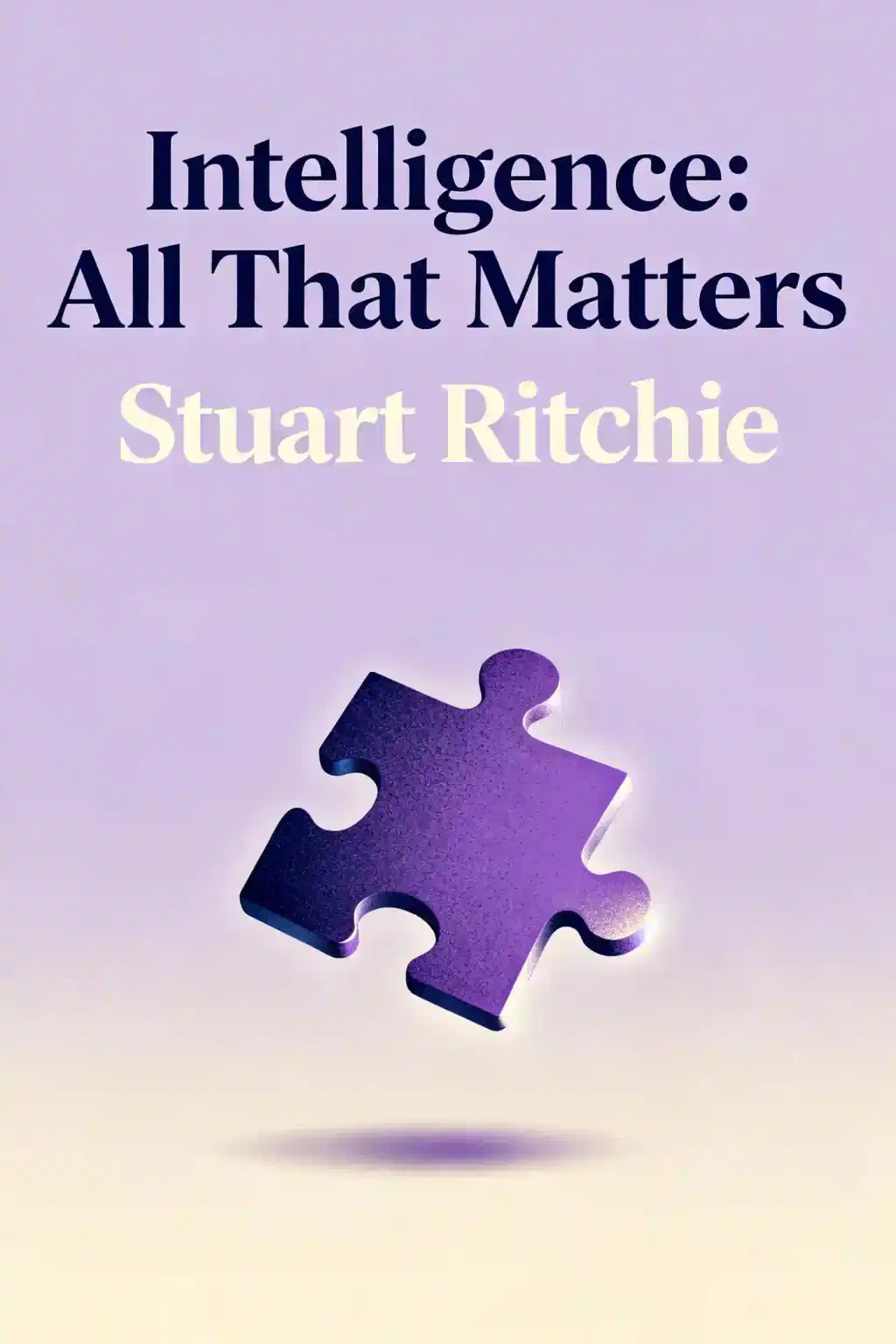
Intelligence: All That Matters by Stuart Ritchie Summary

Overview of Intelligence
Debunking myths about intelligence, Stuart Ritchie's concise guide tackles controversial topics from IQ heritability to educational potential. Can your intelligence actually be improved? Discover why psychologists recommend this clarifying work that balances genetic realities with environmental possibilities - and why it matters.
- IQ tests measure general intelligence (g-factor) predicting education, income, and longevity.
- Fluid vs crystallized intelligence: problem-solving vs knowledge, both decline differently with age.
- 50% of intelligence differences stem from genetics according to twin study comparisons.
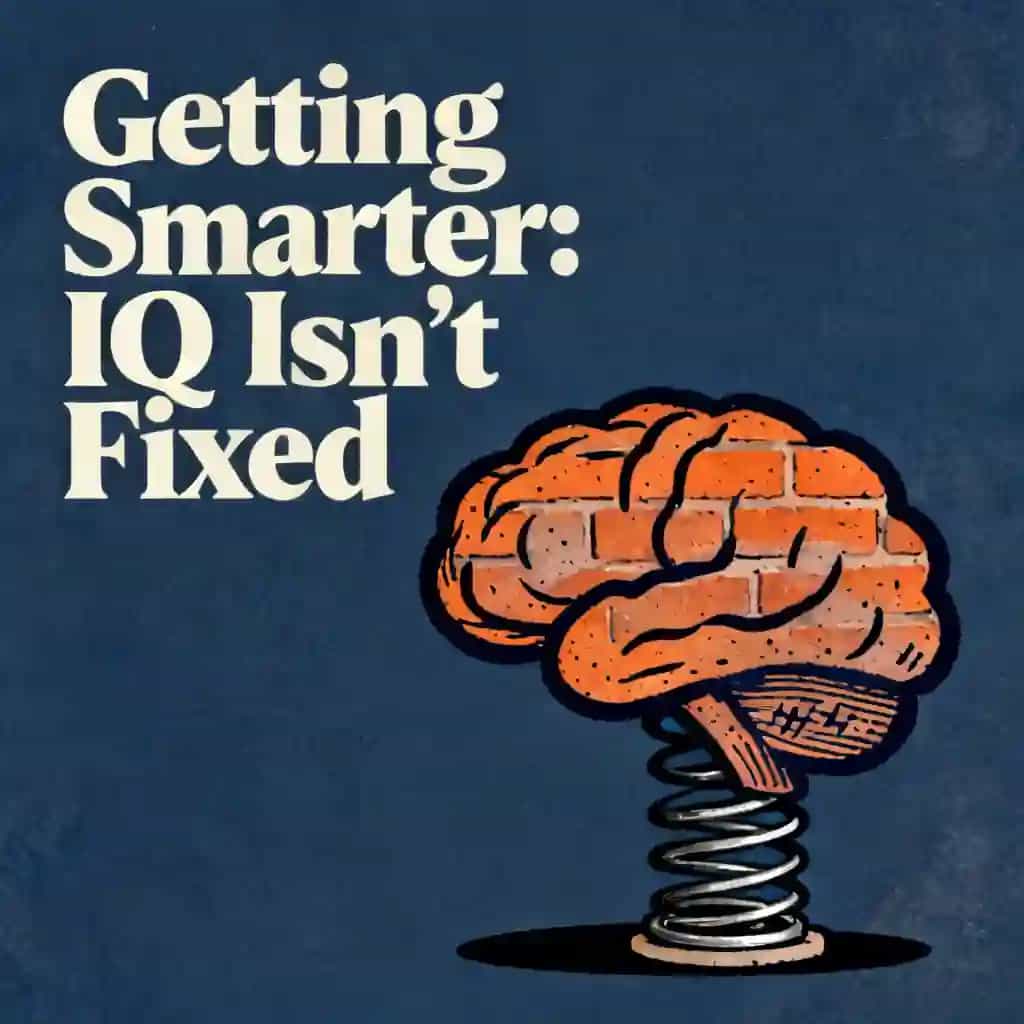
- Education boosts IQ scores, suggesting policy interventions can raise population intelligence levels.
- Brain structure differences in gray matter volume and neural efficiency correlate with higher IQ.
- Male IQ distribution shows more extremes despite equal male-female average intelligence scores.
- IQ correlates with workplace performance better than any other trait including personality tests.
- The Flynn Effect shows global IQ gains but recent data suggests possible reversal.
- Intelligence research remains controversial due to historical eugenics ties and modern equality concerns.
- "Multiple intelligences" theory lacks empirical support compared to general intelligence (g-factor) evidence.
- Facial symmetry and grip strength show measurable correlations with higher intelligence scores.
- Brain training games fail to boost IQ despite claims, unlike formal education benefits.
About the Author of Intelligence
Stuart James Ritchie, author of Intelligence: All That Matters, is a Scottish psychologist and science communicator renowned for his research on human intelligence and the replication crisis in science. A lecturer at King’s College London’s Institute of Psychiatry, Psychology and Neuroscience, Ritchie combines academic rigor with accessible writing to demystify complex topics like cognitive genetics and psychometrics. His work bridges psychology, neuroscience, and education, challenging misconceptions about intelligence testing and its societal implications.
Ritchie further solidified his reputation with Science Fictions, a critically acclaimed exposé of scientific misconduct that was shortlisted for the 2021 Royal Society Science Book Prize. He maintains a Substack newsletter of the same name, offering ongoing analysis of research integrity issues, and regularly contributes to media debates through outlets like the Unsupervised Learning podcast.
His books synthesize peer-reviewed studies with real-world relevance, earning endorsements from leading researchers and praise for making technical subjects engaging for general audiences. Science Fictions has been translated into multiple languages, reflecting its global impact on discussions about scientific reform.
FAQs About Intelligence
What is Intelligence: All That Matters about?
Intelligence: All That Matters explores the science of human intelligence, arguing that IQ is a measurable, impactful trait linked to health, career success, and societal outcomes. Stuart Ritchie debunks myths about intelligence testing, emphasizing its role in problem-solving, learning, and adapting to technological complexity. The book synthesizes decades of research to show why intelligence matters in education, aging, and public policy.
Who should read Intelligence: All That Matters?
Psychology students, educators, and professionals in career development or public health will find this book valuable. It’s also ideal for general readers seeking data-driven insights into IQ controversies, cognitive aging, or how intelligence shapes life outcomes. Ritchie’s accessible writing makes complex topics approachable for non-experts.
Is Intelligence: All That Matters worth reading?
Yes—Ritchie’s concise, evidence-based analysis clarifies misunderstood topics like genetic influences on IQ and the validity of intelligence testing. The book balances academic rigor with real-world examples, offering actionable takeaways for improving educational and workplace policies. It’s particularly relevant in 2025 as AI and automation heighten demands for cognitive adaptability.
What definition of intelligence does Stuart Ritchie use?
Ritchie cites psychologist Linda Gottfredson’s definition: intelligence is a “very general mental capability” involving reasoning, problem-solving, abstract thinking, and quick learning. He stresses it’s not just academic skill but a broader capacity to comprehend and adapt to one’s environment—a predictor of health, income, and longevity.
How does intelligence affect health outcomes?
Higher IQ correlates with healthier lifestyles, better disease prevention, and longer lifespans. Ritchie argues that understanding these links could tailor healthcare interventions—for example, simplifying medical instructions for lower-IQ patients to reduce errors. This connection underscores intelligence as a public health priority.
Does intelligence decline with age?
Yes, but the rate varies. Fluid intelligence (problem-solving) often peaks in early adulthood, while crystallized intelligence (knowledge) remains stable longer. Ritchie highlights research on cognitive training and education to mitigate decline, emphasizing policies to support aging populations in tech-driven societies.
What criticisms does the book address about IQ research?
Ritchie confronts claims that IQ tests are culturally biased or meaningless. He acknowledges historical misuse of intelligence research but defends its validity through replication studies and real-world correlations (e.g., job performance). The book distinguishes between scientific rigor and past ethical failures.
How does Intelligence: All That Matters compare to The Bell Curve?
Unlike The Bell Curve, Ritchie avoids controversial claims about group differences, focusing instead on individual and societal impacts of IQ. Both books agree on intelligence’s predictive power, but Ritchie emphasizes methodological transparency and ethical applications.
What practical advice does the book offer for improving intelligence?
While genetics play a role, Ritchie suggests enriched education, lifelong learning, and cognitive training as partial boosts. He critiques “brain-training” fads but supports policies like early childhood nutrition programs and accessible education to maximize cognitive potential.
Why is intelligence becoming more important in modern society?
Technological complexity and AI integration demand higher problem-solving and adaptability skills. Ritchie argues that IQ’s role in navigating career changes, healthcare systems, and digital tools will grow—making its study critical for equitable policy-making.
How does Ritchie respond to ethical concerns about IQ testing?
He advocates for responsible use: IQ data should inform personalized education and healthcare, not limit opportunities. The book acknowledges past abuses but argues dismissing intelligence research harms evidence-based decision-making.
What iconic quote summarizes the book’s message?
Ritchie quotes Gottfredson: “Intelligence is a very general mental capability... it reflects a broader and deeper capacity to comprehend our surroundings.” This underscores his thesis that IQ isn’t just academic—it’s a life-shaping trait.
Is Intelligence: All That Matters relevant in 2025?
Absolutely. With AI reshaping jobs and healthcare, Ritchie’s insights help readers understand skill demands in tech-driven economies. The book’s focus on cognitive adaptability aligns with current debates about education reform and workplace reskilling.
Feel the book through the author's voice
Turn knowledge into engaging, example-rich insights
Capture key ideas in a flash for fast learning
Enjoy the book in a fun and engaging way
Key Themes in Intelligence
Quotes from Intelligence
Empirical facts themselves carry no inherent moral implications.
Intelligence testing isn't just meaningful-it's predictive.
Understanding intelligence becomes not just academically interesting but practically essential.
Characters in Intelligence
Quick Summary Mode - Read or listen to Intelligence Summary in 9 Minutes

Break down key ideas from Intelligence into bite-sized takeaways to understand how innovative teams create, collaborate, and grow.

Flash Card Mode - Top 10 Insights from Intelligence in a Nutshell

Distill Intelligence into rapid-fire memory cues that highlight key principles of candor, teamwork, and creative resilience.

Fun Mode - Intelligence Lessons Told Through 24-Min Stories

Experience Intelligence through vivid storytelling that turns innovation lessons into moments you'll remember and apply.
Personalize Mode - Read or listen to Intelligence Summary in 0 Minutes

Ask anything, pick the voice, and co-create insights that truly resonate with you.

From Columbia University alumni built in San Francisco
"Instead of endless scrolling, I just hit play on BeFreed. It saves me so much time."


"I never knew where to start with nonfiction—BeFreed’s book lists turned into podcasts gave me a clear path."


"Perfect balance between learning and entertainment. Finished ‘Thinking, Fast and Slow’ on my commute this week."
"Crazy how much I learned while walking the dog. BeFreed = small habits → big gains."
"Reading used to feel like a chore. Now it’s just part of my lifestyle."

"Feels effortless compared to reading. I’ve finished 6 books this month already."
"BeFreed turned my guilty doomscrolling into something that feels productive and inspiring."

"BeFreed turned my commute into learning time. 20-min podcasts are perfect for finishing books I never had time for."
"BeFreed replaced my podcast queue. Imagine Spotify for books — that’s it. 🙌"

"It is great for me to learn something from the book without reading it."
"The themed book list podcasts help me connect ideas across authors—like a guided audio journey."
"Makes me feel smarter every time before going to work"
From Columbia University alumni built in San Francisco
"Instead of endless scrolling, I just hit play on BeFreed. It saves me so much time."
"I never knew where to start with nonfiction—BeFreed’s book lists turned into podcasts gave me a clear path."
"Perfect balance between learning and entertainment. Finished ‘Thinking, Fast and Slow’ on my commute this week."
"Crazy how much I learned while walking the dog. BeFreed = small habits → big gains."
"Reading used to feel like a chore. Now it’s just part of my lifestyle."
"Feels effortless compared to reading. I’ve finished 6 books this month already."
"BeFreed turned my guilty doomscrolling into something that feels productive and inspiring."
"BeFreed turned my commute into learning time. 20-min podcasts are perfect for finishing books I never had time for."
"BeFreed replaced my podcast queue. Imagine Spotify for books — that’s it. 🙌"
"It is great for me to learn something from the book without reading it."
"The themed book list podcasts help me connect ideas across authors—like a guided audio journey."
"Makes me feel smarter every time before going to work"
"Instead of endless scrolling, I just hit play on BeFreed. It saves me so much time."
"I never knew where to start with nonfiction—BeFreed’s book lists turned into podcasts gave me a clear path."
"Perfect balance between learning and entertainment. Finished ‘Thinking, Fast and Slow’ on my commute this week."
"Crazy how much I learned while walking the dog. BeFreed = small habits → big gains."
"Reading used to feel like a chore. Now it’s just part of my lifestyle."
"Feels effortless compared to reading. I’ve finished 6 books this month already."
"BeFreed turned my guilty doomscrolling into something that feels productive and inspiring."
"BeFreed turned my commute into learning time. 20-min podcasts are perfect for finishing books I never had time for."
"BeFreed replaced my podcast queue. Imagine Spotify for books — that’s it. 🙌"
"It is great for me to learn something from the book without reading it."
"The themed book list podcasts help me connect ideas across authors—like a guided audio journey."
"Makes me feel smarter every time before going to work"
"Instead of endless scrolling, I just hit play on BeFreed. It saves me so much time."
"I never knew where to start with nonfiction—BeFreed’s book lists turned into podcasts gave me a clear path."
"Perfect balance between learning and entertainment. Finished ‘Thinking, Fast and Slow’ on my commute this week."
"Crazy how much I learned while walking the dog. BeFreed = small habits → big gains."
"Reading used to feel like a chore. Now it’s just part of my lifestyle."
"Feels effortless compared to reading. I’ve finished 6 books this month already."
"BeFreed turned my guilty doomscrolling into something that feels productive and inspiring."
"BeFreed turned my commute into learning time. 20-min podcasts are perfect for finishing books I never had time for."
"BeFreed replaced my podcast queue. Imagine Spotify for books — that’s it. 🙌"
"It is great for me to learn something from the book without reading it."
"The themed book list podcasts help me connect ideas across authors—like a guided audio journey."
"Makes me feel smarter every time before going to work"

Get the Intelligence summary as a free PDF or EPUB. Print it or read offline anytime.