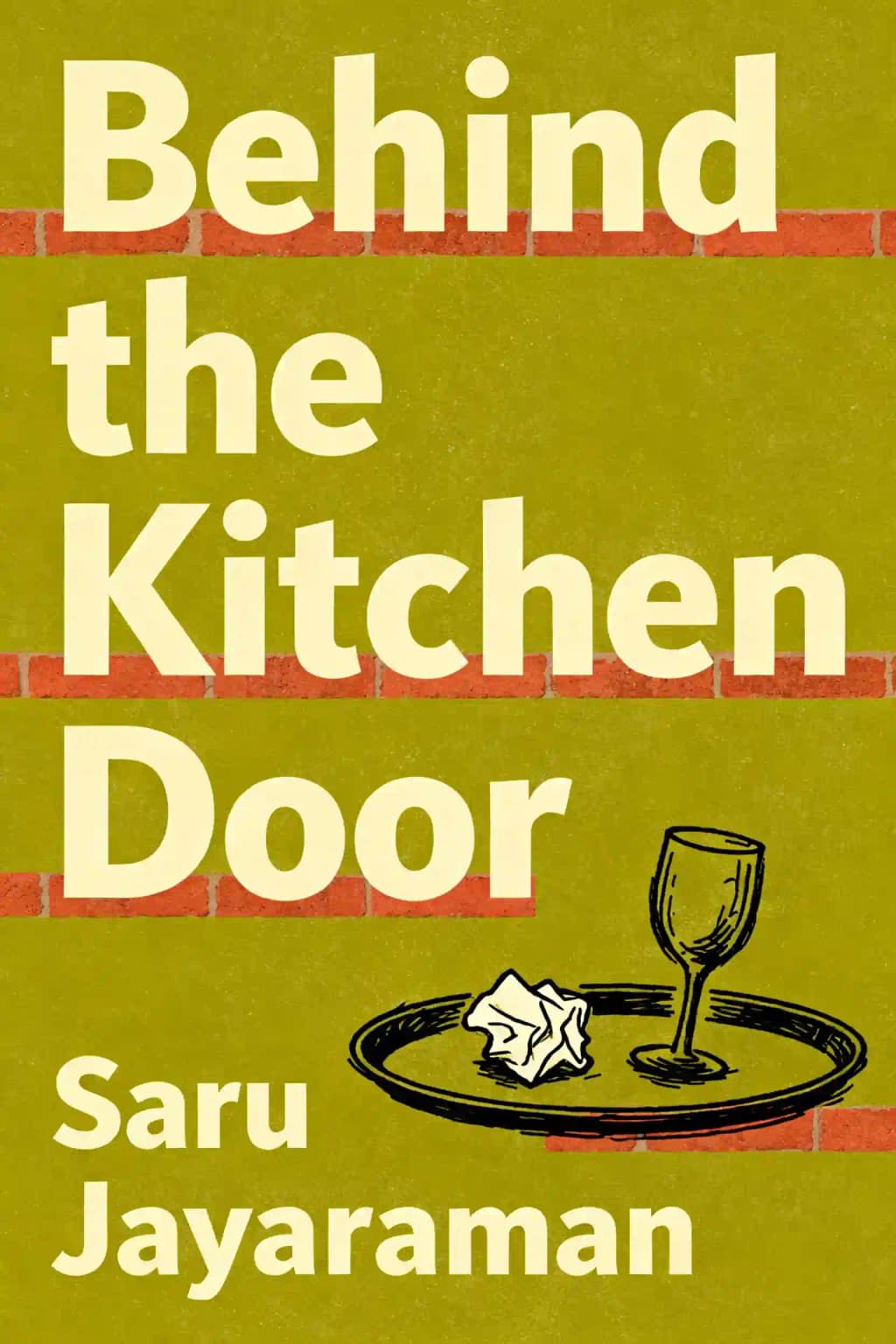
Behind the kitchen door
Overview of Behind the kitchen door
Behind the Kitchen Door reveals the hidden exploitation of 10 million restaurant workers living below poverty lines. Anthony Bourdain championed this expose that sparked a nationwide living wage movement. Ever wonder why your server can't afford healthcare despite your $100 dinner?

Key Themes in Behind the kitchen door
- restaurant labor ethics
- immigrant worker rights
- food service inequality
- sustainable labor practices
- workplace racial segregation
Quotes from Behind the kitchen door
Millions of workers' dreams are perpetually deferred while they serve others celebrating life's milestones.
Sustainability means creating a business where as the business grows, the people grow with it.
Try not to cough.
Characters in Behind the kitchen door
- Saru JayaramanAuthor and co-founder of the ROC
- Fekkak MamdouhFormer Windows headwaiter and ROC co-founder
- FloribertoUndocumented immigrant and bistro worker
- Captain JackSupervisor known for mistreating workers
About the Author
About the Author of Behind the kitchen door
Saru Jayaraman, author of the bestselling nonfiction book Behind the Kitchen Door, is a leading advocate for labor justice and equitable practices in the U.S. food industry.
A Yale Law School and Harvard Kennedy School graduate, she co-founded Restaurant Opportunities Centers United (ROC United) and One Fair Wage, organizations dedicated to improving wages and conditions for restaurant workers. Her work blends investigative journalism with firsthand accounts to expose systemic inequities, reflecting her decades of activism and research as director of UC Berkeley’s Food Labor Research Center.
Jayaraman’s expertise has been featured on CNN, PBS, MSNBC, and HBO, and she’s received accolades including a James Beard Foundation Leadership Award and recognition as a White House Champion of Change.
Her other works, such as Forked: A New Standard for American Dining and One Fair Wage: Ending Subminimum Pay in America, further explore labor rights and consumer accountability in dining culture. Behind the Kitchen Door remains a pivotal text in labor studies and inspired a documentary highlighting its themes.
Download Summary of Behind the kitchen door
Get the Behind the kitchen door summary as a free PDF or EPUB. Print it or read offline anytime.
FAQs About This Book
Behind the Kitchen Door exposes the harsh realities faced by restaurant workers in the U.S., linking labor exploitation to food quality and public health. Saru Jayaraman, a labor advocate, combines investigative journalism and personal narratives to reveal systemic issues like wage theft, racial discrimination, and unsafe working conditions. The book argues for fair wages, sick leave, and consumer activism to transform the industry.
This book is essential for food enthusiasts, labor rights advocates, and socially conscious consumers. It appeals to those interested in sustainable food systems, workplace justice, or policy reform. Readers seeking to understand how racial and gender disparities shape the restaurant industry will find it particularly impactful.
Jayaraman asserts that fair wages and safe workplaces are critical to food safety and industry sustainability. She highlights how subminimum wages perpetuate poverty, especially for women and people of color. The book also emphasizes the power of consumer choices to drive change, advocating for diners to support equitable restaurants.
The book documents how workers of color are often relegated to low-paid “back-of-house” roles, while white workers dominate higher-paying front-of-house positions. Women face sexual harassment and wage gaps, with limited upward mobility. Jayaraman ties these inequities to historical discrimination and corporate profit motives.
Jayaraman advocates for eliminating subminimum wages, mandating paid sick leave, and creating career ladders for marginalized workers. She promotes ROC United’s “high-road” restaurant certification and urges consumers to prioritize ethical dining spots. Policy reforms like the One Fair Wage campaign are highlighted as systemic solutions.
Some reviewers note the book’s heavy tone and repetitive case studies. While praised for its urgency, critics suggest it could offer more nuanced solutions beyond consumer activism. However, its stark portrayal of industry flaws is widely regarded as eye-opening.
Unsanitary kitchens and pressure to work while sick—due to lack of paid leave—directly threaten food safety. Jayaraman argues that fair wages and worker protections would reduce health risks, as employees could prioritize hygiene over survival.
The book urges diners to ask critical questions about restaurants’ labor practices and support establishments with fair wages. Jayaraman provides tools like the “Diner’s Guide to Ethical Eating” to empower consumers to drive industry accountability.
Unlike broader labor studies, this book focuses uniquely on the restaurant industry, blending grassroots stories with policy analysis. It complements works like Eric Schlosser’s Fast Food Nation but emphasizes worker empowerment over corporate critique.
- “The hands that feed us are among the most exploited.”
- “Sustainable food must include sustainable labor.”
These lines underscore the book’s thesis that food ethics extend beyond farm-to-table to fair treatment of workers.
As debates about gig work and wage floors intensify, the book remains a blueprint for addressing income inequality in service sectors. Its insights into post-pandemic labor shortages and consumer activism resonate with current economic challenges.
As co-founder of ROC United and a Yale/Harvard-trained advocate, Jayaraman combines legal expertise with firsthand accounts from workers. Her activism post-9/11 informs the book’s blend of empathy and policy rigor.