Overview of Five Stars
In "Five Stars," Carmine Gallo reveals why communication is today's most valuable currency. Endorsed by Tony Robbins and praised by the Financial Times, this guide shows why Jeff Bezos banned PowerPoint and how speaking in "third-grade language" can transform your career.
- Persuasion is the fundamental skill for career success in the AI age.
- Master Aristotle’s three persuasive pillars: logos, ethos, and pathos.
- Embed struggle into narratives to trigger emotional resonance with audiences.
- Simplify complex ideas to eighth-grade reading levels for maximum impact.
- Apply the SCARF model (Status, Certainty, Autonomy, Relatedness, Fairness) to reduce resistance.
- Structure presentations using the three-act storytelling framework: setup, conflict, resolution.
- Replace jargon with concrete examples and visual metaphors for clarity.
- Practice deliberate communication drills to transform anxiety into charismatic delivery.
- Average communicators get replaced; exceptional storytellers dominate leadership roles.
- Focus presentations on one core idea instead of overwhelming with multiple points.
- Study TED Talks and Steve Jobs’ keynote techniques for rhetorical precision.
- Use “heroic struggle” backstories to make brands relatable and inspirational.
About the Author of Five Stars
Carmine Gallo, bestselling author of Five Stars: The Communication Secrets to Get from Good to Great, is a globally recognized authority on leadership communication and persuasive storytelling. A Harvard instructor and executive coach for Fortune 500 companies, Gallo’s work bridges ancient rhetorical principles with modern business strategy, as seen in his analysis of icons like Steve Jobs and Jeff Bezos.
His books, including The Bezos Blueprint and Talk Like TED, have been translated into 40+ languages and are widely used by executives at Amazon, Google, and LinkedIn to align teams and drive innovation.
Gallo’s insights regularly appear in Forbes, Inc., and Harvard Business Review, with media features on CNN, CNBC, and ABC’s 20/20. As founder of Gallo Communications Group, he has shaped messaging for brands like Microsoft, Pfizer, and Salesforce. His practical frameworks on presentation design and narrative structure are taught in Harvard’s executive education programs and adapted by TED speakers worldwide. Gallo’s books have collectively sold millions of copies, with Talk Like TED spending over 200 weeks on The Wall Street Journal bestseller list.
FAQs About Five Stars
What is Five Stars by Carmine Gallo about?
Five Stars by Carmine Gallo explores the art of persuasive communication, blending historical examples (like John F. Kennedy and Winston Churchill) with modern insights from companies like Google and Airbnb. It teaches readers to master Aristotle’s principles of persuasion, simplify complex ideas using tools like the Readability Index, and leverage storytelling to stand out in an AI-driven world.
Who should read Five Stars by Carmine Gallo?
Professionals, entrepreneurs, and leaders seeking to elevate their communication skills will benefit most. The book is ideal for those aiming to inspire teams, pitch ideas effectively, or build influential brands. It’s also valuable for public speakers and anyone navigating career transitions in a competitive global economy.
Is Five Stars by Carmine Gallo worth reading?
Yes. Praised for its engaging storytelling and actionable advice, Five Stars combines research from neuroscientists, economists, and iconic leaders like Warren Buffett. Readers gain practical frameworks for crafting memorable messages and overcoming public speaking anxiety, making it a standout in communication literature.
How does Five Stars use the Readability Index to improve communication?
The book advocates simplifying language to a third-grade level for maximum clarity, citing Churchill’s preference for short, ancient words. The Readability Index—a textbook-assessment tool—helps measure how easily audiences grasp ideas. Gallo argues that concise language boosts persuasiveness, using examples from JFK’s speeches to NASA’s mission statements.
What historical figures does Five Stars analyze for communication techniques?
Gallo dissects Winston Churchill’s wartime speeches, John F. Kennedy’s inaugural address (“Ask not what your country can do for you…”), and Steve Jobs’ product launches. These case studies highlight rhythm, repetition, and emotional storytelling as timeless tools for influence.
How does Five Stars emphasize emotional appeal in communication?
The book stresses connecting with listeners’ emotions through personal anecdotes and metaphors. For example, Airbnb’s founders used a three-part narrative structure (problem-solution-transformation) to turn a struggling startup into a global brand. Gallo ties this to brain science, showing how stories activate empathy and memory.
What “brain hack” do Steve Jobs and Picasso share in Five Stars?
Gallo reveals that Jobs, da Vinci, and Picasso practiced bilateral thinking—alternating between focused work and reflective walks. This technique sparks creativity by engaging both analytical and imaginative brain regions, a method Gallo encourages for brainstorming persuasive ideas.
Why does Warren Buffett say communication raises your value by 50%?
Buffett argues that articulating ideas clearly builds trust and leadership presence, a sentiment Gallo expands on. Five Stars links this to data showing 75% of income in knowledge-based roles hinges on persuasion skills, from negotiating salaries to inspiring teams.
How does Five Stars relate Airbnb’s success to Hollywood storytelling?
Airbnb’s founders mirrored a three-act film structure: Act 1 (problem: expensive hotels), Act 2 (solution: home-sharing), Act 3 (transformation: global community). Gallo shows how this framework, also used by TED speakers, turns pitches into compelling narratives.
What are common criticisms of Five Stars?
Some readers note the book focuses heavily on U.S.-centric examples and tech leaders, potentially limiting global applicability. Others desire more tactical exercises alongside its conceptual frameworks.
Why is Five Stars relevant in 2025’s AI-driven workplace?
As automation grows, Gallo positions human communication as the irreplaceable edge. The book’s lessons on empathy, simplicity, and storytelling help readers thrive in roles requiring collaboration, sales, or crisis management—skills AI cannot replicate.
How does Five Stars compare to Carmine Gallo’s Talk Like TED?
While Talk Like TED focuses on presentation技巧, Five Stars broadens its scope to everyday communication—emails, pitches, and team meetings. Both emphasize storytelling, but Five Stars adds historical context and data-driven tools like the Readability Index.
Feel the book through the author's voice
Turn knowledge into engaging, example-rich insights
Capture key ideas in a flash for fast learning
Enjoy the book in a fun and engaging way
Characters in Five Stars
- Carmine GalloAuthor and communication expert
- Lin-Manuel MirandaCreator of Hamilton and master storyteller
- Deirdre McCloskeyEconomist who studied the impact of persuasion
- Avinash KaushikGoogle evangelist and storytelling workshop leader
Key Themes in Five Stars
- persuasive storytelling
- human-centric communication
- emotional intelligence
- rhetorical strategy
- idea economy
Quotes from Five Stars
Passion is contagious.
Great leaders are great storytellers.
The human brain is wired for story.
Persuasion has become our most valuable currency.
When ideas have sex in free societies, they multiply exponentially.
Explore Your Way of Learning
 Quick Summary Mode
Read or listen to Five Stars Summary in 9 Minutes
Break down key ideas from Five Stars into bite-sized takeaways to understand how innovative teams create, collaborate, and grow.

 Fun Mode
Five Stars Lessons Told Through 22-Min Stories
Experience Five Stars through vivid storytelling that turns innovation lessons into moments you'll remember and apply.
 Personalize Mode
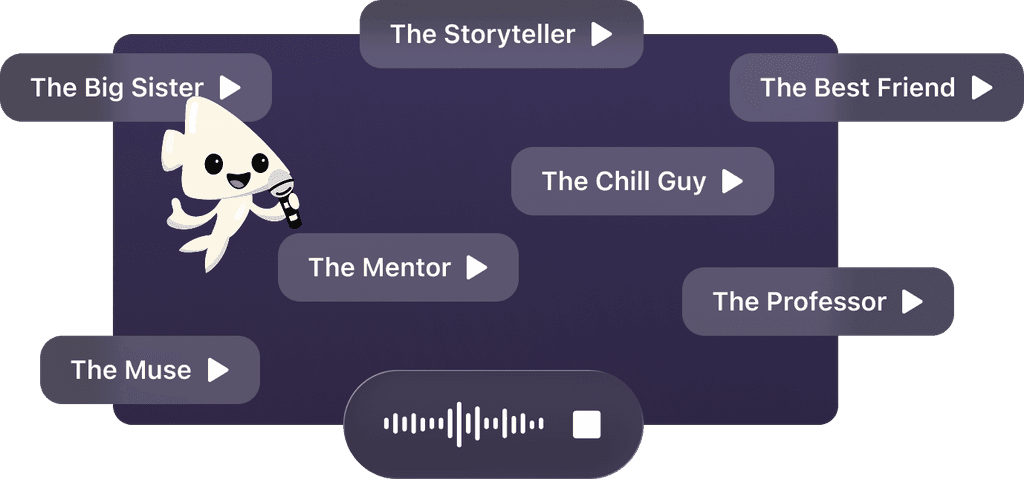
Experience Five Stars in your own learning style
Ask anything, choose your learning style, and co-create insights that truly resonate with you.
From Columbia University alumni built in San Francisco
"Instead of endless scrolling, I just hit play on BeFreed. It saves me so much time."


"I never knew where to start with nonfiction—BeFreed’s book lists turned into podcasts gave me a clear path."


"Perfect balance between learning and entertainment. Finished ‘Thinking, Fast and Slow’ on my commute this week."
"Crazy how much I learned while walking the dog. BeFreed = small habits → big gains."
"Reading used to feel like a chore. Now it’s just part of my lifestyle."

"Feels effortless compared to reading. I’ve finished 6 books this month already."
"BeFreed turned my guilty doomscrolling into something that feels productive and inspiring."

"BeFreed turned my commute into learning time. 20-min podcasts are perfect for finishing books I never had time for."
"BeFreed replaced my podcast queue. Imagine Spotify for books — that’s it. 🙌"

"It is great for me to learn something from the book without reading it."
"The themed book list podcasts help me connect ideas across authors—like a guided audio journey."
"Makes me feel smarter every time before going to work"
From Columbia University alumni built in San Francisco
"Instead of endless scrolling, I just hit play on BeFreed. It saves me so much time."
"I never knew where to start with nonfiction—BeFreed’s book lists turned into podcasts gave me a clear path."
"Perfect balance between learning and entertainment. Finished ‘Thinking, Fast and Slow’ on my commute this week."
"Crazy how much I learned while walking the dog. BeFreed = small habits → big gains."
"Reading used to feel like a chore. Now it’s just part of my lifestyle."
"Feels effortless compared to reading. I’ve finished 6 books this month already."
"BeFreed turned my guilty doomscrolling into something that feels productive and inspiring."
"BeFreed turned my commute into learning time. 20-min podcasts are perfect for finishing books I never had time for."
"BeFreed replaced my podcast queue. Imagine Spotify for books — that’s it. 🙌"
"It is great for me to learn something from the book without reading it."
"The themed book list podcasts help me connect ideas across authors—like a guided audio journey."
"Makes me feel smarter every time before going to work"
"Instead of endless scrolling, I just hit play on BeFreed. It saves me so much time."
"I never knew where to start with nonfiction—BeFreed’s book lists turned into podcasts gave me a clear path."
"Perfect balance between learning and entertainment. Finished ‘Thinking, Fast and Slow’ on my commute this week."
"Crazy how much I learned while walking the dog. BeFreed = small habits → big gains."
"Reading used to feel like a chore. Now it’s just part of my lifestyle."
"Feels effortless compared to reading. I’ve finished 6 books this month already."
"BeFreed turned my guilty doomscrolling into something that feels productive and inspiring."
"BeFreed turned my commute into learning time. 20-min podcasts are perfect for finishing books I never had time for."
"BeFreed replaced my podcast queue. Imagine Spotify for books — that’s it. 🙌"
"It is great for me to learn something from the book without reading it."
"The themed book list podcasts help me connect ideas across authors—like a guided audio journey."
"Makes me feel smarter every time before going to work"
"Instead of endless scrolling, I just hit play on BeFreed. It saves me so much time."
"I never knew where to start with nonfiction—BeFreed’s book lists turned into podcasts gave me a clear path."
"Perfect balance between learning and entertainment. Finished ‘Thinking, Fast and Slow’ on my commute this week."
"Crazy how much I learned while walking the dog. BeFreed = small habits → big gains."
"Reading used to feel like a chore. Now it’s just part of my lifestyle."
"Feels effortless compared to reading. I’ve finished 6 books this month already."
"BeFreed turned my guilty doomscrolling into something that feels productive and inspiring."
"BeFreed turned my commute into learning time. 20-min podcasts are perfect for finishing books I never had time for."
"BeFreed replaced my podcast queue. Imagine Spotify for books — that’s it. 🙌"
"It is great for me to learn something from the book without reading it."
"The themed book list podcasts help me connect ideas across authors—like a guided audio journey."
"Makes me feel smarter every time before going to work"

Download Summary of Five Stars
Get the Five Stars summary as a free PDF or EPUB. Print it or read offline anytime.