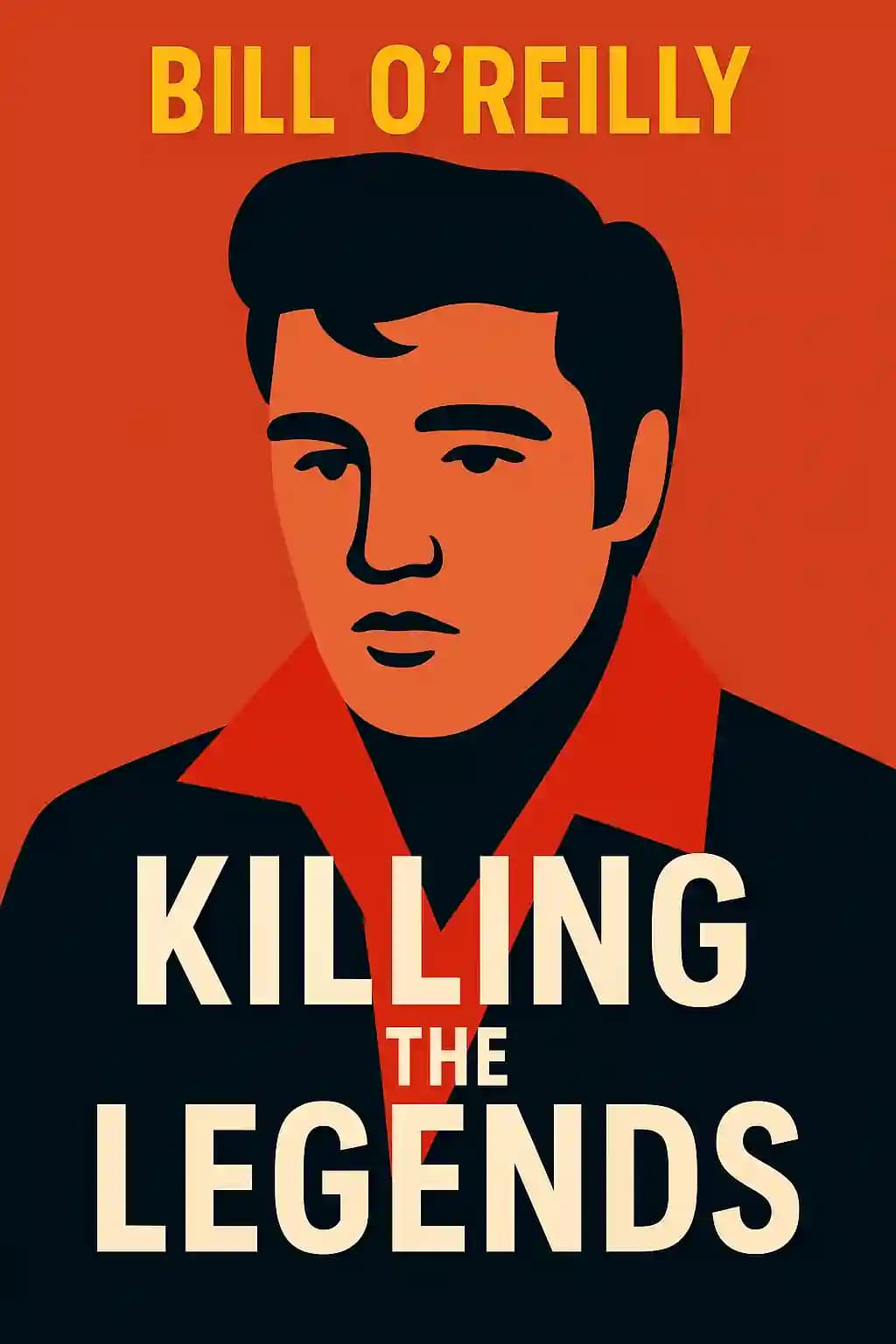
Killing the Legends
The Final Days of Presley, Lennon, and Ali
Overview of Killing the Legends
Explore the dark side of fame as O'Reilly's 12th bestselling "Killing" installment reveals how Elvis, Lennon, and Ali were exploited by those closest to them. With 18 million copies sold worldwide, this series unmasks celebrity's deadliest shadow - trust.

Key Themes in Killing the Legends
- religious persecution
- mass hysteria
- salem witch trials
- spectral evidence
- puritan theocracy
Quotes from Killing the Legends
The hand of Satan is in them.
Accusation became tantamount to guilt.
Salem was primed for disaster.
Characters in Killing the Legends
- William BradfordGovernor of Plymouth Colony and Puritan leader
- TitubaEnslaved woman whose confession sparked hysteria
- Cotton MatherInfluential minister and writer on witchcraft
- SquantoPatuxet survivor who taught settlers survival
- Betty ParrisMinister's daughter who suffered violent fits
About the Author
About the Author of Killing the Legends
Bill O'Reilly and Martin Dugard, #1 New York Times bestselling authors of Killing the Legends, are renowned for their gripping historical narratives that dissect pivotal moments and iconic figures.
O'Reilly, a Harvard-educated journalist and former host of The O'Reilly Factor, combines investigative rigor with decades of broadcast experience to unpack cultural legacies. Dugard, an adventurer and endurance-sports chronicler, brings visceral storytelling honed through works like The Murder of King Tut and The Last Voyage of Columbus.
Together, their Killing series—including Killing Lincoln, Killing Kennedy, and Killing Jesus—has sold over 20 million copies, blending meticulous research with page-turning drama. Several titles have been adapted into National Geographic specials, cementing their status as masters of narrative history.
Killing the Legends continues their exploration of fame’s dark side, informed by O'Reilly’s media insight and Dugard’s flair for high-stakes biography.
Download Summary of Killing the Legends
Get the Killing the Legends summary as a free PDF or EPUB. Print it or read offline anytime.
FAQs About This Book
Killing the Legends by Bill O’Reilly and Martin Dugard examines the tragic downfalls of Elvis Presley, John Lennon, and Muhammad Ali, linking their meteoric fame to exploitation, poor health choices, and destructive personal relationships. The book argues that their iconic status left them vulnerable to manipulation by managers, spouses, and sycophants, ultimately contributing to their premature deaths. It blends biographical storytelling with analysis of celebrity culture’s dangers.
Fans of biographical histories, pop culture enthusiasts, and readers interested in celebrity psychology will find this book compelling. It appeals to those who enjoy the Killing series’ narrative style and anyone curious about the hidden pressures faced by iconic figures. The book’s focus on fame’s dark side also resonates with critics of modern celebrity worship.
Yes, for its gripping storytelling and sharp critique of fame’s perils. The authors provide fresh perspectives on well-known lives, though some criticize its sensationalized tone. It’s ideal for readers seeking page-turning history rather than academic rigor, offering lessons on the costs of unchecked influence and ego.
The book details Elvis’s decline into prescription drug addiction, isolation, and financial mismanagement, exacerbated by his manager Colonel Tom Parker’s exploitative contracts. It highlights how his entourage enabled destructive habits, leading to his death at 42. Presley’s story serves as a cautionary tale about fame’s inability to shield against self-destruction.
Lennon’s section critiques Yoko Ono’s role in fracturing The Beatles and his subsequent identity struggles post-fame. It portrays him as a narcissistic genius whose relationship with Ono and withdrawal from public life made him a target for Mark David Chapman. The authors suggest Lennon’s celebrity magnified his vulnerabilities.
Ali’s story focuses on Herbert Muhammad’s exploitation, pushing him to fight despite Parkinson’s symptoms. The book condemns the boxing industry’s greed and Ali’s financial recklessness, which forced him into dangerous matches. His decline illustrates how pride and external pressures can override self-preservation.
Key themes include isolation caused by fame, exploitation by trusted advisors, and the struggle to adapt after peak success. Each figure’s story underscores how celebrity distorts relationships and decision-making, leaving them trapped by their public personas.
The authors use dramatized scenes and psychological profiling, characteristic of the Killing series. While engaging, this style prioritizes narrative flow over strict historiography, making complex figures accessible but occasionally oversimplifying motivations.
Some reviewers argue the book oversimplifies complex legacies and relies on well-trodden anecdotes. Critics note its heavy focus on the subjects’ flaws while underplaying their cultural contributions. The portrayal of Yoko Ono and Herbert Muhammad has drawn particular scrutiny.
Like earlier entries, it blends suspenseful storytelling with historical analysis but shifts focus from political figures to cultural icons. The tone is darker, emphasizing systemic exploitation over individual heroism. It maintains the series’ accessible style but targets pop culture audiences more directly.
Notable lines include:
- “Fame is a magnifying glass—it turns warmth into fire, and cracks into canyons.”
- “The legends didn’t die from bullets or pills—they were killed by the myth of invincibility.”
These encapsulate the book’s thesis that celebrity amplifies existing vulnerabilities.
In an era of influencer culture and viral fame, the book’s warnings about isolation, exploitation, and identity loss resonate strongly. It offers a lens to analyze modern celebrities like Britney Spears or Kanye West, whose struggles mirror those of Presley, Lennon, and Ali.