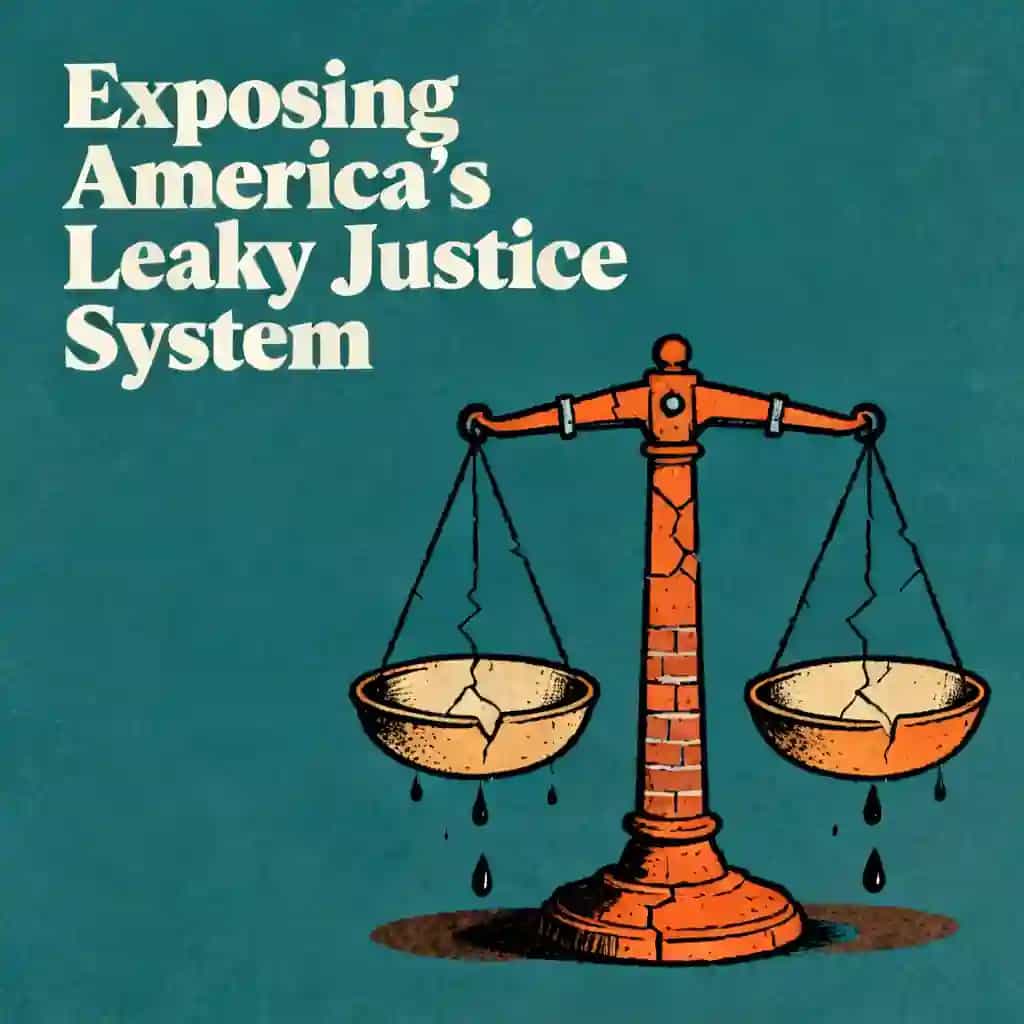
The African-American criminal justice guide: staying alive and out of jail : the #1 criminal justice book in America by Rafael A. Mangual Summary

Overview of The African-American criminal justice guide
In "Criminal (In)Justice," Rafael Mangual challenges popular reform narratives with hard data, revealing how depolicing hurts vulnerable communities most. Former NYPD Commissioner Bill Bratton calls it "required reading" - a provocative exploration that dares to ask: who really pays when we dismantle crime control?
- Rafael Mangual argues decarceration increases violent crime in vulnerable urban communities
- Hyper-concentrated crime patterns justify targeted policing in high-risk neighborhoods
- Incapacitating repeat offenders reduces victimization more effectively than leniency reforms
- Mangual debunks "nonviolent offender" myth with data showing prisons hold violent criminals
- Police presence prevents crime through deterrence not just post-crime justice
- Racial sentencing disparities shrink when controlling for offense severity and criminal history
- Progressive prosecutors endanger Black communities by enabling repeat violent offenders
- Mangual advocates cost-benefit analysis of policing rather than reflexive defunding
- Anti-incarceration reforms ignore geographic concentration of victimization in poor neighborhoods
- Broken windows policing theory still offers urban crime reduction insights
- Street culture normalization of violence drives recidivism more than systemic factors
- Drug enforcement serves as violence proxy by disrupting criminal networks
About the Author of The African-American criminal justice guide
Rafael A. Mangual, author of Criminal (In)Justice: What the Push for Decarceration and Depolicing Gets Wrong and Who It Hurts Most, is a leading criminal justice policy expert and Nick Ohnell Fellow at the Manhattan Institute.
His book critiques modern reform movements, arguing that depolicing and decarceration disproportionately harm marginalized communities. This perspective is informed by his legal training, role as head of research for the Policing and Public Safety Initiative, and service on the New York State Advisory Committee of the U.S. Commission on Civil Rights.
A frequent commentator on Fox News and contributor to The Wall Street Journal and City Journal, Mangual combines statistical rigor with firsthand insights into urban crime dynamics, shaped by his background as the son of an NYPD detective.
His work has earned praise from figures like former Attorney General William Barr and ex-NYPD Commissioner Bill Bratton, cementing his influence in national debates on law enforcement and public safety.
FAQs About The African-American criminal justice guide
What is Criminal (In)Justice by Rafael A. Mangual about?
Criminal (In)Justice critiques modern criminal justice reforms like decarceration and depolicing, arguing they disproportionately harm vulnerable communities. Mangual uses data to challenge narratives linking crime to poverty or COVID-19, disputes claims that incarceration destabilizes families, and emphasizes the risks of lenient pretrial and post-conviction policies. The book advocates balancing reform with evidence-based crime control measures.
Who should read Criminal (In)Justice?
This book is essential for policymakers, legal professionals, and advocates engaged in criminal justice debates. It also appeals to readers seeking data-driven counterarguments to progressive reform claims, particularly those interested in urban safety, policing efficacy, and the societal costs of depolicing.
Is Criminal (In)Justice worth reading?
Yes, for its rigorous analysis of policing and incarceration statistics often overlooked in reform discourse. Mangual’s synthesis of academic research, policy journalism, and real-world examples provides a compelling critique of radical decarceration efforts, making it a vital resource for understanding the trade-offs of criminal justice policy.
How does Criminal (In)Justice critique decarceration?
Mangual argues decarceration ignores the antisocial tendencies of repeat offenders and risks increasing violence in high-crime areas. He highlights cases where lenient policies allowed dangerous individuals to reoffend, asserting that incarceration remains a critical tool for protecting at-risk communities.
What data does Criminal (In)Justice use to challenge reform narratives?
The book cites studies showing crime rates correlate more closely with offender behavior than systemic inequities. It disputes the “mass incarceration” narrative by contextualizing prison populations and challenges claims of widespread police brutality using force incident statistics.
What is the “false-positive problem” discussed in Criminal (In)Justice?
This concept refers to the societal cost of under-policing: failing to intervene in potential criminal scenarios to avoid penalizing innocents. Mangual argues that overcautious policing strategies disproportionately harm communities plagued by violence by enabling unchecked criminal activity.
How does Criminal (In)Justice address police use of force?
Mangual contends that police violence is rare relative to interactions and often justified. He critiques reforms like defunding, arguing they undermine proactive policing strategies that reduce crime, particularly in neighborhoods demanding stronger law enforcement.
What are the main criticisms of Criminal (In)Justice?
Critics may argue the book underestimates systemic racism in policing and overstates the risks of reform. Mangual acknowledges the system’s imperfections but insists radical changes risk sacrificing public safety for ideological goals.
How does Criminal (In)Justice approach racial disparities in sentencing?
While recognizing disparities exist, Mangual cites studies showing they shrink when accounting for criminal history and offense severity. He attributes gaps more to socioeconomic factors than systemic bias, urging reforms focused on individual accountability.
What role does social media play in criminal justice reform, per Criminal (In)Justice?
Mangual argues social media amplifies extreme reform agendas by prioritizing viral narratives over nuanced data. This skews public perception, pressuring policymakers to adopt untested measures like bail reform without evaluating long-term impacts.
How does Criminal (In)Justice compare to other criminal justice books?
Unlike works focused on systemic racism or abolition, Mangual’s book prioritizes empirical analysis over ideological framing. It complements texts like The New Jim Crow by challenging readers to weigh reform benefits against potential harms.
What key quote summarizes Criminal (In)Justice’s thesis?
“What drives criminal violence has a lot more to do with the antisocial dispositions of violent criminals and a street culture that elevates violence as both a means and an end.” This underscores Mangual’s focus on individual accountability over structural explanations.
Feel the book through the author's voice
Turn knowledge into engaging, example-rich insights
Capture key ideas in a flash for fast learning
Enjoy the book in a fun and engaging way
Key Themes in The African-American criminal justice guide
Quotes from The African-American criminal justice guide
Crime in America isn't evenly distributed - it's hyper-concentrated.
The most important disparity isn't racial representation in prisons.
What distinguishes offenders isn't merely poverty.
Prison reform rather than decarceration is the logical solution.
Nearly 40% of violent felons commit their crimes while on probation.
Characters in The African-American criminal justice guide
Quick Summary Mode - Read or listen to The African-American criminal justice guide Summary in 9 Minutes

Break down key ideas from The African-American criminal justice guide into bite-sized takeaways to understand how innovative teams create, collaborate, and grow.

Flash Card Mode - Top 10 Insights from The African-American criminal justice guide in a Nutshell

Distill The African-American criminal justice guide into rapid-fire memory cues that highlight key principles of candor, teamwork, and creative resilience.

Fun Mode - The African-American criminal justice guide Lessons Told Through 24-Min Stories

Experience The African-American criminal justice guide through vivid storytelling that turns innovation lessons into moments you'll remember and apply.
Personalize Mode - Read or listen to The African-American criminal justice guide Summary in 0 Minutes

Ask anything, pick the voice, and co-create insights that truly resonate with you.

From Columbia University alumni built in San Francisco
"Instead of endless scrolling, I just hit play on BeFreed. It saves me so much time."


"I never knew where to start with nonfiction—BeFreed’s book lists turned into podcasts gave me a clear path."


"Perfect balance between learning and entertainment. Finished ‘Thinking, Fast and Slow’ on my commute this week."
"Crazy how much I learned while walking the dog. BeFreed = small habits → big gains."
"Reading used to feel like a chore. Now it’s just part of my lifestyle."

"Feels effortless compared to reading. I’ve finished 6 books this month already."
"BeFreed turned my guilty doomscrolling into something that feels productive and inspiring."

"BeFreed turned my commute into learning time. 20-min podcasts are perfect for finishing books I never had time for."
"BeFreed replaced my podcast queue. Imagine Spotify for books — that’s it. 🙌"

"It is great for me to learn something from the book without reading it."
"The themed book list podcasts help me connect ideas across authors—like a guided audio journey."
"Makes me feel smarter every time before going to work"
From Columbia University alumni built in San Francisco
"Instead of endless scrolling, I just hit play on BeFreed. It saves me so much time."
"I never knew where to start with nonfiction—BeFreed’s book lists turned into podcasts gave me a clear path."
"Perfect balance between learning and entertainment. Finished ‘Thinking, Fast and Slow’ on my commute this week."
"Crazy how much I learned while walking the dog. BeFreed = small habits → big gains."
"Reading used to feel like a chore. Now it’s just part of my lifestyle."
"Feels effortless compared to reading. I’ve finished 6 books this month already."
"BeFreed turned my guilty doomscrolling into something that feels productive and inspiring."
"BeFreed turned my commute into learning time. 20-min podcasts are perfect for finishing books I never had time for."
"BeFreed replaced my podcast queue. Imagine Spotify for books — that’s it. 🙌"
"It is great for me to learn something from the book without reading it."
"The themed book list podcasts help me connect ideas across authors—like a guided audio journey."
"Makes me feel smarter every time before going to work"
"Instead of endless scrolling, I just hit play on BeFreed. It saves me so much time."
"I never knew where to start with nonfiction—BeFreed’s book lists turned into podcasts gave me a clear path."
"Perfect balance between learning and entertainment. Finished ‘Thinking, Fast and Slow’ on my commute this week."
"Crazy how much I learned while walking the dog. BeFreed = small habits → big gains."
"Reading used to feel like a chore. Now it’s just part of my lifestyle."
"Feels effortless compared to reading. I’ve finished 6 books this month already."
"BeFreed turned my guilty doomscrolling into something that feels productive and inspiring."
"BeFreed turned my commute into learning time. 20-min podcasts are perfect for finishing books I never had time for."
"BeFreed replaced my podcast queue. Imagine Spotify for books — that’s it. 🙌"
"It is great for me to learn something from the book without reading it."
"The themed book list podcasts help me connect ideas across authors—like a guided audio journey."
"Makes me feel smarter every time before going to work"
"Instead of endless scrolling, I just hit play on BeFreed. It saves me so much time."
"I never knew where to start with nonfiction—BeFreed’s book lists turned into podcasts gave me a clear path."
"Perfect balance between learning and entertainment. Finished ‘Thinking, Fast and Slow’ on my commute this week."
"Crazy how much I learned while walking the dog. BeFreed = small habits → big gains."
"Reading used to feel like a chore. Now it’s just part of my lifestyle."
"Feels effortless compared to reading. I’ve finished 6 books this month already."
"BeFreed turned my guilty doomscrolling into something that feels productive and inspiring."
"BeFreed turned my commute into learning time. 20-min podcasts are perfect for finishing books I never had time for."
"BeFreed replaced my podcast queue. Imagine Spotify for books — that’s it. 🙌"
"It is great for me to learn something from the book without reading it."
"The themed book list podcasts help me connect ideas across authors—like a guided audio journey."
"Makes me feel smarter every time before going to work"

Get the The African-American criminal justice guide summary as a free PDF or EPUB. Print it or read offline anytime.



![[PDF] rules of evidence of puerto rico*1](/_next/image?url=https%3A%2F%2Fd1y2du6z1jfm9e.cloudfront.net%2Fassets%2Fpodcast%2Fpurple.png&w=1024&q=50)