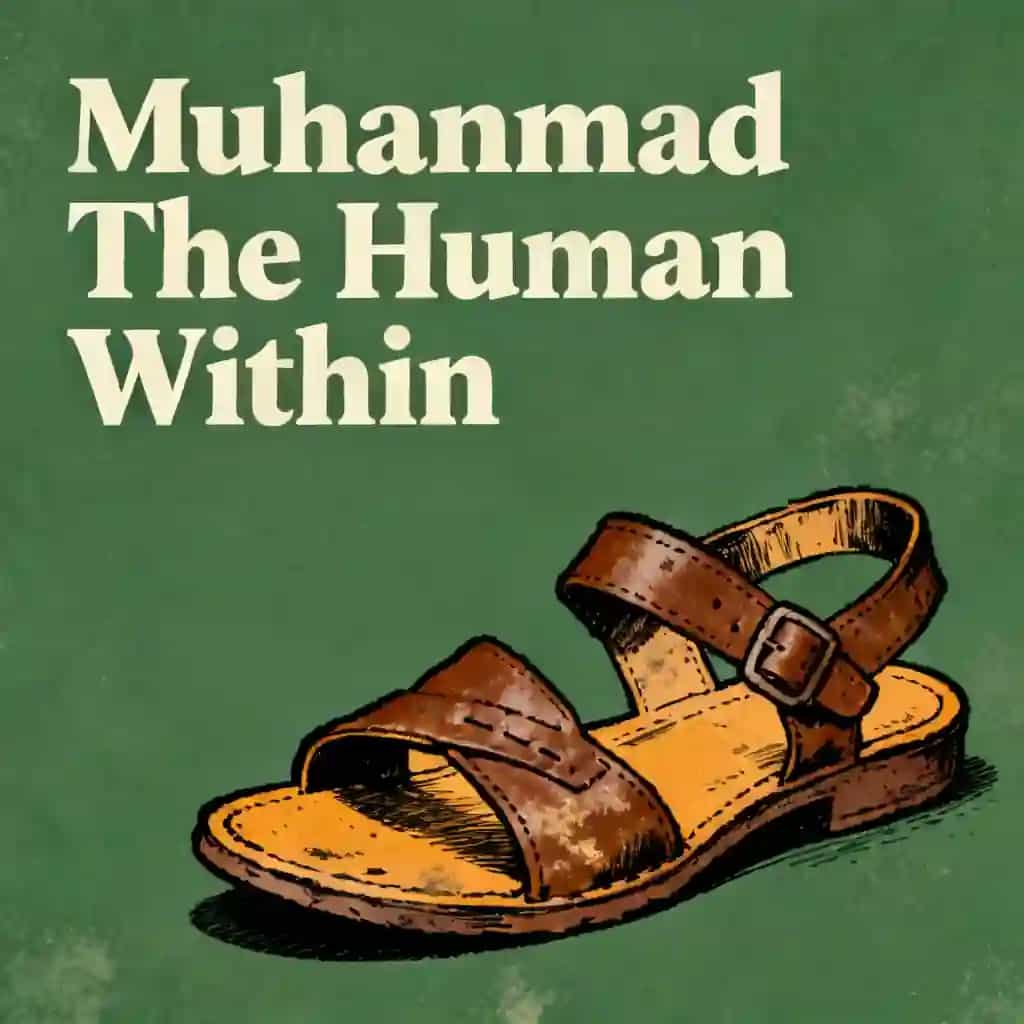
Muhammad Ali's definitive biography - beyond boxing legend to cultural revolutionary. Praised by Ken Burns and based on 500+ interviews, Eig reveals Ali's FBI files, Nation of Islam ties, and the neurological price of greatness that shaped America's racial awakening.
Jonathan Eig is the Pulitzer Prize-winning author of Ali: A Life and a New York Times bestselling biographer known for definitive portraits of cultural icons. A former senior writer for The Wall Street Journal, Eig combines rigorous journalism with narrative depth to explore themes of sports, civil rights, and societal change.
His biography of Muhammad Ali, which won the 2018 PEN/ESPN Award for Literary Sportswriting, traces the boxer’s athletic genius and complex role in America’s racial and political landscape, reflecting Eig’s expertise in blending historical context with human drama.
Eig’s acclaimed works include King: A Life (2024 Pulitzer Prize for Biography), Luckiest Man: The Life and Death of Lou Gehrig, and Opening Day: The Story of Jackie Robinson’s First Season—all celebrated for their meticulous research and vivid storytelling. His books have been translated into more than 20 languages and adapted into PBS documentaries, including Ken Burns’ Muhammad Ali.
A frequent media commentator, Eig has appeared on The Daily Show, NPR’s Fresh Air, and in ESPN series. Ali: A Life was named a best book of the year by Sports Illustrated and The Wall Street Journal, cementing Eig’s reputation as a master chronicler of 20th-century legends.
Ali: A Life is a comprehensive biography of Muhammad Ali, tracing his journey from Cassius Clay—a Black youth in segregated Louisville—to a global icon of sports, civil rights, and cultural rebellion. Jonathan Eig unpacks Ali’s athletic brilliance, religious conversion, Vietnam War resistance, and complex legacy using 500+ interviews and newly uncovered FBI files. The book balances his triumphs with critiques of his personal flaws and the toll of boxing on his health.
This book appeals to sports fans, historians, and readers interested in 20th-century social movements. Eig’s gripping narrative caters to those seeking a nuanced portrait of Ali’s role in racial pride, religious identity, and political dissent. It’s ideal for readers who value meticulously researched biographies with cultural analysis.
Yes—critics praise Eig’s access to unreleased interviews and legal documents, calling it "the definitive biography" of Ali. While some note gaps in boxing-technique analysis, the book excels in capturing Ali’s contradictions: his charisma, activism, and the cost of his prolonged career.
Eig’s work stands out for its unauthorized rigor, drawing on FBI records, audiotapes, and interviews with Ali’s wives and managers. Unlike previous accounts, it controversially suggests Ali showed signs of brain damage by age 28, challenging myths about his invincibility.
Eig depicts Ali as a flawed visionary—a man whose courage in confronting racism and war inspired millions, but whose ego and refusal to retire damaged his relationships and health. The biography emphasizes his symbolic role as a mirror of America’s racial tensions.
The book earned acclaim for its depth and pacing, with The New York Times naming it a notable 2018 release. However, Publishers Weekly criticized its “thin” medical analysis and uneven boxing commentary.
Ali’s 1967 draft resistance led to a 3.5-year boxing ban, financial ruin, and a Supreme Court battle. Eig frames this as a turning point where Ali evolved from a “brash showman” to a principled activist, cementing his status as a countercultural hero.
Eig leverages unprecedented materials:
The biography details Ali’s Parkinson’s diagnosis and argues symptoms of pugilistic dementia appeared as early as 1974. Eig links this to his prolonged career and critiques boxing’s ethical failures.
Eig, a Pulitzer-winning biographer and former Wall Street Journal reporter, combines investigative rigor with narrative flair. His prior sports biographies (Luckiest Man, Opening Day) established his expertise in blending cultural history with individual drama.
The book underscores ongoing debates about race, protest, and athlete activism—themes resonant in movements like Black Lives Matter. Eig’s portrayal of Ali’s resilience against systemic oppression offers historical parallels to modern struggles.
Ressentez le livre à travers la voix de l'auteur
Transformez les connaissances en idées captivantes et riches en exemples
Capturez les idées clés en un éclair pour un apprentissage rapide
Profitez du livre de manière ludique et engageante
“I am America. I am the part you won’t recognize. But get used to me. Black, confident, cocky. My name, not yours. My religion, not yours. My goals, my own. Get used to me.”
“I ain’t got no quarrel with them Viet Cong.”
“It’s hard to be humble when you’re as great as I am.”
“If you even dream of beating me you’d better wake up and apologize.”
Float like a butterfly, sting like a bee!
Décomposez les idées clés de Ali en points faciles à comprendre pour découvrir comment les équipes innovantes créent, collaborent et grandissent.
Condensez Ali en indices de mémoire rapides mettant en évidence les principes clés de franchise, de travail d'équipe et de résilience créative.

Découvrez Ali à travers des récits vivants qui transforment les leçons d'innovation en moments mémorables et applicables.
Posez n'importe quelle question, choisissez la voix et co-créez des idées qui résonnent vraiment avec vous.

Cree par des anciens de Columbia University a San Francisco
"Instead of endless scrolling, I just hit play on BeFreed. It saves me so much time."
"I never knew where to start with nonfiction—BeFreed’s book lists turned into podcasts gave me a clear path."
"Perfect balance between learning and entertainment. Finished ‘Thinking, Fast and Slow’ on my commute this week."
"Crazy how much I learned while walking the dog. BeFreed = small habits → big gains."
"Reading used to feel like a chore. Now it’s just part of my lifestyle."
"Feels effortless compared to reading. I’ve finished 6 books this month already."
"BeFreed turned my guilty doomscrolling into something that feels productive and inspiring."
"BeFreed turned my commute into learning time. 20-min podcasts are perfect for finishing books I never had time for."
"BeFreed replaced my podcast queue. Imagine Spotify for books — that’s it. 🙌"
"It is great for me to learn something from the book without reading it."
"The themed book list podcasts help me connect ideas across authors—like a guided audio journey."
"Makes me feel smarter every time before going to work"
Cree par des anciens de Columbia University a San Francisco

Obtenez le resume de Ali en PDF ou EPUB gratuit. Imprimez-le ou lisez-le hors ligne a tout moment.
A twelve-year-old boy stands crying in a Louisville police station, furious that someone stole his red Schwinn bicycle. "I'm gonna whup whoever took it," he tells Officer Joe Martin. Martin, who moonlights as a boxing trainer, asks a simple question: "Do you know how to fight?" That stolen bicycle in 1954 set in motion one of history's most extraordinary transformations-from Cassius Clay, a kid who couldn't sit still in his stroller, to Muhammad Ali, the most recognizable face on earth. But this isn't just a rags-to-riches sports story. It's the biography of a man who refused to be what anyone wanted him to be, who traded his championship belt for his principles, and who ultimately proved that one person's courage could shake the world. Ali's family tree was stained with brutality. His great-grandfather was a slave, possibly fathered by Senator Henry Clay. His grandfather murdered a man over twenty-five cents and did prison time. His father was a violent alcoholic who once slashed his own son in a drunken rage. This wasn't the origin story anyone would choose, yet it forged something unbreakable in young Cassius Clay. From the moment he could stand, he refused to sit-literally standing in his stroller, walking at ten months, insisting on feeding himself. He led neighborhood boys on adventures, ate his lunch on the way to school, and imitated police sirens to make drivers pull over. The question isn't whether Ali was great-it's how a boy born into violence and segregation became the embodiment of defiance, dignity, and hope for millions.