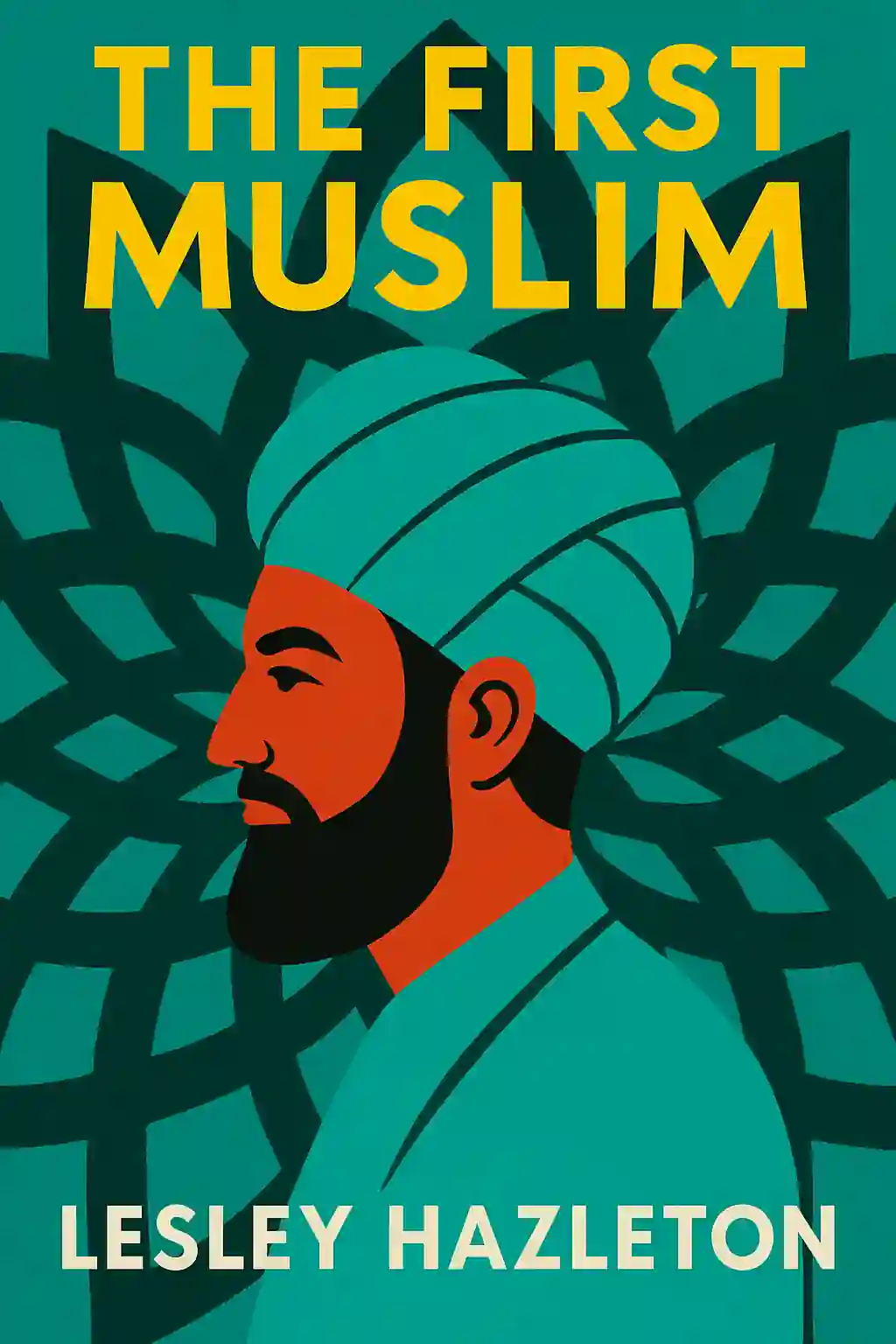
Explore Muhammad's transformation from orphaned merchant to civilization-changing leader. Beyond myths and controversies, discover the deeply human story of doubt, loss, and determination that shaped Islam and continues influencing a quarter of humanity today.

The margins of society often produce the most transformative leaders precisely because they can see what those in the center miss.
the prophet Mohammed


Cree par des anciens de Columbia University a San Francisco
"Instead of endless scrolling, I just hit play on BeFreed. It saves me so much time."
"I never knew where to start with nonfiction—BeFreed’s book lists turned into podcasts gave me a clear path."
"Perfect balance between learning and entertainment. Finished ‘Thinking, Fast and Slow’ on my commute this week."
"Crazy how much I learned while walking the dog. BeFreed = small habits → big gains."
"Reading used to feel like a chore. Now it’s just part of my lifestyle."
"Feels effortless compared to reading. I’ve finished 6 books this month already."
"BeFreed turned my guilty doomscrolling into something that feels productive and inspiring."
"BeFreed turned my commute into learning time. 20-min podcasts are perfect for finishing books I never had time for."
"BeFreed replaced my podcast queue. Imagine Spotify for books — that’s it. 🙌"
"It is great for me to learn something from the book without reading it."
"The themed book list podcasts help me connect ideas across authors—like a guided audio journey."
"Makes me feel smarter every time before going to work"
Cree par des anciens de Columbia University a San Francisco

Blythe: Hey everyone, welcome back to another personalized episode from BeFreed! I'm Blythe, and I'm genuinely excited about today's conversation because we're diving into something that feels both incredibly timely and deeply misunderstood.
Eli: And I'm Eli! You know what's fascinating, Blythe? When people think about the Prophet Muhammad, they often get caught up in either reverence or controversy, but what we're going to explore today is something much more compelling-the actual human story behind one of history's most influential figures.
Blythe: Exactly! We're going to peel back those layers of myth and polarization to discover what made this seventh-century Arabian merchant into someone whose impact still shapes our world today. And honestly? The psychological depth of his journey is what really grabbed me.
Eli: Right! Because here's someone who went from being a marginalized orphan to transforming an entire civilization, and that transformation happened through very human struggles-doubt, fear, determination, loss. It's a story that resonates precisely because it's so deeply human.
Blythe: So let's paint the picture here, Eli. We're talking about seventh-century Arabia, and from what I've been reading, this wasn't exactly a peaceful, egalitarian society we're looking at.
Eli: Oh, absolutely not! Picture this-tribal warfare was constant, female infanticide was practiced, and you had these extreme wealth inequalities. The strong literally preyed on the weak. It was a world where if you didn't have tribal protection, you were basically defenseless.
Blythe: And this is where Muhammad's early experiences become so crucial, right? Because he wasn't born into privilege-quite the opposite.
Eli: Exactly! Being fatherless in sixth-century Mecca was like having a giant target on your back. Lineage was everything in that society, and Muhammad was marked from birth with this profound social disadvantage. His father Abdullah died before he was even born, and then he lost his mother Amina when he was just six years old.
Blythe: Six years old! Can you imagine? And then his grandfather, who was caring for him, died when Muhammad was eight. It's like loss after loss in his formative years.
Eli: Which is what makes his placement with Halima, the Bedouin foster mother, so interesting. Other families wouldn't take this orphaned infant, but she did. And that desert upbringing-living between worlds, you know?-gave him this unique perspective.
Blythe: I love how you put that-"between worlds." Because he absorbed the Bedouin connection to nature and their poetic traditions, but then he returned to Mecca at age five, where he was too noble to dismiss but too marginalized for full privilege.
Eli: That liminal status is fascinating from a psychological perspective! He could see the injustices and inequalities precisely because he wasn't fully inside the power structure. That outsider's eye often sees what insiders miss.
Blythe: And speaking of seeing clearly, let's talk about the economic and religious landscape he was observing. Mecca wasn't just any trading post, was it?
Eli: Not at all! The Kaaba was this incredible confluence of the sacred and commercial. It drew thousands of pilgrims, which meant massive economic benefits for the Quraysh tribe who managed it. But here's what's crucial-this merger of spiritual and worldly power shaped Muhammad's understanding from the very beginning.
Blythe: So he's watching this system where religious authority translates directly into economic control, and meanwhile, he's experiencing what it's like to be on the margins of that system.
Eli: Precisely! And then we get to his marriage to Khadija, which was absolutely transformative. She was fifteen years older, a successful businesswoman, and she proposed to him after seeing his integrity in managing her caravans.
Blythe: I have to say, I find their relationship really compelling. Here's this woman with economic power choosing this younger man based on his character, not his status. And their partnership gave him the stability to pursue his contemplative nature.
Eli: And that contemplation piece is crucial! By his thirties, Muhammad was increasingly retreating to Mount Hira for what they called tahannuth-these contemplative practices born from his dissatisfaction with Mecca's spiritual landscape.
Blythe: Okay, so we get to 610 CE, Muhammad is forty, and he's up in this cave on Mount Hira during Ramadan. This is where everything changes, right? But not in the way you might expect if you're thinking about typical "prophetic calling" stories.
Eli: Oh, this is where it gets really interesting! Because when the angel Gabriel appears and commands "Recite!", Muhammad's response is pure terror. He declares "I am not a reciter!" and the experience literally shatters him-physically and emotionally.
Blythe: The authenticity of that reaction is what strikes me. I mean, if you were fabricating a story about becoming a prophet, would you really describe fleeing down the mountain in panic, begging your wife to "Cover me!"?
Eli: Exactly! That's not the behavior you'd invent for someone claiming divine authority. This is a man wrestling with equal measures of fear and yearning, struggling with this calling that's been thrust upon him.
Blythe: And Khadija's role here is so crucial. She's the one who provides that initial validation, right? She consults her Christian cousin Waraqa, who compares Muhammad's experience to that of Moses.
Eli: Her steadfast belief was instrumental in helping Muhammad gradually accept his role. But even then, look at what his initial revelations focused on-social justice! He's condemning wealth hoarding and the exploitation of the vulnerable. This isn't abstract theology; it's concrete social reform.
Blythe: Which brings us back to that seventh-century Arabian context. Muhammad's message was simultaneously spiritual and revolutionary because it directly challenged Mecca's social hierarchy.
Eli: Right! And the reactions were exactly what you'd expect. Some family members supported him, but others, like his uncle Abu-Lahab, showed outright hostility. The revelations were attacking the worship of wealth and power that had supplanted spiritual values.
Blythe: What's fascinating to me is how the revelations evolved as the conflict with Meccan society grew. They went from mystical reflections to urgent social instructions.
Eli: And then we get to what's called the "Satanic Verses" incident, which reveals so much about his human struggles. Muhammad temporarily acknowledged three goddesses before retracting these verses, showing his ultimate commitment to monotheism even when it would have been politically easier to compromise.
Blythe: That incident is so telling because it shows someone genuinely wrestling with divine calling versus human pressure. And then the deaths of Khadija and Abu-Talib left him incredibly vulnerable.
Eli: Those losses were devastating. Khadija had been his emotional and financial support, and Abu-Talib had provided clan protection. When Abu-Lahab withdrew that protection, Muhammad could literally be attacked without fear of retribution.
Blythe: So this brings us to the Hijra-the emigration from Mecca to Medina in 622 CE. And this wasn't just a change of location, was it? This was a complete rupture.
Eli: Absolutely! The stories about these departures are heartbreaking. People like Umm Salama describe how these emigrations felt like deaths to those left behind. Families were torn apart as believers quietly left their homeland.
Blythe: But in Medina, Muhammad evolved from spiritual reformer to something much more complex-community leader and political strategist. That's a huge transition.
Eli: It really is! And his "Constitution of Medina" is fascinating because it united diverse tribes, including Muslims and Jews, into this new identity called the umma. Instead of blood ties, you had shared values as the organizing principle.
Blythe: That's revolutionary when you think about it. Moving from tribal identity to ideological community-that's a massive social innovation.
Eli: And then the victory at Badr against superior Meccan forces proved to be this turning point. It was interpreted as divine validation and attracted Bedouin tribes to align with Medina.
Blythe: What strikes me is how Muhammad's influence grew through this combination of spiritual leadership and political authority. He wasn't just preaching; he was building alliances, making strategic marriages, engaging in diplomacy.
Eli: Exactly! And his diplomatic prowess culminated in that peaceful conquest of Mecca in 630 CE. This wasn't achieved through overwhelming force but through careful pre-negotiations with key leaders.
Blythe: I love that detail-when he entered the city, Muhammad abolished hereditary privilege. It marked this transition from jahiliya, the "ignorance," to an inclusive order based on faith rather than tribal status.
Eli: That's the vision being realized! Remember, his earliest revelations had condemned the exploitation of the vulnerable. Now he's creating a system where that's actually being addressed structurally.
Blythe: Okay, so we've talked about Muhammad the person, but I think we need to zoom out and look at the broader vision that emerged from his experience. Because Islam isn't just a private spiritual practice, is it?
Eli: Not at all! This is what makes Islam so distinctive among world religions. While other traditions often separate the spiritual from the political, Islam insists they're inseparable. Creating equity, sharing wealth, protecting the vulnerable-these aren't just good deeds but acts of worship.
Blythe: So when Muhammad positioned Islam as continuous with Abraham, Moses, and Jesus, calling Jews and Christians "people of an earlier revelation," he was building on something but also transforming it.
Eli: Exactly! The Quran declared "there shall be no coercion in matters of faith," but the vision was comprehensive. His mosque in Medina embodied this-prayer space, community center, and political headquarters all merged seamlessly.
Blythe: And his reforms for women were actually ahead of their time, right? Inheritance rights, property ownership, divorce options-these preceded European protections by centuries.
Eli: In a culture practicing female infanticide, Muhammad's assertion of women's inherent dignity was genuinely revolutionary. But here's where it gets complex-when Medina's Jewish tribes rejected his prophethood, he developed a distinct Arab monotheistic identity through Abraham's connection to Ishmael.
Blythe: That's interesting because it shows the practical challenges of translating spiritual ideals into political reality. And those challenges became even more apparent after Muhammad's death, didn't they?
Eli: Oh, absolutely! Uthman's assassination in 656 shattered the early unity. Ali ibn Abi Talib's succession sparked immediate conflict-Muhammad's widow Aisha actually led armies against him while Syria's governor rejected his authority.
Blythe: Wait, Muhammad's widow led armies? That's not the passive role you might expect from reading about women in early Islam.
Eli: Right! And at the Battle of Siffin in 657, when Ali agreed to arbitration, the extremist Kharajites seceded, insisting only piety-not lineage or political skill-should determine leadership. A Kharajite assassinated Ali in 661.
Blythe: So the questions that emerged from this first fitnah-should rulers be chosen for piety or competence? Does prophetic bloodline matter?-these are the tensions that would crystallize into the Sunni-Shia divide.
Eli: Exactly! And it reveals how translating spiritual vision into political reality remains Islam's perpetual challenge. The answers to these questions shaped Islamic civilization for centuries.
Blythe: What I find fascinating is how Islamic theology, law, and spirituality emerged from wrestling with these political crises, not from abstract contemplation.
Eli: That's such a crucial point! As civil wars raged, you had diverse movements arising with profound implications. Hasan al-Basri embodied this new piety-living simply while court luxury flourished, his asceticism implicitly criticizing the rulers.
Blythe: And he championed Qadariyyah theology emphasizing human free will, which made rulers accountable. That's not abstract theology; that's political critique wrapped in religious language.
Eli: Exactly! The Mutazilites used rational analysis to emphasize God's justice and condemn exploitation. The Murjites "postponed" judgment on Ali versus Muawiyyah, focusing on interior disposition over outward actions to maintain unity.
Blythe: So they were navigating these incredibly practical questions about how to hold communities together while maintaining religious principles.
Eli: And Abu Hanifah pioneered systematic jurisprudence, translating Quranic principles into practical guidelines. Early scholars collected hadith-reports of the Prophet's words and deeds-to understand how Muhammad organized society.
Blythe: This is what makes Islamic intellectual traditions so different from Western religious evolution, isn't it? They developed from trying to embody divine principles in human society rather than separating sacred and secular spheres.
Eli: Precisely! This integration explains why debates about Islamic law or theology carry political weight-they're different aspects of the same quest. You can't understand one without the other.
Blythe: And then we get to the Abbasid period, which brings this fascinating paradox, right?
Eli: Oh, the Golden Age paradox is incredible! The Abbasids overthrew the Umayyads in 750, massacred the family, and established absolute monarchy. Under Harun al-Rashid, the caliph became "Shadow of God on earth," ruling through viziers-profoundly un-Islamic concentration of power.
Blythe: But paradoxically, this brought unprecedented cultural flourishing! Al-Shafii systematized Islamic jurisprudence while scholars like al-Bukhari created authoritative hadith collections.
Eli: It's this incredible tension-political structures that violated Islamic principles while simultaneously enabling Islamic intellectual achievement. And when the empire fragmented, that decentralization actually proved more congenial to Muslim life.
Blythe: Fast-forward to the nineteenth century, and we get to what you might call the colonial wound. Muslims who had once led world civilization suddenly found themselves as colonial subjects.
Eli: The psychological impact was devastating! European powers proclaimed democracy and human rights while denying these to colonial subjects. In Egypt, the popular Wafd party won seventeen elections between 1923-1952 but ruled only five times because Western powers supported dictatorships.
Blythe: That contradiction-claiming moral superiority while supporting authoritarian rule-that's got to create some serious cognitive dissonance.
Eli: And the deepest pain was that Muslims had actually cultivated virtues crucial to modernity-social justice, egalitarian governance, free speech-yet found themselves subjugated by powers claiming these values while denying them to colonial subjects.
Blythe: Some Muslims initially tried to embrace Western ideas, right? Iranian intellectuals urged Western education, Egyptian writers championed Enlightenment thought.
Eli: Yes, but defining a modern Islamic state produced such varied results! Saudi Arabia claimed the Quran as constitution but enforced archaic punishments. Pakistan oscillated between Jinnah's secular vision and later leaders' aggressive secularism or Islamic symbolism.
Blythe: And this is where we get to fundamentalism, which you point out isn't uniquely Islamic-it's a global phenomenon across all faiths responding to modernity.
Eli: Exactly! All fundamentalist movements share disenchantment with modernity, fear of religion's elimination, and they paradoxically invoke a "golden age" while creating innovative reinterpretations.
Blythe: But figures like Mawdudi and Sayyid Qutb took this in particularly extreme directions, didn't they?
Eli: Mawdudi saw Western secularism as existential threat and elevated jihad to Islam's central tenet. Qutb, radicalized by imprisonment and torture, labeled even nominally Muslim societies as barbaric if their rulers were secularists.
Blythe: The 1992 Algerian crisis really illustrates how suppression breeds extremism, doesn't it? When the Islamic Salvation Front won elections, the military staged a Western-approved coup.
Eli: And pushed outside legal processes, radicals formed the Armed Islamic Group and began a terror campaign. It's a pattern repeated where Western powers support dictatorships while claiming to promote democracy.
Blythe: But there are Muslim thinkers charting a different course, right? Because what we've been describing isn't the whole story.
Eli: Absolutely! Iran's President Khatami and Abdolkarim Sorush advocate reconciling Islamic, pre-Islamic, and Western identities. Sunni thinkers like Rashid al-Ghannouchi and Yusuf Abdallah al-Qaradawi seek moderation.
Blythe: They're rejecting both extremism and Western-imposed secularism, arguing that Muslims want modernity with spiritual traditions intact.
Eli: And they see Islam's "Middle Way" as rejecting all extremes. Islam's 1,400-year journey reveals remarkable adaptability-maintaining core commitments to justice and compassion while adapting to circumstances.
Blythe: Which brings us back to Muhammad himself, doesn't it? Because his story embodies that adaptability-maintaining spiritual principles while engaging with practical political challenges.
Eli: Exactly! Muslims aren't asking the West to fear their faith but to support its healthy development, recognizing that religion at its best cultivates social justice, equality, tolerance, and compassion.
Blythe: And when you look at Muhammad's actual biography-the sources we have, the challenges of interpretation-it's clear that understanding requires moving beyond both demonization and idealization.
Eli: The biographical sources present their own challenges. Early sources for Muhammad's life come from authors 150-200 years after his death, and Western historians describe their purpose as largely conveying a message rather than strictly recording history.
Blythe: But even with those limitations, what emerges is this remarkably human story of someone wrestling with divine calling while experiencing very human doubt, fear, and determination.
Blythe: We can't talk about Muhammad without discussing the Quran, because for Muslims, this isn't just a book-it's the living word that continues to shape daily life.
Eli: That's such an important distinction! Unlike Protestant scripture reading, Quranic recitation is chanted. The Quran functions primarily as recited word rather than written text. Islamic worship centers on memorization and recitation.
Blythe: And by mid-twentieth century Egypt, Quranic recitation had so permeated daily life that people would silently recite scripture even on public transport. Scriptural phrases like "If God wills!" became embedded in everyday Muslim speech.
Eli: The Quran remains fundamentally Arabic, unlike Christianity's Bible which transitioned to vernacular translations. Translations exist only as aids to understanding the original Arabic.
Blythe: But here's where it gets interesting-less than 25% of Muslims are native Arabic speakers. Most Indonesian Muslims learn to recite portions without understanding the meaning, creating this duality between sacred text and daily religious life.
Eli: And the physical reverence is remarkable too! Most Muslims consider the Quranic codex itself sacred. This manifests in keeping the Quran above waist level, atop other books, on elevated stands.
Blythe: For worn copies, Muslims developed respectful disposal methods-washing away ink, careful burial, or secure storage. Recently, the Taliban even banned paper bags, fearing they might contain recycled Quranic pages!
Eli: The theological foundations are fascinating too. The debate over whether the Quran is "created or uncreated" sparked one of Islam's most significant controversies, with the "uncreated" position eventually prevailing.
Blythe: So the Quran was deemed co-eternal with God, which had few monotheistic parallels. While Jewish tradition considered the Torah pre-creation, mainstream Islam uniquely established the Quran as God's literal speech.
Blythe: You know, Eli, as we wrap up our conversation, I keep coming back to what makes Muhammad's story so compelling across cultures and centuries.
Eli: It's that combination of the extraordinary and the deeply human, isn't it? Here's someone who transformed civilization, but he did it through very recognizable human experiences-loss, doubt, growth, leadership challenges.
Blythe: And his final pilgrimage really showcases that integration of old and new. He's taking pre-Islamic traditions and integrating them into Islam while establishing new spiritual foundations.
Eli: His passing at sixty-two left behind a unified Arabia bound by shared values rather than tribal loyalties. But even his death created challenges-the succession dispute planted seeds of the Sunni-Shia divide.
Blythe: What strikes me is how his social vision challenged existing hierarchies through emphasis on charity, justice, and equality of believers before God. That transformation from orphaned outsider to spiritual and political leader-it demonstrates how influential leaders can emerge from society's margins.
Eli: And that's perhaps the most relevant lesson for our listeners today. Personal change can spark social revolution. The margins of society often produce the most transformative leaders precisely because they can see what those in the center miss.
Blythe: For our listeners who want to understand Islam or engage with Muslim communities, I think the key takeaway is moving beyond stereotypes to engage with the actual human story and the ongoing struggles to embody spiritual principles in practical life.
Eli: Absolutely! Whether you're Muslim or not, Muhammad's story offers insights into leadership, social change, spiritual development, and the eternal challenge of translating ideals into reality.
Blythe: So as we bring this to a close, I'm curious-what's the one thing you hope our listeners take away from this conversation about Muhammad and early Islamic history?
Eli: I hope they understand that Islam, like all major religious traditions, is far more complex and nuanced than media representations suggest. Muhammad's story reveals someone genuinely wrestling with how to create a more just society while maintaining spiritual principles.
Blythe: And for me, it's the recognition that understanding any religious tradition requires moving beyond both hostile caricatures and idealized portraits to engage with the actual human struggles and aspirations involved.
Eli: The questions Muhammad and early Muslims grappled with-how do you balance spiritual ideals with political realities? How do you create inclusive communities? How do you maintain authenticity while adapting to new circumstances?-these remain relevant today.
Blythe: Whether you're leading a religious community, building a social movement, or just trying to live according to your values in a complex world, there's something to learn from this story.
Eli: And I think that's what makes studying religious history so valuable. It's not just about understanding the past-it's about gaining perspective on the perennial human challenges we all face.
Blythe: Plus, in our increasingly connected world, understanding Islam and its founder helps us engage more thoughtfully with the quarter of humanity that identifies as Muslim.
Eli: Exactly! And on that note, we want to encourage everyone listening to stay curious, keep those questions coming, and remember that the most interesting stories are often the most complex ones.
Blythe: Thanks for joining us for another deep dive into the human stories that shaped our world. Until next time, keep exploring, keep questioning, and keep learning!
Eli: And remember-history is never just about the past. It's about understanding how we got to where we are and imagining where we might go next. See you soon!