Chapitre 1
The Devil's Playground: America's Haunting Legacy of Fear
In 1591, a wealthy Scottish woman named Euphame MacCalzean stood atop a pile of kindling in Edinburgh, about to be burned alive for witchcraft. Though innocent, her death satisfied a crowd of 20,000 who believed justice had triumphed over evil. Fast forward to 1949, when a 13-year-old boy named Ronald Hunkeler experienced unexplainable phenomena-flying objects, mysterious scratches appearing on his body, and speaking languages he never learned-culminating in a Catholic exorcism that would later inspire one of the most terrifying horror films ever made. Between these two events lies the story of America's complex relationship with fear, superstition, and religious freedom.
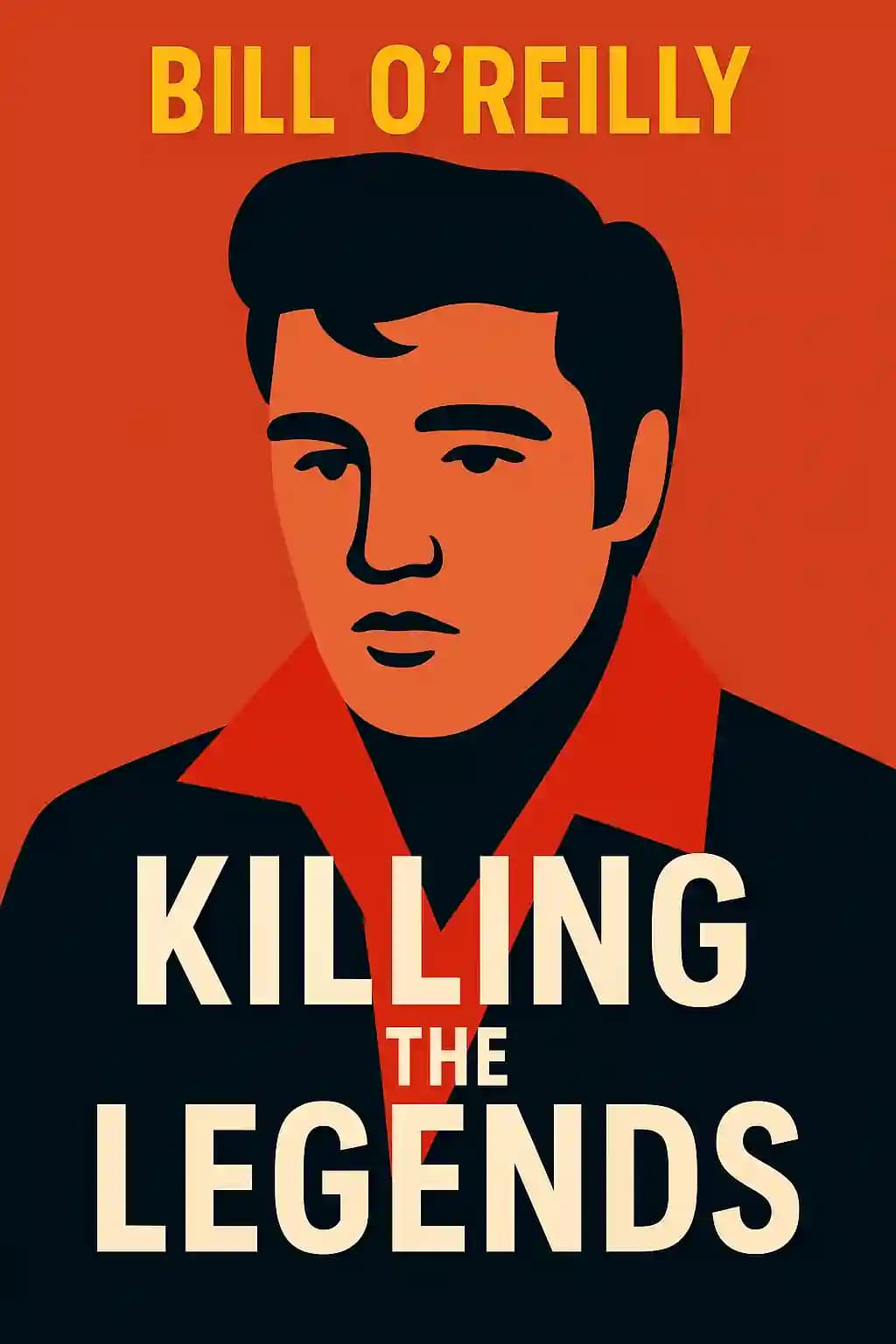
Bill O'Reilly's "Killing the Witches" traces this fascinating journey from the Salem witch trials through the founding of America, revealing how the terror of witchcraft allegations shaped our nation's core values. The book has become a cultural touchstone, praised by historians for illuminating how religious persecution ultimately led to the Constitutional protection of religious freedom. As Stephen King noted, "O'Reilly shows us that the distance between Salem's gallows and modern America's freedoms is shorter than we might think."
Chapitre 2
Seeds of Persecution: The Puritan Foundation
The Mayflower departed Plymouth, England in September 1620, dangerously late in the season for Atlantic crossing. Aboard were 102 passengers, mostly Puritans fleeing religious persecution, along with some "Strangers" like barrel-maker John Alden who were simply working the voyage. After a harrowing journey, they established Plymouth Colony, where they might have perished if not for Squanto, the last survivor of the local Patuxet tribe who taught them survival skills despite having been previously enslaved by Europeans.
Under Governor William Bradford's leadership, the colony began to thrive, celebrating their first successful harvest with the Wampanoag tribe in what would become known as the first Thanksgiving. Yet the seeds of religious intolerance were already present. The strict Puritans enforced Scripture-based laws with public punishments, rejected celebrations like Christmas, and mandated twice-weekly church attendance. When Bradford found "Strangers" playing games on Christmas Day, he and military leader Captain Standish confiscated their gaming equipment, deepening the divide between the religious zealots and those seeking greater freedom.
This religious strictness only intensified when Reverend John Lyford arrived in 1622, secretly undermining the colony by sending letters to London merchants describing the Puritans as "intolerant," "contentious, cruel and hard-hearted." When Bradford discovered these letters, he publicly humiliated Lyford and his accomplice "Mad Jack" Oldham, expelling them from the colony. The incident made Plymouth even more intolerant, though Bradford did improve food security by switching from communal to private farming.
As settlements expanded across New England, religious governance tightened. John Winthrop established the Massachusetts Bay Colony as a "city on a hill" under strict Puritan control. Only Roger Williams, who founded Providence Plantations (later Rhode Island) after being banished from Massachusetts, established separation of church and state. Throughout the rest of New England, theocracies governed every aspect of life with harsh punishments for religious and moral infractions, setting the stage for the tragedy that would unfold in Salem.
Chapitre 3
The Perfect Storm: How Salem Became a Killing Ground
By January 1692, Salem was primed for disaster. The community faced multiple threats: hostile Indian attacks, food shortages from poor harvests, and bitter property disputes between families. These tensions created perfect conditions for witch hysteria to take root in a town dominated by religious extremism, where residents attended mandatory three-hour church services and lived austere lives devoid of celebration or comfort.
In Boston, influential ministers Increase Mather and his son Cotton had become powerful voices against witchcraft. Cotton's 1689 book "Memorable Providences" detailed the case of Ann Glover, an Irish immigrant hanged as a witch in 1688 despite only speaking Gaelic and being unable to recite the Lord's Prayer in English. As an unusually cold winter set in and food became scarce, Salem's residents knew exactly who to blame: witches.
The spark came in February 1692, when Betty Parris, daughter of Salem's minister, suddenly experienced violent convulsions, followed by similar fits in her cousin Abigail Williams. The girls claimed invisible forces were tormenting them, and when consulted, Reverend John Hale declared, "The hand of Satan is in them." After a failed attempt at using a "witch cake" to identify the tormentors, the children named Tituba, a slave from Barbados with knowledge of "vodun" spiritual practices, as their affliction's source.
During questioning, Tituba made a stunning confession, claiming the Devil had visited her and that she had witnessed Sarah Good and Sarah Osborne practicing witchcraft. She described flying through the air, seeing a yellow bird offering "pretty things," and claimed there were nine witches in Salem. Her testimony ignited mass hysteria that would consume the community and lead to the execution of nineteen innocent people.
What made Salem's witch hunt so devastating was the perfect alignment of factors: economic insecurity, political tensions, religious extremism, and the power of suggestion. When combined with the court's willingness to accept "spectral evidence" (claims that a witch's spirit had appeared to the accuser), the result was a judicial system where accusation became tantamount to guilt, and denial was seen as further evidence of wickedness.
Chapitre 4
The Victims: Lives Destroyed by Hysteria
The first to face Salem's gallows was Bridget Bishop, an outrageous, thrice-married woman who had long been suspected of witchcraft. After her husband Thomas Oliver died in 1679, rumors spread that she had used witchcraft to kill him for his estate. When arrested on April 18, 1692, for "sundry practice of witchcraft," four young girls claimed her "specter" had inflicted hurt on them. Despite her pleas of innocence, whenever Bridget looked at her accusers in court, they screeched in pain with unnatural contortions.
After six weeks in a filthy jail cell with barely enough food to survive, Bridget stood trial on June 2. Doctor William Griggs found a "devil's mark" on her body that mysteriously disappeared hours later. Witnesses testified that her specter had admitted to killing four women, threatened to drown a girl, and physically attacked others. Despite her protests, she was found guilty and hanged on June 10, the first execution in the Salem witch trials.
Even more shocking was the case of Rebecca Nurse, a frail seventy-one-year-old respected church member who had lived in Salem for nearly fifty years. Unlike previous witch accusations targeting social outcasts, Rebecca and her husband Francis were wealthy, well-regarded community members. Political tensions underlay the case-Francis served on a committee opposing Reverend Parris and had a property dispute with the Putnam family, whose daughter Ann accused Rebecca.
Despite thirty-one character witnesses and the jury initially finding her not guilty, Judge Stoughton questioned Rebecca about referring to confessed witches as "one of us." When she failed to respond due to poor hearing, the jury changed their verdict to guilty. Governor Phips briefly granted a reprieve but rescinded it under pressure. On July 19, Rebecca and four others were hanged.
Perhaps most heartbreaking was the case of four-year-old Dorothy Good, who was imprisoned with her mother Sarah. After nine months chained in prison, Dorothy was released but permanently insane. Her mother, who was pregnant during her imprisonment, gave birth in jail before being executed. As Sarah stood on the gallows, she cursed Reverend Noyes, declaring, "I am no more a witch than you are a wizard, and if you take away my life, God will give you blood to drink."
Chapitre 5
The Accusers: Power, Politics and Paranoia
At the center of Salem's witch-hunting storm was Thomas Putnam, a bitter 40-year-old farmer who never achieved the status he expected. Walking through the village with depositions from his afflicted daughter Ann, he noticed how people avoided speaking to him, knowing what happened to his enemies. Though holding no official position, his power was immense-he personally accused forty-three people, with twelve executed and two dying in prison.
Putnam controlled the four primary accusers: his twelve-year-old daughter Ann, seventeen-year-old servant Mercy Lewis, eleven-year-old Abigail Williams, and seventeen-year-old Mary Walcott. Ann Putnam led the accusers, testifying against sixty-two witches-more than anyone else. For these young girls, it was the most exciting time of their lives, offering unprecedented power and attention in a society where they otherwise had none.
The girls' reputation spread throughout New England. They were invited to Andover where sixty-seven witches were arrested, and later to Gloucester. Cotton Mather supported them, convincing New England these children spoke truth despite their lethal accusations. Meanwhile, confessed witches in Boston cells provided a steady stream of new names to avoid the noose, creating an ever-expanding web of accusations.
By winter 1692, Salem was completely devastated. Nineteen "witches" had been executed, with scores more awaiting their likely executions in prison. Families were torn apart, friendships destroyed, and past deeds reinterpreted with sinister meanings. Travelers bypassed Salem, shops stood empty, and even church attendance dwindled. Only the witch trials drew crowds.
The end came suddenly when Governor William Phips returned from building fortifications in Maine to discover his wife, Dame Mary Phips, had been accused of witchcraft while he was away. The accusation followed her unauthorized release of an imprisoned witch, an act of mercy that cost jailer John Arnold his job. Phips was furious and immediately secured his wife's release. The accusation against someone as pious as Mary led him to conclude other innocent people must have been falsely accused.
After consulting with Increase and Cotton Mather, Phips took decisive action. He wrote to London explaining the situation, suspended all witch arrests, released many prisoners, and banned publications about the witch hunt-America's first act of government censorship. On October 29, he officially shut down the witch court, replacing it with the Superior Court of Judicature, which was prohibited from considering spectral evidence.
Chapitre 6
From Salem to Freedom: The Birth of Religious Liberty
The Salem witch trials ended not with justice but with a quiet fading away. Though English law permitted the trials and executions, Governor Phips stopped the proceedings but did little to hold the accusers accountable. No formal investigation followed, and many of those responsible continued their lives without consequence.
For the Salem girls who sparked the terror, their power evaporated suddenly. When invited to Gloucester to identify witches, they named three people but were shocked when none were arrested. During their return journey, they fell into fits upon passing an old woman-behavior that would have meant death for the woman months earlier-but now, she simply walked away undisturbed. The public no longer heeded their accusations.
The aftermath of Salem profoundly shaped American thought. In 1722, apprentice Benjamin Franklin created the pseudonym Silence Dogood to secretly publish satirical essays in his brother James's newspaper, the New-England Courant. The name cleverly mocked Cotton Mather, referencing his "Silent Sufferer" sermon and "do good" treatise. When James discovered his brother's deception, jealousy led him to end the column. After James was briefly jailed for the paper's provocative content, Ben took over as publisher, making the paper even more radical. Their relationship deteriorated, and seventeen-year-old Ben fled Boston in May 1723, selling his library to book passage on a ship, escaping both his brother and the religious persecution he faced for his deist views.
Franklin found Philadelphia to be everything Boston was not-a place of religious tolerance where he could rise "from the poverty and obscurity from which I was born and bred." Though Franklin never converted to Christianity despite his friendship with evangelist George Whitefield, he recognized the importance of religious freedom. This principle would become central to his vision for America.
Meanwhile, in Virginia, religious persecution continued against non-Anglicans. When fire destroyed Williamsburg's capitol building in 1747, Governor William Gooch framed it as divine punishment for allowing non-Anglican preachers to spread throughout Virginia. On April 3, he issued a proclamation barring "all itinerant preachers from teaching or holding any meeting in this Colony." This crackdown had both religious and financial motivations, as the Anglican Church derived substantial revenue through forced tithing.
This religious controversy became a pivotal moment in American history, representing early rebellion against British authority. Young Patrick Henry, whose mother Sarah had left the Anglican Church to follow evangelical minister Samuel Davies, witnessed this religious discord firsthand. The religious fissure between the Crown and colonists spread throughout the thirteen colonies, planting seeds of independence as freedom of choice took root.
Chapitre 7
The Founding Fathers' Response: Creating Constitutional Protections
By May 1787, the Founding Fathers gathered at the Philadelphia State House for the Constitutional Convention to structure the new nation, with George Washington presiding. While the delegates disagreed on many issues, the future of religion in America proved particularly contentious.
James Madison, arriving eleven days early for the convention, understood the dangers of governmental oppression from studying the Salem witch trials and Native American conflicts. The intense 36-year-old Virginian meticulously documented the proceedings while designing a compromise limiting both federal and state powers, particularly concerned with religious freedom.
In Virginia, Madison's conflict with Patrick Henry continued over religious freedom. Henry, who refused to attend the convention fearing a plot by the wealthy to create a strong central government, proposed making Christianity Virginia's official religion with state-funded Christian teachers. Madison and Thomas Jefferson strongly opposed any government-sanctioned religion.
Benjamin Franklin, despite his discomfort in the heat, sided with Madison on religious freedom. When debate over congressional representation grew bitter, with smaller states threatening to leave the union, Franklin urged compromise. Roger Sherman of Connecticut, a devout Congregationalist, argued for Christianity as the national religion with tax support for ministers, alarming Madison, Jefferson, and Franklin.
On September 17, 1787, the final day of the convention, Benjamin Franklin delivered his closing remarks through James Wilson. He urged every delegate to sign the Constitution despite their differences, addressing religious freedom directly. Franklin cleverly noted how most religious sects believe themselves infallible, comparing the Catholic Church and Church of England's certainty in their doctrines. He implored the delegates to "doubt a little of his own infallibility" and sign the document to demonstrate unanimity.
The Constitution, though imperfect, became the most liberating government document in the world, freeing citizens from the control of kings and tyrants. The First Amendment's guarantee that "Congress shall make no law respecting an establishment of religion, or prohibiting the free exercise thereof" directly addressed the lessons learned from Salem and other religious persecutions. Jefferson later called his Virginia Statute for Religious Freedom "the severest contest" he'd ever faced, but its principles became foundational to American liberty.
Chapitre 8
The Modern Exorcism: When Evil Returns
On January 15, 1949, thirteen-year-old Ronald Hunkeler began experiencing strange phenomena in his Cottage City, Maryland home. After hearing mysterious dripping water and scratching sounds beneath his bed, Ronald's troubles escalated following the sudden death of his eccentric Aunt Tillie, who had taught him to use Ouija boards to contact the dead. At school, Ronald's desk moved on its own, while at home, footsteps, shaking furniture, and flying objects terrorized the family.
The desperate Protestant parents contacted Reverend Luther Miles Schulze from Saint Stephen's Lutheran Evangelical Church. Though sympathetic, the Lutheran minister had no belief in demonic possession and could only offer prayers. Suspecting the boy of trickery, Schulze invited Ronald to spend the night at his home. There, the minister witnessed Ronald's bed violently vibrating, the boy sliding across the floor, and being pressed against the bed's underside until bleeding. Convinced this was beyond his understanding, Schulze told the family, "You have to see a Catholic priest. The Catholics know about things like this."
On February 27, 1949, the Hunkeler family visited Father Edward Albert Hughes at Saint James Catholic Church. During their meeting, the room grew cold, Ronald entered a trance-like state, cursed at the priest, and a telephone rattled. When Hughes reluctantly visited the Hunkeler home, Ronald shocked him by speaking perfect Latin, identifying himself as the devil. Ronald was subsequently admitted to Georgetown University Hospital under a false name, where he spoke in ancient languages including Aramaic while his bed shook violently and bloody scratches appeared on his chest.
After relocating to St. Louis, Father William S. Bowdern, a 52-year-old Jesuit and WWII veteran, began the formal rite of exorcism while Father Raymond Bishop documented the proceedings. During the initial exorcism, Ronald manifested disturbing physical symptoms-scratches formed across his body, including the word "HELL" on his chest and an image of the Devil on his leg. He fought invisible forces, sang in falsetto, and required physical restraint from multiple priests.
After thirty-one days of exorcism, on Easter morning, a commanding voice declared: "Satan! I am Saint Michael and I command you, Satan, and the other evil spirits to leave the body in the name of Dominus, immediately: NOW! NOW! NOW!" After violent thrashing, Ronald became calm, describing a vision of a man in white with a fiery sword pointing into a pit where devils disappeared. Father Bishop confirmed: "Since Monday at 11:00 p.m., there have been no indications of the presence of the Devil."
Chapitre 9
Legacy of Fear: From Salem to Hollywood
Ronald Hunkeler resumed normal teenage life while Georgetown University student William Peter Blatty became fascinated by newspaper accounts of the exorcism. Twenty-two years later, now a successful Hollywood comedy writer known for Pink Panther films, Blatty transformed the story into a novel, changing the possessed boy to a twelve-year-old girl named Regan MacNeil. The book became an international phenomenon, selling 13 million copies worldwide, with Warner Brothers engaging in a fierce bidding war before securing the movie rights for $641,000 - a record-breaking sum for that era.
Director William Friedkin's film adaptation was plagued by an unprecedented series of bizarre occurrences that fueled speculation about supernatural interference. Nine crew members died during the production period, including actors Jack MacGowran and Vasiliki Maliaros shortly after filming their death scenes. A mysterious fire destroyed most of the set except for the exorcism bedroom, causing significant delays. Lead actress Ellen Burstyn suffered a permanent spinal injury during a violent scene, while child star Linda Blair endured back injuries from the mechanical harness used for levitation effects. Even Max von Sydow, who played Father Merrin, lost his brother on his first day of shooting.
The film created an unprecedented worldwide sensation, with audiences experiencing extreme physical and psychological reactions. Theaters provided "Exorcist barf bags" and reported numerous cases of fainting, seizures, and hysteria. In one London cinema, a woman broke her jaw after falling face-first in panic. Religious leaders across denominations responded dramatically - the Archbishop of Canterbury Robert Runcie saw it as evidence of "the craving for the supernatural in an increasingly secular age," while evangelist Billy Graham went further, declaring there's "a power of evil in the film itself" that could invite actual demonic possession.
Meanwhile, Ronald Hunkeler's past cast a long shadow over his life. Though he achieved professional success as a NASA scientist working on the Apollo space program and the Pioneer 10 space probe, he lived in constant fear of being exposed as "the exorcism boy." His personal life suffered significantly - multiple marriages ended in divorce, and he became estranged from his children. On May 10, 2020, as he lay dying from a stroke at age 84 in Marriottsville, Maryland, a Catholic priest inexplicably appeared at his doorstep without being called. The priest performed the Sacrament of the Sick, heard Ronald's final confession, and administered Holy Communion - which Ronald peacefully accepted, in stark contrast to his violent rejection of the Eucharist during his childhood ordeal. Shortly after this mysterious visit, Ronald passed away, three weeks shy of his 85th birthday.
Today, Salem has thoroughly reimagined its tragic history into a booming tourist industry, attracting over a million visitors annually who contribute more than $100 million to the local economy. Now officially marketed as "Witch City" with the promotional tagline "Salem-Still Making History," the city hosts the world's largest Halloween celebration, spanning the entire month of October. What was initially criticized as controversial commercialization of a historical tragedy has evolved into an accepted and integral part of Salem's modern identity, with attractions ranging from the Salem Witch Museum to psychic reading shops and witch-themed retail stores.
Chapitre 10
America's Continuing Struggle with Fear and Freedom
The story of witchcraft in America reveals our nation's complex relationship with fear, persecution, and liberty. From the Puritans' rigid theocracy to the Constitutional protection of religious freedom, America's journey has been one of learning from tragic mistakes. The Salem witch trials, though centuries old, continue to resonate because they remind us how easily fear can override reason, how quickly accusations can replace evidence, and how dangerous it is when we abandon due process.
Benjamin Franklin, who witnessed firsthand the destructive power of religious persecution, became one of America's strongest advocates for tolerance. Though not religious himself, he understood that freedom of conscience was essential to a functioning democracy. His friendship with evangelist George Whitefield demonstrated how people of different beliefs could maintain "civil friendship" despite fundamental disagreements-a lesson increasingly relevant in our polarized times.
Thomas Jefferson and James Madison faced fierce opposition from Patrick Henry and others who wanted Christianity established as America's official religion. Their victory in separating church and state wasn't just about protecting religious minorities; it was about protecting religion itself from the corrupting influence of government power. As Jefferson noted, pure Christianity had been "corrupted by commentators," and only freedom could preserve authentic faith.
The Salem witch trials and Ronald Hunkeler's exorcism, separated by nearly three centuries, bookend America's relationship with the supernatural. Both events generated mass hysteria, both involved accusations that couldn't be disproven, and both revealed our enduring fascination with forces beyond our understanding. Yet they also demonstrate our progress-while Salem executed nineteen innocent people based on spectral evidence, modern America treated Hunkeler's case as a medical and spiritual challenge rather than a criminal matter.
As we continue to navigate the tensions between freedom and fear, between faith and reason, between individual rights and community welfare, the lessons of Salem remain vitally important. In times of crisis, we must resist the urge to find scapegoats. We must insist on evidence rather than accusation. And we must remember that the greatest protection against tyranny-whether religious or secular-is our Constitutional commitment to liberty and justice for all.