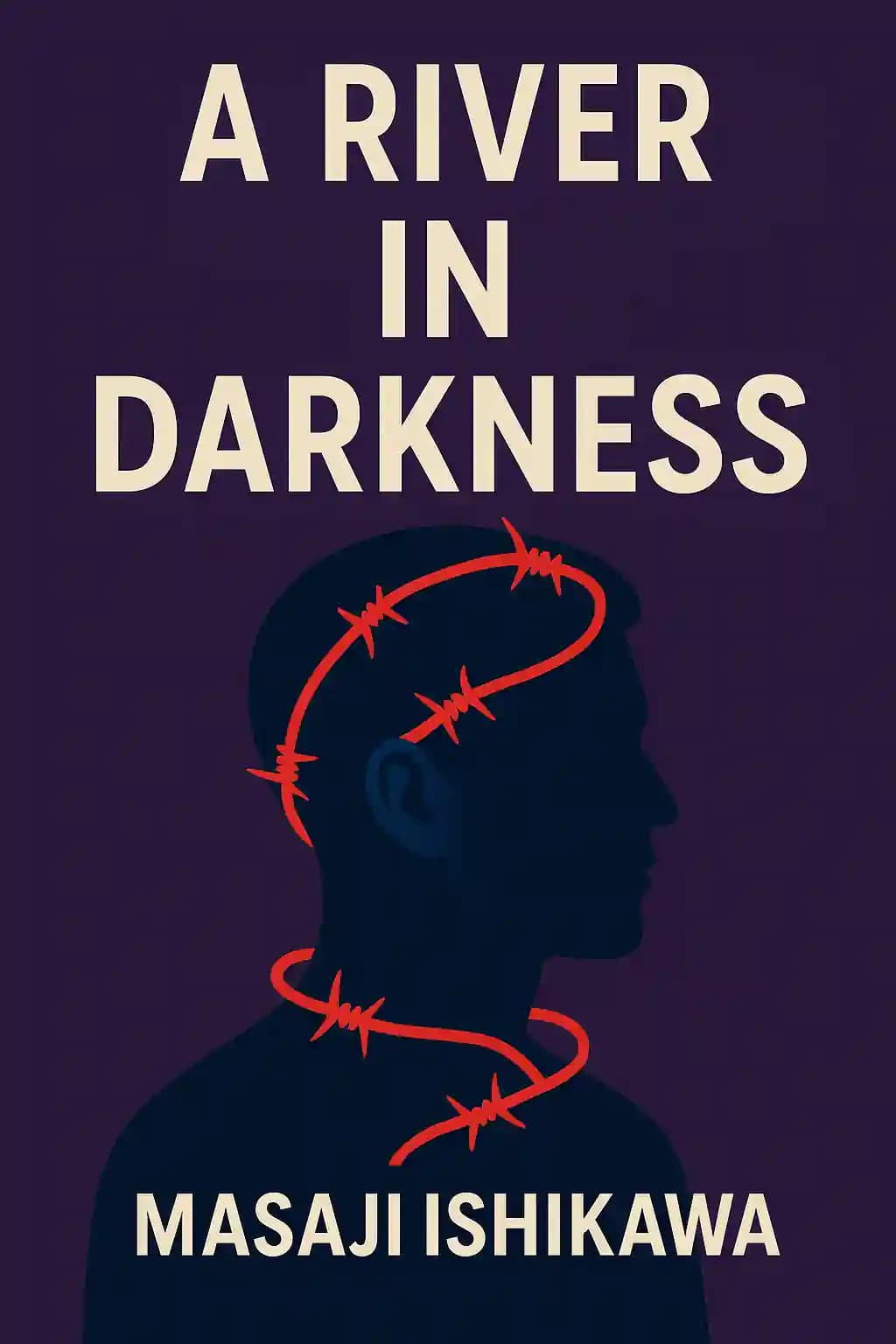
Masaji Ishikawa's harrowing memoir reveals his 36-year nightmare in North Korea - a rare firsthand account of starvation, propaganda, and eventual escape. What happens when a promised "paradise" becomes hell on earth? This shocking testimony changed how we understand the hermit kingdom.
Masaji Ishikawa, author of A River in Darkness: One Man’s Escape from North Korea, is a survivor of one of history’s most oppressive regimes and a powerful voice documenting life under totalitarianism.
Born in Japan in 1947 to a Korean father and Japanese mother, Ishikawa faced discrimination in both countries before his family was coerced into relocating to North Korea in 1960. His harrowing 36-year ordeal under the Kim regime—marked by starvation, forced labor, and systemic brutality—forms the core of this memoir, blending personal resilience with stark insights into authoritarian control.
Published in Japan in 2000 under a pseudonym and later translated into over a dozen languages, including Persian, the book has resonated globally, earning a 4.28-star rating from nearly 60,000 Goodreads reviewers. Ishikawa’s escape in 1996, aided by the Japanese government after a perilous river crossing, underscores his unflinching resolve. The memoir remains a critical work on human rights and survival, with excerpts featured in Literary Hub.
A River in Darkness is a harrowing memoir by Masaji Ishikawa, detailing his 36-year ordeal in North Korea after being forcibly relocated from Japan in 1960. The book chronicles his survival under totalitarian rule, systemic famine, and brutal labor camps, culminating in his 1996 escape via the Yalu River. It exposes the regime’s propaganda, human rights abuses, and the psychological toll of life under the Kim dynasty.
This book is essential for readers interested in North Korean defector narratives, human rights advocacy, or firsthand accounts of totalitarianism. It appeals to fans of memoirs like Nothing to Envy and those seeking insight into resilience amid oppression. Historians and policymakers will value its unflinching portrayal of systemic suffering.
Yes—critics and readers praise it as a gripping, eye-opening account of survival. With a 4.3/5 Goodreads rating, it’s lauded for its raw honesty and absence of political bias. While emotionally challenging, its stark depiction of North Korea’s reality makes it a vital read for understanding modern authoritarianism.
In 1996, Ishikawa fled by swimming across the Yalu River into China during a patrol gap. After evading capture, he received covert assistance from the Japanese government to leave China. His escape involved navigating freezing waters, starvation, and the constant fear of execution.
Ishikawa never reunited with his North Korean wife and three children due to Japan’s refusal to recognize their citizenship claims. His memoir implies they likely faced severe retaliation from the regime, though their exact fate remains unconfirmed.
Unlike broader sociological studies (e.g., Nothing to Envy), Ishikawa’s account focuses intensely on personal trauma and familial disintegration. It’s often cited for its visceral storytelling and lack of sentimentality, offering a complementary perspective to Barbara Demick’s journalistic approach.
Some reviewers note the memoir’s unrelenting bleakness and sparse historical context. A minority criticize its narrow focus on Ishikawa’s experience over systemic analysis. However, most agree its emotional rawness strengthens its authenticity.
The “river” refers to the Yalu River, representing both physical escape and the boundary between oppression and freedom. “Darkness” signifies North Korea’s ideological isolation and the moral void of its regime, as well as Ishikawa’s psychological struggles.
Ishikawa describes forced labor, state-sanctioned starvation, and relentless indoctrination. Families were divided by a caste system (songbun), while dissenters faced public execution. The regime’s false utopian promises are contrasted with reality—rotten food rations and paralyzing fear.
Despite diplomatic shifts, North Korea’s human rights violations persist. Ishikawa’s story underscores the enduring plight of defectors and the regime’s censorship tactics. It remains a cautionary tale about propaganda and authoritarian control in an era of global instability.
Key themes include resilience in dehumanizing conditions, the cost of ideological fanaticism, and the fragility of freedom. The memoir warns against complacency toward authoritarian regimes and highlights the universality of dignity amid suffering.
Initially published under a pseudonym in Japan (2000), it faced muted official response due to diplomatic sensitivities. The Korean translation sparked debates about Zainichi Korean identity. Its global translations (English, Persian) amplified awareness of North Korea’s crimes.
Ressentez le livre à travers la voix de l'auteur
Transformez les connaissances en idées captivantes et riches en exemples
Capturez les idées clés en un éclair pour un apprentissage rapide
Profitez du livre de manière ludique et engageante
North Korea is a paradise on earth!
All Koreans are barbarians, just like your husband.
This isn't what I expected.
I want to go home!
Rice is for humans, you little shit!
Décomposez les idées clés de River in Darkness en points faciles à comprendre pour découvrir comment les équipes innovantes créent, collaborent et grandissent.
Condensez River in Darkness en indices de mémoire rapides mettant en évidence les principes clés de franchise, de travail d'équipe et de résilience créative.

Découvrez River in Darkness à travers des récits vivants qui transforment les leçons d'innovation en moments mémorables et applicables.
Posez n'importe quelle question, choisissez la voix et co-créez des idées qui résonnent vraiment avec vous.

Cree par des anciens de Columbia University a San Francisco
"Instead of endless scrolling, I just hit play on BeFreed. It saves me so much time."
"I never knew where to start with nonfiction—BeFreed’s book lists turned into podcasts gave me a clear path."
"Perfect balance between learning and entertainment. Finished ‘Thinking, Fast and Slow’ on my commute this week."
"Crazy how much I learned while walking the dog. BeFreed = small habits → big gains."
"Reading used to feel like a chore. Now it’s just part of my lifestyle."
"Feels effortless compared to reading. I’ve finished 6 books this month already."
"BeFreed turned my guilty doomscrolling into something that feels productive and inspiring."
"BeFreed turned my commute into learning time. 20-min podcasts are perfect for finishing books I never had time for."
"BeFreed replaced my podcast queue. Imagine Spotify for books — that’s it. 🙌"
"It is great for me to learn something from the book without reading it."
"The themed book list podcasts help me connect ideas across authors—like a guided audio journey."
"Makes me feel smarter every time before going to work"
Cree par des anciens de Columbia University a San Francisco

Obtenez le resume de River in Darkness en PDF ou EPUB gratuit. Imprimez-le ou lisez-le hors ligne a tout moment.
A thirteen-year-old boy stands at Shinagawa Station in 1960, watching his best friend Lion push through a cheering crowd. "Are you really going?" Lion asks, tears streaming down his face. The boy promises to write, to return someday. But as the train pulls away toward a ship bound for North Korea-the supposed "paradise on earth"-he knows he'll never see his friend again. What follows is thirty-six years of hell that would test the limits of human endurance and expose one of the twentieth century's cruelest deceptions. Masaji Ishikawa's journey into darkness began with a campaign of lies. In the late 1950s, the General Association of Korean Residents in Japan launched a "return to North Korea" movement, though most Koreans in Japan had never set foot there. The propaganda was relentless: free education, stable jobs, a better life. What really convinced people wasn't grand ideology but simple promises-enough food, dignity, opportunity. Japan wanted to rid itself of Koreans they feared might cause unrest; Kim Il-sung needed workers to rebuild after the Korean War. Together, they orchestrated a mass migration that would trap over 93,000 people in a totalitarian nightmare. When Ishikawa's ship approached Chongjin port, he saw only barren mountains. An elderly passenger clutched the rail, his face ashen: "This isn't what I expected." It was already too late.