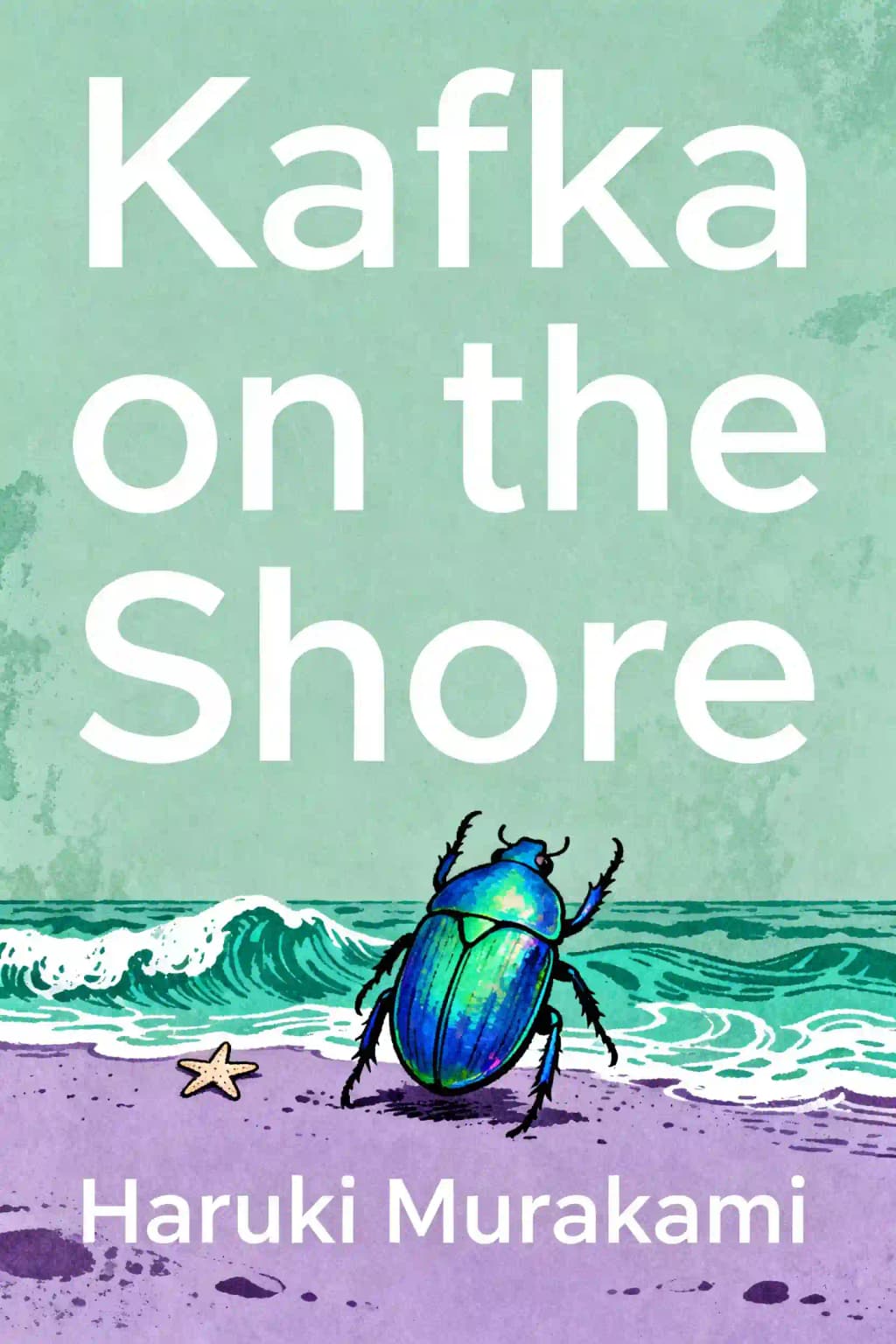
Kafka on the shore
Aperçu de Kafka on the shore
Murakami's dreamlike masterpiece blurs reality and fantasy, following a 15-year-old runaway's surreal journey. This controversial mind-bender sparked global debate while inspiring artists across mediums. What hidden truth awaits in this philosophical labyrinth that readers call "vivid, compelling, and wildly controversial"?
Thèmes clés dans Kafka on the shore
- oedipal prophecy
- metaphysical journey
- subconscious exploration
- magical realism
- parallel realities
Citations de Kafka on the shore
Closing your eyes isn't going to change anything. Nothing's going to disappear just because you don't want to see what's happening.
Memories warm you up from the inside. But they also tear you apart.
If you remember me, then I don’t care if everyone else forgets.
When you come out of the storm, you won't be the same person who walked in.
Personnages de Kafka on the shore
- Kafka TamuraA fifteen-year-old runaway seeking his identity
- NakataAn elderly man who can communicate with cats
- OshimaA refined librarian who becomes Kafka's mentor
- Miss SaekiThe mysterious head of the Komura Memorial Library
- CrowKafka's imaginary friend and conscience
À propos de l'auteur
À propos de l'auteur de Kafka on the shore
Haruki Murakami, the internationally acclaimed author of Kafka on the Shore, is celebrated for his surreal storytelling and philosophical exploration of human consciousness. Born in Kyoto, Japan, in 1949, Murakami’s works blend magical realism with themes of identity, fate, and self-reliance.
His background in running a Tokyo jazz bar infuses his prose with rhythmic, introspective qualities, while influences from Western authors like Franz Kafka and F. Scott Fitzgerald shape his narrative depth.
Murakami’s acclaimed bibliography features bestsellers such as Norwegian Wood, The Wind-Up Bird Chronicle, and 1Q84, all noted for their dreamlike narratives and existential inquiry. A recipient of the Jerusalem Prize, his works have been translated into over fifty languages, cementing his status as a global literary icon. Kafka on the Shore itself delves into the duality of mind and body, reflecting Murakami’s enduring fascination with the boundaries of reality and imagination.
Telecharger le resume de Kafka on the shore
Obtenez le resume de Kafka on the shore en PDF ou EPUB gratuit. Imprimez-le ou lisez-le hors ligne a tout moment.
FAQ sur ce livre
Kafka on the Shore follows two parallel narratives: Kafka Tamura, a 15-year-old runaway seeking escape from a dark prophecy, and Nakata, an elderly man with supernatural abilities. Blending surrealism and metaphysical themes, the novel explores identity, memory, and fate through dreamlike encounters, symbolic landscapes, and intertwined destinies.
Fans of magical realism, philosophical fiction, and nonlinear storytelling will appreciate Murakami’s surreal exploration of consciousness and existence. The novel appeals to readers comfortable with ambiguity, symbolic themes, and introspective narratives.
With over 500,000 ratings on Goodreads and critical acclaim, Kafka on the Shore is celebrated for its haunting prose and imaginative depth. While its open-ended puzzles polarize some readers, many praise its emotional resonance and thought-provoking themes.
Key themes include the mind vs. body dichotomy, the inevitability of fate versus free will, and the power of music to evoke introspection. Memory’s role in shaping identity and the struggle for self-sufficiency also drive the narrative.
Music serves as a bridge between characters’ inner worlds and reality. Miss Saeki’s song “Kafka on the Shore” symbolizes lost love and timeless longing, while classical compositions like Beethoven’s Archduke Trio reflect emotional states and catalyze introspection.
Kafka’s disgust with his genetic inheritance and Nakata’s disconnected consciousness highlight the tension between physical existence and inner self. Murakami uses surreal events—like Kafka’s symbolic metamorphosis—to question whether identity transcends the body.
Kafka’s father’s prophecy—that he will kill his father and sleep with his mother/sister—looms over his journey. Characters grapple with predestination, yet Murakami suggests agency through Kafka’s ultimate rejection of this curse.
Rainstorms of fish, a metaphysical library, and talking cats exemplify the novel’s dream logic. These elements mirror the characters’ psychological states and blur the line between reality and imagination.
- “Sometimes fate is like a small sandstorm that keeps changing directions”: Reflects the uncontrollable, shifting nature of destiny.
- “You’re the most precious thing in the world to me”: Miss Saeki’s unresolved grief, tying memory to emotional paralysis.
Kafka’s amnesia about his mother and Nakata’s lost memories symbolize fragmented selves. Murakami posits that identity is shaped by both remembered experiences and suppressed traumas.
Some readers find its abstract plot and unresolved mysteries frustrating. Critics note that its reliance on symbolism can overshadow character development, though others argue this intentional ambiguity invites personal interpretation.
Like The Wind-Up Bird Chronicle, it blends reality and surrealism, but Kafka is more focused on metaphysical philosophy. Its twin narratives and lyrical prose make it a standout in Murakami’s exploration of existential themes.




