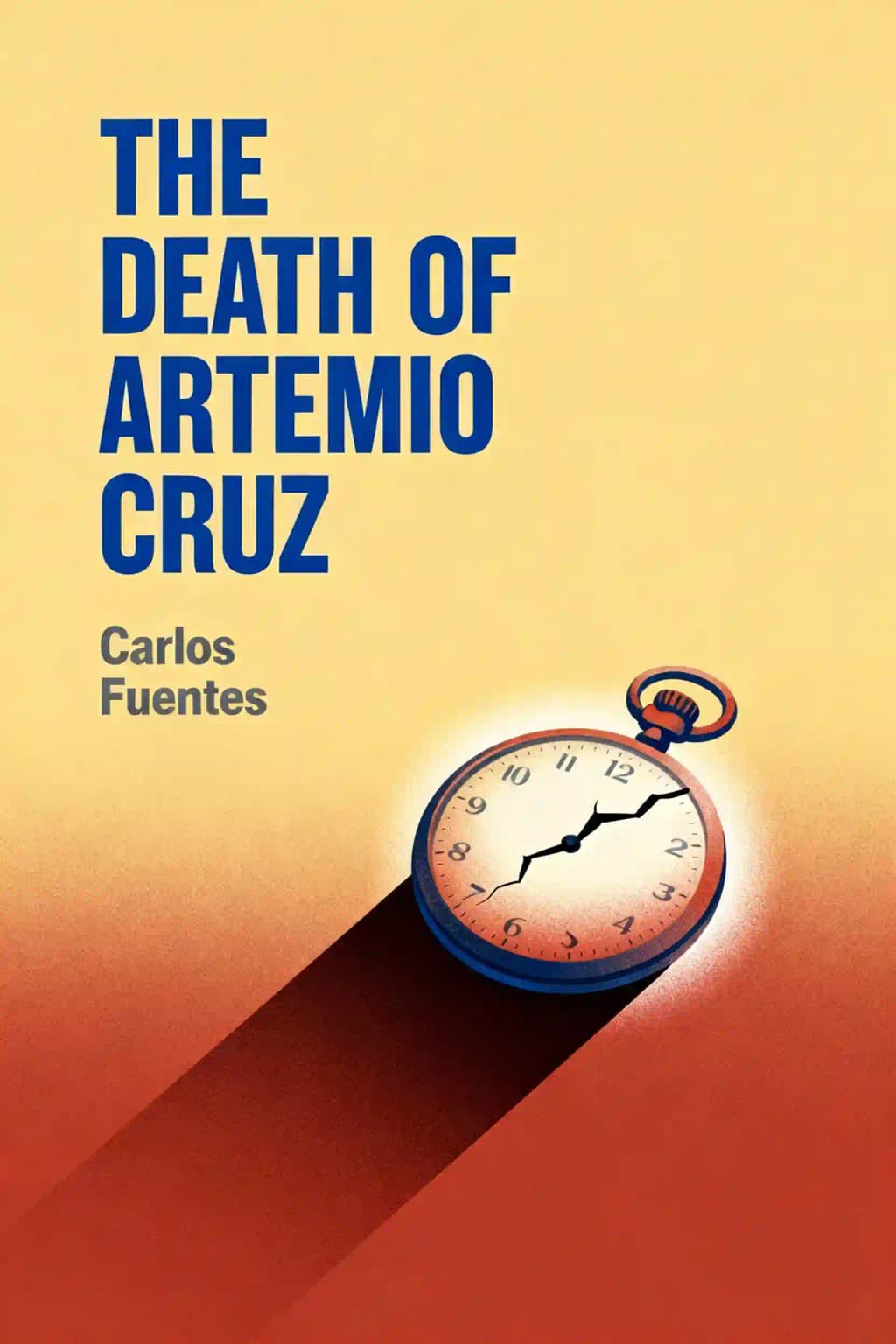
The death of Artemio Cruz
Overview of The death of Artemio Cruz
A dying revolutionary's fractured memories reveal Mexico's corrupted soul. Carlos Fuentes' 1962 masterpiece defined Latin American literature, pioneering stream-of-consciousness techniques that influenced generations. This cornerstone of the Latin American Boom asks: what price do nations pay when idealism transforms into power?

Key Themes in The death of Artemio Cruz
- mexican revolution legacy
- moral compromise
- fragmented consciousness
- betrayal of idealism
- corruption of power
Quotes from The death of Artemio Cruz
a mask so well-worn it might be indistinguishable from the face beneath.
a man with nothing to lose and everything to gain.
It was now their life, the life of both of them.
Characters in The death of Artemio Cruz
- Artemio CruzA dying businessman and former revolutionary
- ReginaArtemio's first love and a symbol of idealism
- Gonzalo BernalAn idealistic lawyer imprisoned with Artemio
- CatalinaArtemio's wife who harbors mutual resentment
- Colonel ZagalA military officer who captures Artemio
About the Author
About the Author of The death of Artemio Cruz
Carlos Fuentes Macías (1928–2012) was the celebrated Mexican novelist and essayist behind The Death of Artemio Cruz, a seminal work of modern Spanish American literature that explores post-revolutionary Mexico through experimental narrative techniques.
Published in 1962, this social realist novel examines themes of corruption, betrayal, and the distortion of revolutionary ideals through the story of a dying landowner reflecting on his morally compromised life.
Fuentes was a central figure in the Latin American Boom of the 1960s and 1970s, earning recognition from The New York Times as "one of the most admired writers in the Spanish-speaking world." A law graduate who served as Mexico's ambassador to France, he co-founded the influential Revista Mexicana de Literatura and produced an extensive body of work including Aura, Terra Nostra, and The Old Gringo. His literary achievements earned him the prestigious Miguel de Cervantes Prize and Mexico's highest honor, the Belisario Domínguez Medal.
The Death of Artemio Cruz has been widely regarded as a masterpiece and was optioned for film and television adaptation in 2012.
Download Summary of The death of Artemio Cruz
Get the The death of Artemio Cruz summary as a free PDF or EPUB. Print it or read offline anytime.
FAQs About This Book
The Death of Artemio Cruz follows a wealthy, corrupt Mexican businessman on his deathbed as he reflects on his life through fragmented flashbacks. Once an idealistic revolutionary fighter, Artemio Cruz transforms into a ruthless opportunist who betrays his principles, accumulating power through manipulation, blackmail, and exploitation. The novel explores how revolutionary ideals become corrupted by greed, examining Cruz's journey from peasant soldier to morally bankrupt tycoon in post-revolutionary Mexico.
The Death of Artemio Cruz is ideal for readers interested in Latin American literature, political corruption narratives, and experimental storytelling techniques. This novel appeals to those fascinated by moral complexity, the psychology of power, and how revolutions betray their original ideals. Readers who appreciate non-linear narratives influenced by cinematic techniques like Citizen Kane, as well as those studying Mexican history and social realism, will find this book particularly rewarding.
The Death of Artemio Cruz is widely regarded as a seminal work of modern Spanish American literature and remains deeply relevant for understanding power's corrupting influence. Carlos Fuentes crafts a complex portrait of moral decay through innovative narrative techniques, including rotating perspectives and cinematic flashbacks. The novel's exploration of how revolutionary ideals collapse under class domination, financial corruption, and failed reforms offers timeless insights into political betrayal and personal ambition.
The Death of Artemio Cruz conveys that power corrupts absolutely, showing how revolutionary idealism inevitably transforms into greed and moral decay. Carlos Fuentes suggests that only those who die young or remain impoverished retain their ideals, while survivors like Cruz betray everything they once fought for. The novel critiques how Mexico's revolutionary promises—land reform, peasant rights, social justice—were abandoned by the very people who claimed to champion them.
The Death of Artemio Cruz employs three distinct narrative voices—first person (I), second person (you), and third person (he)—to explore Cruz's fragmented consciousness. The novel unfolds non-chronologically through flashbacks from Cruz's deathbed on April 9, 1959, forcing readers to piece together his life's trajectory themselves. This cinematic technique, heavily influenced by Orson Welles' Citizen Kane, mirrors the protagonist's disintegrating identity and Mexico's fractured post-revolutionary reality.
The Death of Artemio Cruz examines corruption, betrayal of revolutionary ideals, and the moral compromises required for wealth and power. Central themes include class domination, Americanization of Mexico through corrupt business deals, the failure of land reform, and the search for Mexican national identity. Carlos Fuentes also explores emotional isolation, loveless relationships, and how violence and exploitation become normalized in pursuit of ambition.
Artemio Cruz is the corrupt protagonist who transforms from revolutionary idealist to ruthless businessman. Regina, his first love brutally hanged during the revolution, represents his lost innocence. Catalina Bernal becomes his wife in a loveless marriage arranged through deception after Cruz betrays her brother Gonzalo Bernal to a firing squad. Their son Lorenzo dies fighting Fascists in Spain, embodying the idealism Cruz abandoned, while daughter Teresa is disdained and ignored.
Artemio Cruz symbolizes post-revolutionary Mexico itself—born from violence, promising justice, but ultimately betraying its foundational ideals for personal gain. His transformation from peasant revolutionary to corrupt oligarch mirrors how Mexico's political class abandoned land reform and worker rights. Cruz's mixed heritage (son of a wealthy landowner who raped his mulatto slave mother) represents Mexico's identity crisis rooted in colonial conquest and racial violence.
The Death of Artemio Cruz depicts the Mexican Revolution as a failed promise where idealistic fighters like Cruz ultimately become the oppressive class they once opposed. Carlos Fuentes shows how revolutionary goals—redistributing land to peasants, ending exploitation—were corrupted by opportunists who used violence and political connections for personal enrichment. The novel criticizes how revolutionary leaders facilitated corrupt deals selling Mexico's natural resources to American businessmen while abandoning agrarian reform.
The title emphasizes that Cruz's physical death on his deathbed frames the entire narrative, but his moral and spiritual death occurred decades earlier when he betrayed his revolutionary principles. Carlos Fuentes uses Cruz's dying moments to examine how ambition kills idealism, suggesting the protagonist truly died when Regina was hanged and he chose self-preservation over honor. The title also suggests the death of Mexico's revolutionary hopes embodied in corrupted figures like Cruz.
Carlos Fuentes exposes how Mexico's post-revolutionary government perpetuated the same class exploitation it claimed to overthrow through figures like Artemio Cruz. The novel criticizes corrupt business practices, including selling national resources to American interests, using newspapers for blackmail and political manipulation, and violently expanding land holdings at peasants' expense. Fuentes dedicates the book to sociologist C. Wright Mills, emphasizing its political critique of failed land reform, Americanization, and financial corruption.
Carlos Fuentes employs stream-of-consciousness narration, rotating between three grammatical perspectives (I, you, he) to demonstrate the complexities of Cruz's fractured identity. The novel uses cinematic techniques borrowed from Citizen Kane, including flashbacks, cross-cutting, deep focus narrative, and fragmented chronology. Fuentes writes lengthy passages without punctuation, incorporates metaphor and juxtaposition like poetry, and alternates between vivid action scenes and Cruz's interior monologue to create a modernist masterpiece.