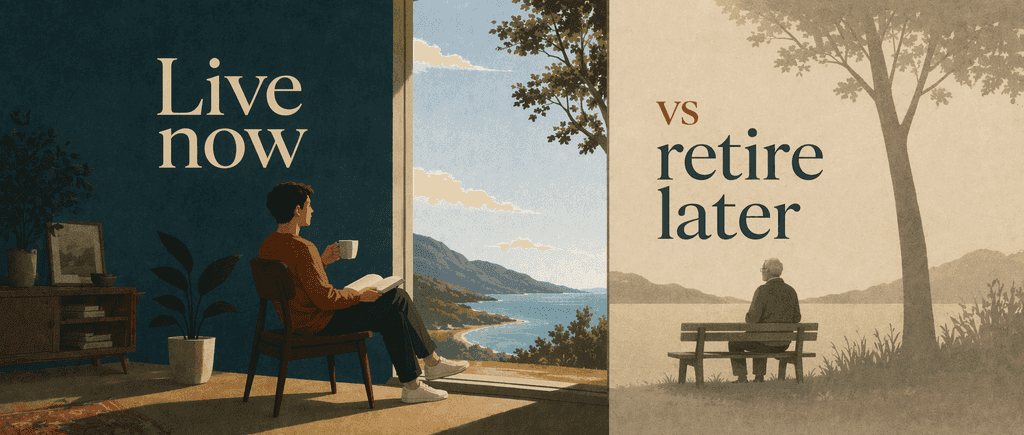
Happy Ever After: Escaping the Myth of the Perfect Life

Overview of Happy Ever After
Paul Dolan shatters society's happiness myths in "Happy Ever After." What if marriage, wealth, and parenthood don't guarantee fulfillment? Using surprising data showing happiness peaks at $50,000-$75,000 income, Dolan invites you to redefine success on your own liberating terms.
- Happiness peaks at $50k-$75k income—beyond that, wealth offers diminishing returns.
- Social narratives about success often mislead more than they guide.
- "Just-enough" lifestyle choices beat relentless pursuit of more money or status.
- Burnout isn’t glamorous—it’s a sign of misaligned work priorities and exploitation.
- Marriage and parenthood aren’t universal happiness requirements despite societal expectations.
- Education’s value lies in personal growth, not elite institution prestige or debt.
- Happiness emerges from minimizing misery, not chasing idealized versions of perfection.
- Financial security matters more than keeping up with others’ consumption habits.
- True well-being comes from designing experiences, not checking societal boxes.
- Consumerism traps us in comparison cycles that erode life satisfaction.
- Career success without intrinsic motivation often leads to emotional emptiness.
- Personal agency matters less than acknowledging life’s unpredictable constraints.
About the Author of Happy Ever After
Paul Dolan, author of Happy Ever After: Escaping The Myth of The Perfect Life, is a leading behavioural scientist and bestselling author renowned for his work on happiness and decision-making. A Professor of Behavioural Science at the London School of Economics and Political Science, Dolan combines academic rigor with practical insights, drawing from over 120 peer-reviewed publications and his influential Mindspace framework adopted by the UK Cabinet Office.
His expertise in measuring wellbeing led him to design the UK Office for National Statistics’ life satisfaction questions.
Dolan’s prior book, Happiness by Design—foreworded by Nobel laureate Daniel Kahneman—explores attention-driven joy, while Happy Ever After challenges societal narratives around success and fulfillment. He extends his reach through the Duck-Rabbit podcast and the Get Happier series, distilling behavioral science into actionable advice.
A frequent media commentator, Dolan has appeared on BBC1’s Lose Weight for Love and delivered keynote talks at global forums like the Hay Festival. His work has sold over 500,000 copies worldwide and informed policies across governments and corporations.
FAQs About Happy Ever After
What is Happy Ever After: Escaping the Myths of the Perfect Life about?
Happy Ever After challenges societal myths about success and happiness, arguing that conventional goals like marriage, career advancement, and wealth often don’t lead to lasting fulfillment. Paul Dolan uses behavioral science to show how cultural narratives distort our choices, urging readers to prioritize their own authentic desires over external expectations. The book blends research with practical advice to redefine what a "good life" means.
Who should read Happy Ever After?
This book is ideal for professionals, individuals feeling societal pressure to conform, or anyone questioning traditional life milestones. It’s particularly relevant for readers interested in behavioral psychology, self-help, or redefining success. Dolan’s insights appeal to those seeking data-driven strategies to align their lives with genuine happiness rather than societal scripts.
Is Happy Ever After worth reading?
Yes—reviewers praise its evidence-based critique of middle-class ideals and actionable advice for escaping societal traps. With over 34,000 academic citations, Dolan combines rigor with accessibility, making complex behavioral science concepts relatable. Readers gain tools to audit their own narratives and make intentional life choices.
What are the main ideas in Happy Ever After?
Key concepts include:
- Success traps: How blindly chasing marriage, promotions, or wealth leads to burnout.
- Attention vs. narratives: Aligning how you spend time with what truly matters to you.
- Redefining happiness: Prioritizing purpose and pleasure over societal "shoulds." Dolan emphasizes measuring happiness through daily experiences, not societal benchmarks.
How does Happy Ever After redefine traditional life goals?
The book argues that marriage and career success often don’t correlate with long-term happiness. For example, Dolan cites studies showing unmarried women without children frequently report higher well-being than married peers. He encourages readers to critically evaluate which goals stem from personal values versus cultural conditioning.
What quotes from Happy Ever After highlight its themes?
While direct quotes aren’t provided in sources, key takeaways include:
- "Financial security matters, but not at the cost of daily joy."
- "Happiness lies in designing your life, not checking society’s boxes." These reflect the book’s focus on intentional living and rejecting one-size-fits-all success.
How does Happy Ever After compare to Dolan’s Happiness by Design?
Both books explore happiness through behavioral science, but Happy Ever After specifically targets societal myths about adulthood and success. While Happiness by Design focuses on balancing pleasure/purpose, this sequel applies those principles to life stages like career, marriage, and aging, offering a more targeted critique of cultural narratives.
What criticisms exist about Happy Ever After?
Some readers may find its rejection of traditional milestones overly radical or dismissive of structural barriers like income inequality. Critics argue Dolan’s focus on individual agency underestimates systemic challenges. However, supporters counter that the book provides a framework to navigate these pressures thoughtfully.
How can Happy Ever After help with career decisions?
The book advises readers to evaluate career moves based on daily satisfaction, not just titles or salaries. Dolan suggests auditing how work impacts energy/stress levels and aligning roles with personal values (e.g., flexibility over prestige). This helps avoid "success theater" in professional lives.
Why is Happy Ever After relevant in 2025?
With growing debates about work-life balance, remote work, and delayed life milestones, Dolan’s critique of rigid success scripts remains timely. The book offers tools to navigate post-pandemic shifts in career, relationships, and self-definition, making it a resource for modern reevaluations of happiness.
What frameworks in Happy Ever After help assess personal happiness?
Dolan introduces:
- The Attention Audit: Tracking where time/energy actually go vs. ideal allocations.
- Myth-Busting Checklists: Questions to identify societal assumptions influencing decisions.
- Pleasure-Purpose Ratios: Balancing immediate enjoyment with long-term meaning.
How does Happy Ever After address financial goals?
While acknowledging money’s role in security, Dolan warns against fetishizing wealth. He suggests setting income thresholds tied to specific lifestyle needs rather than endless accumulation. Examples include prioritizing time freedom over higher salaries once basic needs and savings goals are met.
Feel the book through the author's voice
Turn knowledge into engaging, example-rich insights
Capture key ideas in a flash for fast learning
Enjoy the book in a fun and engaging way
Characters in Happy Ever After
- Paul DolanAuthor and behavioral scientist at the LSE
Key Themes in Happy Ever After
- social narratives
- narrative traps
- status seeking
- wealth paradox
- behavioral science
Quotes from Happy Ever After
These narratives function like invisible scripts, guiding our behavior and judgments without our conscious awareness.
Being a "high achiever" might sound good but feel terrible-and if it feels bad, should it really be glorified?
The wealth narrative stigmatizes contentment, labeling those satisfied with what they have as "lazy" or "unambitious."
The success narrative, particularly around careers and jobs, is deeply ingrained in society.
Explore Your Way of Learning
 Quick Summary Mode
Read or listen to Happy Ever After Summary in 8 Minutes
Break down key ideas from Happy Ever After into bite-sized takeaways to understand how innovative teams create, collaborate, and grow.

 Fun Mode
Happy Ever After Lessons Told Through 25-Min Stories
Experience Happy Ever After through vivid storytelling that turns innovation lessons into moments you'll remember and apply.
 Personalize Mode
Experience Happy Ever After in your own learning style
Ask anything, choose your learning style, and co-create insights that truly resonate with you.

From Columbia University alumni built in San Francisco
"Instead of endless scrolling, I just hit play on BeFreed. It saves me so much time."


"I never knew where to start with nonfiction—BeFreed’s book lists turned into podcasts gave me a clear path."


"Perfect balance between learning and entertainment. Finished ‘Thinking, Fast and Slow’ on my commute this week."
"Crazy how much I learned while walking the dog. BeFreed = small habits → big gains."
"Reading used to feel like a chore. Now it’s just part of my lifestyle."

"Feels effortless compared to reading. I’ve finished 6 books this month already."
"BeFreed turned my guilty doomscrolling into something that feels productive and inspiring."

"BeFreed turned my commute into learning time. 20-min podcasts are perfect for finishing books I never had time for."
"BeFreed replaced my podcast queue. Imagine Spotify for books — that’s it. 🙌"

"It is great for me to learn something from the book without reading it."
"The themed book list podcasts help me connect ideas across authors—like a guided audio journey."
"Makes me feel smarter every time before going to work"
From Columbia University alumni built in San Francisco
"Instead of endless scrolling, I just hit play on BeFreed. It saves me so much time."
"I never knew where to start with nonfiction—BeFreed’s book lists turned into podcasts gave me a clear path."
"Perfect balance between learning and entertainment. Finished ‘Thinking, Fast and Slow’ on my commute this week."
"Crazy how much I learned while walking the dog. BeFreed = small habits → big gains."
"Reading used to feel like a chore. Now it’s just part of my lifestyle."
"Feels effortless compared to reading. I’ve finished 6 books this month already."
"BeFreed turned my guilty doomscrolling into something that feels productive and inspiring."
"BeFreed turned my commute into learning time. 20-min podcasts are perfect for finishing books I never had time for."
"BeFreed replaced my podcast queue. Imagine Spotify for books — that’s it. 🙌"
"It is great for me to learn something from the book without reading it."
"The themed book list podcasts help me connect ideas across authors—like a guided audio journey."
"Makes me feel smarter every time before going to work"
"Instead of endless scrolling, I just hit play on BeFreed. It saves me so much time."
"I never knew where to start with nonfiction—BeFreed’s book lists turned into podcasts gave me a clear path."
"Perfect balance between learning and entertainment. Finished ‘Thinking, Fast and Slow’ on my commute this week."
"Crazy how much I learned while walking the dog. BeFreed = small habits → big gains."
"Reading used to feel like a chore. Now it’s just part of my lifestyle."
"Feels effortless compared to reading. I’ve finished 6 books this month already."
"BeFreed turned my guilty doomscrolling into something that feels productive and inspiring."
"BeFreed turned my commute into learning time. 20-min podcasts are perfect for finishing books I never had time for."
"BeFreed replaced my podcast queue. Imagine Spotify for books — that’s it. 🙌"
"It is great for me to learn something from the book without reading it."
"The themed book list podcasts help me connect ideas across authors—like a guided audio journey."
"Makes me feel smarter every time before going to work"
"Instead of endless scrolling, I just hit play on BeFreed. It saves me so much time."
"I never knew where to start with nonfiction—BeFreed’s book lists turned into podcasts gave me a clear path."
"Perfect balance between learning and entertainment. Finished ‘Thinking, Fast and Slow’ on my commute this week."
"Crazy how much I learned while walking the dog. BeFreed = small habits → big gains."
"Reading used to feel like a chore. Now it’s just part of my lifestyle."
"Feels effortless compared to reading. I’ve finished 6 books this month already."
"BeFreed turned my guilty doomscrolling into something that feels productive and inspiring."
"BeFreed turned my commute into learning time. 20-min podcasts are perfect for finishing books I never had time for."
"BeFreed replaced my podcast queue. Imagine Spotify for books — that’s it. 🙌"
"It is great for me to learn something from the book without reading it."
"The themed book list podcasts help me connect ideas across authors—like a guided audio journey."
"Makes me feel smarter every time before going to work"

Download Summary of Happy Ever After
Get the Happy Ever After summary as a free PDF or EPUB. Print it or read offline anytime.