Discover how Nobel Prize-winning research revealed neurons that fire at specific locations, creating cognitive maps in your brain. From navigation to consciousness, explore the spatial intelligence that makes thinking possible.
Mejor cita de Place Cells: The Brain's GPS Revolution
“
Thinking is actually a form of movement through mental maps; when you solve problems or recall memories, your brain activates successive locations within these mental reference frames, just as it would when physically exploring an environment.
”
F
Generated by Freedee_89C48E3C
Pregunta de entrada
# Place cells: A quantitative guide for computational model validation
Place cells are hippocampal pyramidal neurons that fire when an animal occupies specific locations in an environment, forming the neural basis of cognitive spatial maps. For computational model validation, cells should exhibit **spatial information ≥0.5 bits/spike**, **peak firing rates of 5-40 Hz** with baseline rates below 1 Hz, and **place field sizes of 30-50 cm** in standard environments. Verification requires permutation testing against shuffled controls, with genuine place cells exceeding the 95th percentile of null distributions across spatial information, coherence, and stability metrics.
## Discovery established the hippocampal cognitive map
John O’Keefe and Jonathan Dostrovsky’s 1971 Brain Research paper documented the first evidence that hippocampal neurons encode spatial location. Recording from freely-moving rats, they discovered neurons that fired only “when the rat was situated in a particular part of the testing platform facing in a particular direction.” Controls eliminating auditory and olfactory cues ruled out simple sensory explanations, leading to their conclusion that the hippocampus provides “a spatial reference map.” O’Keefe and Nadel’s 1978 book *The Hippocampus as a Cognitive Map* formalized this theory, proposing place cells as basic units of an internal cognitive map— work that earned O’Keefe the 2014 Nobel Prize in Physiology or Medicine.
Place cells are found throughout the hippocampal formation with distinct regional properties. **CA1** is the most extensively studied region, with approximately **25% of neurons** displaying place field firing in familiar environments. **CA3** shows more stable representations across trials and days, with fields emerging gradually but remaining consistent. The **dentate gyrus** contributes to pattern separation, differentiating similar spatial memories. A critical feature is the dorsoventral gradient: **dorsal hippocampus** place fields measure roughly **30-50 cm** on standard linear tracks, while **ventral hippocampus** fields can span **5-10 meters**, reflecting a tenfold difference in spatial resolution.
## Firing rates and field sizes define the core phenotype
Place cell firing exhibits a stark contrast between in-field and out-of-field activity. **Baseline firing rates** outside the place field remain below **1 Hz** (typically 0.6 ± 0.2 Hz), while **in-field rates** average **4.7-7.3 Hz** with **peak rates reaching 20-40 Hz** during single passes and **80-100 Hz** during theta bursts. This firing rate differential produces the characteristic spatial selectivity used for classification.
Place field dimensions scale with both brain region and environment size. In standard recording chambers, fields occupy approximately **13% of a 76 cm diameter cylinder**. On linear tracks, rat place fields measure **40 cm** median width (interquartile range: 33-48 cm), while mouse fields are smaller at **33 cm** median (IQR: 25-40 cm). The Kjelstrup et al. (2008) study on an 18-meter track demonstrated that ventral hippocampus fields average **5-6 meters** with maximum extent reaching **10 meters**—the gradient is approximately linear along the dorsoventral axis.
In small environments (approximately 1 m²), **63-82% of place cells** exhibit single fields. However, in larger environments, multiple fields become prevalent: CA3 cells average **4.96 fields per cell** while dentate gyrus granule cells show **5.35 fields per cell** in expansive arenas. Stability is robust—place fields can persist **up to 153 days** in unchanging environments, though recent calcium imaging reveals that only **15-25%** of cells with fields on one day maintain them on subsequent days, reflecting representational drift.
## Spatial information metrics quantify place cell quality
The Skaggs et al. (1993, 1996) spatial information metric is the standard for place cell identification. The formula calculates **bits per spike**:
**SI = Σ pᵢ × (λᵢ/λ̄) × log₂(λᵢ/λ̄)**
where pᵢ represents occupancy probability in spatial bin i, λᵢ is the mean firing rate in that bin, and λ̄ is the overall mean firing rate. **Values exceeding 0.5 bits/spike** typically indicate genuine place cells, with well-tuned cells reaching **1-4 bits/spike**. Statistical significance requires comparison against **500-1000 shuffled versions** where spike times are shifted by at least 5 seconds relative to position data. Cells must exceed the **95th or 99th percentile** of the shuffled distribution (equivalent to z-score >2.29, p<0.01).
Complementary metrics strengthen classification. **Sparsity**, calculated as [E(λ)]²/E(λ²), measures firing concentration, with values of **0.22-0.24** indicating spatially confined activity (lower is more selective). **Spatial coherence**—the first-order autocorrelation of unsmoothed rate maps—should exceed **0.4-0.5** for genuine place fields. The **peak-to-mean firing rate ratio** typically requires values **≥4** for classification, with place field boundaries defined where firing exceeds **20% of peak rate**.
Four primary classification methods exist: the **Peak method** (activity at one location statistically higher than elsewhere), **Information method** (Skaggs metric), **Stability method** (correlation between session halves), and **Combination method** (multiple thresholds including field width 20-120 cm, in-field/out-field ratio ≥4, activity in ≥20% of traversals). Critically, these methods identify **largely non-overlapping populations**— only approximately 1.1% of cells satisfy all four criteria simultaneously.
## Remapping, phase precession, and replay reveal computational mechanisms
**Global remapping** occurs when animals move between distinct environments: the population of active cells and field locations become completely uncorrelated, producing statistically independent representations. **Rate remapping** preserves place field locations while varying firing rates—observed during subtle environmental changes like altered colors or odors. CA3 shows particularly dramatic rate remapping, with individual cells changing peak rates by an **order of magnitude**.
**Phase precession** couples place cell firing to the **6-12 Hz theta rhythm**. As an animal traverses a place field, spike timing advances progressively earlier relative to theta phase. Spikes begin approximately **90-120° after** the population activity peak upon field entry and precess through **100-355°** total (typically ~180°) by field exit. This temporal code provides information beyond rate coding alone, with theta-scale compression ratios reaching **10:1**—behavioral sequences spanning seconds compress into single theta cycles.
**Replay** during sleep and rest reactivates place cell sequences within **sharp-wave ripple** oscillations (**110-200 Hz**, lasting 40-100 ms). Approximately **5-20% of hippocampal neurons** fire within these brief windows. **Forward replay** precedes navigation and supports planning; **reverse replay** occurs at reward locations and correlates strongly with theta-scale compression during prior behavior (r=0.80). Replay compression factors reach 50-100 ms for sequences originally spanning seconds.
**Behavioral timescale synaptic plasticity (BTSP)** enables one-shot place field formation. Unlike classical spike-timing-dependent plasticity, BTSP potentiates inputs arriving **seconds before and after** dendritic plateau potentials, with rise time ~4 seconds and decay ~3 seconds. This mechanism produces predictive place fields that anticipate behaviorally significant locations.
## Distinguishing place cells from other spatial cell types
Place cells differ fundamentally from **grid cells**, which exhibit **hexagonal/triangular firing patterns** with multiple evenly-spaced fields spanning entire environments. Grid cells reside in medial entorhinal cortex (MEC) with spacing increasing along the dorsoventral axis (~50 cm dorsally to ~3 m ventrally). Grid scores—computed from rotational autocorrelation of rate maps—quantify hexagonal periodicity: **grid score = min(r₆₀, r₁₂₀) - max(r₃₀, r₉₀, r₁₅₀)**, with positive values indicating grid-like organization.
**Head direction cells** fire when the animal’s head points in specific allocentric directions, independent of location—they fire throughout the environment. **Border/boundary cells** activate at fixed distances from environmental boundaries, providing geometric reference signals. **Speed cells** show firing rates proportional to movement velocity. Place cells are distinguished by their **single localized fields** (in standard environments), **allocentric coding** anchored to external landmarks rather than body-centered coordinates, and **environment-specific representations** that globally remap across distinct contexts.
## Validating artificial place cells requires multiple convergent analyses
The DeepMind grid cells paper (Banino et al., Nature 2018) established methods for validating emergent spatial representations. For neural network hidden units:
1. **Rate map construction**: Record unit activations across positions, bin into N×N grid (typically 50×50), divide by occupancy, apply Gaussian smoothing (σ = 3-5 cm)
1. **Spatial information calculation**: Apply Skaggs formula to activations, require **≥0.5 bits/spike**
1. **Shuffling controls**: Time-shift activations relative to position (≥5 seconds), generate 500-1000 shuffles, require exceeding 95th/99th percentile
1. **Population decoding**: Train linear or Bayesian decoders to predict position from population activity; genuine spatial representations should support accurate position reconstruction
1. **Ablation experiments**: Silencing spatial units should impair navigation performance if representations are causally relevant
Properties that models readily replicate include spatially localized fields, environment-spanning coverage, and basic path integration. However, several features remain challenging: **hexagonal grid symmetry** (many models produce environment-shaped patterns instead), **discrete multi-scale organization** (biological grid modules have discrete scales), **realistic remapping dynamics**, and **theta-coupled phase precession**. Common failure modes include sensitivity to regularization hyperparameters, overfitting to training environments, and missing the ~50% of hippocampal neurons with non-spatial responses.
## Conclusion
For computational model validation, place cell identification requires spatial information **≥0.5 bits/spike** (exceeding shuffled controls at p<0.01), spatial coherence **>0.5**, peak firing rates **>1 Hz** with in-field/out-field ratios **≥4**, and place field widths between **20-120 cm**. Multiple complementary metrics provide robustness, as single criteria yield non-overlapping populations. Models should demonstrate decoding accuracy, remapping across environments, and ideally capture temporal phenomena like phase precession. The field increasingly recognizes that spatial representations may emerge as computational primitives in networks processing complex information—recent work shows place-like and grid-like patterns arising even in networks trained purely on visual perception, suggesting these representations may be fundamental features of spatial information processing rather than hippocampus-specific adaptations.
Creado por exalumnos de la Universidad de Columbia | en San Francisco
BeFreed Reúne a una Comunidad Global de Mentes Curiosas
4.7
valoración media
Más de 7,84 mil valoraciones de la app
Comunidad BeFreed
En serio, todavía no he explorado la app a fondo, pero después de usarla estos últimos días estoy impresionadísima… BeFreed está en otro nivel comparada con cualquier otra app de aprendizaje que haya usado. Te engancha muchísimo y de verdad mejora la concentración, ¡ideal para los que no paran de hacer scroll!
@ladyInfinity
Compré BeFreed hace exactamente 23 días y lo he usado todos los días desde entonces. Se ha integrado por completo en mi rutina diaria de trabajo y aprendizaje.
@jayallen
La verdad es que la app ha superado todas mis expectativas. Puedo pedirle que genere audio sobre cualquier tema, sea cual sea, y el resultado es impresionante. Mi campo profesional es una especialización en psicoterapia y es multidisciplinario; aun así, las respuestas son muy precisas.
@Raguipa
Lo que más valoro es cuánto ha reducido mi scroll: paso menos tiempo buscando y más tiempo absorbiendo información. La combinación de audiolibros completos, podcasts y los planes de aprendizaje es brillante.
@colonyofcreatorsNGO
Llevo 24 años siendo instructor de aprendizaje acelerado PhotoReading… los libros, la lectura y el aprendizaje son lo mío, y BeFreed ha hecho un gran trabajo ofreciendo un enfoque innovador para transmitir información de una forma fácil de consumir.
@BeFreed user
No es solo una app de resúmenes de libros: he usado la opción de lectura divertida y es un resumen mucho mejor y una forma más fácil de captar las ideas que la manera tradicional; solo eso ya vale la pena.
@austinakon
Me encanta esta app. La he usado varios días y no puedo dejar de escuchar. Una forma buenísima de empezar.
@jcrules328
Me gusta mucho el programa; llevo alrededor de un mes probándolo y siento que es una verdadera joya. Funciona genial porque puedo usar BeFreed para crear mis propios temas, y la voz es buenísima, con opciones de narración ilimitadas.
@DanielCZ
En serio, todavía no he explorado la app a fondo, pero después de usarla estos últimos días estoy impresionadísima… BeFreed está en otro nivel comparada con cualquier otra app de aprendizaje que haya usado. Te engancha muchísimo y de verdad mejora la concentración, ¡ideal para los que no paran de hacer scroll!
@ladyInfinity
Compré BeFreed hace exactamente 23 días y lo he usado todos los días desde entonces. Se ha integrado por completo en mi rutina diaria de trabajo y aprendizaje.
@jayallen
La verdad es que la app ha superado todas mis expectativas. Puedo pedirle que genere audio sobre cualquier tema, sea cual sea, y el resultado es impresionante. Mi campo profesional es una especialización en psicoterapia y es multidisciplinario; aun así, las respuestas son muy precisas.
@Raguipa
Lo que más valoro es cuánto ha reducido mi scroll: paso menos tiempo buscando y más tiempo absorbiendo información. La combinación de audiolibros completos, podcasts y los planes de aprendizaje es brillante.
@colonyofcreatorsNGO
Llevo 24 años siendo instructor de aprendizaje acelerado PhotoReading… los libros, la lectura y el aprendizaje son lo mío, y BeFreed ha hecho un gran trabajo ofreciendo un enfoque innovador para transmitir información de una forma fácil de consumir.
@BeFreed user
No es solo una app de resúmenes de libros: he usado la opción de lectura divertida y es un resumen mucho mejor y una forma más fácil de captar las ideas que la manera tradicional; solo eso ya vale la pena.
@austinakon
Me encanta esta app. La he usado varios días y no puedo dejar de escuchar. Una forma buenísima de empezar.
@jcrules328
Me gusta mucho el programa; llevo alrededor de un mes probándolo y siento que es una verdadera joya. Funciona genial porque puedo usar BeFreed para crear mis propios temas, y la voz es buenísima, con opciones de narración ilimitadas.
@DanielCZ
Me encanta poder recibir información e ideas útiles y condensadas en un audio estilo podcast de 8 a 15 minutos. No soy muy fan de los podcasts por tanto relleno, pero esto va directo al grano.
@BeFreed user
Estoy terminando mi doctorado y tengo que leer muchísimo material desconocido… Con BeFreed simplemente escribes un prompt y la app encuentra las fuentes por ti y genera un podcast en audio. El proceso de BeFreed me parece más ágil que el de NotebookLM.
@Brad
Suelo buscar en YouTube algo que escuchar mientras preparo el desayuno, salgo a caminar o voy al trabajo, ¡y BeFreed ofrece un enfoque aún más certero, sin anuncios y sin relleno!
@BeFreed user
Lo mejor de esta plataforma es su versatilidad. Literalmente no hay tema que quede fuera. Le lanzas lo que sea y lo maneja… Es raro encontrar una herramienta de aprendizaje sin limitaciones que de verdad cumpla lo que promete.
@jayallen
BeFreed es fantástica. Su diseño intuitivo hace que pase menos tiempo navegando y más tiempo aprendiendo. La mezcla de audiolibros, podcasts y planes de aprendizaje es una combinación genial que ha cambiado por completo mi rutina diaria.
@BeFreed user
Al principio me llevó un rato entender cómo crear podcasts en italiano y ¡boom! ¡Es genial! Puedo pedirle que me explique cualquier tema y lo hace súper bien y con mucha inteligencia.
@matteo77
BeFreed se ha convertido en mi app diaria de audiolibros… Lo que más me gusta es que pones tu texto y te devuelve un audio que puedes escuchar donde sea.
@kotanzu1
Me encanta poder recibir información e ideas útiles y condensadas en un audio estilo podcast de 8 a 15 minutos. No soy muy fan de los podcasts por tanto relleno, pero esto va directo al grano.
@BeFreed user
Estoy terminando mi doctorado y tengo que leer muchísimo material desconocido… Con BeFreed simplemente escribes un prompt y la app encuentra las fuentes por ti y genera un podcast en audio. El proceso de BeFreed me parece más ágil que el de NotebookLM.
@Brad
Suelo buscar en YouTube algo que escuchar mientras preparo el desayuno, salgo a caminar o voy al trabajo, ¡y BeFreed ofrece un enfoque aún más certero, sin anuncios y sin relleno!
@BeFreed user
Lo mejor de esta plataforma es su versatilidad. Literalmente no hay tema que quede fuera. Le lanzas lo que sea y lo maneja… Es raro encontrar una herramienta de aprendizaje sin limitaciones que de verdad cumpla lo que promete.
@jayallen
BeFreed es fantástica. Su diseño intuitivo hace que pase menos tiempo navegando y más tiempo aprendiendo. La mezcla de audiolibros, podcasts y planes de aprendizaje es una combinación genial que ha cambiado por completo mi rutina diaria.
@BeFreed user
Al principio me llevó un rato entender cómo crear podcasts en italiano y ¡boom! ¡Es genial! Puedo pedirle que me explique cualquier tema y lo hace súper bien y con mucha inteligencia.
@matteo77
BeFreed se ha convertido en mi app diaria de audiolibros… Lo que más me gusta es que pones tu texto y te devuelve un audio que puedes escuchar donde sea.
Explore the internal GPS of your brain as we break down the biological, social, and cognitive pathways that shape our mental health and personal growth.
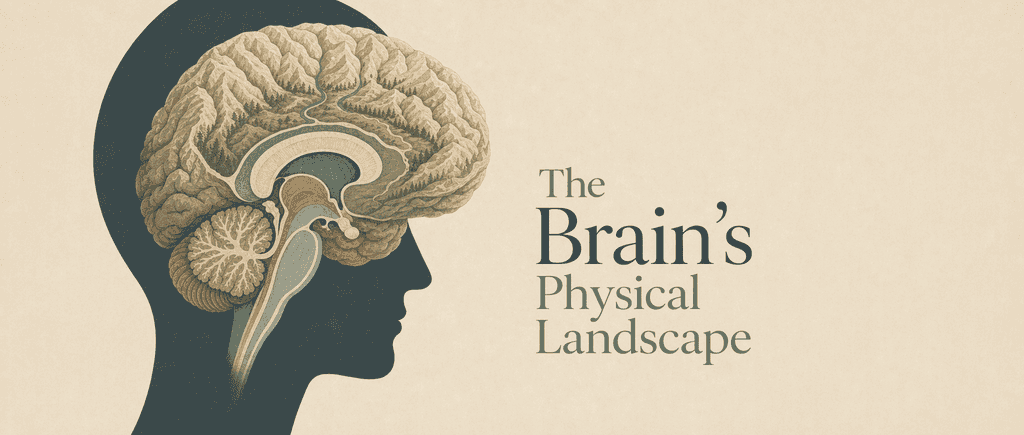
Explore how 100 billion neurons shape everything from memories to emotions, and discover how your brain's remarkable adaptability makes you uniquely you in this journey through modern neuroscience.
Explore how psychology and neuroscience merged to reveal that your thoughts, emotions, and memories are all brain activity - transforming our understanding of human experience.
We often ignore the complex organ shaping our every thought. Explore how 80 billion neurons build your world and how to keep this command center resilient.