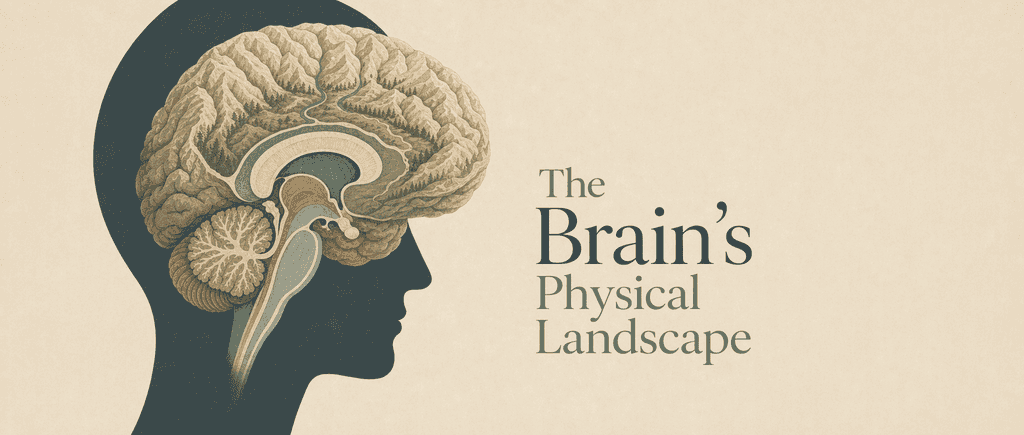
Why does your brain reroute your personality? Discover how new imaging and molecular maps are redefining how we understand behavior and learning.
Mejor cita de Neuroscience Breakthroughs and the New Map of the Mind
“
Neuropeptides are the sustain pedal of the brain; they change the context of every other signal and set the long-term mood of the entire neural circuit.
”
L
Generated by Locd and Chozen
Pregunta de entrada
Neroscience?
Voces del presentador
Lena
Miles
Fuentes de conocimiento
Preguntas frecuentes
Neuropeptides are large amino acid chains that function as a high-tech communication system for the brain, acting more like a wide-reaching Wi-Fi signal than a direct text message. While standard neurotransmitters like dopamine provide fast, specific "pings" between cells, neuropeptides diffuse over larger areas and linger longer because they are slow to break down. This allows them to set the "state" or mood of a neural circuit, acting like a sustain pedal on a piano that changes the context of all other incoming signals.
The brain’s architecture acts as a physical record of evolutionary history, moving from a "legacy code" basement to a sophisticated "penthouse." Older neuropeptide receptors, which manage basic survival functions like pain and blood flow, are primarily located in the subcortex. In contrast, more recently evolved receptors are concentrated in the neocortex, which developed during the transition to early mammals. This evolutionary "software update" allowed for the emergence of higher cognitive functions, such as spatial attention and complex social bonding.
Attractor states are stable patterns of neural activity that the brain naturally tends to fall into, similar to a ball rolling into a valley in a landscape. These states are "orthogonal," meaning they are distinct and spaced apart to prevent mental blurring and maximize memory capacity. Even when the brain is at rest, it is not idling; it is constantly flowing between these different attractor states. Research shows that certain disorders, such as autism, can alter the "gravity" or depth of these valleys, changing how the brain traverses this internal landscape.
Precision neuroimaging involves repeatedly scanning a single individual to create a unique map of their specific neural circuits, rather than relying on a general population average. This is crucial for treatments like DBS because specific hubs, such as the somato-cognitive action network (SCAN), can shift locations between individuals. By using these personalized maps, doctors can "tune" the brain with specific electrical frequencies to normalize glitchy connections, helping to treat conditions like Parkinson’s disease with much higher accuracy.
Yes, the brain is "livewired" and constantly changing based on input, a process known as neuroplasticity. Activities like aerobic exercise act as "fertilizer" for neural pathways by boosting growth factors, while learning new skills physically expands the brain's representational areas. Conversely, chronic stress can "denormalize" important planning networks. Because the brain will wire itself based on whatever data it receives, individuals can actively "sculpt" their circuits through intentional habits like quality sleep, social connection, and continuous learning.
Creado por exalumnos de la Universidad de Columbia | en San Francisco
BeFreed Reúne a una Comunidad Global de Mentes Curiosas
4.7
valoración media
Más de 7,84 mil valoraciones de la app
Comunidad BeFreed
En serio, todavía no he explorado la app a fondo, pero después de usarla estos últimos días estoy impresionadísima… BeFreed está en otro nivel comparada con cualquier otra app de aprendizaje que haya usado. Te engancha muchísimo y de verdad mejora la concentración, ¡ideal para los que no paran de hacer scroll!
@ladyInfinity
Compré BeFreed hace exactamente 23 días y lo he usado todos los días desde entonces. Se ha integrado por completo en mi rutina diaria de trabajo y aprendizaje.
@jayallen
La verdad es que la app ha superado todas mis expectativas. Puedo pedirle que genere audio sobre cualquier tema, sea cual sea, y el resultado es impresionante. Mi campo profesional es una especialización en psicoterapia y es multidisciplinario; aun así, las respuestas son muy precisas.
@Raguipa
Lo que más valoro es cuánto ha reducido mi scroll: paso menos tiempo buscando y más tiempo absorbiendo información. La combinación de audiolibros completos, podcasts y los planes de aprendizaje es brillante.
@colonyofcreatorsNGO
Llevo 24 años siendo instructor de aprendizaje acelerado PhotoReading… los libros, la lectura y el aprendizaje son lo mío, y BeFreed ha hecho un gran trabajo ofreciendo un enfoque innovador para transmitir información de una forma fácil de consumir.
@BeFreed user
No es solo una app de resúmenes de libros: he usado la opción de lectura divertida y es un resumen mucho mejor y una forma más fácil de captar las ideas que la manera tradicional; solo eso ya vale la pena.
@austinakon
Me encanta esta app. La he usado varios días y no puedo dejar de escuchar. Una forma buenísima de empezar.
@jcrules328
Me gusta mucho el programa; llevo alrededor de un mes probándolo y siento que es una verdadera joya. Funciona genial porque puedo usar BeFreed para crear mis propios temas, y la voz es buenísima, con opciones de narración ilimitadas.
@DanielCZ
En serio, todavía no he explorado la app a fondo, pero después de usarla estos últimos días estoy impresionadísima… BeFreed está en otro nivel comparada con cualquier otra app de aprendizaje que haya usado. Te engancha muchísimo y de verdad mejora la concentración, ¡ideal para los que no paran de hacer scroll!
@ladyInfinity
Compré BeFreed hace exactamente 23 días y lo he usado todos los días desde entonces. Se ha integrado por completo en mi rutina diaria de trabajo y aprendizaje.
@jayallen
La verdad es que la app ha superado todas mis expectativas. Puedo pedirle que genere audio sobre cualquier tema, sea cual sea, y el resultado es impresionante. Mi campo profesional es una especialización en psicoterapia y es multidisciplinario; aun así, las respuestas son muy precisas.
@Raguipa
Lo que más valoro es cuánto ha reducido mi scroll: paso menos tiempo buscando y más tiempo absorbiendo información. La combinación de audiolibros completos, podcasts y los planes de aprendizaje es brillante.
@colonyofcreatorsNGO
Llevo 24 años siendo instructor de aprendizaje acelerado PhotoReading… los libros, la lectura y el aprendizaje son lo mío, y BeFreed ha hecho un gran trabajo ofreciendo un enfoque innovador para transmitir información de una forma fácil de consumir.
@BeFreed user
No es solo una app de resúmenes de libros: he usado la opción de lectura divertida y es un resumen mucho mejor y una forma más fácil de captar las ideas que la manera tradicional; solo eso ya vale la pena.
@austinakon
Me encanta esta app. La he usado varios días y no puedo dejar de escuchar. Una forma buenísima de empezar.
@jcrules328
Me gusta mucho el programa; llevo alrededor de un mes probándolo y siento que es una verdadera joya. Funciona genial porque puedo usar BeFreed para crear mis propios temas, y la voz es buenísima, con opciones de narración ilimitadas.
@DanielCZ
Me encanta poder recibir información e ideas útiles y condensadas en un audio estilo podcast de 8 a 15 minutos. No soy muy fan de los podcasts por tanto relleno, pero esto va directo al grano.
@BeFreed user
Estoy terminando mi doctorado y tengo que leer muchísimo material desconocido… Con BeFreed simplemente escribes un prompt y la app encuentra las fuentes por ti y genera un podcast en audio. El proceso de BeFreed me parece más ágil que el de NotebookLM.
@Brad
Suelo buscar en YouTube algo que escuchar mientras preparo el desayuno, salgo a caminar o voy al trabajo, ¡y BeFreed ofrece un enfoque aún más certero, sin anuncios y sin relleno!
@BeFreed user
Lo mejor de esta plataforma es su versatilidad. Literalmente no hay tema que quede fuera. Le lanzas lo que sea y lo maneja… Es raro encontrar una herramienta de aprendizaje sin limitaciones que de verdad cumpla lo que promete.
@jayallen
BeFreed es fantástica. Su diseño intuitivo hace que pase menos tiempo navegando y más tiempo aprendiendo. La mezcla de audiolibros, podcasts y planes de aprendizaje es una combinación genial que ha cambiado por completo mi rutina diaria.
@BeFreed user
Al principio me llevó un rato entender cómo crear podcasts en italiano y ¡boom! ¡Es genial! Puedo pedirle que me explique cualquier tema y lo hace súper bien y con mucha inteligencia.
@matteo77
BeFreed se ha convertido en mi app diaria de audiolibros… Lo que más me gusta es que pones tu texto y te devuelve un audio que puedes escuchar donde sea.
@kotanzu1
Me encanta poder recibir información e ideas útiles y condensadas en un audio estilo podcast de 8 a 15 minutos. No soy muy fan de los podcasts por tanto relleno, pero esto va directo al grano.
@BeFreed user
Estoy terminando mi doctorado y tengo que leer muchísimo material desconocido… Con BeFreed simplemente escribes un prompt y la app encuentra las fuentes por ti y genera un podcast en audio. El proceso de BeFreed me parece más ágil que el de NotebookLM.
@Brad
Suelo buscar en YouTube algo que escuchar mientras preparo el desayuno, salgo a caminar o voy al trabajo, ¡y BeFreed ofrece un enfoque aún más certero, sin anuncios y sin relleno!
@BeFreed user
Lo mejor de esta plataforma es su versatilidad. Literalmente no hay tema que quede fuera. Le lanzas lo que sea y lo maneja… Es raro encontrar una herramienta de aprendizaje sin limitaciones que de verdad cumpla lo que promete.
@jayallen
BeFreed es fantástica. Su diseño intuitivo hace que pase menos tiempo navegando y más tiempo aprendiendo. La mezcla de audiolibros, podcasts y planes de aprendizaje es una combinación genial que ha cambiado por completo mi rutina diaria.
@BeFreed user
Al principio me llevó un rato entender cómo crear podcasts en italiano y ¡boom! ¡Es genial! Puedo pedirle que me explique cualquier tema y lo hace súper bien y con mucha inteligencia.
@matteo77
BeFreed se ha convertido en mi app diaria de audiolibros… Lo que más me gusta es que pones tu texto y te devuelve un audio que puedes escuchar donde sea.
Explore the internal GPS of your brain as we break down the biological, social, and cognitive pathways that shape our mental health and personal growth.
Discover how cutting-edge brain research proves your personality isn't permanent. Learn practical methods to break free from limiting beliefs and transform your deepest sense of self using neuroplasticity, compassion, and environmental design.
Discover the revolutionary neuroscience behind identity change. Learn how neuroplasticity, habit formation, and conscious choice can help you literally rewire your brain to become who you want to be.
Explore how psychology and neuroscience merged to reveal that your thoughts, emotions, and memories are all brain activity - transforming our understanding of human experience.
Explore how 100 billion neurons shape everything from memories to emotions, and discover how your brain's remarkable adaptability makes you uniquely you in this journey through modern neuroscience.
Feeling stuck in old habits or limited by your biology? Discover how to physically reshape your brain's pathways to learn new skills and change your life.
Explore psychology's evolution from its scientific birth to modern approaches, revealing how this discipline illuminates human behavior, thought patterns, and our complex mental landscape.