Music Therapy: The Bridge to the Autistic Brain and Sensory Health
Explore how evidence-based music therapy acts as a bridge to the autistic brain, improving social communication and sensory processing through clinical interventions.
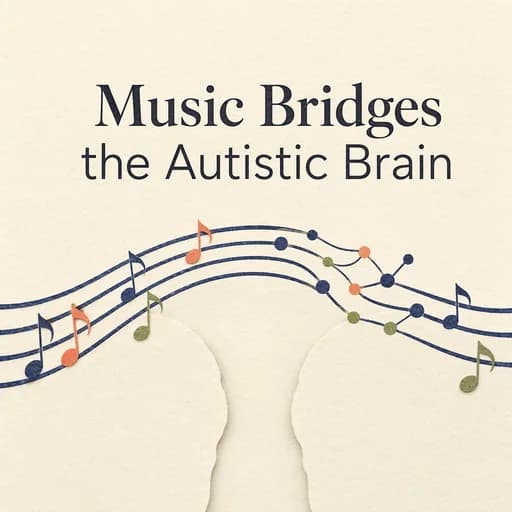
Mejor cita de Music Therapy: The Bridge to the Autistic Brain and Sensory Health
Modern neuroscience is finally catching up to what musicians have known for centuries: that music can repair damaged neural pathways and foster social connection in ways that traditional talk therapy simply cannot.

Esta lección de audio fue creada por un miembro de la comunidad BeFreed
Music therapy: history, practices, applications for autism, and documented clinical results for someone preparing for a program.






Preguntas frecuentes
Music therapy is a clinical, evidence-based discipline that uses musical interventions to achieve personalized goals within a therapeutic relationship. For those on the autism spectrum, it serves as a bridge to a nervous system that may feel isolated by chaotic sensory input. Because the brain is hardwired to respond to rhythm and melody before verbal logic, music therapy bypasses traditional communication barriers to help regulate the nervous system and improve emotional processing.
Individuals on the autism spectrum often experience a daily reality where lights are too bright and sounds are overwhelming. While they may struggle with social communication, research indicates they often possess normal or even enhanced abilities to recognize the emotional aspects of music. Music therapy utilizes this natural response to rhythm and melody to target stress management and sensory health, providing a structured way to connect with a world that often feels chaotic.
Clinical music therapy is a rigorous discipline used by qualified professionals to address a wide range of needs beyond just listening to music. These evidence-based interventions are designed to target specific outcomes such as memory enhancement, pain relief, physical rehabilitation, and stress management. By building a therapeutic relationship through musical experiences, practitioners can help individuals with autism achieve significant improvements in their daily functional abilities and overall nervous system regulation.
Creado por exalumnos de la Universidad de Columbia en San Francisco
"Instead of endless scrolling, I just hit play on BeFreed. It saves me so much time."


"I never knew where to start with nonfiction—BeFreed’s book lists turned into podcasts gave me a clear path."


"Perfect balance between learning and entertainment. Finished ‘Thinking, Fast and Slow’ on my commute this week."
"Crazy how much I learned while walking the dog. BeFreed = small habits → big gains."
"Reading used to feel like a chore. Now it’s just part of my lifestyle."

"Feels effortless compared to reading. I’ve finished 6 books this month already."
"BeFreed turned my guilty doomscrolling into something that feels productive and inspiring."

"BeFreed turned my commute into learning time. 20-min podcasts are perfect for finishing books I never had time for."
"BeFreed replaced my podcast queue. Imagine Spotify for books — that’s it. 🙌"

"It is great for me to learn something from the book without reading it."
"The themed book list podcasts help me connect ideas across authors—like a guided audio journey."
"Makes me feel smarter every time before going to work"
Creado por exalumnos de la Universidad de Columbia en San Francisco
"Instead of endless scrolling, I just hit play on BeFreed. It saves me so much time."
"I never knew where to start with nonfiction—BeFreed’s book lists turned into podcasts gave me a clear path."
"Perfect balance between learning and entertainment. Finished ‘Thinking, Fast and Slow’ on my commute this week."
"Crazy how much I learned while walking the dog. BeFreed = small habits → big gains."
"Reading used to feel like a chore. Now it’s just part of my lifestyle."
"Feels effortless compared to reading. I’ve finished 6 books this month already."
"BeFreed turned my guilty doomscrolling into something that feels productive and inspiring."
"BeFreed turned my commute into learning time. 20-min podcasts are perfect for finishing books I never had time for."
"BeFreed replaced my podcast queue. Imagine Spotify for books — that’s it. 🙌"
"It is great for me to learn something from the book without reading it."
"The themed book list podcasts help me connect ideas across authors—like a guided audio journey."
"Makes me feel smarter every time before going to work"
"Instead of endless scrolling, I just hit play on BeFreed. It saves me so much time."
"I never knew where to start with nonfiction—BeFreed’s book lists turned into podcasts gave me a clear path."
"Perfect balance between learning and entertainment. Finished ‘Thinking, Fast and Slow’ on my commute this week."
"Crazy how much I learned while walking the dog. BeFreed = small habits → big gains."
"Reading used to feel like a chore. Now it’s just part of my lifestyle."
"Feels effortless compared to reading. I’ve finished 6 books this month already."
"BeFreed turned my guilty doomscrolling into something that feels productive and inspiring."
"BeFreed turned my commute into learning time. 20-min podcasts are perfect for finishing books I never had time for."
"BeFreed replaced my podcast queue. Imagine Spotify for books — that’s it. 🙌"
"It is great for me to learn something from the book without reading it."
"The themed book list podcasts help me connect ideas across authors—like a guided audio journey."
"Makes me feel smarter every time before going to work"
"Instead of endless scrolling, I just hit play on BeFreed. It saves me so much time."
"I never knew where to start with nonfiction—BeFreed’s book lists turned into podcasts gave me a clear path."
"Perfect balance between learning and entertainment. Finished ‘Thinking, Fast and Slow’ on my commute this week."
"Crazy how much I learned while walking the dog. BeFreed = small habits → big gains."
"Reading used to feel like a chore. Now it’s just part of my lifestyle."
"Feels effortless compared to reading. I’ve finished 6 books this month already."
"BeFreed turned my guilty doomscrolling into something that feels productive and inspiring."
"BeFreed turned my commute into learning time. 20-min podcasts are perfect for finishing books I never had time for."
"BeFreed replaced my podcast queue. Imagine Spotify for books — that’s it. 🙌"
"It is great for me to learn something from the book without reading it."
"The themed book list podcasts help me connect ideas across authors—like a guided audio journey."
"Makes me feel smarter every time before going to work"