Does IQ Have a Relationship With Race and Gender?
Explore the complex relationship between IQ, race, and gender. This episode examines psychometrics, cognitive testing, and demographic differences in intelligence.

Mejor cita de Does IQ Have a Relationship With Race and Gender?
The data suggests that while racial gaps might reflect a difference in general mental capacity, gender gaps are more about a 'differentiation' of talents. Men and women might have the same overall 'horsepower,' but they apply it differently across various cognitive domains.

Esta lección de audio fue creada por un miembro de la comunidad BeFreed
Does Iq have any relationship with race and gender?






Preguntas frecuentes
The relationship between IQ and race is a highly debated topic within psychometrics and cognitive testing. While some historical data shows variations in average scores across different groups, many experts argue these differences are often influenced by socioeconomic factors, educational access, and cultural biases in testing rather than innate biological traits. Understanding these demographic differences in IQ requires a careful look at environmental contexts and the limitations of standardized intelligence quotient assessments.
Research into IQ and gender generally suggests that there are no significant differences in general intelligence between men and women. While some studies in psychometrics indicate slight variations in specific cognitive domains—such as verbal tasks or spatial reasoning—the overall intelligence quotient remains remarkably similar across genders. Most modern cognitive testing confirms that gender is not a primary determinant of a person's total intellectual capacity or their ability to perform complex mental tasks.
Psychometrics is the scientific field dedicated to the design and interpretation of tests that measure mental attributes like intelligence. When examining demographic differences in IQ, psychometricians analyze how various groups perform on cognitive testing to ensure validity and fairness. This field helps identify potential biases in how questions are framed, ensuring that the intelligence quotient accurately reflects cognitive ability rather than a person's specific racial or gender background.
Descubre más

Explore Human Mind, Culture & History
This plan bridges the gap between biological evolution and cultural history to explain what truly makes us human. It is ideal for curious minds seeking to understand the intersection of neuroscience, anthropology, and sociology.

General intelligence
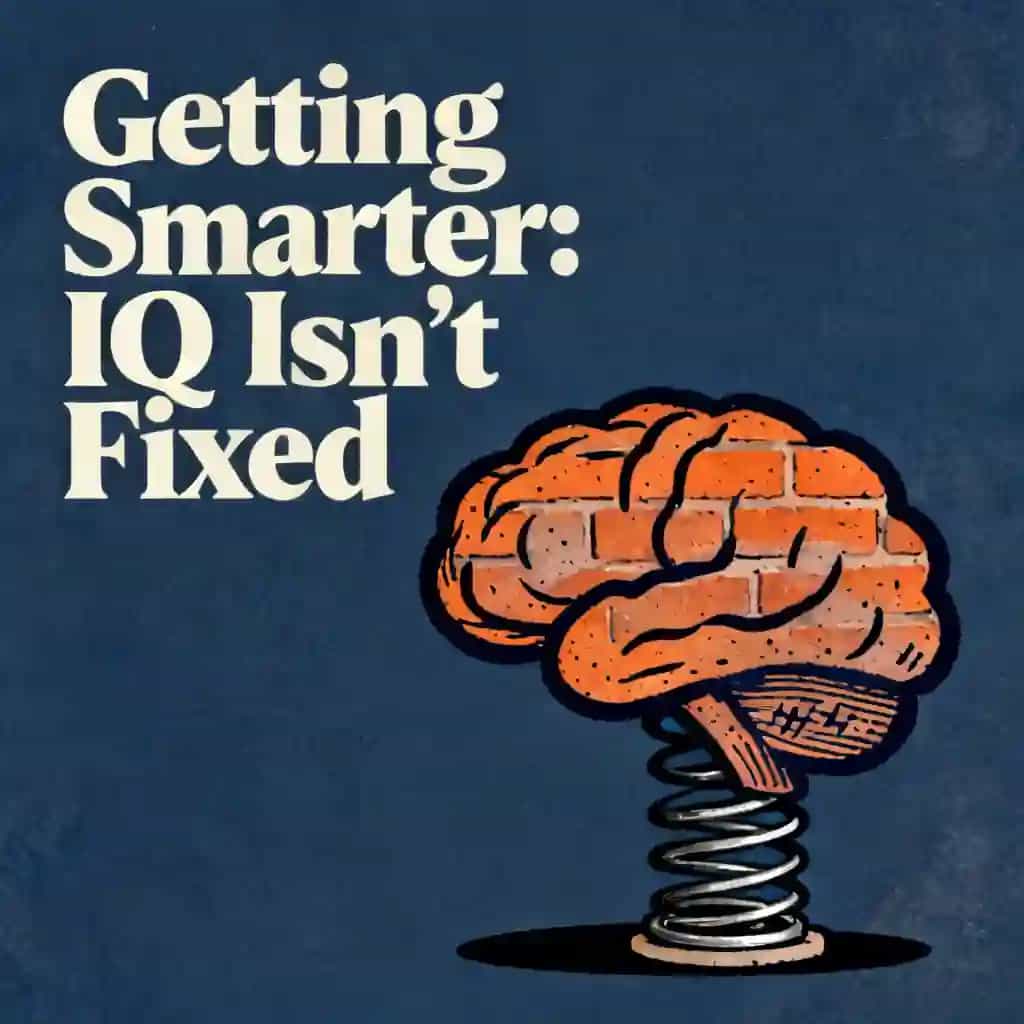
Intelligence isn't fixed—it's a set of skills you can systematically develop and optimize. This learning plan is ideal for professionals, students, and lifelong learners who want to enhance their cognitive abilities, think more clearly, and learn more effectively using science-backed methods rather than myths or pseudoscience.

The Biological Blueprint of Identity
This learning plan bridges the gap between hard science and human psychology, offering a deep dive into the physiological roots of who we are. It is ideal for students of behavioral science, psychology enthusiasts, or anyone seeking to understand the biological machinery driving human personality.

Grow Mindset, IQ & Reform Education System
This learning plan bridges the gap between cognitive science and structural reform, offering a blueprint for personal and systemic growth. It is ideal for educators, lifelong learners, and policymakers who want to optimize human intelligence and modernize how we teach.

Growth, Science, Tech & Human Potential
This learning plan bridges the gap between biological potential and technological advancement for high achievers and lifelong learners. It is designed for those looking to master their cognitive health while staying ahead of the AI-driven evolution of human capability.

The Brain's Brutal Trade-offs
This plan explores the biological 'price' of human intelligence, from metabolic demands to the challenges of raising vulnerable offspring. It is ideal for students of evolutionary biology, psychology, or anthropology seeking to understand the trade-offs that shaped the modern mind.

Understanding the human mind
This plan bridges the gap between biological neuroscience and behavioral psychology to provide a holistic view of human nature. It is ideal for curious learners, aspiring psychologists, or professionals seeking to understand the hidden drivers behind human interaction and decision-making.

Become one of the geniuses of this century.
This plan is designed for high-achievers and polymaths who want to transcend average cognitive performance. It bridges the gap between raw intelligence and world-class impact by decoding the specific habits and mental frameworks used by history's greatest innovators.
Creado por exalumnos de la Universidad de Columbia en San Francisco
"Instead of endless scrolling, I just hit play on BeFreed. It saves me so much time."


"I never knew where to start with nonfiction—BeFreed’s book lists turned into podcasts gave me a clear path."


"Perfect balance between learning and entertainment. Finished ‘Thinking, Fast and Slow’ on my commute this week."
"Crazy how much I learned while walking the dog. BeFreed = small habits → big gains."
"Reading used to feel like a chore. Now it’s just part of my lifestyle."

"Feels effortless compared to reading. I’ve finished 6 books this month already."
"BeFreed turned my guilty doomscrolling into something that feels productive and inspiring."

"BeFreed turned my commute into learning time. 20-min podcasts are perfect for finishing books I never had time for."
"BeFreed replaced my podcast queue. Imagine Spotify for books — that’s it. 🙌"

"It is great for me to learn something from the book without reading it."
"The themed book list podcasts help me connect ideas across authors—like a guided audio journey."
"Makes me feel smarter every time before going to work"
Creado por exalumnos de la Universidad de Columbia en San Francisco
"Instead of endless scrolling, I just hit play on BeFreed. It saves me so much time."
"I never knew where to start with nonfiction—BeFreed’s book lists turned into podcasts gave me a clear path."
"Perfect balance between learning and entertainment. Finished ‘Thinking, Fast and Slow’ on my commute this week."
"Crazy how much I learned while walking the dog. BeFreed = small habits → big gains."
"Reading used to feel like a chore. Now it’s just part of my lifestyle."
"Feels effortless compared to reading. I’ve finished 6 books this month already."
"BeFreed turned my guilty doomscrolling into something that feels productive and inspiring."
"BeFreed turned my commute into learning time. 20-min podcasts are perfect for finishing books I never had time for."
"BeFreed replaced my podcast queue. Imagine Spotify for books — that’s it. 🙌"
"It is great for me to learn something from the book without reading it."
"The themed book list podcasts help me connect ideas across authors—like a guided audio journey."
"Makes me feel smarter every time before going to work"
"Instead of endless scrolling, I just hit play on BeFreed. It saves me so much time."
"I never knew where to start with nonfiction—BeFreed’s book lists turned into podcasts gave me a clear path."
"Perfect balance between learning and entertainment. Finished ‘Thinking, Fast and Slow’ on my commute this week."
"Crazy how much I learned while walking the dog. BeFreed = small habits → big gains."
"Reading used to feel like a chore. Now it’s just part of my lifestyle."
"Feels effortless compared to reading. I’ve finished 6 books this month already."
"BeFreed turned my guilty doomscrolling into something that feels productive and inspiring."
"BeFreed turned my commute into learning time. 20-min podcasts are perfect for finishing books I never had time for."
"BeFreed replaced my podcast queue. Imagine Spotify for books — that’s it. 🙌"
"It is great for me to learn something from the book without reading it."
"The themed book list podcasts help me connect ideas across authors—like a guided audio journey."
"Makes me feel smarter every time before going to work"
"Instead of endless scrolling, I just hit play on BeFreed. It saves me so much time."
"I never knew where to start with nonfiction—BeFreed’s book lists turned into podcasts gave me a clear path."
"Perfect balance between learning and entertainment. Finished ‘Thinking, Fast and Slow’ on my commute this week."
"Crazy how much I learned while walking the dog. BeFreed = small habits → big gains."
"Reading used to feel like a chore. Now it’s just part of my lifestyle."
"Feels effortless compared to reading. I’ve finished 6 books this month already."
"BeFreed turned my guilty doomscrolling into something that feels productive and inspiring."
"BeFreed turned my commute into learning time. 20-min podcasts are perfect for finishing books I never had time for."
"BeFreed replaced my podcast queue. Imagine Spotify for books — that’s it. 🙌"
"It is great for me to learn something from the book without reading it."
"The themed book list podcasts help me connect ideas across authors—like a guided audio journey."
"Makes me feel smarter every time before going to work"