Capítulo 1
The Mind Behind Desire: How Our Sexual Fantasies Heal Us
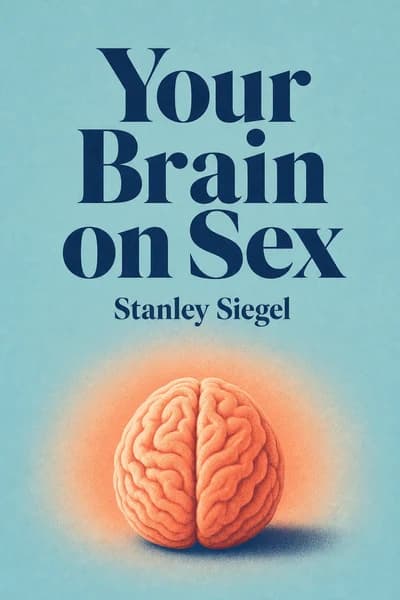
Sex. The word itself carries a charge that makes most of us shift uncomfortably in our seats. Despite living in an era saturated with sexual imagery, genuine conversations about our desires remain taboo. Yet Stanley Siegel's groundbreaking work "Your Brain on Sex" suggests that our deepest sexual fantasies aren't random or shameful-they're sophisticated psychological mechanisms designed to heal our deepest wounds. This revolutionary perspective has earned Siegel acclaim among therapists and celebrities alike, with figures like Dan Savage and Esther Perel citing his work as transformative for modern relationships. The book's influence extends beyond therapy circles, inspiring a cultural shift toward viewing sexuality as a pathway to self-knowledge rather than a source of shame. As sexual dissatisfaction increasingly contributes to relationship dissolution, Siegel's framework offers a timely alternative to conventional wisdom: what if our most "deviant" desires hold the key to our emotional wholeness?
Capítulo 2
Transforming Pain into Pleasure: The Healing Power of Sexual Fantasy
Our bodies possess remarkable healing capabilities, responding to both physical and emotional wounds through natural defense mechanisms. Among these, fantasy serves as a powerful recovery tool, transforming conflict into pleasure. Children instinctively use fantasy play to master skills and find comfort, while adults continue using fantasies to navigate life's challenges. Sex, with its exceptional intensity, offers unparalleled healing potential.
Sexual fantasies specifically help us work through deep conflicts and unmet childhood needs. By adolescence, these needs become erotically encoded, creating desire patterns that persist throughout our lives. Yet society's contradictory messages about sexuality leave many disconnected from their authentic desires, leading to various sexual difficulties from loss of interest to erectile dysfunction. This disconnection creates a profound alienation between mind and body.
Consider Sam, a 25-year-old newlywed who couldn't perform sexually on his wedding night despite previous arousal during dating. As the eldest of five children raised by a widowed mother, Sam had promised his dying father he would care for the family. He dutifully sacrificed his adolescence to fulfill this role, secretly harboring resentment while maintaining a "good son" image. Though Sam developed sexual fantasies involving anal intercourse, he kept these hidden when he met Erica, a woman reminiscent of his mother in kindness and values. After their wedding, his inability to connect his true desires with "missionary sex" led to erectile dysfunction that even Viagra couldn't solve.
Through therapy and exploring intelligent lust, Sam discovered how he had eroticized his resentment toward family obligations. When Erica joined therapy sessions, she revealed her own suppressed desires to be "naughty," and together they found their fantasies complemented each other perfectly. Their sexual authenticity ultimately brought them closer, creating a connection far deeper than their previous "acceptable" intimacy.
But is understanding our desires enough, or must we act them out to heal? While some professionals argue against enacting fantasies that fall outside "normalcy," these definitions are socially constructed and constantly shifting. Our sexual desires reflect our unique histories and serve as healing instruments with specific meaning and purpose. Following intelligent lust allows us to decode them and bring them to life safely, achieving authenticity by aligning our sexual behavior with our true desires. Self-knowledge alone isn't enough; we must take action that breaks past patterns.
By challenging cultural values and norms, intelligent lust helps us achieve authenticity. We develop moral values based on self-knowledge and self-acceptance. Embracing our sexual truth reverses the corrosive influences of guilt and shame, enhancing self-worth and wholeness. We reclaim abandoned parts of ourselves, improving relationships through greater sexual intimacy and compatibility. This journey counteracts feelings of loneliness and inadequacy, reuniting mind, body, and soul in experiences that invoke our highest levels of being.
Capítulo 3
Intelligent Lust: A Roadmap to Sexual Authenticity
Intelligent lust is the process of discovering our true sexual desires by bravely exploring what genuinely turns us on, understanding where those desires originate, and using these insights to create a meaningful, satisfying, and healing sexual life.
Unlike ordinary lust-which is selfish, empty, mechanical, and soulless as seen in meaningless encounters like anonymous or substance-influenced sex-intelligent lust engages body, mind, and spirit to give and receive physical pleasure through deep emotional connection. It's a process of searching for authenticity, unity, and purpose beyond simple sexual gratification, becoming a source of deep satisfaction and beauty, though sometimes unsentimental and ruthless.
Emily's story illustrates this process perfectly. A successful 35-year-old event planner, she came to therapy confused about her stalled relationship with Josh, a seemingly perfect match who left her feeling bored and disconnected. Through therapy, she discovered that her childhood feelings of powerlessness with her domineering father and brother had become encoded in her sexual desires. Her attraction to being dominated sexually was her unconscious way of managing those childhood feelings-by choosing submission as an adult, she symbolically gained control over past powerlessness, converting pain into pleasure.
With this insight, Emily began dating using her newfound self-awareness, letting sexual attraction be her compass rather than focusing on similar backgrounds. She eventually met Dan, a physical trainer and musician with whom she developed both sexual compatibility and deep emotional intimacy. Their sexual honesty fostered communication about all aspects of their relationship, leading Emily to feel authentic for the first time in her life.
The steps of intelligent lust foster engagement of the body as an erotic landscape and the mind's understanding of our desires, their origins, and meanings. It promotes self-acceptance, consciousness of our worth, and engagement of imagination and intuition while cultivating respect, generosity, and an open heart for healing ourselves and our partners.
When we follow this path, we often discover that our relationships improve dramatically. We develop a special kind of friendship based on intimacy, respect, and courage that provides a loving context for handling whatever discoveries emerge. This foundation of honest communication extends far beyond the bedroom, creating relationships that can weather life's most difficult challenges.
Capítulo 4
Decoding Our Desires: Understanding Fantasy's Origins
Our sexual fantasies aren't random imaginings but contain fragments of our history and childhood conflicts that echo into adulthood. These early emotional wounds become encoded in our erotic images and narratives as unconscious attempts to gain mastery over them. Childhood conflicts produce strong emotions that never completely disappear, causing us to unconsciously reenact old dramas in our relationships.
When parents misuse authority to control rather than guide with love and understanding, children grow up lacking confidence and feeling unsafe. Some people sexualize these feelings of powerlessness in fantasies of submission, punishment, or humiliation-unconsciously converting past helplessness into pleasure and control. Others respond oppositely by identifying with their aggressors, finding satisfaction in dominating others.
Mark's story illustrates this pattern. Strictly disciplined as a child, he later developed sexual arousal from restraining partners-transforming his childhood powerlessness into control and pleasure. Similarly, when parents, teachers, or religious authorities overuse guilt and shame as teaching tools, children may later sexualize these emotions. Some become aroused by fantasies of being "naughty" or engaging in forbidden acts. Others might fantasize about being forced into sex, removing choice and therefore guilt.
Laura exemplifies this dynamic. Raised by an overprotective mother who taught her "all men are no good," she developed fantasies of being overpowered by boys, eventually using alcohol to enable guilt-free sexual encounters where she could maintain her mother's worldview while still experiencing pleasure.
When childhood trauma goes unprocessed without parental guidance-whether from death, abuse, or emotional neglect-we may become emotionally detached as a survival mechanism. This emptiness, actually repressed grief, later manifests in our sexuality as we eroticize emotional distance. We objectify partners, fetishize body parts, and create sexual scenarios devoid of intimacy.
Michael's story powerfully demonstrates this pattern. After his brother's suicide, his parents became emotionally unavailable, and Michael withdrew completely. His sexual fantasies reflected this detachment-focused solely on receiving oral sex from strangers with no concern for their needs or emotions, bringing momentary pleasure to his deep-seated sorrow.
When parents are physically or emotionally absent due to crisis, trauma, or self-absorption, children develop feelings of rejection that later influence their sexuality. Some eroticize rejection through fantasies involving humiliation or submission. Others develop compensatory fantasies where they're irresistibly desirable-pursued by extraordinary partners, starring in sexual performances, or being worshipped by multiple admirers.
Understanding these connections between childhood emotional wounds and adult sexual fantasies provides the key to unlocking their healing potential. When we recognize that our desires aren't random or perverse but sophisticated psychological responses to unresolved conflicts, we can embrace them as pathways to wholeness rather than sources of shame.
Capítulo 5
The Chemistry of Attraction: Why We Want Who We Want
Sexual chemistry isn't mysterious-it begins in our thoughts as our subconscious interprets physical traits and mannerisms through the lens of our psychological needs. When someone's attributes align with our unconscious sexual motivations, we feel attraction. Whether seeking to master powerlessness (attracted to strength signals) or repair loneliness (drawn to gentleness), our attractions reflect deeper needs.
Consider how we unconsciously interpret physical characteristics as symbolic representations of these needs. Tattoos signal nonconformity and trigger fantasies of wild, uninhibited sex. Muscular bodies represent power and evoke submissive fantasies in those who eroticized childhood powerlessness. Different scents trigger specific emotional responses based on our personal histories. Understanding these connections helps us decode our attractions and make more intelligent choices about potential partners rather than acting solely on lust.
Kathy's story demonstrates how unresolved family conflicts shape our attractions. An intelligent philosophy professor with a pattern of choosing "wrong men," she was drawn to "bad boys" with edgy looks and unstable lives. She initially experienced intense chemistry with these men but inevitably faced relationship collapse when chaos emerged. Her pattern stemmed from divided loyalties between her stable, conventional mother and her bohemian, risk-taking artist father.
By unconsciously choosing men who embodied her father's traits while trying to stabilize them like her mother would, she attempted to resolve her internal conflict. Only when she reversed her approach-choosing stable men and bringing adventure herself-did she find fulfillment with Steve, a doctor who followed her sexual lead while providing the stability she needed.
While the internet has revolutionized dating by expanding our options beyond traditional meeting places, assessing chemistry online presents significant challenges. Digital photographs and chat conversations provide limited information compared to in-person meetings where we can detect crucial signals like smell, speech patterns, and mannerisms. People often present idealized versions of themselves online, leading to disappointment when fantasy meets reality.
Our attractions evolve as we resolve internal conflicts and satisfy unmet needs, making self-discovery an ongoing process where each revelation leads to new insights. By understanding the psychological underpinnings of our attractions, we gain the power to make choices that serve our healing rather than perpetuate our wounds.
Capítulo 6
From Fantasy to Reality: Communicating Desires with Partners
Beyond initial attraction, determining sexual compatibility requires discovering whether someone can satisfy our deepest desires. Physical compatibility matters-body fit, hygiene, sexual timing preferences, positions, and stamina-but psychological and spiritual alignment is equally crucial. The process requires gradually gathering information during dating, though we typically give it less attention than other factors like personality or education.
Breaking social conventions to have direct, honest conversations about sex is essential, though often uncomfortable. How someone discusses sex reveals as much as what they say. Creating restorative sexual experiences demands openness, trust and respect-elements that lead beyond good sex into the ecstatic realm.
Julie's conversation with Will demonstrates this approach. Despite her concern about spoiling romance, their open discussion about sexual preferences actually deepened their connection. Will appreciated their honest exchange, saying "It's kind of cool talking about this. I've never really done this before." Through intelligent lust, Julie had recognized how she eroticized childhood feelings of inadequacy. Growing up with a famous novelist father who was often absent and competitive with her writing talents, Julie learned to feel she'd never measure up.
With Will, Julie broke her pattern of seeking unavailable men by directly discussing sexual compatibility. Their complementary desires-him as pursuer, her as pursued-along with Will's emotional availability and honesty provided a counterpoint to her father's competitive, demeaning behavior. Together, they built the foundation for a restorative relationship with transformative sex, emotional intimacy, and trust.
While some believe that blindly discovering a partner's sexuality adds excitement, this approach often leads to misunderstandings and disappointment. Discussing desires doesn't diminish enjoyment-what we sacrifice in spontaneity, we gain in understanding and purpose. For couples jointly following the intelligent lust process, sharing discoveries about sexual desires and their connections to childhood experiences creates profound understanding and compassion.
When one partner explores intelligent lust alone, breaking the silence about sex can still transform a relationship. Though vulnerability and fear of judgment may create resistance, honest conversation remains worth the risk-perhaps the only way to save a troubled relationship. Choosing appropriate timing and location for discussions, rehearsing potential responses, beginning by reassuring your partner of their importance, revealing discoveries gradually, and maintaining compassion for your partner's potential discomfort can help navigate these challenging conversations.
Historically, certain communities developed greater comfort discussing sexual compatibility out of necessity. Gay, bisexual, and transgender individuals had to confront and communicate their different sexuality to understand themselves and connect with their communities. Those with HIV or STDs needed verbal fluency to protect themselves and others. The kink community learned to describe desires openly to find compatible partners and establish safety protocols. These pioneering communities helped America recognize how communication reduces risk while increasing love, respect, pleasure, and satisfaction despite our culture's comparatively Puritanical approach to sex.
Capítulo 7
Bringing Fantasies to Life: The Healing Power of Enactment
When we act out our fantasies, our entire inner world comes into focus, giving sex humanity, spirituality, and depth. We integrate mind, body, and soul, making our sexuality a fully integrated part of our being. This demands leaving ordinary time behind by engaging deeply with past, present, and future. Though planning sexual scenarios may seem contrived, the preparations infuse the experience with attention and inspiration.
Our erotic desires can be unsettling, and some experts argue fantasies should never be enacted. But personal growth requires overcoming fears and inhibitions. Our true desires aren't malevolent-they're laden with meaning that allows us to transcend moral judgments and expand our sensibilities. After establishing compatibility with a partner, sex might happen organically or through carefully planned scenarios. Either way, we engage all our senses in full action-moving, talking, imagining, touching-creating an experience both thrilling and spiritual.
Jane's story demonstrates this healing potential. Growing up with a physically handicapped sister who received all her parents' attention, Jane felt guilty for being healthy while also suffering from neglect. In high school, she was tall and underdeveloped, earning the nickname "Olive Oil." She developed fantasies of being a beautiful enchantress who could seduce any man.
At thirty, Jane sought therapy after a string of failed relationships with emotionally unavailable men. Through therapy, she recognized her pattern of recreating childhood neglect and began dating using intelligent lust. She met Bill, who had similar childhood issues of comparison to a more successful sibling. Together they acted out their complementary fantasies-Jane as the seductress and Bill as the pursued-meeting in bars as strangers before going home together.
This regular role-playing over several months validated Jane's deepest needs and empowered her. Though the relationship ended when she moved for a job, the experience corrected a lifetime of neglect and set a standard for future relationships.
While supporting kink and "fringe" sexual choices, there's increased risk of physical and emotional harm when participants act from hurt or anger. Sexual encounters must always be consensual with clear communication, especially when fantasies include subjugation, pain, or humiliation. Completing the previous steps of intelligent lust helps approach these situations from self-knowledge and self-worth, reducing the risks of acting directly from anger by engaging our reason. Understanding the origin of aggressive behavior allows us to consciously use it to heal underlying conflicts, even as we continue to sexualize it.
Capítulo 8
Navigating Sexual Incompatibility in Committed Relationships
It's not just good sex that makes relationships better; it's understanding the purpose and meaning of our desires and connecting with a partner willing to explore theirs. When couples discover sexual incompatibility, they have choices: some continue without sex, valuing other aspects of their relationship; others consciously address their partner's needs; some explore unconventional approaches like open relationships; and a few end their marriages for the right reasons.
Hank and Marion, both ambitious lawyers and parents, had seen their sex life dwindle to almost nothing over eight years of marriage. When Hank nearly had an affair, he sought therapy instead. The core issue wasn't their busy lives but Marion's resentment of Hank's controlling approach to sex. Through intelligent lust, they discovered complementary fantasies: Marion longed to be tenderly made love to, escaping the hostility of her childhood home, while Hank fantasized about being a gentle, heroic rescuer-a reaction to his parents' difficult economic circumstances. Once they understood these deeper meanings, they recognized their natural sexual compatibility and rekindled their connection.
James and Robert faced sexual incompatibility as both preferred being dominant ("tops"). After Robert's explosive outburst about James's sexual rigidity, they sought therapy to establish rules for an open relationship. With mutual respect, they agreed to inform each other before hookups without requiring permission, avoid seeing the same person twice, no overnight stays or bringing partners home, and practicing safe sex. Three months later, they reported success-less tension, more honesty, and a deeper appreciation for their relationship's strength.
Margot and Billy had married without discussing sex, each privately feeling unsatisfied. Through honest communication, they discovered complementary desires: Margot had eroticized childhood trauma around her mother's controlling dance demands into exhibitionist fantasies, while Billy, who felt invisible growing up, had developed voyeuristic tendencies. Rather than feeling threatened, they found these revelations exciting. They visited a sex club where Margot could perform sexually while Billy watched-fulfilling both their needs without jealousy. The experience deepened their intimacy through conversations about trust and boundaries.
While many people prefer lifelong partnership, others-especially younger generations-are exploring alternatives like polyamory. Intelligent lust makes monogamy a conscious choice rather than an unexamined assumption. The element of choice prevents marriage from becoming Freud's "prison" while still allowing it to be a "refuge." Ongoing conversation about feelings-even difficult ones like attraction to others-is more important for relationship survival than monogamy itself, as secrecy poses the greater threat.
Capítulo 9
When Sex Feels Impossible: Addressing Sexual Challenges
Sometimes our sexual issues feel overwhelming, making self-help programs like intelligent lust seem daunting. However, understanding that our problems exist for reasons-they're actually solutions to difficult dilemmas-can give us a new perspective and self-compassion. Lack of sexual interest helps avoid potential conflict, anonymous sex permits safe detachment from intimate complications, aggressive sex may handle feelings of powerlessness from past abuse, and substance-aided sex might be the only way some can let go.
When it comes to desire, sexual interest varies significantly among individuals in both frequency and intensity. Studies show that erotic urgency naturally ebbs and flows throughout life, with about 30 percent of young and middle-aged men and women experiencing extended periods of little or no sexual desire. Physical transitions like menopause or postpartum phases, life stresses, medications, and psychological factors all affect our interest in sex.
Paul and Melissa discovered they shared a pattern of dating demanding perfectionists. Despite their immediate connection, their sex life faltered. Through therapy, they learned Paul's sexual drive had diminished with age while Melissa remained highly sexual with fantasies of authoritarian direction. They developed a satisfying compromise: Paul would hold Melissa and tell her exactly how to pleasure herself, after which she would embrace and caress him. This arrangement, though unconventional, perfectly suited their needs and deepened their connection.
While intelligent lust honors desire, compulsive lust occurs when we repeatedly pursue sexual encounters to relieve tension, anxiety, or escape pain. The chemical surge during sexual excitement acts as a temporary antidepressant, but when it wears off, we're left with greater anxiety or shame, creating a destructive cycle. Every compulsion has a healthy intention-to soothe pain or conflicts-but without understanding our sexuality's true nature, we can't direct this energy toward healing.
Anita's ballet career, which had shielded her from confronting childhood trauma, collapsed when her body betrayed her during performances. After collapsing three times on stage, she began experiencing anxiety, depression, and disturbing dreams of violent sexual assault. Through therapy, she gradually recovered memories of being tied up and raped by her teenage cousin at age six. Ballet had provided perfect protection-giving her control over her body, keeping boys at a safe distance, and requiring her to remain silent. But eventually her body manifested her trauma physically, leaving her unable to move, symbolically mirroring how she'd been bound during the assault.
While moderate alcohol can enhance romantic encounters by loosening inhibitions, excessive drinking severely impacts sexual function and judgment. Many use alcohol to numb sexual shame or guilt, creating distance rather than intimacy. Those with alcohol issues should seek professional help before attempting the steps of intelligent lust, as exploring repressed sexual feelings could threaten sobriety.
Capítulo 10
The Transcendent Power of Intelligent Sexuality
Sex transcends its reputation as a base instinct, revealing itself as our most complex human need-a vehicle for connection, communication, power negotiation, pleasure, and psychological healing. Our sexual fantasies and desires offer profound windows into our psyches, miraculously transforming our deepest pains into pleasure. For most people, fulfilling authentic desires leads to greater health and authenticity, guiding us to compatible partners or revitalizing existing relationships.
Through intelligent lust, sex evolves from a mysterious act into a path of self-knowledge and self-acceptance. Our desires naturally evolve throughout life, sometimes leading us down new paths, other times maintaining their original form despite resolving their underlying conflicts. The connection formed through openly exploring desires with a partner creates a profound, unsentimental bond centered on generosity. Whether or not romantic love endures, following intelligent lust inevitably leads to self-love-honoring both pain and pleasure on our journey to deep satisfaction.
Smart sex requires self-knowledge, self-esteem, and partner respect. A restorative relationship offers passion with honesty, openness, and trust, lacking the irrational swoon of falling in love but avoiding love's potential jealousy and possessiveness. This foundation creates relationships that can weather life's most difficult challenges, as Frank and Margaret discovered when Frank faced a false accusation of soliciting a student for sex. Their sexual honesty had built such profound understanding that Margaret knew immediately the accusations couldn't be true-they didn't match his sexual preferences at all.
Intelligent lust isn't about immediate gratification. As experience matures, we discover deeper subtleties of our own and our partner's erotic truth. Over time, as conflicts heal, desires change too. Couples may become less interested in sex that once attracted them, discovering psychological and spiritual connections beneath their sexual compatibility. Even if frequency or intensity declines, the ability to handle complex emotions increases with experience.
Sex ultimately represents our indomitable drive to transform suffering into joy, loneliness into connection, and fear into pleasure. By honoring our authentic desires and understanding their healing purpose, we create not just better sex but more meaningful lives-lives where our sexuality serves as a bridge between our deepest wounds and our highest potential.