Capítulo 1
When Stress Becomes Your Worst Enemy
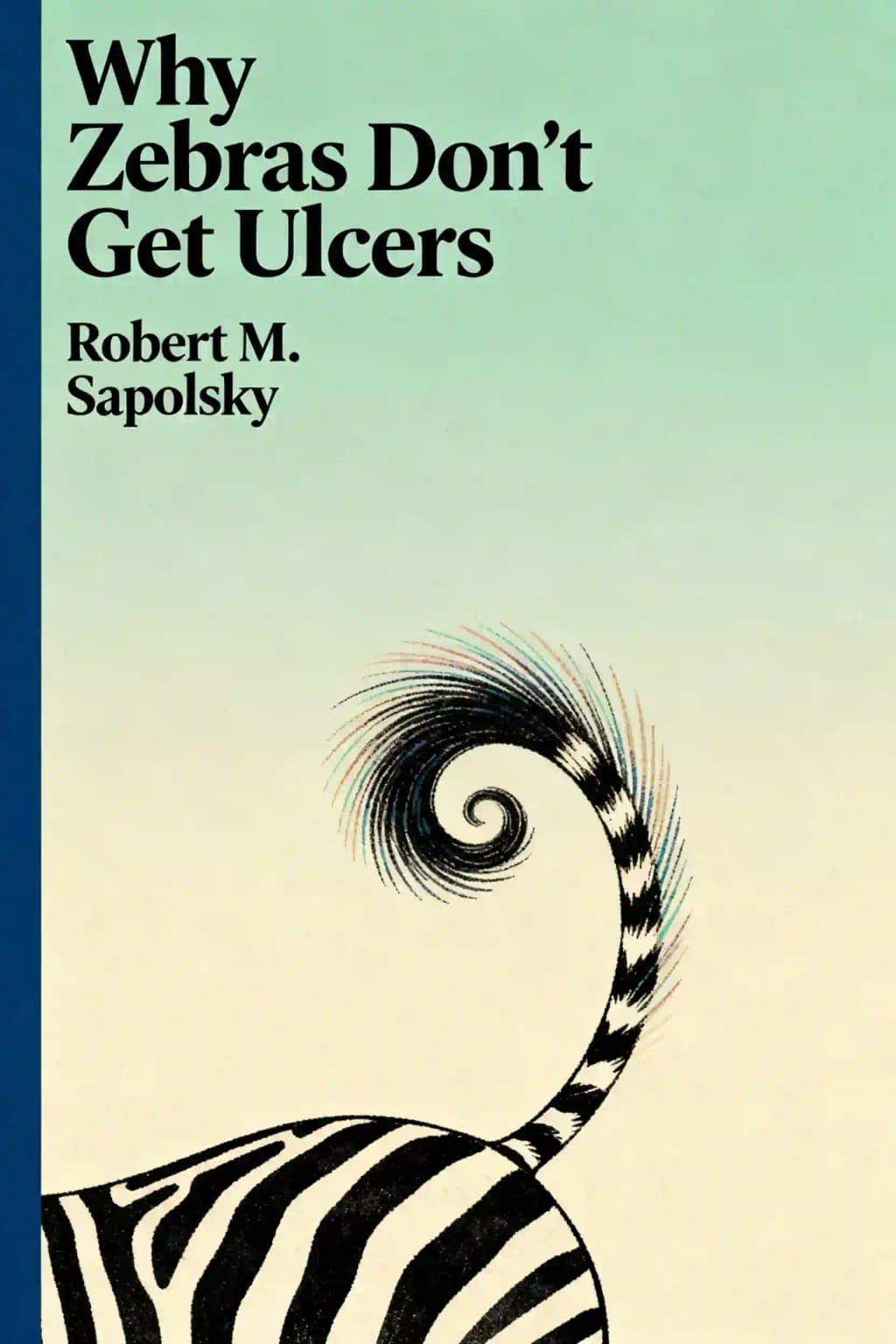
Imagine your heart racing, palms sweating, and mind spiraling as you prepare for tomorrow's presentation. While you lie awake catastrophizing about potential humiliation, a zebra on the African savanna sleeps peacefully, unconcerned with performance anxiety or mortgage payments. This stark contrast forms the foundation of Robert Sapolsky's groundbreaking work on stress physiology. A Stanford neurobiologist who spent decades studying baboon troops in Kenya, Sapolsky combines rigorous science with disarming humor to explain why modern humans suffer from diseases our ancestors never experienced. Since its publication, "Why Zebras Don't Get Ulcers" has become required reading in medical schools worldwide, praised by figures from Bill Gates to Daniel Goleman, and established itself as the definitive layperson's guide to understanding the biology of stress. With over a million copies sold across multiple editions, this modern classic continues to influence how we think about the intersection of psychology and physical health.
Capítulo 2
The Fundamental Mismatch: Our Stone Age Bodies in a Modern World
The brilliance of Sapolsky's central insight lies in recognizing a fundamental mismatch between our physiological stress response and modern life. For zebras, stress means acute physical crises-sprinting away from a lion or, as a lion, chasing down dinner. Their bodies mobilize perfectly for these emergencies: energy pours from storage sites as glucose floods the bloodstream, heart rate and breathing accelerate, pain perception dulls, and senses sharpen. Meanwhile, long-term "building projects" like digestion, growth, tissue repair, and reproduction temporarily pause. Within minutes or hours, the zebra either resolves the crisis or dies, and its physiology returns to normal.
Humans, however, generate a third category of stress-psychological and social disruptions that can persist for weeks, months, or years. We activate the same emergency response designed for immediate physical threats when worrying about mortgages, relationships, or career setbacks. Our sophisticated brains allow us to trigger full physiological stress responses through mere anticipation, turning on emergency systems and leaving them running indefinitely.
This distinction explains why zebras don't get ulcers but humans do. The zebra's stress response perfectly manages short-term physical emergencies but becomes harmful when chronically activated. The price of this chronic activation includes energy depletion, cardiovascular damage, digestive disorders, growth inhibition, reproductive problems, immune suppression, and even brain cell damage.
Hans Selye, a pioneer of stress physiology, accidentally discovered this phenomenon in the 1930s when his clumsy handling of laboratory rats produced peptic ulcers, enlarged adrenal glands, and shrunken immune tissues. When he ran a control group with the same handling stress but saline injections, they developed identical symptoms-revealing that the physical stress response itself was causing these changes.
Capítulo 3
The Orchestra of Stress: How Your Body Responds to Danger
Understanding stress requires appreciating how the brain regulates bodily functions. A mere thought-whether angry, sad, euphoric, or lustful-can trigger profound physiological changes without moving a muscle. You can make your pancreas secrete hormones, your liver produce enzymes, and alter blood flow throughout your body through pure thought.
The autonomic nervous system works in opposition: sympathetic projections speed up the heart while parasympathetic projections slow it down. The sympathetic system diverts blood to muscles; the parasympathetic does the opposite. Having both active simultaneously would be like pressing the gas and brake together-a disaster the brain prevents by activating one branch while inhibiting the other.
Beyond neural control, the brain mobilizes stress responses through hormone secretion. Scientists once believed peripheral glands like the pancreas and adrenals operated autonomously-a misconception that led to early 20th century "rejuvenation therapy" fads where aging men received testicular extracts from animals to combat aging.
Eventually, scientists discovered the brain was the true master gland. The stress hormone cascade begins when the hypothalamus secretes CRH (corticotropin releasing hormone). Within fifteen seconds, CRH triggers the pituitary to release ACTH into the bloodstream, which then causes the adrenal glands to release glucocorticoids within minutes.
Additional hormones activated during stress include epinephrine and norepinephrine (from the sympathetic nervous system), glucagon (which raises blood sugar), prolactin (which suppresses reproduction), endorphins (which blunt pain), and vasopressin (which affects cardiovascular response). Meanwhile, reproductive hormones, growth hormone, and insulin are inhibited.
Importantly, the stress response isn't identical across all stressors or individuals. While males typically demonstrate a "fight-or-flight" response, females often exhibit a "tend and befriend" response involving oxytocin secretion, which promotes maternal behavior and social bonding. Different stressors produce distinct hormonal "signatures" that vary based on psychological context.
Capítulo 4
The Vulnerable Heart: How Stress Attacks Your Cardiovascular System
The cardiovascular stress response begins by increasing heart rate and blood pressure while strategically redistributing blood flow. Arteries to muscles dilate to increase energy delivery, while blood flow decreases dramatically to nonessential areas like the digestive tract and skin. The body also reduces blood flow to the kidneys and releases vasopressin to halt urine formation, conserving water for circulation.
While this response is adaptive during genuine physical threats, it becomes maladaptive during psychological stress. When you're terrified and sprinting, increased blood flow to muscles matches metabolic demand. But when you're merely worrying about deadlines while sitting still, this same cardiovascular response becomes harmful.
Chronic stress leads to hypertension through a vicious cycle: elevated blood pressure forces small vessels to develop thicker muscle layers, which increases vascular resistance, further raising blood pressure. This chronic hypertension damages the heart by causing left ventricular hypertrophy-a thickening of heart muscle that increases risk of irregular heartbeat.
Blood vessels suffer as well, particularly at bifurcation points where vessels branch. These junctions are vulnerable to damage from increased pressure and turbulence. Once the smooth inner lining tears, inflammatory immune cells aggregate at the site along with fatty foam cells, forming atherosclerotic plaque.
Heart disease often culminates in cardiac catastrophe during acute stress. A shocking piece of news can trigger fatal cardiac arrest within moments of the emotional surge. Strong emotions like anger double heart attack risk in the subsequent two hours. During the 1991 Persian Gulf War, more Israelis died from sudden cardiac death during SCUD missile attacks than from actual missile damage.
Counterintuitively, extreme joy can kill just as effectively as extreme grief. Whether wailing in grief or leaping in ecstasy, the demands on a diseased heart remain dangerous. Your sympathetic nervous system affects coronary arteries similarly during murderous rage or thrilling orgasm. For the cardiovascular system, rage and ecstasy, grief and triumph all represent equivalent challenges to allostatic equilibrium.
Capítulo 5
Energy Crisis: How Stress Disrupts Your Metabolism
During physical emergencies, your body must quickly access stored energy without time to digest food. Digestion breaks down complex food into simple building blocks: amino acids (from proteins), glucose (from carbohydrates), and fatty acids and glycerol (from fats). After a large meal, excess nutrients are stored-fatty acids combine with glycerol to form triglycerides in fat cells, glucose molecules link into glycogen chains in muscles and liver, and amino acids combine to form proteins throughout the body.
During stress, this process reverses. First, sympathetic activation and parasympathetic suppression reduce insulin secretion. Second, glucocorticoids block nutrient transport into fat cells. Stress hormones trigger the breakdown of stored nutrients: triglycerides release fatty acids, glycogen degrades into glucose, and proteins convert back to amino acids. The liver transforms circulating amino acids into glucose through gluconeogenesis, making energy readily available.
While this energy mobilization is essential during physical challenges, chronic activation causes problems similar to constantly withdrawing money with early withdrawal penalties. The process is inefficient-shuttling nutrients in and out of storage and powering enzymes to build and break down complex molecules requires energy, leading to everyday fatigue.
Perpetually mobilized fat and glucose in the bloodstream increases atherosclerosis risk while raising "bad" LDL-cholesterol and decreasing "good" HDL-cholesterol. Chronic stress also promotes insulin resistance, particularly harmful for those with diabetes or pre-diabetic conditions.
In adult-onset diabetes (type 2), the problem isn't too little insulin but cells failing to respond to it-insulin resistance. This typically occurs when fat cells become overstuffed as people age and gain weight. Chronic stress worsens this condition by mobilizing more glucose and fatty acids while promoting insulin resistance. Someone on the edge of becoming diabetic can be pushed over the threshold during periods of stress.
This matters because adult-onset diabetes has reached epidemic proportions-increasing 33% among older adults and 70% among thirty-year-olds in just a decade. Even children now develop adult-onset diabetes more frequently than juvenile diabetes.
Capítulo 6
Digestive Distress: Your Gut Under Pressure
During stress, the body's digestive system undergoes a dramatic shutdown as the sympathetic nervous system takes control. This involves multiple simultaneous reactions: saliva production ceases, stomach acid secretion diminishes, and blood flow to digestive organs decreases by up to 80%. While this response was crucial for our ancestors facing immediate physical threats, it creates significant problems for modern humans experiencing chronic psychological stress. Even mild workplace anxiety can trigger these responses dozens of times daily.
The fight-or-flight response can have particularly extreme manifestations in the digestive system. Under severe terror or panic, humans may experience spontaneous defecation-a primitive survival mechanism designed to shed unnecessary weight when fleeing predators. This occurs through a precise orchestration of the sympathetic nervous system, which simultaneously inhibits small intestine contractions while stimulating large intestine movement. What served as an adaptive response for our ancestors becomes a source of intense anxiety and embarrassment in modern contexts like public speaking or job interviews.
The relationship between stress and food consumption follows a complex biochemical pattern. The immediate stress response triggers CRH release, which suppresses appetite within seconds. However, the slower-acting glucocorticoids, particularly cortisol, begin circulating within minutes and can persist for hours, stimulating appetite-especially for high-calorie comfort foods rich in fats and sugars. Modern life's constant low-grade stressors create a particularly problematic pattern: frequent CRH bursts throughout the day coupled with chronically elevated glucocorticoids. Research at major universities has demonstrated that individuals who secrete higher levels of glucocorticoids during stress are 75% more likely to overeat in the following hours and show particular cravings for sugary foods.
Glucocorticoids' effects extend beyond immediate appetite stimulation to influence long-term fat storage patterns. These hormones specifically target abdominal "visceral" fat cells, which contain up to four times more glucocorticoid receptors than subcutaneous fat cells in other areas like the hips and thighs. This preferential targeting creates the characteristic "apple" body shape associated with chronic stress, rather than the less metabolically dangerous "pear" shape. Visceral fat cells are metabolically more active, readily releasing fatty acids directly to the liver where they're converted to glucose, promoting insulin resistance and increasing the risk of type 2 diabetes by up to 40%.
Perhaps most concerning is the discovery of a self-reinforcing cycle between stress and eating patterns. Research from leading endocrinology centers has shown that consuming comfort foods actually reduces stress hormone production by up to 30%, while the accumulation of abdominal fat can dampen future stress responses through complex feedback mechanisms. This creates a powerful physiological and psychological cycle: stress promotes comfort eating and abdominal fat storage, which in turn provides temporary relief from stress, reinforcing the behavior. Breaking this cycle requires addressing both the underlying stress triggers and the established eating patterns simultaneously.
Capítulo 7
Growth Interrupted: How Stress Stunts Development
Growth transforms children's bodies comprehensively-brains enlarge, head shapes change, cells divide and synthesize proteins, cartilage at bone ends migrates into shafts and solidifies, baby fat converts to muscle, and puberty brings voice changes, body hair, and sexual development. This massive construction project requires substantial nutritional resources coordinated by various hormones, with growth hormone playing the central role.
Stress inhibits skeletal growth because growing makes little evolutionary sense when you're fleeing danger. Stress dwarfism-though extremely rare-occurs in children subjected to severe psychological abuse or neglect. These children stop growing despite adequate nutrition and absence of disease. When removed from toxic environments before puberty, some "catch-up" growth occurs, though shortness and developmental issues often persist.
Stress dwarfism involves extremely low growth hormone levels. In one remarkable case study, a hospitalized child's growth hormone levels doubled and growth rate tripled after forming an attachment with a nurse-then plummeted when she went on vacation, only to recover when she returned. This demonstrates how our emotional state directly affects cellular processes.
Touch proves critical-rat pups separated from mothers show decreased growth hormone, but active stroking normalizes growth. Similarly, premature human infants who received just 45 minutes of daily touch grew 50% faster, matured more quickly, and left the hospital a week earlier than untouched infants.
Childhood is when we form fundamental assessments about the world. Similarly, during fetal development, our bodies "learn" about the external environment and make lifelong physiological adaptations. When a fetus experiences stress, particularly nutritional deprivation, it develops a "thrifty" metabolism designed to store every bit of nutrition-leading to increased adult risks of hypertension, obesity, diabetes and cardiovascular disease.
The Dutch Hunger Winter of WWII provides dramatic evidence: fetuses exposed to famine developed metabolic programming that increased disease risks decades later. Even within normal birth weights, lower weights correlate with higher metabolic syndrome risks. This relationship extends beyond nutrition to include stress hormones, as prenatal stress permanently increases glucocorticoid secretion and programs anxiety and cognitive changes.
Capítulo 8
Reproductive Shutdown: Sex and Stress Don't Mix
Stress profoundly disrupts our reproductive systems, causing irregular menstrual cycles, erectile difficulties, and decreased sexual interest. Erectile dysfunction is commonly triggered by stress, creating a vicious cycle of performance anxiety. Over half of male reproductive complaints stem from psychological rather than organic causes. While testosterone production must be severely compromised to affect fertility, even minor stress can completely disrupt erections.
Female reproduction follows a hormonal cascade that stress disrupts through multiple mechanisms. When hunter-gatherer women breast-feed for brief periods every fifteen minutes around the clock for three years, prolactin levels remain elevated, suppressing ovulation. This pattern means hunter-gatherer women experience only about two dozen menstrual cycles in their lifetime, compared to hundreds for modern Western women.
Stress disrupts female sexual desire just as it affects male erectile function. Both proceptive and receptive behaviors typically peak around ovulation but are suppressed during stress. This suppression stems from stress-reduced sex hormone secretion. Social subordination in female monkeys can suppress estrogen as effectively as ovariectomy, explaining how stress disrupts sexual behavior.
The link between stress and miscarriage occurs through sympathetic nervous system activation. When stressed, norepinephrine and epinephrine dramatically decrease uterine blood flow, reducing oxygen delivery to the fetus. Studies across species show that psychological stressors cause this reduction in blood flow. While a single hypoxic episode is unlikely to cause harm, repeated episodes can lead to asphyxiation. Severe stress can therefore increase miscarriage risk, and at late pregnancy stages, elevated glucocorticoids from stress can trigger preterm birth.
Despite these numerous mechanisms by which stress can disrupt reproduction, these systems are surprisingly resilient. Even in Nazi concentration camps where women endured starvation, slave labor and psychological terror, only 54% stopped menstruating-meaning reproductive physiology continued functioning in nearly half despite horrific conditions.
Capítulo 9
The Compromised Defense: Stress and Your Immune System
The immune system's primary function is defending against infectious agents by distinguishing between "self" and "non-self" cells. This defense relies on white blood cells-lymphocytes (T and B cells) and monocytes. T cells provide cell-mediated immunity: when an invader enters the body, macrophages present it to T helper cells, triggering proliferation of cytotoxic killer cells that destroy the invader. B cells generate antibody-mediated immunity: after T helper cell activation, B cells produce antibodies with shapes specifically matching invader features, immobilizing and targeting them for destruction.
Stress disrupts numerous immune functions: it suppresses lymphocyte formation and circulation, inhibits antibody production against infections, disrupts communication between lymphocytes, and dampens inflammation. Glucocorticoids are the primary mediators, causing thymus shrinkage by halting new lymphocyte formation, inhibiting immune messenger release, removing lymphocytes from circulation, and even triggering lymphocyte suicide through programmed cell death pathways.
Contrary to traditional understanding, stress initially enhances immunity during the first thirty minutes (phase A), particularly innate immunity. During this subtle rise in glucocorticoid levels at the start of phase B, these hormones don't indiscriminately kill lymphocytes but selectively eliminate older, less effective ones-essentially sculpting the immune response. Additionally, glucocorticoids and epinephrine divert many lymphocytes to infection sites rather than deactivating them.
With truly major stressors, immunity drops below baseline. This pattern explains why autoimmune diseases present a paradox: while massive glucocorticoid doses suppress symptoms, stress often worsens these conditions. Two scenarios increase autoimmunity risk: numerous transient stressors that ratchet the system upward, and having phase A without adequate phase B.
The connection between stress and susceptibility to colds has strong scientific support. In landmark research, volunteers were housed under controlled conditions, assessed for stress levels, then exposed to identical amounts of rhinovirus. Results showed stressed individuals were three times more likely to develop colds, with prolonged social stressors beyond one month creating the greatest risk.
Capítulo 10
The Mind-Body Connection: Why Psychological Stress Feels Physical
The stress field underwent a dramatic transformation when bioengineers brought mathematical precision to understanding stress responses. They revealed the system's remarkable sensitivity to stressor intensity, demonstrating linear relationships between physiological disruptions and hormone responses. This mechanistic approach seemed to promise perfect predictability-measure the disruption, calculate the response.
Then came a revolutionary discovery: psychological factors could modulate these responses. A child experiencing pain showed less stress when comforted by their mother, despite identical physical stimuli. This revelation led to understanding that psychological variables could not only modify stress responses but trigger them entirely without physical stressors.
Jay Weiss at Rockefeller University conducted elegant experiments identifying key psychological variables in stress responses. His studies revealed several critical factors: outlets for frustration (like rats gnawing on wood during electric shocks) significantly reduce stress effects; social support networks dramatically decrease stress responses; predictability makes stressors less damaging; and perhaps most importantly, control-or even just the perception of control-powerfully modulates stress responses.
Another critical psychological variable affects stress responses: the perception that things are worsening. In experiments, rats experiencing an increase in electric shocks develop hypertension, while rats experiencing a decrease don't, despite facing identical conditions. This principle appears in human illness too-parents of children with cancer in remission show only moderate glucocorticoid increases despite a 25% mortality risk, because this represents dramatic improvement from previous odds.
The psychological factors triggering stress responses-loss of control or predictability, lack of outlets for frustration or social support, and perceptions of worsening conditions-often overlap and sometimes conflict. When variables conflict, their relative power determines the outcome. Unexpectedly winning the lottery might be stressful due to unpredictability, but the perception of improvement usually outweighs this.
Capítulo 11
Managing the Beast: Effective Strategies for Handling Stress
Despite all the bad news about stress's harmful effects, there is hope. Not everyone collapses under stress-some individuals cope remarkably well. The key insight comes from gerontology research showing that while average measures of health decline with age, the variability increases dramatically. Among elderly populations, some individuals actually improve on certain health metrics with age.
In a classic 1960s study, psychiatrists examined parents of children dying from cancer and found significant variance in their glucocorticoid levels. Parents with lower stress hormones displayed specific coping mechanisms: they could displace major worries onto less threatening concerns, practice selective denial during remission periods, and use religious rationalization to find meaning in their child's illness. These psychological strategies effectively reduced their physiological stress responses during an unimaginably difficult situation.
While some individuals naturally excel at coping with stress, the good news is that we can all change our coping styles. Physical conditioning through exercise improves cardiovascular health, psychotherapy can alter both behaviors and physiological markers in Type-A personalities, and relaxation techniques can modulate pain responses.
Exercise counters stress by decreasing risk of metabolic and cardiovascular diseases, improving mood through beta-endorphin secretion, creating a sense of self-efficacy, and providing an appropriate outlet for the stress response's muscular preparation. However, important qualifications apply: exercise only enhances mood for hours to a day afterward; it must be voluntary rather than forced; aerobic exercise provides better health benefits than anaerobic; it requires regular sessions of at least 20-30 minutes several times weekly; and excessive exercise can be harmful.
Regular meditation practice (approximately daily sessions of 15-30 minutes) appears beneficial for health, reducing glucocorticoid levels and sympathetic tone. Social support isn't always straightforward as a stress reducer, but one of the strongest stress-reducing aspects of social support is actually giving it rather than receiving it-making the world better one act at a time provides a powerful sense of control in an uncontrollable world.
Different coping styles work better in different circumstances. Problem-solving approaches are appropriate before challenges, while emotion-focused reframing works better after unavoidable negative outcomes. The key is developing cognitive flexibility to switch strategies when current approaches aren't working, rather than doubling down on ineffective methods.
The 80/20 rule applies powerfully to stress management: 80 percent of stress reduction comes from the first 20 percent of effort. The critical step is genuinely deciding to change-not because others pressure you, but because you've truly committed. Once you've made that decision, even imperfect techniques can work wonders. Taking time almost daily for stress management demonstrates you've made change important enough to say no to competing demands.
The key principles of effective stress management include: In truly terrible situations beyond control, denial can be adaptive, while lesser problems require balanced, protective hope; seek control over present stressors but accept what's already happened and what's truly uncontrollable; pursue predictable, accurate information when timely and manageable; find regular, benign outlets for frustrations; and develop genuine social affiliation and support beyond mere socializing. While not all health problems are stress-related, our psychological outlook significantly influences many aspects of health and disease.