Capítulo 1
The Deceptive Dance: Unmasking Our Evolutionary Talent for Lies
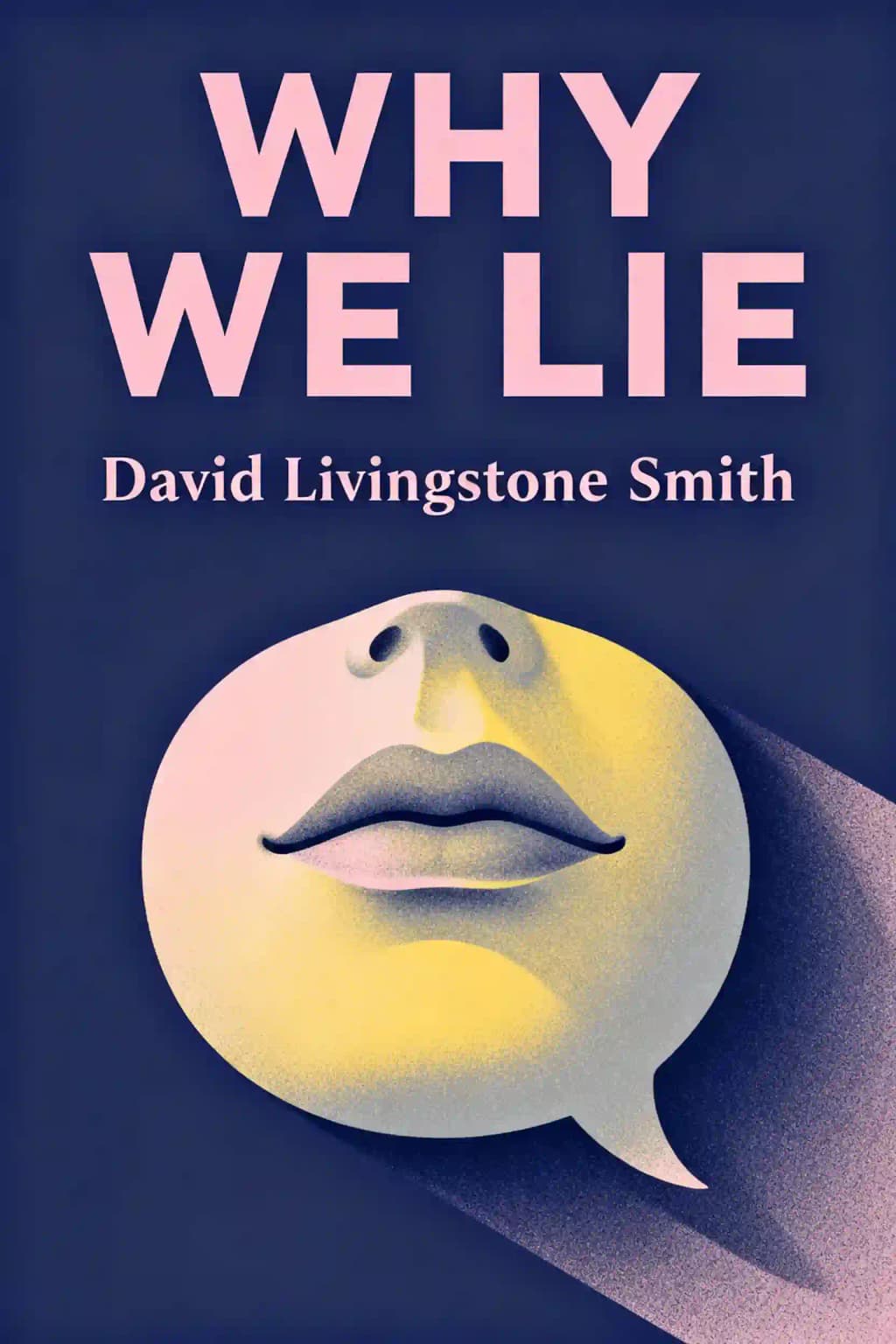
Have you ever caught yourself in a small lie and wondered why it came so naturally? You're not alone. David Livingstone Smith's groundbreaking exploration of human deception suggests we might be better named Homo fallax (deceptive man) rather than Homo sapiens (wise man). This provocative thesis has made "Why We Lie" a favorite among psychologists, evolutionary biologists, and even politicians seeking to understand human nature. When Barack Obama was asked about books that helped shape his worldview, this title appeared alongside works by Shakespeare and the Bible. The book's cultural impact extends beyond academia-celebrities like Natalie Portman have cited it when discussing the "masks" we wear in public life. What makes Smith's work so compelling is its uncomfortable revelation: deception isn't a moral failing but a fundamental feature of human psychology, shaped by millions of years of evolution to help us navigate our complex social world.
Capítulo 2
Natural-Born Liars: The Ubiquity of Human Deception
Human beings are grandmasters of mendacity. While a juvenile baboon might feign distress to steal food from an adult, such animal deceptions pale compared to our capacity for deceit. Our minds evolved not primarily for truth-seeking but for reproductive success-nature selected mental capacities that helped spread our genes, not necessarily those promoting honesty.
Deception has been a major human concern since our earliest cultural narratives. From the Garden of Eden to King Lear to Little Red Riding Hood, stories of deception captivate us because they speak to something fundamental in the human condition. Deceit permeates all human relationships-between parents and children, spouses, employers and employees, governments and citizens.
The paradox of deception is that it must conceal its own existence to be effective. This makes it simultaneously ubiquitous and elusive. Despite claiming to value honesty, we're dimly aware that too much truth can be antisocial. As portrayed in works like Dostoevsky's Prince Mishkin or the film "Liar, Liar!", absolute honesty wreaks havoc. Evolutionary biology suggests no normal person could maintain complete truthfulness-we are natural-born liars.
Taking a biologically realistic view, lying encompasses any behavior that provides others with false information or deprives them of truth. This includes not just verbal falsehoods but nonverbal deception like breast implants, hairpieces, feigned illnesses, and fake smiles. Strategic ambiguity and crucial omission-like Clinton's infamous "did not have sexual relations" statement-also constitute deception without explicit falsehoods.
Research shows undergraduates lie to their mothers in half of conversations and to strangers 80% of the time. On average, we tell three lies per ten minutes of conversation-and this only counts explicit verbal falsehoods. Our very appearance is carefully arranged deception, a practice dating back at least 70,000 years with archaeological evidence of ochre body adornment.
Not only do we excel at deceiving others, we're equally adept at deceiving ourselves. Self-deception is any mental process that conceals information from our conscious mind. This phenomenon has puzzled thinkers for millennia-how can someone simultaneously be both deceiver and deceived?
Capítulo 3
The Evolutionary Arms Race: Deception Across Species
Deception exists throughout the biosphere-from lowly viruses to great apes, living things exchange meaningful signals through languages of form, color, chemicals, behavior and sound. Once, biologists believed animal and plant communication existed to transmit true information. This reassuring idea is wrong-it reflects an idealization of nature and failure to observe closely.
To flourish, organisms must use resources around them, including other organisms. When force isn't an option, they must use guile. Some employ the "puppet master strategy" of directly manipulating another creature's brain, like the parasitic fluke that infects California killifish, causing them to swim erratically near the surface where shore birds can easily catch them.
The mirror orchid exploits wasps through techniques similar to human scam artists. Like a con man, the orchid must "understand" what motivates its victim and use this knowledge for its own ends. Though it sounds strange to speak of a brainless plant reading minds, this may reflect our human-centered prejudices. The mirror orchid's uncanny ability to manipulate its pollinator represents accumulated wisdom from millions of years of evolutionary trial and error.
Animals constantly face tough choices about avoiding predators, choosing mates, deciding when to fight or flee. Making the "right" choice depends on assessing likely outcomes, which requires predicting others' behavior. This prediction ability-mind reading-facilitates deception, while deception encourages better mind reading. These abilities bounce off each other in an intimate dialectic spiraling through evolutionary time.
Camouflage, or crypsis, allows animals to hide in plain sight. Color-changing isn't limited to chameleons-it's used by worms, mollusks, insects, spiders, fish, amphibians, birds and mammals. Some cuttlefish can even modify their body texture and sprout new appendages to become indistinguishable from their environment.
Mimicry involves three parties: the mimic (performer of deception), the model (whom the mimic impersonates), and the dupe (who is fooled). The mimic octopus is nature's greatest impersonator, able to transform into venomous soles, lionfish, or sea snakes by changing its shape, color, and movement patterns.
Capítulo 4
The Machiavellian Mind: How Deception Shaped Human Intelligence
The most effective cheating happens behind deception's smokescreen, operating in the shadows where detection becomes nearly impossible. This creates an evolutionary arms race between deception and detection abilities, driving increasingly sophisticated social intelligence. Social interactions require chess-like planning, often extending multiple moves ahead while anticipating others' potential responses through complex decision trees - demanding "intelligence unparalleled in any other sphere of living." This "Machiavellian intelligence" hypothesis suggests that deception and the corresponding need for suspicion and detection were primary drivers of primate brain evolution, explaining our species' remarkable cognitive capabilities.
Language represented a quantum leap in our deceptive capabilities, introducing unprecedented complexity to social interactions. Words require minimal energy expenditure and commitment, making promises remarkably easy to break compared to physical actions. This evolutionary history explains why we instinctively privilege nonverbal cues over verbal statements when detecting deception - our ancient detection systems remain more attuned to physical tells than linguistic content. As Shakespeare astutely noted in Macbeth, "False face must hide what the false heart doth know," yet our bodies consistently betray us through involuntary signals that evolved long before speech.
The genuine smile, first documented by nineteenth-century neurologist Guillaume Duchenne, provides a fascinating window into this dynamic. True happiness engages the orbicularis oculi muscles around the eyes (creating "crow's feet"), while fake smiles only activate the zygomaticus major muscles of the mouth. This distinction proves remarkably universal - even babies instinctively reserve genuine Duchenne smiles for mothers while offering counterfeit ones to strangers. We unconsciously detect these subtle distinctions through what anthropologist Gregory Bateson termed a "secret code that is written nowhere, known by none, and understood by all" - an implicit language of authenticity written in muscle movements.
Deception creates measurable psychological and physiological stress, particularly when facing skeptical audiences primed to punish dishonesty. Like Pinocchio's growing nose, liars reveal themselves through an array of involuntary signals - elevated voice pitch, facial blushing, increased perspiration, microexpressions of guilt, or conspicuously wooden behavior from over-controlled body language. These stress responses stem from the cognitive load of maintaining false narratives while suppressing truth.
Self-deception evolved as nature's elegant solution to this "Pinocchio problem." As evolutionary biologist Robert Trivers proposed in his landmark theory, "the overriding function of self-deception is the more fluid deception of others." By hiding uncomfortable truths from our conscious minds, we conceal them more effectively from others, avoiding the stress signals that typically betray deception. Self-deception allows us to lie sincerely, projecting genuine belief in our falsehoods. This explains why the most effective deceivers often believe their own lies, having mastered the art of self-delusion in service of social manipulation.
Capítulo 5
The Partitioned Mind: Consciousness and Unconscious Processing
The Machiavellian mind requires a deep division between conscious and unconscious regions. Scientific evidence increasingly confirms that introspection gives us only a partial, misleading picture of our inner lives. This division is not merely theoretical but manifests in countless ways throughout our daily experiences and has been documented through rigorous scientific investigation.
Our everyday experiences offer frequent glimpses into this hidden realm of unconscious processing. Thoughts often "pop" into our heads unbidden, like uninvited guests arriving at a party - whether it's suddenly remembering an important task while showering, or having the perfect comeback hours after a conversation. Creative breakthroughs frequently emerge from unconscious processes, particularly during periods of relaxation or engagement in unrelated activities. Mathematician Henri Poincare meticulously documented how solutions to complex mathematical problems came to him suddenly-while boarding a bus, walking by the sea, or after periods of intense conscious struggle followed by rest. This pattern of insight following incubation has become known as the "Poincare phenomenon" in creativity research.
These insights don't feel self-generated but rather seem to "present themselves" or "appear" to awareness, suggesting their origin in unconscious mental processes. Charles Darwin described how evolution's mechanism occurred to him "to my joy" while in his carriage, after years of collecting data but unable to consciously formulate the theory. Andrew Wiles called solving Fermat's Last Theorem an "incredible revelation" after seven years of focused work. Even mundane experiences like remembering birthdays, finding lost keys, or recognizing faces happen through complex neural processes we cannot consciously access or articulate.
Benjamin Libet's groundbreaking experiments in the 1980s revealed disturbing truths about consciousness and free will. When subjects were asked to press a button at will while noting the exact moment they decided to act, Libet discovered their brains began preparing for action through a "readiness potential" over a third of a second before conscious awareness of the decision. This finding fundamentally contradicts our intuitive belief that conscious decisions initiate actions-a universal delusion that shapes our understanding of human agency and responsibility.
Libet's research went further, demonstrating that consciousness consistently lags behind sensory stimulation. While brief electrical stimulation of the sensory cortex produces immediate neural activity, conscious experience requires sustained stimulation lasting approximately half a second. Even more surprisingly, there's a half-second delay between a stimulus (like a pinprick) and conscious sensation - a gap that challenges our assumption of immediate awareness.
Why doesn't daily life feel like a badly dubbed movie, given these temporal delays? The brain employs sophisticated mechanisms to create a seamless experience, unconsciously "backdating" sensations by seven-tenths of a second to create the illusion of instantaneous response. This demonstrates that conscious experience systematically distorts reality, filling gaps and smoothing perception's jagged edges through complex neural processes operating outside our awareness. This "temporal binding" mechanism ensures our conscious experience feels continuous and coherent, despite the underlying delays and discontinuities in neural processing.
These findings collectively suggest that consciousness serves more as an interpreter of experience rather than its primary author, raising profound questions about human agency, free will, and the nature of conscious experience itself.
Capítulo 6
Playing Social Poker: The Game We Don't Know We're Playing
Social interaction resembles a high-stakes game we play best when unaware we're playing it. Like predator-prey dynamics, social life requires anticipating others' moves while concealing our own intentions. Skills originally evolved for survival against predators were repurposed for social competition when humans became their own main predators. This evolutionary shift created sophisticated mental mechanisms for navigating complex social landscapes, much like how prey animals developed intricate systems for detecting and evading threats.
The unconscious mind must influence behavior without conscious awareness, requiring agility and speed to think several moves ahead. Effective social operators need an intuitive grasp of others' mental states to manipulate behavior advantageously. Consider how skilled negotiators instinctively read micro-expressions, body language, and subtle vocal cues without consciously processing each signal. This creates a fundamental tension: shrewd social play requires understanding human self-interest, while self-deception requires disavowing this knowledge. Nature's elegant solution? Split the mind, allowing consciousness to remain socially myopic while Machiavellian intelligence operates behind the scenes, much like a puppet master controlling strings from above.
Social life resembles poker more than chess, requiring deception and mind-reading. Expert poker players use techniques mirroring animal defensive strategies: the "poker face" (crypsis, like a chameleon's camouflage), incessant chatter (diversion, similar to a killdeer's broken-wing display), and unpredictable behavior (protean strategy, like a rabbit's erratic escape pattern). They read others' "tells"-involuntary information leaks-while suppressing their own and even creating false tells to mislead opponents. A master player might deliberately display nervousness when holding a strong hand, creating a pattern that can be exploited later.
We play social poker "in the dark" because "part of the game of social competition involves concealing how it is played" from our own conscious minds. As unconscious poker players, we manipulate others while remaining innocent of our self-serving intentions. This self-deception is so complete that when accused of manipulation, we can sincerely take offense and claim paranoia on the accuser's part. For instance, a manager might genuinely believe they're providing constructive feedback while unconsciously undermining a potential rival.
Freud proposed that everyone possesses "in his unconscious an instrument" to interpret others' unconscious communications-essentially a mental module specialized for interpersonal perception that can detect what lies behind deceptive social veneers. This "Machiavellian module" operates unconsciously, is domain-specific (attuned to emotionally charged, concealed mental states), and processes the disguised expressions of others' unconscious thoughts. Like a sophisticated radar system, it picks up subtle social signals: the slight tension in a smile, the microsecond delay in a response, or the unconscious mirroring of postures that reveal true intentions beneath surface behaviors.
In professional settings, this manifests as "office politics," where individuals navigate complex social hierarchies while maintaining plausible deniability about their strategic maneuvering. The most successful players are often those who sincerely believe they're above such games, even as they expertly play them.
Capítulo 7
The Hidden Language: How We Communicate Without Knowing
Gossip serves as nature's telephone, circulating vital information about whom to trust and whom to avoid. Research shows we spend 80-90% of conversation time discussing other people, with two-thirds focusing on our immediate social networks. This remarkable statistic holds true across cultures and age groups, suggesting a universal human tendency. Robin Dunbar proposes that speech evolved specifically for gossip, as our ancestors needed a more efficient social bonding mechanism than physical grooming. This theory explains why human language capabilities far exceed what's necessary for basic survival communication.
Much everyday gossip seems trivial rather than reputation-enhancing or damaging. Friends discuss TV shows, celebrities, or random encounters that provide no obvious evolutionary benefit. They share stories about coworkers' fashion choices, neighbors' garden renovations, or their cousin's new job. The coded communication hypothesis offers an explanation: we unconsciously select particular stories because they symbolically portray the interpersonal dynamics unfolding in the present interaction, encoding information that shields our conscious minds from the complex Machiavellian maneuvers occurring beneath the surface.
Unconscious coded communication can be approached through the more familiar concept of conscious encoding. Double entendres-like Mae West's famous "Is that a gun in your pocket?"-allow discussion of taboo subjects through humor. Sometimes we produce these unconsciously, like the man who mumbled about getting "a breast of fresh air" upon seeing a woman's cleavage. These Freudian slips reveal underlying thoughts and emotions that we may not consciously acknowledge.
While military codes use arbitrary digital symbols, unconscious communication typically employs analogical coding-representing through resemblance rather than convention. For example, complaining about a "controlling" boss might actually express frustration with a dominant spouse. Unconscious coded messages typically emerge in contexts involving covert conflicts of interest where speaking openly would be disadvantageous. They often seem irrelevant to the conversation, coming "out of the blue" with a peculiar urgency, yet carry deeper meaning when analyzed in context.
The author describes how his wife Subrena unconsciously helped calm a distressed mother and baby on a London bus. Without realizing it, she began criticizing their friend Janet's poor parenting skills within earshot of the struggling mother. The mother moved away, became calmer, and the baby stopped crying. When asked later, Subrena was completely unaware of the connection between her story and the situation. This example illustrates how we unconsciously select and share stories that serve immediate social purposes, even when we're not consciously aware of their function. Similar patterns appear in workplace conversations, family dynamics, and social gatherings, where seemingly random anecdotes often carry coded messages about present relationships and situations.
Capítulo 8
The Therapeutic Window: Seeing Deception in Action
The psychoanalytic setting-with its strange, asymmetrical dynamic where patients reveal everything while therapists remain inscrutable-creates perfect conditions for activating the Machiavellian module. From an evolutionary perspective, the therapy situation unconsciously registers as deeply threatening: someone is trying to uncover your hidden thoughts while concealing their own, resembling a social predator. This dynamic mirrors ancient social scenarios where vulnerability could be exploited, triggering deep-seated defensive mechanisms that evolved to protect us from manipulation.
Robert J. Langs was the first psychoanalyst to systematically study unconscious perception and communication in therapy. Through decades of clinical observation, he proposed that patients' stories carry unconscious messages in figurative language that covertly express their unconscious interpretations of their therapists-often portraying them as social predators. This encoded communication serves as a protective mechanism, allowing patients to safely express their anxieties and perceptions without direct confrontation.
Clinical vignettes demonstrate how patients unconsciously respond to breaches of confidentiality through coded narratives. In one case, seven-year-old Ali enacts a story about naked boys being filmed in a locker room after his therapist fails to notice a peephole in the therapy room door. His play therapy sessions suddenly shifted to themes of invasion and exposure, reflecting his unconscious awareness of the compromised privacy. In another case, thirteen-year-old Jane tells a story about betrayal through phone calls after her therapist discussed her case with her mother. She repeatedly brought up themes of secret-sharing and broken trust in seemingly unrelated stories about school friends, unconsciously processing her therapist's breach of confidence.
The case of Eileen and Nick reveals how the Machiavellian module detects hidden motives with remarkable precision. When therapist Eileen suggested doubling Nick's sessions "for his benefit," his conscious mind accepted her altruism at face value. However, his unconscious told a different story through his narratives. First discussing the movie Jaws, Nick unconsciously portrayed Eileen as a predatory shark circling its prey, using vivid descriptions of the shark's hunting patterns that paralleled therapeutic manipulation. Then mentioning prostitutes "selling themselves," he unconsciously framed her as soliciting business, drawing parallels between commercial exploitation and therapeutic relationships. These encoded narratives revealed his Machiavellian module's detection of her concealed self-interest in increasing her income-an insight his conscious mind missed completely.
The therapeutic setting thus provides a unique window into how our unconscious mind processes potential deception. Through metaphor and symbolic communication, patients demonstrate an innate ability to detect hidden agendas and respond to perceived threats, even when these insights remain outside conscious awareness. This understanding has profound implications for therapeutic practice and our broader understanding of human social intelligence.
Capítulo 9
Beyond Self-Deception: Facing Our Evolutionary Heritage
While Descartes imagined battling an all-powerful deceptive demon while seeking certainty, the real demon was within himself. Self-deception, once adaptive for our ancestors in small nomadic bands where group cohesion and social harmony were paramount for survival, has become increasingly dangerous in our modern world of complex global interactions. The most perilous forms are collective delusions-patriotism, moral crusades, religious fervor-that divide the world into good and evil. These tribal instincts, which once helped small groups survive, now fuel conflicts on an unprecedented scale.
Though we can't eliminate self-deception entirely (nor should we, as it serves some protective psychological functions), we could significantly reduce its harmful effects through several approaches. We should teach real history instead of sanitized fairy tales, including uncomfortable truths about our past. We need to reframe blind loyalty as potentially dangerous rather than inherently virtuous, recognizing how unquestioning devotion has enabled historical atrocities. Systematic inoculation against harmful illusions through critical thinking education and exposure to diverse perspectives can help build resistance to manipulation. At minimum, we might acknowledge our nature as natural-born liars, recognizing that we know less about ourselves and more about others than we realize.
The evolutionary perspective suggests some psychological theories will never "feel right" precisely because they address aspects of human nature we're designed to reject. Our intuitive resistance to certain ideas about human behavior - like unconscious motivations or evolutionary explanations - may itself be evidence for their validity. Only rigorous empirical testing, not intuitive appeal or personal comfort, can ultimately validate or falsify these ideas about unconscious communication and motivation.
Understanding ourselves requires systematic scientific investigation, not mere introspection. The interval between unconscious awareness and conscious perception provides ample opportunity for what researchers call the Machiavellian unconscious to filter, edit, and tamper with incoming information. Modern humans operate as naive realists who systematically misconstrue both themselves and others, their perceived "objective reality" actually being the product of unnoticed interpretative manipulations. This explains why eyewitness testimony can be unreliable and why people can maintain contradictory beliefs without noticing the inconsistency.
Perhaps the most unsettling insight from Smith's work is that depression may involve a deficit in self-deception rather than distorted thinking. Multiple studies show high levels of self-deception correlate strongly with conventional measures of mental health and life satisfaction-suggesting "normality" may rest on a foundation of strategic self-deception. Depressed individuals often demonstrate more accurate self-assessment and realistic worldviews than their non-depressed peers, a phenomenon known as "depressive realism." As philosopher David Nyberg wryly notes, "Self knowledge isn't all that it's cracked up to be." This suggests that some degree of self-deception may be necessary for psychological well-being in our complex modern world.