Capítulo 1
The Long Run: Finding Life's Rhythm One Step at a Time
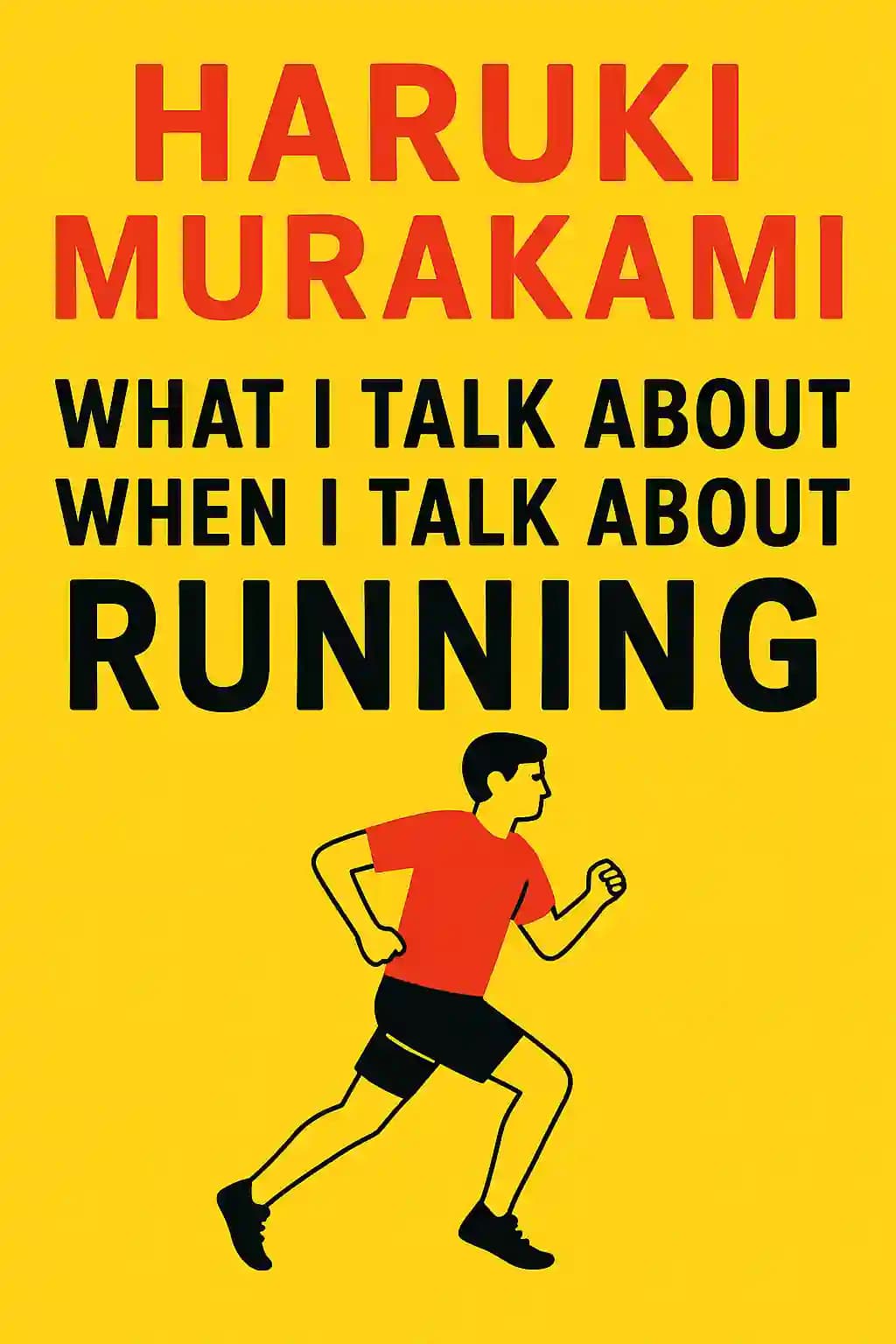
When Haruki Murakami first laced up his running shoes at age thirty-three, he couldn't have known this simple act would become as essential to his identity as writing novels. The celebrated Japanese author has since completed over twenty-five marathons, an ultramarathon, and numerous triathlons-all while producing internationally acclaimed fiction. "Pain is inevitable. Suffering is optional," he discovered, a mantra that applies equally to running and writing. This intimate memoir has become a cult favorite among both runners and writers, translated into over twenty languages and frequently cited by celebrities from Phoebe Bridgers to David Sedaris. Beyond its popularity, the book represents something rare: a meditation on the creative process that eschews romantic notions of artistic suffering in favor of discipline, consistency, and the profound joy found in pushing one's physical limits. In a world obsessed with productivity hacks and quick results, Murakami's reflections offer a refreshingly honest counterpoint-excellence requires not genius but persistence, showing up day after day, mile after mile, page after page.
Capítulo 2
The Accidental Runner: How a Bar Owner Became a Novelist and Runner
It was the fall of 1982 when I first began running daily at age thirty-three. Before that, I'd been running a jazz club near Sendagaya Station in Tokyo, having opened my first small venue shortly after college. Despite predictions of failure, the business thrived-not because I possessed any particular business aptitude, but because failure wasn't an option and I worked relentlessly. My wife's business intuition helped tremendously.
The idea to write a novel struck me suddenly on April 1, 1978, while watching a baseball game at Jingu Stadium. When American player Dave Hilton hit a double, something clicked inside me: I could write a novel. With no prior literary ambitions, just a strong desire to write, I bought manuscript paper and a fountain pen. By fall, I'd completed "Hear the Wind Sing," submitted it to a literary contest, and was surprised when it won. While still running my business, I wrote my second novel, but increasingly felt drawn to write something more substantial.
Despite objections, I sold the business in 1981 to focus entirely on writing, completing "A Wild Sheep Chase" by the following April. Though editors were unenthusiastic, readers loved it-this became my true starting point as a novelist. With my new sedentary lifestyle came weight gain and excessive smoking. I chose running for fitness because it required no special equipment or facilities-just shoes and roads. Running naturally led me to quit my sixty-cigarette-a-day habit.
As a professional writer, I completely transformed my lifestyle-going to bed early, rising with the sun, and living more selectively. For over two decades, I've maintained this disciplined routine: up before 5 a.m. to focus on important work, exercise later, and relax in the evenings. This efficient pattern sometimes complicates social relationships, but it's how I've sustained my writing career.
When I first started running, I could barely manage twenty or thirty minutes before becoming exhausted. But gradually, as my body adapted, I increased my distance. Running became incorporated into my daily routine alongside meals, sleep, and work. I'm fortunate to have been born with a strong, healthy body that has allowed me to run daily for almost twenty-five years without serious injury or illness. Though I'm no great runner, I'm definitely a strong one.
Capítulo 3
The Writer's Body: Physical Discipline as Creative Foundation
Most people believe novelists must live hazardously to create meaningful art-drinking heavily, smoking constantly, staying up all night, following the romanticized image of writers like Hemingway or Fitzgerald. However, I've discovered precisely the opposite through years of professional writing. Writing is fundamentally unhealthy-when we write, a kind of toxin deep within humanity rises to the surface that we must confront. This toxin manifests as emotional strain, psychological burden, and physical exhaustion. But professional writers hoping for long careers must develop an immune system against this toxin, which requires tremendous physical energy and disciplined self-care.
My motto: to deal with something unhealthy, be as healthy as possible. The healthy and unhealthy don't oppose each other but complement each other, like yin and yang. Many writers experience burnout when their physical energy can no longer overcome the creative toxin, leaving them with only technique but no vitality. I've seen countless talented writers fade away, their creativity diminished by exhaustion, their passion dampened by poor health. I want to avoid this literary burnout. For me, writing is like climbing a steep mountain-you either overcome your limitations or you don't. Each day presents a new summit to conquer.
Talent is the most important quality for a novelist, but it's uncontrollable-it wells up when it wants to and dries up on its own schedule, like an unpredictable spring. The next crucial qualities are focus and endurance, which unlike talent can be acquired through training and consistent practice. Focus means concentrating all your limited talents on what's critical, while endurance is the ability to maintain that focus day after day for months or years. It's like breathing-holding your breath while slowly continuing to breathe. This paradoxical balance requires both tension and relaxation.
Through daily writing practice, you gradually expand your limits, raising the bar almost imperceptibly, like building muscle through regular exercise. Raymond Chandler understood this, making sure he sat at his desk every day to build the physical stamina a writer needs, even if he wrote nothing. Writing novels is manual labor requiring tremendous energy over long periods, pushing your body to its limits much like long-distance running. The mind and fingers must work in harmony for hours, days, weeks, maintaining concentration through fatigue and distraction.
My daily running has taught me practical, physical lessons about writing: how much to push myself without risking injury, how much rest is appropriate between intense creative sessions, how to maintain consistency without becoming inflexible, and when to trust or doubt my abilities. The rhythm of footfalls mirrors the rhythm of words, each stride a sentence, each mile a chapter. If I hadn't become a long-distance runner when I became a novelist, my work would have been vastly different. The discipline of running has shaped not just my body but my creative process, teaching me patience, persistence, and the value of steady progress. I'm grateful to running for helping me write novels I'm proud of, for showing me that physical discipline and creative achievement are inseparable companions on the writer's journey.
Capítulo 4
Finding Your Rhythm: The Solitary Joy of Going the Distance
I'm fundamentally someone who enjoys solitude-running alone and writing alone suit me perfectly. Though I learned to be sociable in my twenties while running a bar, that core need for private time remains essential for my mental well-being. People often ask what I think about while running. The answer is: almost nothing. I run in a void, or rather, to acquire a void. Occasional thoughts drift through like clouds in an unchanging sky-present yet insubstantial.
Marathon runners understand this mindset-we're motivated by personal time goals, not rivalries. Writing novels is similar; what matters isn't sales or awards but meeting your own standards. Running is both exercise and metaphor-day by day, I raise the bar and elevate myself. The only opponent is who I used to be.
I've never recommended running to others-people become runners because they're meant to, not because someone persuades them. Running suits me, which is why I've continued for over twenty years. Even Olympic runner Toshihiko Seko admitted he often doesn't feel like running. On such days, I remind myself how fortunate I am to work as a novelist, setting my own hours without commuting or meetings. By comparison, running an hour seems trivial.
People may sneer at daily runners, but most run not to extend their lives but to live them fully-with clear goals and complete presence. Exerting yourself to your individual limits is the essence of running, a metaphor for life and writing. I've learned to prioritize ruthlessly, placing my relationship with readers above all else. Just as in my bar days when I focused on pleasing the one-in-ten customers who truly enjoyed my place rather than worrying about the nine who didn't, I write exactly what I want, how I want.
My muscles need a long time to warm up but can then work efficiently for extended periods-perfect for long distances but unsuited for sprints. This physical tendency seems connected to how my mind works. My resting heart rate is unusually slow at fifty beats per minute, another characteristic of a long-distance runner's constitution. Experienced runners can recognize each other by their quiet, measured breathing as they pass on the road, sensing each other's internal rhythm much like writers perceive each other's style.
Capítulo 5
The Athens Marathon: Testing the Limits of Endurance
In July 1983, I ran from Athens to Marathon-the reverse of the original course. The brutal conditions were overwhelming: the road was littered with dead animals, the sun rose with incredible speed, and my sweat evaporated instantly, leaving painful salt residue on my skin.
After passing seventeen miles, I glimpsed the Marathon hills, calculating I could finish in three and a half hours. But at nineteen miles, a fierce headwind began blowing from the sea, growing stronger as I approached Marathon. By twenty-two miles, I entered terra incognita, having never run farther. At twenty-three miles, I started hating everything-the sheep, the photographer, the heat.
When I finally reached the Marathon monument, I felt no accomplishment-only relief that I didn't have to run anymore. An old man at a gas station gave me flowers in congratulation. I finished in 3:51, not great but respectable considering the conditions. Later that year, I ran my first official marathon in Honolulu.
Even now, after twenty-some marathons, my mental process remains identical: confidence until nineteen miles, struggle after twenty-two, and post-race amnesia about the pain that lets me eagerly plan the next one. Some processes don't allow variation-you can only transform yourself through their persistent repetition.
Since my forties, though, I can no longer improve my times-an inevitable part of aging. My peak as a runner came in my late forties, when I could consistently run marathons in about three and a half hours. Now I'm inching closer to four hours, which has been shocking. This "runner's blues" emerged as my times slowed despite continued training. I even tried diversifying with triathlons and squash, hiring a swimming coach to improve technique, but the disappointment remained.
I've accepted I'll never run as I once did-one of aging's less pleasant realities. Time performs its job more faithfully than I ever could. The honor of physical decline awaits those fortunate enough to avoid dying young. What's meaningful now isn't competing against time but finding contentment in completing twenty-six miles, valuing things that numbers can't express, seeking pride from a different source.
Capítulo 6
Sixty-Two Miles: The Ultramarathon That Changed Everything
Have you ever run sixty-two miles in a single day? Most sane people haven't attempted something so foolhardy, but I did once. This ultramarathon, physically draining as it was, held profound meaning for me as a runner. It added new elements to my self-understanding, transforming my view of life.
The annual sixty-two-mile ultramarathon at Lake Saroma in Hokkaido takes place in June when the weather is pleasantly cool. Starting in freezing morning temperatures, runners gradually shed layers as the day warms. The course circles the enormous lake from Yuubetsu to Tokoro-cho, finishing through a natural flower garden facing the Sea of Okhotsk-gorgeous scenery if you can afford to notice it. Cows graze indifferently alongside the course, too busy eating to care about our nonsensical human activity.
The first thirty-four miles felt like a typical long run, but crossing the marathon distance marker (26.2 miles) gave me a shiver-I was entering unknown territory. By mile thirty-one, my muscles began tightening and thirst pursued me relentlessly. At the thirty-four mile rest stop, I changed clothes, ate snacks, applied anti-inflammatory spray, and stretched-but never sat down, fearing I wouldn't get up again.
The next thirteen miles were excruciating, like being slowly processed through a meat grinder. My body rebelled completely-different parts taking turns screaming complaints-while runners steadily passed me, including a seventy-year-old woman who shouted encouragement. I survived by mentally transforming: "I'm not human. I'm machinery. I don't need to feel. Just forge ahead." I narrowed my world to just the ground three yards ahead, repeating this mantra mechanically while rejecting all other sensory input.
Around mile forty-seven, I felt I'd "passed through" something-like my body had moved clean through a stone wall. Suddenly I didn't need to think anymore; some external power seemed to propel me forward. My exhausted muscles had accepted their fate, complaints silenced. I became an autopilot being whose sole purpose was rhythmic movement. Pain vanished or was shoved aside. In this state, I began passing other runners-about two hundred of them-who were slowing or walking.
In the final stretch through the Natural Flower Garden, running entered the metaphysical realm. The evening air carried the scent of the sea and summer grass. Foxes watched curiously from fields. Thick clouds hung overhead like a nineteenth-century landscape painting. My breathing remained steady, my organs working in perfect harmony. The cheers from spectators passed through me like the crystalline air. I was simultaneously me and not me-a still, quiet feeling where the mind no longer seemed important.
Capítulo 7
The Runner's Blues: Losing and Rediscovering Motivation
Though the ultramarathon gave me confidence and satisfaction, a mysterious slump persisted for years afterward. My marathon times steadily declined, dropping from consistent sub-3:30 performances to struggling to break 4 hours. Running became mere formality, no longer moving me as before - the spiritual lift and mental clarity I once cherished had vanished. I turned to triathlons and squash, desperate to recapture that athletic passion, and running ceased being my life's focus-like losing that initial crazy feeling when you fall in love. The joy had transformed into obligation, each mile feeling mechanical and empty.
After a decade-long slump, I'm finally emerging from the runner's blues fog that surrounded me since that ultramarathon. Something's beginning to stir within me again - that familiar anticipation before a morning run, the satisfaction of pushing through fatigue, the meditative state that only running provides. Each morning as I lace my shoes, I sense a faint promise in the air, like the first hints of spring after a long winter. I'm nurturing this fragile sprout carefully, focusing on my body's signals to avoid missteps, letting the passion reignite naturally rather than forcing it.
For the first time in years, I feel genuine contentment in my daily training runs for the upcoming New York City Marathon. The familiar routes along the river bring new discoveries, and even the challenging hill workouts feel purposeful again. I've opened a new notebook with fresh ink, writing something new - recording not just times and distances, but feelings and observations, reconnecting with the mental aspect of running. Why this renewed generosity toward running remains mysterious-perhaps returning to Cambridge and the Charles River has awakened dormant feelings, stirring memories of earlier, more passionate running days, or maybe the necessary internal adjustment simply needed time to complete its cycle, like healing from an emotional wound.
Time has come full circle. Running has returned as a happy, necessary part of my daily life-not mechanical repetition or prescribed ceremony, but a natural bodily desire like craving fresh fruit when dehydrated. The rhythm of footfalls on pavement feels right again, each breath purposeful and grounding. I'm looking forward to the NYC Marathon, not for my finishing time but for the satisfaction of the experience itself - the energy of the crowds, the challenge of the bridges, the triumph of reaching Central Park.
As a writer, I think about many things while running, arranging my thoughts without necessarily writing them down. Stories form and reform with each mile, characters develop alongside my breathing patterns. Rewriting takes my thinking deeper, yet I never reach conclusions or destinations - both writing and running are journeys without end. Even after decades of writing, I still only present hypotheses or paraphrase issues, much like how each run poses new questions rather than providing answers. I don't fully understand why my runner's blues appeared or why it's now fading. Perhaps we must simply accept life's mysteries without explanation-like taxes, tides, John Lennon's death, and bad referee calls. Some transformations defy rational explanation, requiring only our acceptance and gratitude for their passing.
Capítulo 8
Triathlon Transformations: New Challenges in Middle Age
After being disqualified in the 2000 Murakami Triathlon when I suddenly couldn't swim, I took a four-year break. My problem was hyperventilation-breathing too deeply before races due to nervousness, which threw off my timing. I spent those years finding a good swimming coach who gradually reshaped my technique, teaching me first to swim without body rotation like a flat board, then slowly adding rotation back in. Through patient, repetitive practice-like a drummer learning each component separately-I eventually developed a more efficient crawl.
Now in 2006, I'm back at the Murakami Triathlon, standing with fellow competitors who share this peculiar lifestyle of training rigorously despite jobs and families. We're not just competitors but share a bond-"a sort of warm emotion, like a vague, faintly colored mist over a late-spring peak." When the siren sounds, I plunge in, focusing on exhaling rather than inhaling. Despite being kicked and swallowing water, I maintain rhythm, but discover my goggles are completely fogged from Vaseline on my fingers. I waste time swimming off-course, constantly reorienting myself.
After finishing the swim, I transition awkwardly to biking along the scenic Sasagawa Nagare coastline, feeling "like a salamander that's evolved overnight into an ostrich" as my body adjusts to the different motion. During the bike portion, I pedal steadily northward along the sea, focusing on maintaining pace rather than passing others. After the turnaround point, I downshift and speed up, passing seven people.
When I transition to running, my legs initially refuse to cooperate-muscles locked from biking. Unlike previous triathlons where I'd easily pass thirty runners, this time I manage only fifteen. Still, I'm becoming more balanced across all three disciplines-perhaps becoming a true triathlete. Racing through Murakami City spurred on by spectators' cheers, I push to the finish line with exultation, despite small mishaps like my Vaseline adventure and untied shoelaces.
I'm training for another triathlon, finding cycling particularly solitary and torturous-endless repetition of slopes, winds, gear changes, and position adjustments. As triathlete Dave Scott wrote, cycling may be mankind's most unpleasant sport. Yet I persist, desperately humming "18 Til I Die" while forcing my legs to remember the proper rhythm against the Pacific winds.
Capítulo 9
The Meaning in the Motion: Why We Run
The pain and struggle inherent in endurance sports, particularly long-distance running, is precisely what makes them meaningful - through this voluntary suffering, we get a visceral sense of truly being alive. The burning muscles, the labored breathing, the mental battles fought in solitude - these challenges forge our character and reveal our true nature. Even if this pursuit seems pointless or inefficient to others who question spending hours running in circles or along empty roads, what matters is the profound truth I feel in my heart when I run. Long-distance running has not just shaped my body, but molded me into who I am fundamentally as a person, teaching me persistence, humility, and self-reliance. I hope we can grow old together, my legs carrying me forward even as time marches on. As I drive home from races, muscles aching but spirit soaring, I'm already thinking about next season's goals, facing each training run and race as best I can-because this is who I am: a long-distance runner.
I'm determined to continue running marathons until I feel I've done well again, regardless of my advancing age or others' well-meaning concerns. That's simply my nature-as instinctive and undeniable as salmon swimming upstream against the current or wild ducks mating for life. Throughout my life, I've always done whatever I felt was true to myself, whether writing novels in my distinctive style or logging miles on isolated trails. Looking deep inside myself, I see my stubborn, often self-centered nature that I've carried like an old, fraying suitcase down this long path-not because I particularly like these traits, but because they're fundamental to who I am, what I was meant to carry through life.
Running has blessed me with countless cherished memories that I replay like favorite films: jogging alongside renowned novelist John Irving in Central Park while interviewing him in 1983, our conversation flowing as naturally as our strides; exchanging silent, knowing smiles for years with an attractive woman on my regular Tokyo running route, our wordless connection speaking volumes about shared passion; struggling mightily to run at high altitude in Boulder with Olympic medalist Yuko Arimori, who coolly asked "Is something the matter?" as my lungs screamed for oxygen in the thin mountain air. Each memory is a testament to how running connects us to others and to our deeper selves.
For my gravestone, when that distant day arrives, I'd like it to say: "Haruki Murakami, 1949-20**, Writer (and Runner), At Least He Never Walked." This isn't mere stubbornness, but a statement about facing life's challenges head-on, maintaining forward motion even when the path grows steep. I'm deeply grateful to all who've helped me along this running journey - coaches, training partners, race organizers, and countless volunteers. I dedicate these reflections especially to all runners I've encountered on the road-those I've passed in moments of strength and those who've passed me in my struggles. Without this vast community of kindred spirits, I never would have kept running through all these years, through all life's changes. Running has been my constant companion, my teacher, and my truth.