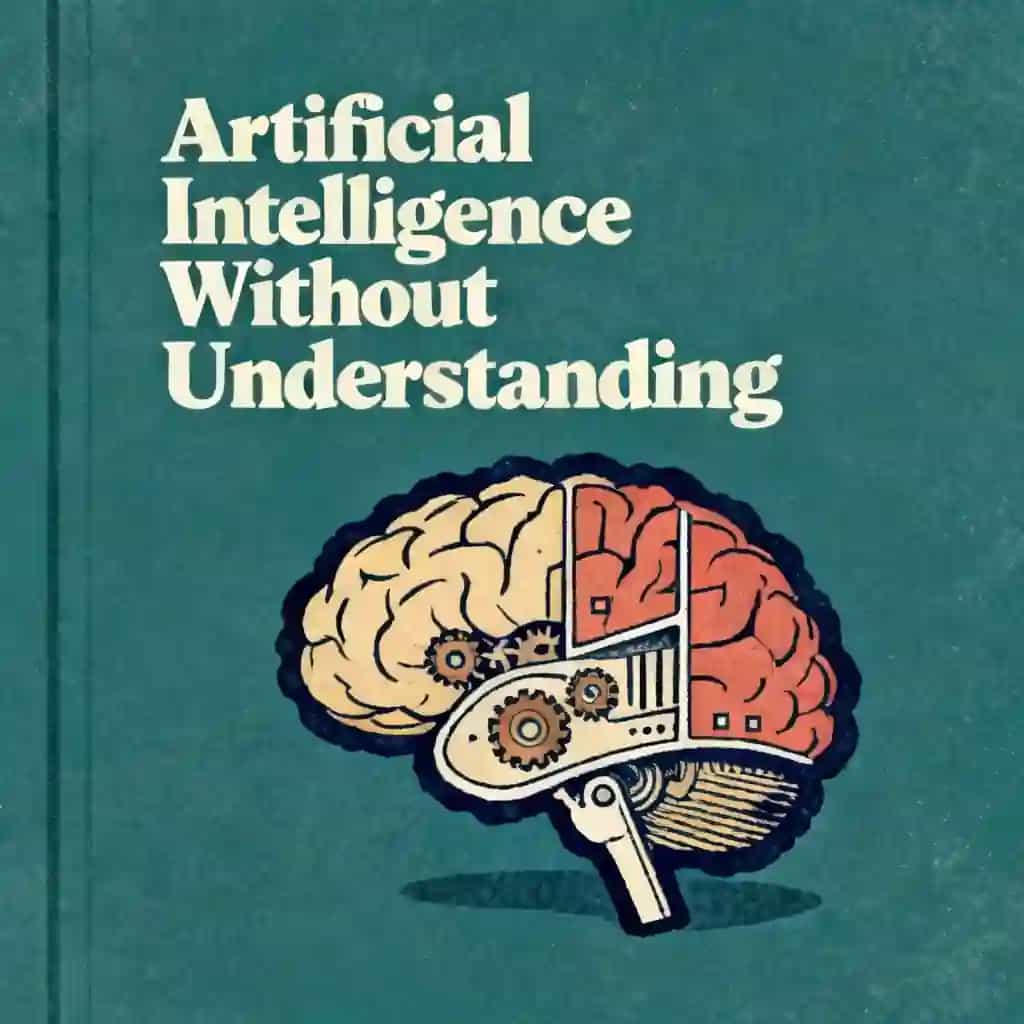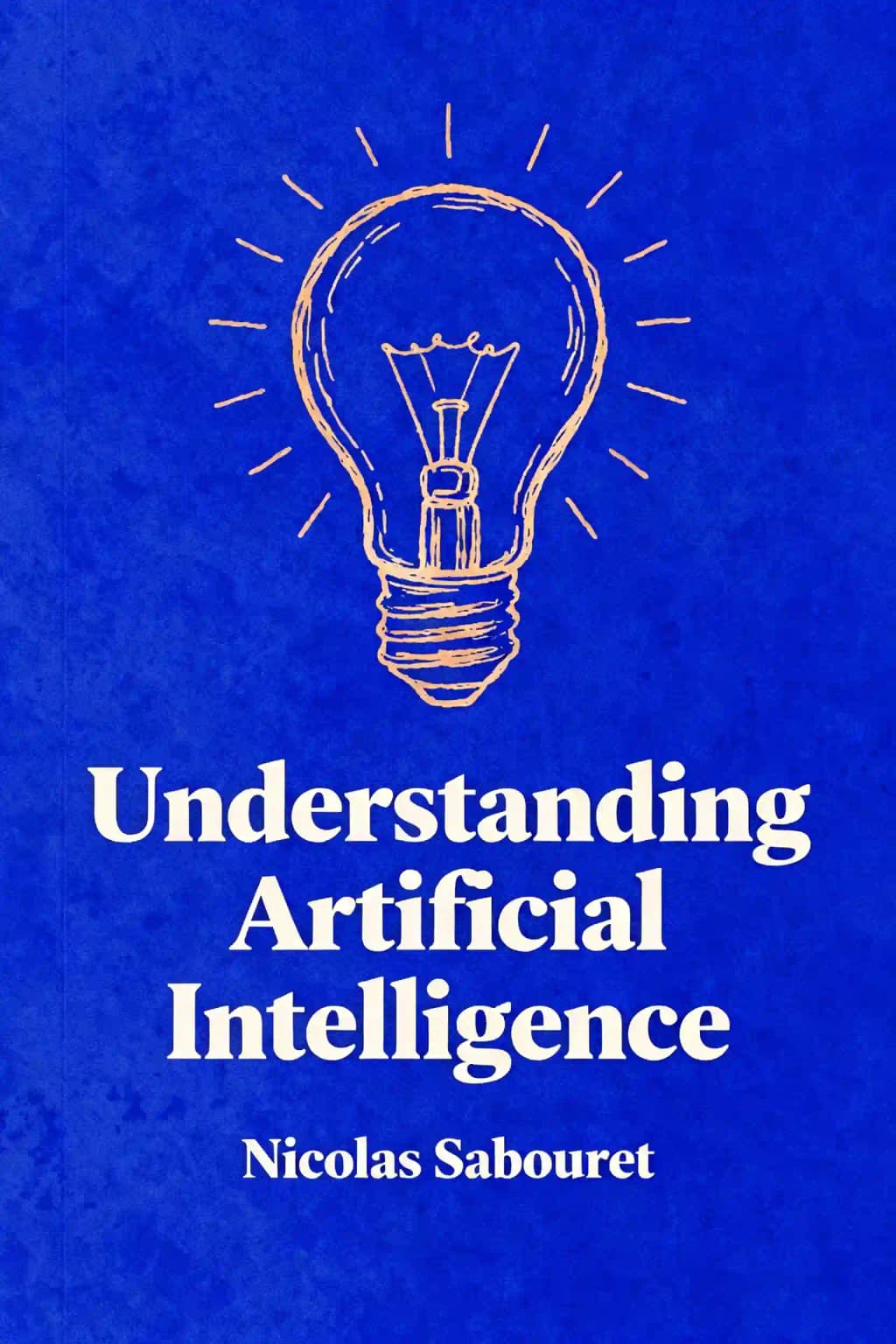
Understanding Artificial Intelligence
Resumen de Understanding Artificial Intelligence
Demystifying AI without the jargon, Professor Sabouret's guide untangles complex algorithms with striking clarity. Rated 4.2/5 by readers who call it "highly addictive," this book reveals why AI isn't sentient - and why that matters for our technological future.
Temas clave en Understanding Artificial Intelligence
- algorithmic reasoning
- machine learning limitations
- human-machine distinction
- turing test evaluation
- computational logic
Citas de Understanding Artificial Intelligence
AI outperforms humans in specific domains without possessing consciousness.
There's nothing magical about AI-it's simply algorithms written by humans.
A program cannot produce just any program-it depends on good instructions.
Intelligent behaviors aren't necessarily human-like.
Machines aren't intelligent like humans, but rather execute algorithms.
Personajes en Understanding Artificial Intelligence
- Nicolas SabouretAuthor and expert on artificial intelligence
- Charles BabbageOriginator of the concept of a programmable computer
- Marvin MinskyCognitive scientist who defined AI in 1968
- Lee SedolWorld champion Go player defeated by AlphaGo
Sobre el Autor
Sobre el autor de Understanding Artificial Intelligence
Nicolas Sabouret, author of Understanding Artificial Intelligence, is a professor of computer science at Université Paris-Saclay and a leading expert in human-machine interaction with over two decades of AI research experience. Specializing in multi-agent systems and affective computing, Sabouret bridges technical AI concepts with human behavioral modeling, exploring how machines simulate social intelligence.
His work spans collaborations with institutions like EDF and the European TARDIS project, focusing on applications from energy consumption prediction to virtual counseling agents.
Sabouret demystifies AI in this non-technical guide, drawing from his academic background and prior books like L’Intelligence Artificielle n’est pas une question technologique (co-authored with philosopher Laurent Bibard), which critiques AI’s societal implications. His interdisciplinary approach—merging computer science with psychology and social theory—positions him as a trusted voice for readers seeking clarity on AI’s capabilities and limitations.
The book distills complex algorithms into relatable examples, reflecting Sabouret’s commitment to public education. Translated into multiple languages, it has become a primer for students, professionals, and curious minds navigating AI’s evolving role in daily life.
Descargar resumen de Understanding Artificial Intelligence
Obtén el resumen de Understanding Artificial Intelligence como PDF o EPUB gratis. Imprímelo o léelo sin conexión en cualquier momento.
Preguntas Frecuentes Sobre Este Libro
Understanding Artificial Intelligence demystifies AI for non-technical readers, explaining how algorithms work, why they make errors, and why they lack consciousness. Nicolas Sabouret, a computer science professor, uses accessible language and illustrations to clarify AI’s limitations, debunk sci-fi myths, and emphasize its role as a human-designed tool—not a sentient entity. The book explores practical applications, ethical considerations, and future possibilities of AI.
This book is ideal for curious readers without technical backgrounds seeking a concise, jargon-free introduction to AI. Students, educators, and professionals in non-IT fields will gain insights into AI’s societal impact, while tech enthusiasts may appreciate its critique of AI’s overhyped capabilities. It’s also valuable for policymakers exploring AI ethics.
Yes—it balances clarity and depth, offering a grounded perspective missing from sensational AI narratives. Sabouret’s 20+ years of research ensure accuracy, while humorous analogies (e.g., comparing AI to ancient tools) make complex concepts relatable. The book’s focus on AI’s “good enough” solutions and lack of consciousness provides a refreshing counterpoint to dystopian fears.
Sabouret argues AI lacks independent will and operates within programmed constraints, making errors inevitable. He compares AI to historic tools like plows—effective but limited by design—and explains how heuristics prioritize speed over perfection, yielding practical but imperfect results. Consciousness or rebellion, he asserts, are impossible without human-like intent.
- Heuristics: AI’s problem-solving shortcuts that trade precision for efficiency.
- Machine learning: Systems that improve through data patterns, not human-like reasoning.
- Ethical design: The need to prevent AI misuse while leveraging its benefits.
- Human-AI collaboration: AI as a tool to augment—not replace—human decision-making.
Unlike technical guides, Sabouret avoids code and equations, using real-world analogies (e.g., self-driving car dilemmas) to explain algorithms. It uniquely addresses public misconceptions fueled by sci-fi, stressing AI’s dependency on human input. The focus on “good enough” outcomes contrasts with books promoting AI’s infallibility.
Sabouret firmly dismisses AI consciousness as a myth, stating machines lack self-awareness or desires. He attributes apparent “intelligence” to programmed responses, comparing AI to a sophisticated calculator. The book warns against anthropomorphizing algorithms, which operate without intent or emotion.
It envisions AI enhancing healthcare, logistics, and environmental solutions but warns of unchecked biases in data and decision-making. Sabouret advocates for interdisciplinary collaboration to steer AI toward societal benefit, urging readers to engage ethically with emerging technologies.
Sabouret cites navigation apps choosing suboptimal routes to avoid computational overload and recommendation systems prioritizing engagement over accuracy. These examples show AI balancing efficiency and practicality, mirroring human compromises.
Illustrator Lizete de Assis, an AI expert, uses playful diagrams to clarify concepts like neural networks and algorithmic bias. Visual metaphors (e.g., AI as a magnifying glass highlighting data patterns) make abstract ideas tangible for visual learners.
Yes—it highlights risks like biased facial recognition and autonomous weapons, emphasizing programmer accountability. Sabouret argues ethical AI requires diverse teams and transparent design, not just technical fixes. The book avoids simplistic solutions, urging ongoing public dialogue.
As a Université Paris-Saclay professor and AI researcher, Sabouret grounds theories in 20+ years of hands-on experience. His teaching expertise shines in stepped explanations of machine learning workflows and error analysis. The tone balances academic rigor with approachable storytelling.
With AI now pervasive, the book’s focus on critical thinking aligns with debates about AI regulation and workplace integration. Updated sections address generative AI’s creative limits and the sustainability of large language models, offering timeless principles for evaluating new technologies.