Capítulo 1
Unveiling the Path to Fulfillment: Where Ancient Wisdom Meets Modern Success
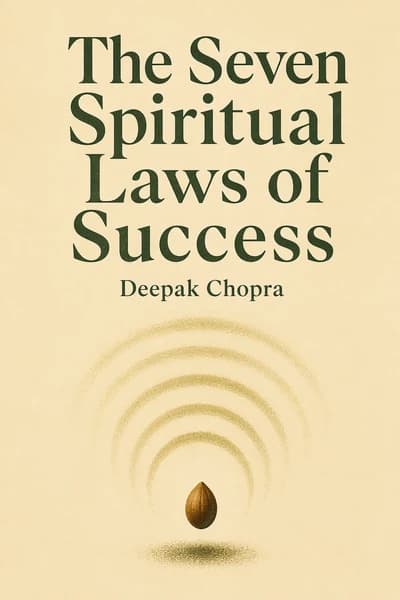
When Deepak Chopra first published "The Seven Spiritual Laws of Success," few could have predicted its meteoric rise to becoming one of the most influential spiritual texts of our time. Embraced by celebrities from Oprah Winfrey to Lady Gaga, this slim volume has sold millions of copies worldwide and been translated into over 40 languages. What makes this work so compelling is how it bridges Eastern philosophical traditions with Western pragmatism, offering a roadmap to success that transcends material achievement. In a world increasingly hungry for meaning beyond consumption and status, Chopra's integration of Vedic wisdom with quantum physics speaks to our deepest yearning-to live lives of purpose, abundance, and joy without sacrificing our spiritual essence.
Capítulo 2
The Essence of Yoga: Union Beyond Physical Postures
While many Westerners associate yoga primarily with physical postures performed in studios, its true essence extends far beyond mere exercise. The word "yoga" derives from the Sanskrit "yuj," meaning "to unite"-it represents the integration of body, mind, and soul; the merging of individual consciousness with universal consciousness. This ancient science of balanced living, developed over thousands of years in India, offers a comprehensive path to realizing our full human potential through practices that include meditation, breathwork, ethical principles, and lifestyle guidelines.
When we practice yoga in its complete form, we experience a profound transformation that affects every aspect of our being. Physical vitality increases as energy blockages clear, emotional barriers dissolve, and an innate sense of joy awakens within us. The body becomes more flexible and strong, while the mind grows calmer and more focused. The Seven Spiritual Laws of Yoga program brings into action the consciousness-based principles from Chopra's renowned book, offering harmony and abundance through an approach that recognizes consciousness as the primary force in the universe. These laws - Pure Potentiality, Giving, Karma, Least Effort, Intention and Desire, Detachment, and Dharma - provide a framework for understanding how consciousness manifests in our daily lives.
What makes yoga so powerful is its recognition that we exist simultaneously on multiple levels. While modern medicine often views humans as primarily biological machines, yoga reminds us of our multidimensional nature through its holistic approach to wellness. The ninth-century sage Adi Shankara, perhaps yoga philosophy's most influential teacher, identified the "koshas" or coverings that consciousness wears: the physical body (annamaya kosha), which includes our muscles, bones, and organs; the energy body (pranamaya kosha), which governs our vital life force and breath; the mental body (manomaya kosha), encompassing our emotions and sensory experiences; the intellectual body (buddhimaya kosha), responsible for wisdom and decision-making; and the bliss body (anandamaya kosha), our deepest layer of pure joy and connection to universal consciousness.
Traditional yogic practices address each of these layers systematically. Asanas (physical postures) work primarily with the physical body, while pranayama (breathing exercises) affects the energy body. Meditation and concentration practices influence the mental and intellectual bodies, while deeper spiritual practices touch the bliss body. When we understand ourselves as more than just physical entities, we open to the possibility of healing and transformation that addresses our whole being. This comprehensive approach allows us to address not just surface-level symptoms but their root causes across all dimensions of our existence. Through regular practice, we begin to experience the unity that yoga promises - a state where body, mind, and spirit work in perfect harmony, leading to profound peace and well-being.
Isn't this what we're truly seeking-not just relief from symptoms but a profound sense of wholeness and connection? The ancient wisdom of yoga provides a time-tested roadmap for this journey of self-discovery and transformation.
Capítulo 3
The Three Bodies: Physical, Subtle, and Causal
To understand yoga's approach to human experience, we must recognize that we exist in three distinct yet interconnected bodies. The physical body encompasses not just our personal collection of cells and tissues, but also our extended environment. Every breath we take exchanges atoms with our surroundings-the rivers flowing through valleys and the blood flowing through our veins are intimately related. This recognition naturally makes yogis environmentalists, as they understand the profound connection between personal and planetary wellbeing.
What's fascinating about our physical bodies is their constant state of renewal. Scientific studies show that 98 percent of our body's atoms are replaced annually-our stomach lining recreates itself every five days, our skin monthly, and our liver cells every six weeks. We are quite literally not the same person we were a year ago! This understanding helps us release rigid identification with our physical form.
The subtle body encompasses our mind, intellect, and ego-the components most people identify as "self." The mind stores sensory impressions and filters reality through different states of consciousness. The intellect weighs advantages and disadvantages of choices, ultimately distinguishing between the real (that which cannot be lost) and the unreal (anything with beginning and end). The ego creates boundaries through concepts of "I," "me," "my," and "mine," seeking security through control and approval. Most emotional pain results when the ego discovers something it believed it controlled was actually outside its jurisdiction.
The causal body-the domain of spirit-underlies both physical and subtle bodies. Though imperceptible to our senses, it gives rise to thoughts, feelings, desires, memories, and the material world itself. This field of pure potentiality manifests as the diverse world of forms we experience. Yoga encourages bringing attention to this realm to become imbued with its stillness and creativity, maintaining centered awareness even during dynamic activity.
Have you ever experienced moments when you felt connected to something larger than yourself-perhaps while witnessing a breathtaking sunset or during profound meditation? These glimpses into our causal nature remind us of who we truly are beyond our temporary identifications.
Capítulo 4
The Soul Questions: Who Am I? What Do I Want? How Can I Serve?
According to Maharishi Patanjali, the legendary founder of yoga philosophy, yoga's ultimate goal is nothing less than total freedom from suffering. His classic Yoga Sutras elaborate the eight branches of yoga designed to shift our internal reference point from constricted to expanded consciousness-from ego to spirit. When we identify solely with our ego, we bind ourselves to things without permanent reality, creating distress and unhappiness.
Three key questions help facilitate this shift: Who am I? What do I want? How can I serve? Whether conscious of them or not, these questions direct our life choices.
When asked "Who are you?", most people respond with positions and possessions-"I'm a doctor," "I'm American," "I'm a father." We define ourselves by roles, group affiliations, relationships, or practices. From yoga's perspective, these represent aspects of you but not your ultimate essence.
The second soul question, "What do I want?", takes us deeper. As the Upanishads state: "You are what your deep, driving desire is. As is your desire, so is your will. As is your will, so is your deed. As is your deed, so is your destiny." Different levels of our being express different desires-physical needs, emotional connections, and spiritual expression. By repeatedly asking ourselves "What do I really want?", we begin to distinguish superficial wants from deeper longings.
The third soul question, "How can I serve?", shifts our inner dialogue from "What's in it for me?" to "How can I help?" As our sense of self expands, our compassion naturally increases, and we begin to care about how our choices affect others. This question connects us to our dharma-our purpose and unique contribution to the world.
When was the last time you sat quietly with these questions? What might change in your life if you allowed their answers to emerge from your deepest self rather than from social conditioning?
Capítulo 5
The Eightfold Path: Patanjali's Royal Road to Union
Maharishi Patanjali elaborated the eight branches of yoga as different entry points into an expanded sense of self. Rather than rigid commandments, these branches represent qualities that emerge spontaneously from enlightened awareness. They offer a comprehensive approach to living that addresses our relationship with others, ourselves, our bodies, our energy, and our consciousness.
The first branch, Yama, provides universal guidelines for engaging with others through five principles: practicing nonviolence (ahimsa), speaking truthfully (satya), expressing sexuality appropriately (brahmacharya), being honest (asteya), and practicing generosity (aparigraha). These aren't restrictive rules but natural expressions of an awakened consciousness that recognizes the interconnectedness of all life.
The second branch, Niyama, represents qualities naturally expressed in an evolutionary personality-how we live when no one is looking. These include purity (shoucha), contentment (santosha), discipline (tapas), spiritual exploration (svadhyana), and surrender to the divine (Ishwara-Pranidhana). These qualities emerge from living a natural, balanced life in harmony with cosmic intelligence.
Asana, the third branch, means "seat" or "position" and represents mind-body integration through conscious awareness of energy flow. The postures create balance, flexibility, and strength-essential qualities for a healthy life. Regular practice cultivates physical and emotional flexibility, which yogis consider the secret to vitality and even longevity.
Pranayama, the fourth branch, involves mastering life force through breathing techniques. Prana is the essential energy animating all living beings, similar to chi in Chinese medicine. When prana flows freely, health and vitality follow; when blocked, fatigue and disease result. By regulating breathing, we can influence mental activity and enhance neurorespiratory integration.
The remaining branches-Pratyahara (sensory withdrawal), Dharana (focused attention), Dhyana (meditation), and Samadhi (pure awareness)-progressively refine our consciousness. Pratyahara involves turning the senses inward to hear the inner voice more clearly. Dharana develops mastery of attention and intention. Dhyana cultivates witnessing awareness-the ability to observe thoughts, feelings, and sensations without reaction. Samadhi represents being settled in pure, unbounded awareness-experiencing unity with all creation.
This eightfold path isn't linear but spiral, with each element supporting and enhancing the others. As we practice, we naturally move from the gross to the subtle, from the outer to the inner, from form to formlessness.
Capítulo 6
The Seven Spiritual Laws: Principles of Cosmic Operation
The Seven Spiritual Laws represent the principles through which the unmanifest becomes manifest-how spirit becomes the material universe. Each law is associated with a specific day of the week and a corresponding mantra to help practitioners integrate these principles into daily life.
The Law of Pure Potentiality reminds us that at our core, we are pure awareness-the domain of all possibilities and creativity. During yoga practice, this law encourages us to cultivate stillness between poses, practice witnessing awareness, and embrace non-judgment. The associated mantra is "Om Bhavam Namah" (I am absolute existence).
The Law of Giving and Receiving recognizes that the universe operates through dynamic exchange. Our bodies and minds constantly interact with the universe, and stopping this circulation blocks energy flow. In yoga practice, this manifests in every breath-the exchange of atoms with our environment. The mantra is "Om Vardhanam Namah" (I am the nourisher of the universe).
The Law of Karma states that every action generates energy that returns in kind-as we sow, so we reap. By witnessing our choices from quiet awareness, we make karma-free decisions that align with our highest good. The mantra "Om Kriyam Namah" reminds us that our actions are aligned with cosmic law.
The Law of Least Effort teaches that nature functions with effortless ease-flowers blossom and stars move without strain. The greatest benefits of yoga come from relaxing into poses rather than forcing the body. At points of resistance, we learn to breathe into it and surrender rather than muscling through. The mantra "Om Daksham Namah" reminds us that our actions achieve maximal benefit with minimal effort.
The Law of Intention and Desire recognizes that at the quantum level, everything is energy and information influenced by consciousness. By consciously directing our attention and intention, we influence not just our personal body but our extended environment. The mantra "Om Ritam Namah" reminds us that our intentions are supported by cosmic intelligence.
The Law of Detachment teaches that to acquire something, we must relinquish attachment to it-not giving up intention but releasing attachment to outcome. In yoga, this means letting go of idealized poses and allowing awareness to embrace yoga's essence. The mantra "Om Anandham Namah" reminds us our actions are blissfully free from attachment to outcome.
The Law of Dharma states that every being has a purpose in life, with unique abilities and ways of expressing them. When the world's needs match our creative talents, our dharma is realized. The mantra "Om Varunam Namah" helps shift our focus from self-interest to service.
These laws aren't arbitrary rules but descriptions of how the universe actually operates. When we align with them, we experience greater ease, joy, and fulfillment. Isn't it remarkable how often we struggle against these principles, only to discover that surrendering to them brings the very outcomes we were seeking?
Capítulo 7
The Technology of Transformation: Meditation and Breath
While yoga philosophy provides the theoretical framework, meditation and breathwork offer practical technologies for transformation. Meditation calms the turbulent mind, allowing messages of peace to reach every cell in the body. Each chakra (energy center) identifies a core human need, and when open, energy flows effortlessly to meet those needs.
The root chakra (Muladhara) at the base of the spine governs basic survival needs. When energy flows freely here, we feel confident about meeting core needs without struggle. The creativity chakra (Svadhisthana) in the sexual organs governs creative expression in all forms. The energy chakra (Manipura) in the solar plexus is our seat of power, allowing us to translate intentions into manifestation.
The heart chakra (Anahata) represents unifying love and compassion. When flowing, we feel deeply connected to others. The throat chakra (Vishuddha) governs expression, allowing us to confidently communicate our needs. The intuition chakra (Ajna), the third eye in the forehead, connects us to insight and our life purpose. The consciousness chakra (Sahaswara) at the crown reveals our unbounded nature as spirit in human form.
The So Hum meditation technique uses breath with a mantra to quiet the mind and relax the body. By silently repeating "So" on inhalation and "Hum" on exhalation, we access the silent space between thoughts where healing and transformation occur. With regular practice, this expansive consciousness permeates our active life, extending relaxation beyond meditation sessions.
Pranayama (breathwork) offers powerful techniques for managing energy. Bhastrika (bellows breath) involves forceful exhalations and inhalations that clear mental fog and increase metabolism. Dirgha (complete breath) sequentially fills three areas of the lungs, nourishing organs and tissues. Ujjayi (success breath) creates a cooling influence by slightly constricting the throat muscles during breathing. Nadi Shodhana (alternate nostril breathing) quiets mental turbulence and helps with anxiety.
By becoming aware of our breathing throughout the day, we can use these techniques to manage stress and maintain centeredness. Conscious breathing keeps awareness centered amid turbulence-the true value of pranayama.
Have you noticed how your breath changes with your emotional state? Short, shallow breathing accompanies anxiety, while deep, slow breathing promotes relaxation. By consciously controlling our breath, we gain a powerful tool for influencing our mental and emotional state.
Capítulo 8
Consciousness in Motion: The Physical Practice
Yoga begins with simple awareness of the body. Even while reading these words, noticing your posture and making adjustments to enhance comfort is yoga in action. This creates a feedback loop where changing your posture shifts your awareness and vice versa. Whether you're sitting at a desk, standing in line, or lying in bed, each moment offers an opportunity to practice this foundational aspect of yoga.
The physical practice involves bringing consciousness to movement and position, treating your body as a precious vehicle for awakening. In yoga, "asana" means "seat"-a position consciously chosen. This reflects the deeper principle that we ultimately choose every position in life, both physically and metaphorically. Regular practice offers two key benefits: enhanced awareness of bodily signals and improved baseline physical comfort, making your body a more reliable instrument for evaluating choices. This heightened awareness extends beyond the yoga mat, influencing how we sit, stand, walk, and move through daily activities.
The practice includes a variety of flexibility poses that release stagnating toxins blocking vital energy flow. Forward bends calm the nervous system, while backbends energize and invigorate. Twisting poses massage internal organs and detoxify the body. Balancing poses help cultivate stillness in both body and mind, becoming easier with regular practice. These poses, such as Tree Pose (Vrksasana) and Eagle Pose (Garudasana), develop concentration and inner stability. Sun salutations enhance flexibility and strength while improving circulatory health-described as the most complete exercise available. This flowing sequence of poses synchronizes breath with movement, creating a moving meditation that warms the body and focuses the mind. Energy-opening poses release spinal congestion, allowing prana to nourish the entire body, particularly through inversions and heart-opening poses.
What distinguishes yoga from mere exercise is the quality of awareness brought to each movement. Rather than mechanically performing repetitions, we bring full presence to each posture, noticing sensations, thoughts, and emotions that arise. This mindful approach transforms physical movement into a meditation in motion. Every pose becomes an opportunity to observe the interplay between effort and ease, strength and flexibility, stability and movement.
The human body thrives on movement. When we move freely and harmoniously with our environment, we experience joy and vitality on all levels. Regular yoga practice expands our limitations, creating a parallel relationship between body and mind: as the body becomes more flexible and strong, so does the mind. Physical balance cultivates mental and emotional centeredness. This mind-body connection becomes increasingly evident as practitioners develop their practice, noticing how physical tension reflects mental stress and how releasing physical constraints often leads to emotional breakthroughs. Through consistent practice, we develop not just physical strength and flexibility, but also mental resilience and emotional equilibrium.
Capítulo 9
Integration: The Complete Yoga Session
The complete Seven Spiritual Laws of Yoga program orchestrates a transformative journey that guides your body and mind from profound silence through conscious breathing into positions that enhance flexibility, strength, and balance. An ideal session begins with pranayama breathing exercises, incorporating techniques like Ujjayi (ocean breath), Nadi Shodhana (alternate nostril breathing), and Bhastrika (bellows breath). This is followed by a period of meditation, typically lasting 10-15 minutes, where practitioners cultivate inner stillness and present-moment awareness.
After quieting the mind through these preliminary practices, practitioners move through a carefully sequenced series of asanas. The progression starts with gentle flexibility postures like forward bends and spinal twists to warm up the body. This flows into balancing poses such as Tree Pose (Vrksasana) and Eagle Pose (Garudasana), which develop both physical and mental equilibrium. The practice then builds energy through several rounds of Sun Salutations (Surya Namaskar), incorporating bandhas (energy locks) like Mula Bandha (root lock) and Uddiyana Bandha (abdominal lock). Energy-opening postures such as backbends and hip openers follow, helping to release blocked energy and emotion stored in the body.
The session concludes with a focused awareness of the spiritual law corresponding to that particular day: Sunday (Pure Potentiality - connecting to infinite possibilities), Monday (Giving and Receiving - maintaining life's flow), Tuesday (Karma - conscious choice-making), Wednesday (Least Effort - following nature's intelligence), Thursday (Intention and Desire - harnessing attention and intention), Friday (Detachment - embracing uncertainty), and Saturday (Dharma - discovering life purpose). Each law receives special attention through specific mantras, mudras, and contemplative practices.
This integrated program can be customized to fit different schedules, ranging from 45 minutes to two hours. A shorter practice might focus on key poses and brief meditation, while longer sessions allow for deeper exploration of each element. The intensity can also be adjusted, from gentle and restorative to more vigorous and challenging sequences, making it accessible to practitioners of all levels.
The program's power lies in its seamless integration of physical movement, breath awareness, meditation, and spiritual principles. Rather than treating these as separate disciplines, this approach weaves them together into a unified practice that addresses the whole person. Physical postures become gateways to deeper awareness, breath work creates bridges between body and mind, and spiritual principles provide context for personal transformation. This holistic perspective recognizes the interconnectedness of physical health, emotional wellbeing, and spiritual growth, acknowledging that transformation in one area naturally influences all others.
Capítulo 10
The Ultimate Purpose: From Separation to Unity
Yoga is fundamentally a system of gaining knowledge through direct experience. While scientists may understand strawberries through molecular analysis or botany, a yogi knows a strawberry by taking a bite. This philosophy extends to understanding reality by consciously experiencing the different layers of life-physical, mental, and spiritual.
The Bhagavad Gita illustrates life's perennial struggle through the story of two opposing clans-the Pandavas representing right action according to natural law, and the Kauravas representing limited awareness that causes suffering. When both leaders seek Lord Krishna's support, Duryodhana chooses Krishna's army while Arjuna receives Krishna as his personal charioteer-symbolizing that expanded awareness is more valuable than might. Krishna teaches Arjuna that yoga offers a solution to life's dualities by establishing oneself in unity consciousness beyond time, space, and causality.
The ultimate purpose of yoga is to take practitioners into the realm of Pure Potentiality where anything is possible. Through practice, all seven spiritual laws become activated: Giving and Receiving manifests in the exchange of life energy with the universe; Karma appears in the relationship between action and reaction; Least Effort emerges through surrender into postures; combining Intention with Detachment maximizes achievement while minimizing strain; and Dharma expresses through graceful, conscious movement that positively affects oneself and the environment.
Whether practiced for flexibility, stress release, or spiritual awakening, yoga serves and nourishes at every level of being. It helps us discover gifts of peace, harmony, laughter, and love that have remained unopened since childhood. In a world increasingly characterized by fragmentation, distraction, and disconnection, yoga offers a path back to wholeness-a remembrance of who we truly are beyond our temporary identifications and limitations.
As we embrace this ancient wisdom in our modern lives, we discover that success isn't measured by external achievements alone but by the quality of our consciousness. True fulfillment comes not from having more but from being more-more present, more compassionate, more aligned with our authentic nature. And isn't that the success we're really seeking?