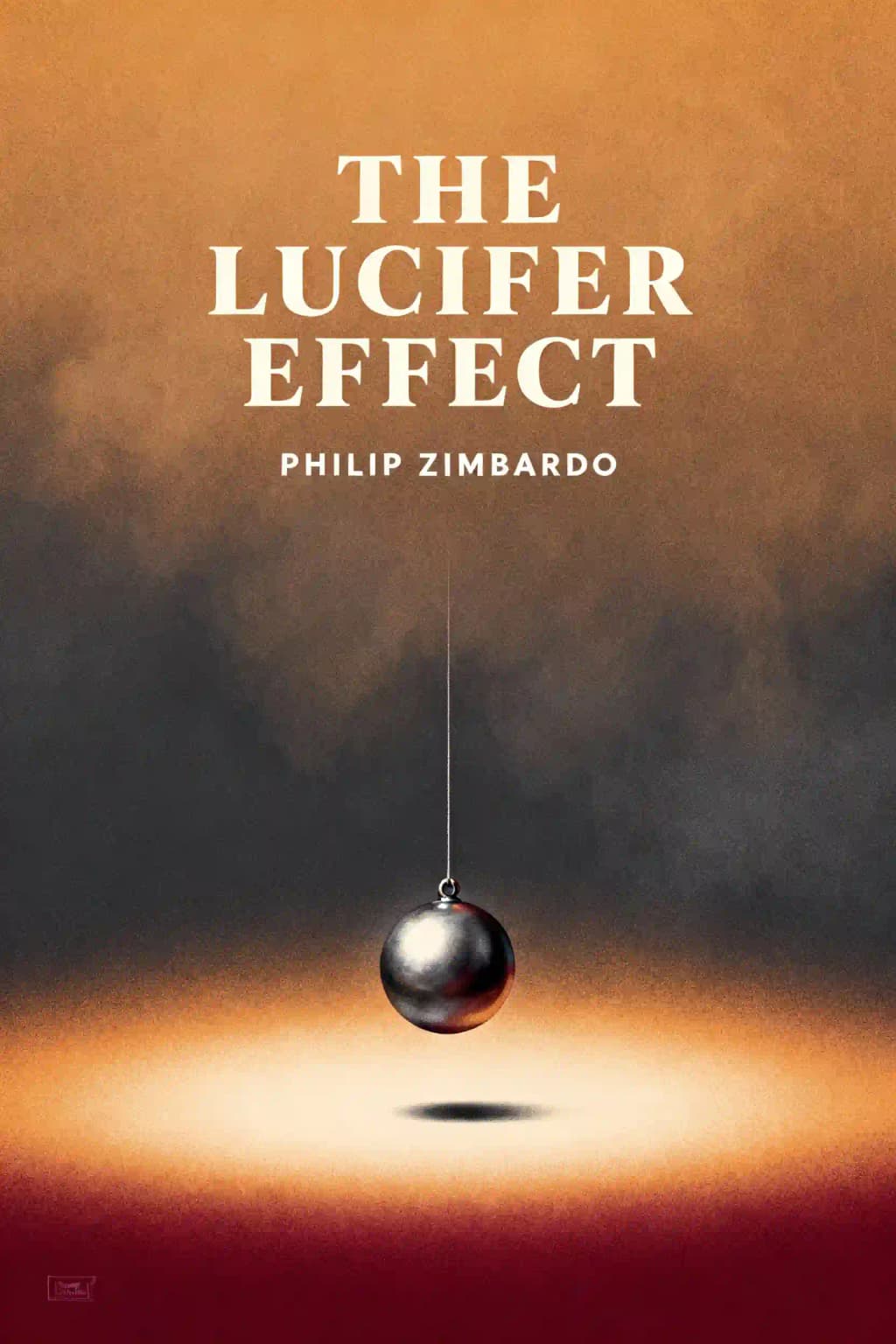
How can ordinary people become monsters? Zimbardo's landmark Stanford Prison Experiment reveals the terrifying truth behind Abu Ghraib and beyond. Not just "bad apples" but "bad barrels" transform good people into perpetrators of evil - a psychological phenomenon that haunts military, corporate, and everyday ethics.
Siente el libro a través de la voz del autor
Convierte el conocimiento en ideas atractivas y llenas de ejemplos
Captura ideas clave en un instante para un aprendizaje rápido
Disfruta el libro de una manera divertida y atractiva
What turns a kind college student into a sadistic prison guard in just days? This question haunts Philip Zimbardo's groundbreaking work on the psychology of evil. In 1971, Zimbardo transformed Stanford University's basement into a mock prison, randomly assigning psychologically healthy students to roles as either guards or prisoners. The planned two-week experiment collapsed after just six days when the situation spiraled dangerously out of control. Guards who described themselves as pacifists became increasingly cruel-forcing prisoners to clean toilets with bare hands, standing on their backs during push-ups, and subjecting them to humiliating sexual taunts. Meanwhile, prisoners became passive, depressed, and helpless, with some experiencing complete emotional breakdowns. Most disturbing was how quickly everyone-including Zimbardo himself-became absorbed in their roles. The experiment ended only when an outside observer was horrified by what she witnessed. This wasn't about "bad apples" with sadistic personalities; the roles had been randomly assigned. The situation itself transformed ordinary people into monsters.
Desglosa las ideas clave de The Lucifer Effect en puntos fáciles de entender para comprender cómo los equipos innovadores crean, colaboran y crecen.
Destila The Lucifer Effect en pistas de memoria rápidas que resaltan los principios clave de franqueza, trabajo en equipo y resiliencia creativa.

Experimenta The Lucifer Effect a través de narraciones vívidas que convierten las lecciones de innovación en momentos que recordarás y aplicarás.
Pregunta lo que quieras, elige la voz y co-crea ideas que realmente resuenen contigo.

Creado por exalumnos de la Universidad de Columbia en San Francisco
"Instead of endless scrolling, I just hit play on BeFreed. It saves me so much time."
"I never knew where to start with nonfiction—BeFreed’s book lists turned into podcasts gave me a clear path."
"Perfect balance between learning and entertainment. Finished ‘Thinking, Fast and Slow’ on my commute this week."
"Crazy how much I learned while walking the dog. BeFreed = small habits → big gains."
"Reading used to feel like a chore. Now it’s just part of my lifestyle."
"Feels effortless compared to reading. I’ve finished 6 books this month already."
"BeFreed turned my guilty doomscrolling into something that feels productive and inspiring."
"BeFreed turned my commute into learning time. 20-min podcasts are perfect for finishing books I never had time for."
"BeFreed replaced my podcast queue. Imagine Spotify for books — that’s it. 🙌"
"It is great for me to learn something from the book without reading it."
"The themed book list podcasts help me connect ideas across authors—like a guided audio journey."
"Makes me feel smarter every time before going to work"
Creado por exalumnos de la Universidad de Columbia en San Francisco

Obtén el resumen de The Lucifer Effect como PDF o EPUB gratis. Imprímelo o léelo sin conexión en cualquier momento.