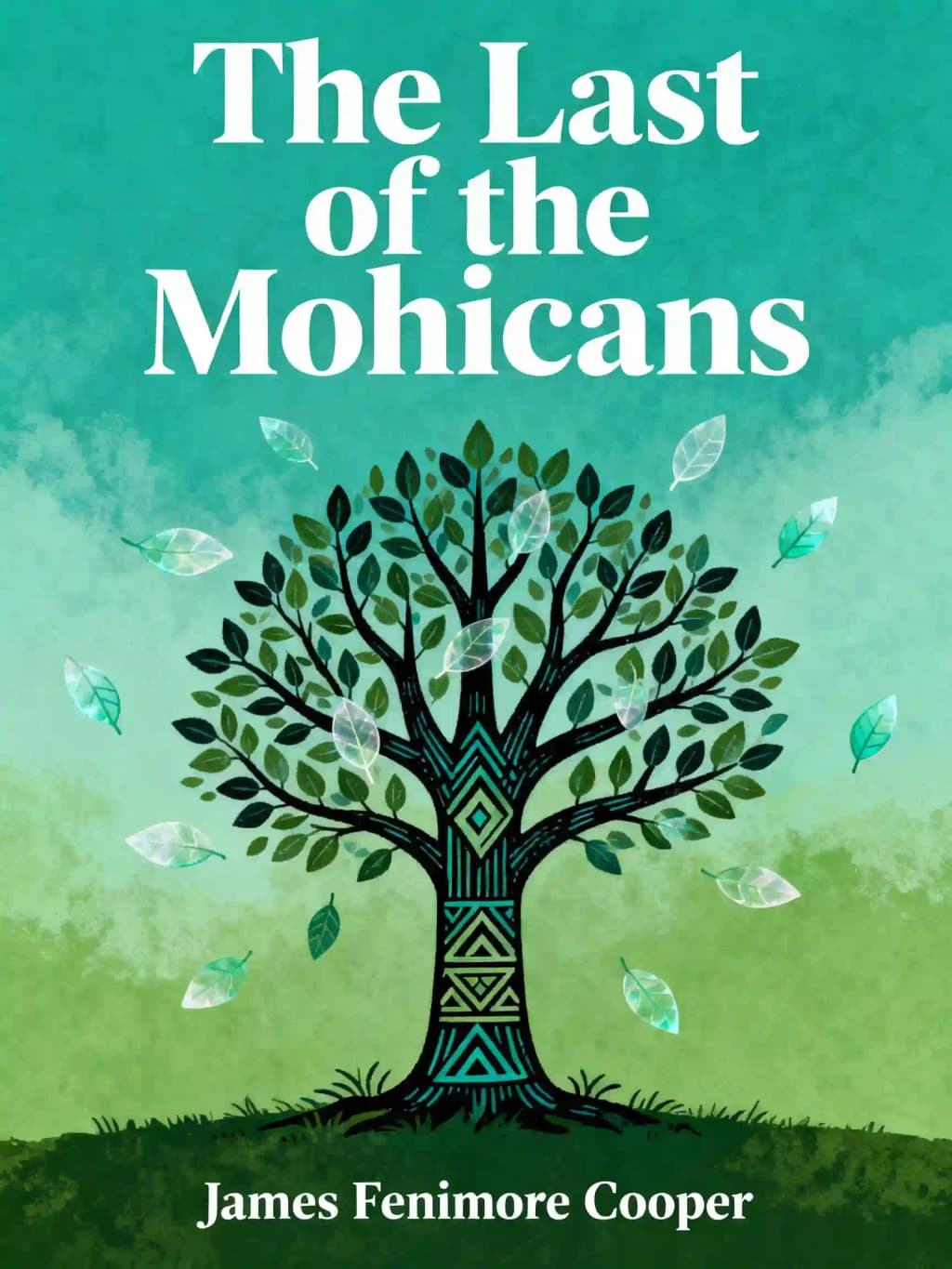
The Last of the Mohicans
A Narrative of 1757
Resumen de The Last of the Mohicans
In 1826, Cooper's frontier epic revolutionized American literature, depicting clashing cultures during the French-Indian War. Praised by Theodore Roosevelt and inspiring Michael Mann's Oscar-winning film, this controversial classic explores identity, survival, and America's complex colonial legacy. What Native American truths does it reveal?
Temas clave en The Last of the Mohicans
- vanishing frontier
- cultural displacement
- colonial warfare
- interracial friendship
- wilderness survival
Citas de The Last of the Mohicans
The soul of the wilderness.
There will no longer be any of the blood of the Sagamores.
Harmless things to their fate.
Without hope of any other recompense but such as God always gives.
Personajes en The Last of the Mohicans
- HawkeyeWhite frontiersman known as La Longue Carabine
- ChingachgookMohican chief and father of Uncas
- UncasThe last of the blood of the Sagamores
- Major Duncan HeywardBritish officer escorting Alice and Cora
Sobre el Autor
Sobre el autor de The Last of the Mohicans
James Fenimore Cooper (1789–1851), author of The Last of the Mohicans, was a pioneering 19th-century American novelist. He is celebrated for shaping foundational genres like historical fiction and frontier adventure.
A key figure in the Romantic literary movement, Cooper drew from his upbringing in upstate New York and brief U.S. Navy service to craft vivid portrayals of colonial America’s clash between wilderness and civilization. His Leatherstocking Tales series—including The Deerslayer and The Pathfinder—introduced iconic frontiersman Natty Bumppo, blending action with themes of indigenous displacement and environmental stewardship.
Cooper’s works, criticized in his lifetime but later hailed as cultural landmarks, influenced Herman Melville and Joseph Conrad. He also established early templates for Westerns and sea tales. The Last of the Mohicans, his most enduring novel, has been adapted into multiple films and remains a cornerstone of American literature, translated into over 20 languages.
Descargar resumen de The Last of the Mohicans
Obtén el resumen de The Last of the Mohicans como PDF o EPUB gratis. Imprímelo o léelo sin conexión en cualquier momento.
Preguntas Frecuentes Sobre Este Libro
The Last of the Mohicans by James Fenimore Cooper is a historical adventure set during the French and Indian War (1757). It follows frontiersman Hawkeye, his Mohican allies Chingachgook and Uncas, and British Major Heyward as they protect sisters Cora and Alice Munro from hostile forces. Themes of interracial friendship, cultural conflict, and the vanishing Native American way of life drive the narrative against a backdrop of violent frontier warfare.
Fans of classic American literature, historical fiction, and adventure stories will appreciate this novel. It’s ideal for readers interested in early U.S. history, Native American representation in literature, or exploring themes like heroism and cultural identity. Educators may also use it to discuss colonialism and 19th-century romanticism of frontier life.
Yes—it’s a cornerstone of American literature that influenced the Western genre. While criticized for romanticizing Native Americans and historical inaccuracies, its exploration of interracial dynamics, loyalty, and frontier survival remains impactful. The novel’s lush descriptions of the Adirondack wilderness and fast-paced plot make it a compelling read despite its dense prose.
The war serves as the story’s backdrop, fueling tensions between British, French, and Native American factions. Key events like the siege of Fort William Henry and the subsequent massacre of surrendering British troops (based on real history) drive the characters’ perilous journey. The conflict highlights themes of imperialism, cultural collision, and the fragility of alliances.
- Interracial friendship vs. doomed love: Hawkeye’s bond with Chingachgook contrasts with Cora and Uncas’ tragic romance.
- Cultural conflict: Clashes between European colonizers and Native tribes reveal prejudices and misunderstandings.
- Heroism and survival: Characters navigate moral dilemmas in a violent, untamed landscape.
- Nature’s symbolism: The wilderness reflects both beauty and danger, mirroring the characters’ struggles.
Their unfulfilled romance symbolizes the impossibility of interracial harmony in 18th-century America. Cora (mixed-race) and Uncas (Mohican) share mutual respect, but societal norms and Magua’s vengeance ensure their tragic end. This subplot critiques racial divides and foreshadows the decline of Native cultures.
Cooper romanticizes tribes like the Mohicans as “noble savages” while depicting others like the Huron as antagonists. Though criticized for stereotypes, the novel acknowledges Native complexity—contrasting Uncas’ honor with Magua’s ruthlessness. These portrayals reflect 19th-century views of Indigenous peoples as both heroic and doomed to displacement.
The Adirondack forests and rivers are both a refuge and a threat. Characters use natural landmarks like caves and waterfalls to evade enemies, but the terrain also isolates them. The untamed wilderness symbolizes the struggle between civilization and primal instincts, central to the novel’s tension.
Hawkeye (Natty Bumppo) embodies the archetypal frontiersman: resourceful, morally ambiguous, and culturally hybrid. He bridges European and Native worlds but rejects “settled” society, idealizing freedom and survival skills. His loyalty to the Mohicans underscores Cooper’s theme of honorable interracial bonds.
The title refers to Chingachgook and Uncas, the last surviving members of the Mohican tribe. Their deaths symbolically mark the end of Native American sovereignty in the face of colonization. Uncas’ fate—a heroic but futile resistance—echoes Cooper’s belief in the inevitable decline of Indigenous cultures.
The novel depicts colonial greed and violence through events like the Fort William Henry massacre, where European alliances break down. Native tribes, manipulated by both French and British, suffer most. Cooper questions the cost of “progress” while romanticizing the vanishing frontier—a矛盾 typical of 19th-century American literature.
Its themes of cultural displacement, identity, and resistance resonate in discussions about historical trauma and systemic racism. The novel remains a lens for examining how literature shapes perceptions of Native Americans and colonial history. Updated adaptations continue reinterpreting its legacy for contemporary audiences.
- “The last of the Mohicans is come to his kindred!”: Uncas’ dying declaration underscores the tragedy of Indigenous extinction.
- “Tis better to be alone than to live in a crowd that cares not for you”: Hawkeye’s rejection of societal hypocrisy.
- “The pale-faces are masters of the earth”: Magua’s bitter acknowledgment of colonial dominance.
Like Moby-Dick or The Scarlet Letter, it explores moral complexity and national identity. However, Cooper’s focus on frontier conflict and Native American themes sets it apart. Modern readers may find its pacing and prose denser than later Westerns but more historically nuanced.