Capítulo 1
A Tale of Two Women in a Divided America
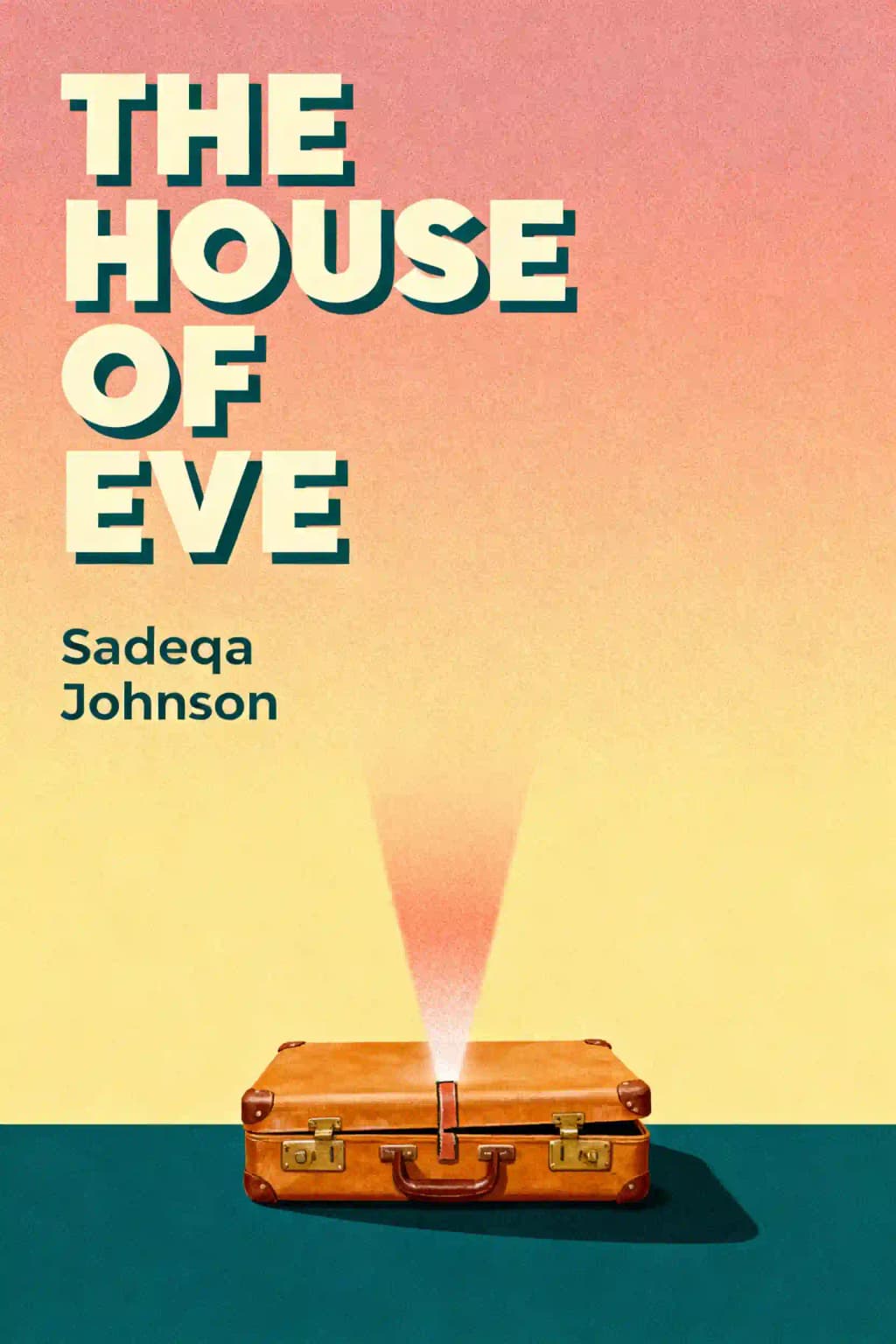
"The House of Eve" captivates readers with its unflinching portrayal of two young Black women navigating the treacherous waters of 1950s America. Oprah Winfrey called it "a powerful exploration of motherhood, race, and the choices women are forced to make," while The New York Times praised Johnson's "masterful ability to weave historical detail with intimate character development." This bestseller, which spent twelve weeks on the Goodreads Most Anticipated list, draws from Johnson's own family history of hidden pregnancies and forced adoptions. The novel's raw emotional power comes from its examination of how racism, classism, and sexism converged to limit women's choices during a pivotal era in American history. What happens when society forces young women to choose between their dreams and their children? Johnson's answer will leave you breathless.
Capítulo 2
Trapped Between Dreams and Reality: Ruby's Journey
In 1948 Philadelphia, fifteen-year-old Ruby Pearsall is a bright, determined young woman with dreams that extend far beyond her North Philadelphia neighborhood. Selected as one of twelve Negro students for the prestigious Armstrong Association's "We Rise" program, Ruby sees education as her only escape from poverty. She meticulously plans her path to becoming an optometrist, knowing that a full scholarship to Cheyney University represents her sole chance at college.
Ruby's home life is a study in instability. Her mother Inez, who had Ruby as a teenager herself, resents her daughter's ambition and beauty. When Inez's boyfriend Leap makes predatory advances toward Ruby, Inez blames Ruby instead of her boyfriend, calling her "fast" and throwing her out. This pattern of maternal rejection forces Ruby to live with her Aunt Marie, a numbers-running, gun-toting woman whose rough exterior hides a protective heart.
Ruby's world shifts dramatically when she meets Shimmy Shapiro, her aunt's Jewish landlord's son. Their forbidden connection begins innocently-he notices the contrast in her artwork between darkness and light, adding a streak of yellow paint to create perfect balance. Despite her initial guardedness, Ruby finds herself drawn to Shimmy's genuine interest in her as a person, not just an object of curiosity. Their relationship develops through secret meetings at Greenwald's candy store and late-night drives to hear music at Robin Hood Dell.
When Ruby experiences racism firsthand during a shopping trip downtown-being called a racial slur after an accidental bump-the harsh reality of their interracial relationship hits home. "Knowing about racism and experiencing it firsthand are entirely different things," Ruby realizes, temporarily breaking things off with Shimmy despite their growing feelings. The scene powerfully illustrates how systemic racism doesn't just restrict public freedoms but also invades the most intimate aspects of life, including who one can love.
Have you ever felt that society's expectations were directly at odds with your heart's desires? Ruby's dilemma resonates because it represents this universal conflict, magnified by the particular cruelties of 1950s America.
Capítulo 3
Eleanor's Quest for Belonging
While Ruby struggles with poverty and racism in Philadelphia, Eleanor Quarles faces different but equally challenging obstacles in Washington, D.C. A brilliant Howard University student from modest beginnings in Elyria, Ohio, Eleanor works in the university library while pursuing her degree. When she meets third-year medical student William Pride, their connection is immediate and electric.
Eleanor's romance with William introduces her to a world she never knew existed-the elite society of Washington's "Gold Coast," where wealthy, light-skinned Black families maintain strict social hierarchies. At William's family home, Eleanor discovers she's "the darkest-skinned person present besides the servants," as William's family and their social circle are all light-skinned Negroes whom she initially mistakes for white people.
William's mother, Rose Pride, represents the old guard of Black aristocracy, where lineage, complexion, and social connections determine one's worth. Rose's cold reception of Eleanor-questioning her family background and making thinly veiled comments about her darker skin-reveals the painful reality of colorism within the Black community. This internal prejudice adds another layer to the racial discrimination both women face in the broader society.
Despite Rose's disapproval and the machinations of Greta Hepburn, William's mother's preferred choice for a daughter-in-law, Eleanor and William's relationship progresses. When Eleanor becomes pregnant before marriage, William stands by her, proposing marriage and defying his mother's wishes. Their hasty wedding, arranged by Rose to avoid scandal, seems to secure Eleanor's place in the Pride family.
However, Eleanor's journey takes a devastating turn when she suffers multiple miscarriages. Each loss chips away at her sense of self-worth and her position in William's world. "He had married a malfunction," Eleanor thinks after her third miscarriage, revealing how deeply she has internalized society's view that a woman's primary value lies in her ability to bear children.
Eleanor's struggle with infertility becomes entangled with her insecurities about class and color. When Mother Margaret, a nun who runs a home for unwed mothers, offers Eleanor the opportunity to adopt a baby and pass it off as her own, Eleanor sees a chance to secure her place in William's family and life. The deception becomes a metaphor for Eleanor's larger attempt to fit into a world that constantly reminds her she doesn't truly belong.
Capítulo 4
The House of Magdalene: A Prison of Shame
When Ruby discovers she's pregnant with Shimmy's child, her carefully constructed plans for education and escape begin to crumble. Mrs. Shapiro, Shimmy's mother, offers Ruby a devil's bargain-a full scholarship to Cheyney College in exchange for giving up her baby at the House of Magdalene, a Catholic home for unwed mothers in Washington, D.C.
Johnson's portrayal of the House of Magdalene (nicknamed the "Gingerbread House" by its residents) exposes the cruel realities of institutions that were supposedly created to help "fallen women." Upon arrival, Ruby immediately notices the racial segregation-the four Black girls eat at a small round table while eight white girls sit at long tables. During evening devotions, the Black girls must sit on metal folding chairs while the "porcelain girls" take comfortable sofas.
The home operates on shame and coercion. Mother Margaret, the imposing nun who runs the facility, lectures the girls nightly on their sins of fornication. The ominously named "shaming room" awaits those who resist the home's purpose-surrendering their babies for adoption. When Clara changes her mind about giving up her child, she's dragged away bleeding to the shaming room despite her protests about her rights.
Through Ruby's eyes, we witness the profound injustice of a system that punishes young women while absolving men of responsibility. "Why was it that girls bore all the weight?" Ruby wonders, observing how Shimmy continues his life while she faces these consequences alone. The question resonates across decades, challenging readers to consider how much has-or hasn't-changed.
The girls form bonds of solidarity despite their circumstances. When Bubbles goes into labor determined not to surrender her baby to the nuns, Ruby and the other girls help deliver the child in secret. This act of resistance-women helping women in defiance of institutional control-provides one of the novel's most powerful moments. Later, when Georgia Mae's light-skinned baby is taken from her against her will, the girls share in her grief, understanding that they are all vulnerable to the same fate.
Ruby's own delivery becomes a traumatic experience when she's unexpectedly taken to a clinic. The brutal procedure, performed without acknowledging her pleas to stop, represents the ultimate violation of bodily autonomy. Despite the pain, Ruby forms an immediate bond with her daughter, whom she names Grace. The five days she's allowed with her baby become precious memories that Ruby will carry forever, even as she knows their separation is inevitable.
Capítulo 5
Intersections of Race, Class, and Gender
Johnson masterfully weaves together the stories of Ruby and Eleanor to examine how race, class, and gender intersect to shape women's choices. Though their backgrounds and circumstances differ dramatically, both women find themselves constrained by societal expectations and prejudices.
For Ruby, race and class create nearly insurmountable barriers to her dreams. Her relationship with Shimmy represents a forbidden crossing of racial boundaries that neither family can accept. When Mrs. Shapiro discovers them together, she calls Ruby a "whore" and is horrified at the prospect of her Jewish son having a child with a "Colored" girl. Even Ruby's aunt Marie, who loves her fiercely, warns her about the relationship: "You done pulled a seat up to a game that your ass can't win. Cut that shit off now."
Eleanor's struggle with colorism within the Black community highlights how privilege operates even among marginalized groups. The Pride family's emphasis on light skin and "good hair" reveals internalized racism that creates hierarchies of acceptability. When Rose Pride makes a disparaging comment about Eleanor's background, she exposes the intersection of colorism and classism that defines Washington's Black elite.
Both women face impossible choices regarding motherhood. Ruby must decide between her education-her only path out of poverty-and keeping her child. Eleanor, unable to bear children of her own, must decide whether to participate in a system that separates other women from their babies for her benefit. Their decisions are shaped not just by personal preference but by the structural inequalities that limit their options.
The novel asks difficult questions about agency and choice. How free are choices made under duress? Can we judge women who surrendered their children when society offered them no viable alternatives? By placing Ruby and Eleanor's stories side by side, Johnson invites readers to consider how different forms of privilege and oppression shape the range of options available to women.
Capítulo 6
Secrets, Lies, and the Cost of Survival
Secrets form the intricate foundation of "The House of Eve," fundamentally shaping the characters' identities, relationships, and life trajectories. Ruby's pregnancy becomes a carefully guarded secret, masked behind an elaborate fiction of a prestigious "internship" in D.C. - a cover story that must be maintained not only for her immediate protection but to preserve her hard-won academic future. Eleanor and William's adoption plan evolves into an increasingly complex web of deception, involving not just fake pregnancy padding but also meticulously choreographed social appearances, strategic timing of public outings, and a carefully curated narrative about their growing family. These secrets aren't merely personal choices but essential survival strategies in a 1950s society that ruthlessly punishes women for their sexuality and fertility, particularly across racial lines.
The psychological burden of maintaining these secrets extracts a devastating toll on both women. Ruby emerges from the House of Magdalene transformed - emotionally distant and unable to fully embrace her academic achievements at Howard University, the very accomplishment for which she sacrificed so much. "The only way forward is to forget," she repeatedly tells herself, clutching to Mother Margaret's stern advice like a lifeline. Yet forgetting proves impossible; memories of Grace, her friend from the home, surface unbidden in quiet moments, during lectures, and in her dreams. The weight of her secret creates an invisible barrier between Ruby and her academic peers, forcing her to maintain a careful distance even as she excels in her studies.
Eleanor's elaborate deception regarding Wilhelmina's adoption gradually erodes the foundation of her marriage. The discovery that William and Rose conducted clandestine meetings with Mother Margaret creates deep fissures in her relationship with both her husband and her closest friend. "I've been honest with you about everything," she tells William in a moment of confrontation, though this declaration carries its own irony - she never revealed her first miscarriage before their marriage, a secret that haunts their relationship. Their marriage becomes increasingly strained under the weight of unspoken truths and careful omissions, as both partners construct emotional barriers to protect themselves from vulnerability and potential judgment.
The novel powerfully demonstrates that secrets don't simply vanish with time - they leave lasting imprints that resurface in unexpected and often painful ways. The epilogue, set thirteen years after the main events, brings Ruby and Eleanor into an unexpected encounter at Howard Hospital, where Ruby, now Dr. Ruby Pearsall, recognizes something familiar in Eleanor's adopted daughter. The unspoken tension between them, coupled with Ruby's particular interest in Wilhelmina's artwork, suggests a deeper connection that neither woman openly acknowledges. This pivotal moment raises profound questions about the nature of truth and reconciliation: Can secrets truly remain buried forever? What happens to relationships built on foundations of necessary lies? The novel suggests that the cost of survival often includes carrying these unspoken burdens across generations.
Capítulo 7
Motherhood: Chosen, Forced, and Denied
Johnson explores motherhood in all its complexity-as a biological reality, a social expectation, and an emotional bond that transcends circumstances. Through different characters, we see motherhood as both a burden and a blessing, sometimes simultaneously.
Ruby's relationship with her mother Inez illustrates the damage that can occur when motherhood is forced on someone who isn't ready. Inez, who had Ruby as a teenager herself, resents her daughter's beauty and ambition, seeing them as reminders of her own lost opportunities. When Ruby visits Inez after giving up Grace, she finds her mother with a new baby, Lena. Watching Inez coo "Who's a good girl, Mommy's baby..." to Lena, Ruby confronts the painful reality that her mother could love another child in ways she never loved her.
Yet this encounter also brings Ruby to a new understanding of her mother's choices. "Seeing things differently now," Ruby realizes Inez left her with Nene because she couldn't care for her, just as Ruby couldn't care for Grace. This moment of empathy doesn't erase the pain of maternal rejection but offers a more nuanced perspective on Inez's limitations.
Eleanor's desperate desire for motherhood contrasts sharply with Inez's reluctance. After multiple miscarriages, Eleanor sees adoption as her last chance to become a mother and secure her place in William's family. Her willingness to participate in a system that separates other women from their children reveals how privilege can blind us to others' pain when we're focused on our own needs.
The novel also explores chosen motherhood through characters like Aunt Marie, who steps into a maternal role for Ruby despite having no biological obligation. When Ruby receives her scholarship letter, it's Aunt Marie who celebrates enthusiastically, dancing and proclaiming Ruby will be the first in their family to attend college. This chosen mothering-imperfect but genuine-provides Ruby with the support her biological mother couldn't offer.
Capítulo 8
The Power of Female Solidarity
Amid the novel's portrayal of systemic oppression, Johnson masterfully illustrates how women create powerful networks of mutual support when institutional structures fail them. These bonds of female solidarity emerge as a vital force of resistance against patriarchal authority, forming intricate webs of care that sustain women through their darkest moments.
The House of Magdalene becomes an unlikely crucible for these connections. Despite - or perhaps because of - the institution's attempts to isolate and shame its residents, the girls forge profound bonds that transform their survival from individual struggle to collective resistance. When Bubbles goes into labor, determined to keep her baby against all odds, we witness perhaps the most powerful demonstration of this solidarity. Ruby, Loretta, Georgia Mae, and Gertrude - whose evolution from perceived enemy to ally speaks to the transformative power of shared struggle - risk severe punishment to help deliver the child in secret. They create an improvised delivery room using donated blankets and smuggled medical supplies, their whispered encouragements forming a protective circle around mother and child.
The friendship between Ruby and Loretta emerges as a particularly poignant example of how women sustain each other's humanity in dehumanizing circumstances. Their relationship transcends mere companionship, becoming a lifeline of emotional support and practical assistance. They develop an intricate system of communication through shared books, hidden notes, and coded gestures. When Loretta receives the devastating news about her son's ptosis and his fate in an orphanage, Ruby's response - painting a sunrise with golden streaks matching Loretta's hair - becomes a profound act of empathy and recognition. Using smuggled watercolors and precious scraps of paper, Ruby creates not just art but a testament to Loretta's worth beyond her maternal tragedy.
Eleanor's journey leads her to rediscover solidarity in an unexpected place - her mother Lorraine's kitchen in Ohio. Their reconciliation unfolds over multiple afternoons of peppermint tea and homemade pound cake, each slice served with a side of hard-earned wisdom. When Eleanor finally reveals "everything she had vowed to take to her grave," Lorraine's response offers a stark contrast to Rose Pride's conditional acceptance. Through shared stories of survival and resistance, Lorraine helps Eleanor understand her place in a longer lineage of women who have faced and overcome similar struggles. Her reminder that "women have been through worse" becomes not just consolation but a battle cry of resilience.
These networks of female solidarity manifest in various forms throughout the novel - secret letters passed between cells, shared food rations, whispered warnings about abusive guards, and collective schemes to protect vulnerable members of their community. While these bonds don't dismantle the structural inequalities that constrain women's lives, they create vital spaces where women can express their full humanity. In these protected moments, women support each other through pregnancy, loss, heartbreak, and triumph, affirming each other's complexity beyond societal roles and expectations. Johnson shows how these relationships become not just a means of survival but a form of quiet revolution against a world that seeks to reduce women to their reproductive capacity.
Capítulo 9
Redemption Through Truth and Memory
The novel concludes with deliberate ambiguity that mirrors life's complex realities. Ruby receives her coveted scholarship to Howard University, yet finds herself emotionally hollow - the achievement feels distant and unreal against the backdrop of her recent trauma. Eleanor's reconciliation with William progresses tentatively, their renewed connection weighted by unspoken truths and lingering doubts. Thirteen years later, when Ruby and Eleanor's paths intersect at a Chicago department store, their brief exchange crackles with unacknowledged recognition - a moment pregnant with shared history neither woman dares to voice.
Johnson crafts this open-ended conclusion with careful intention, rejecting the familiar comfort of neat resolution. The story refuses to wrap itself in either the triumphant bow of complete healing or the neat package of absolute tragedy. Instead, it occupies the messy middle ground where most human experiences truly reside.
The novel posits that genuine healing begins not with forgetting but with unflinching acknowledgment of truth. Ruby initially embraces Mother Margaret's well-meaning but misguided counsel that "the only way forward is to forget" - a common refrain among those who survived similar ordeals. Yet the chance encounter years later, when she spots Eleanor and Wilhelmina shopping, demonstrates how the past refuses to stay buried. The moment sends tremors through her carefully constructed present, suggesting that unacknowledged pain doesn't disappear but rather goes underground, continuing to shape our lives in subtle ways.
Eleanor's path toward reconciliation with William illuminates another facet of truth's healing power. Only when she musters the courage to tell her mother "everything she had vowed to take to her grave" - the full circumstances of her pregnancy, her time at the home, the depth of her love for Ruby - does she begin to reconstruct her relationship with William. This confession acts as a bridge, spanning the chasm that secrets had created between them.
Johnson grounds these fictional explorations in deeply personal soil. In her author's note, she reveals that the novel sprouted from her grandmother's hidden history - a pregnancy at fourteen in 1955 that family shame buried in silence. Johnson's mother lived eleven years before discovering her true origin story, a revelation that transformed her understanding of both herself and her family. This generational secret inspired Johnson to imagine different possibilities and drove her to research the estimated 1.5 million American women who lost children to forced adoption between 1945-1973 - a staggering number that represents countless untold stories.
By dedicating her work to "women who were forced to surrender their children due to race, age, abuse, shame or coercion," Johnson transforms private pain into public acknowledgment. The novel serves as both testimony and memorial, challenging the societal impulse to erase uncomfortable histories. Through her storytelling, Johnson asserts that true healing - both personal and collective - requires us to remember, to speak, and to honor these difficult truths rather than bury them beneath layers of shame and silence.
Capítulo 10
Legacy of Pain, Promise of Change
"The House of Eve" refuses to offer easy comfort about America's progress on issues of race, class, and gender. The epilogue's 1964 setting-at the height of the Civil Rights Movement-reminds readers that structural inequalities persist even as legal barriers fall. Ruby has achieved her dream of becoming Dr. Ruby Pearsall, but the brief, tense encounter with Eleanor and Wilhelmina suggests the wounds of the past remain unhealed.
Yet the novel also contains seeds of hope. Ruby and Eleanor both find ways to pursue their dreams despite obstacles. Their achievements-Ruby as an optometrist, Eleanor as a professional with "her own accomplishments"-represent hard-won victories against systems designed to limit their potential. The fact that Ruby can work alongside William at Howard Hospital, a position that would have been unimaginable for a woman of her background in 1950, suggests that change, however slow and incomplete, is possible.
The most profound hope lies in the novel's commitment to telling difficult truths about America's past. By exposing the intersecting systems of oppression that shaped women's choices in the 1950s, Johnson invites readers to examine how these systems continue to operate today. What choices are women still forced to make between their dreams and their children? How do race and class still determine which options are available to whom? These questions remain urgently relevant.
In the end, "The House of Eve" is both an indictment of historical injustice and a testament to women's resilience in the face of impossible choices. Through Ruby and Eleanor's intertwined stories, Johnson creates a powerful reminder that personal choices are always made within social contexts that enable some possibilities while foreclosing others. By acknowledging this complexity, the novel honors the difficult decisions women have made throughout history while imagining a future where such choices might not be necessary.