Capítulo 1
When Your Gut Feeling Becomes Your Guardian Angel
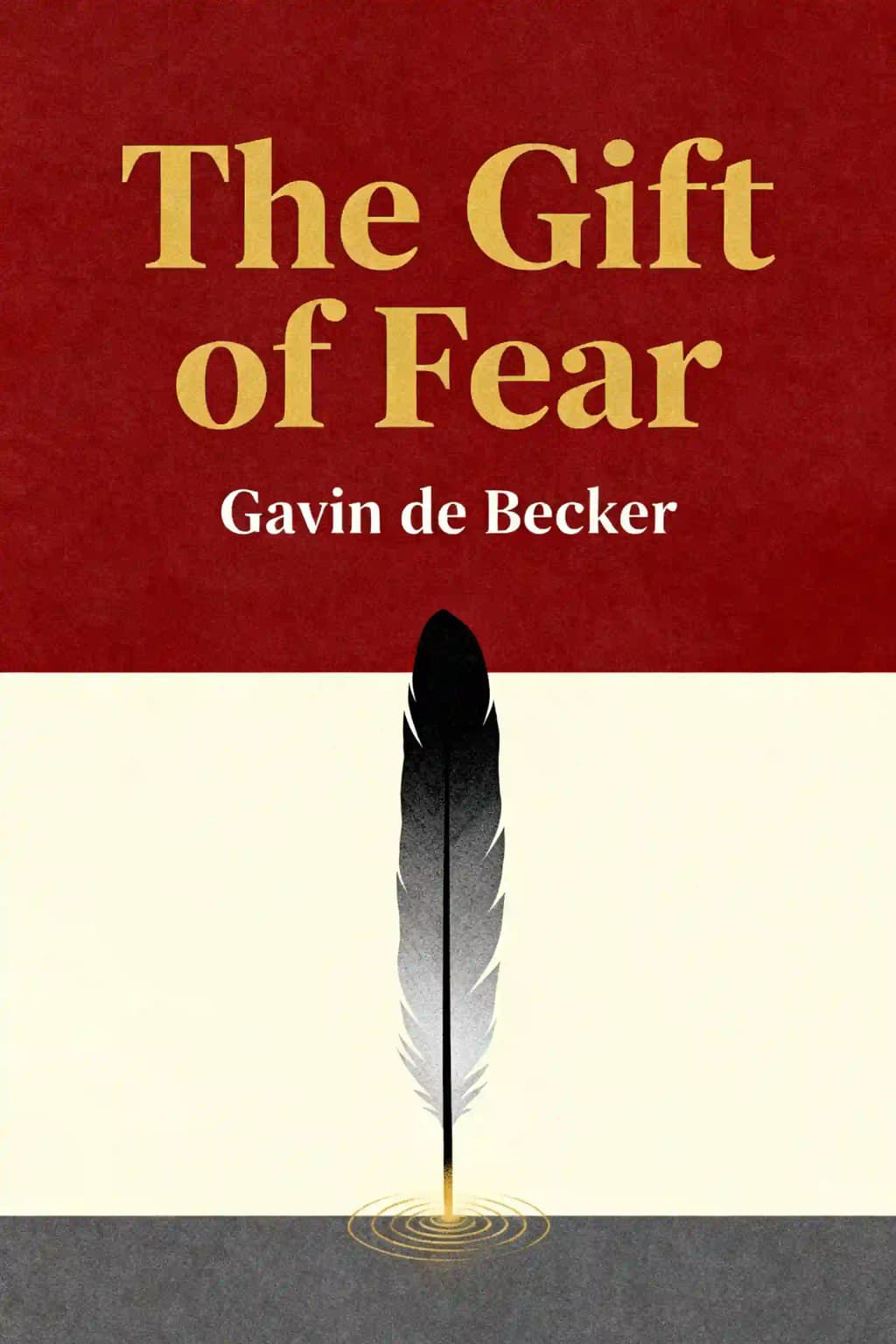
In 1997, a book quietly entered the literary scene that would transform how millions of people understand danger and intuition. "The Gift of Fear" by Gavin de Becker quickly became Oprah Winfrey's most recommended book, spending weeks on bestseller lists and earning praise from celebrities like Madonna and Nicole Kidman. This wasn't just another self-help title-it was a revelation about the human survival system that had been hiding in plain sight.
Imagine walking alone at night when footsteps quicken behind you. That electric jolt you feel? That's not weakness-it's your internal guardian sounding an alarm honed through millions of years of evolution. De Becker, who grew up witnessing extreme violence in his own home and later became security advisor to presidents, celebrities, and government agencies, argues that this instinctive fear is actually your greatest gift-if only you'd listen to it.
The book's cultural impact extends beyond its sales figures. It fundamentally changed how law enforcement approaches threat assessment, how schools handle safety protocols, and how ordinary people-particularly women-navigate potentially dangerous situations. Even today, nearly three decades later, its insights remain so vital that FBI academies and police departments across America include it in their training materials. As the Los Angeles Times noted, this book "may save your life."
Capítulo 2
The Technology of Intuition: Your Brain's Hidden Supercomputer
What if I told you that you possess a sophisticated prediction system more powerful than any artificial intelligence? Your intuition-that gut feeling that something isn't right-isn't some mystical sixth sense but rather your brain's lightning-fast risk assessment system operating below conscious awareness.
When airline pilot Robert Thompson suddenly felt afraid in a convenience store and left moments before a deadly shooting, he initially dismissed it as "just a gut feeling." But upon reflection, he recognized the signals his intuition had processed: the clerk's concerned glance at another customer, a man wearing a heavy jacket on a hot day, men sitting in a car with the engine running. His brain had evaluated these details faster than his conscious mind could articulate them.
This is how intuition works-like a diligent stagehand with countless "shopkeepers" evaluating new information, including soldiers and guards who separate the merely unusual from the significantly unusual. The root of the word intuition, tuere, means "to guard, to protect." It's literally your internal protection system.
Ironically, we often respect intuition in others (even dogs) while dismissing our own. Unlike animals who heed fear instantly, humans waste mental energy searching for innocent explanations rather than evaluating potential threats. We make poor risk assessments-fixating on rare, uncontrollable dangers like terrorist attacks while ignoring common risks within our control, like texting while driving.
Our culture dismisses intuition as emotional and unreasonable, preferring logic even when it's wrong. Men often reframe their intuition as "gut feelings," but intuition is actually our most complex cognitive process connecting us to our evolutionary nature. When clients consult me about threatening situations, their intuitive suspicions almost always identify the culprit, even when they hesitate to voice them.
Violence isn't random or senseless-it always has purpose and meaning to the perpetrator. By finding the humanness in violent people, their similarity to us, their actions become predictable. Even the most frightening violent acts follow detectable patterns with warning signs. Every action is preceded by an impulse, every impulse by a thought, and every thought by a perception-making human behavior readable through pre-incident indicators that signal potential violence.
Capítulo 3
The Academy of Prediction: Learning the Language of Violence
"I am capable of what every other human is capable of. This is one of the great lessons of war and life." This quote from Maya Angelou frames a crucial truth: our shared human capacity for both violence and prediction.
Before I turned thirteen, I witnessed shootings, beatings, addiction, and suffered abuse myself. Yet these experiences, though different from yours, triggered the same fundamental human emotions we all share. This shared emotional capacity is what enables us to predict others' behavior. You can imagine every human feeling, making you an expert at predicting violence if you accept that human behavior's mysteries can be solved within yourself.
Cambridge's Nicholas Humphrey explains that evolution gave us introspection specifically to model and predict others' behavior. To succeed, we must be "natural psychologists" who understand "what it's like to be human." This shared humanity is what connects us even to those who commit terrible acts.
Distinguished psychiatrist Karl Menninger rejected the concept of a "criminal mind," stating "Everyone's mind is criminal." Einstein and Freud agreed that humans possess destructive instincts alongside preservative ones. Violence occurs in all cultures across our 5-million-year history, with anthropologists finding no truly non-violent societies. Though we have space-age technology, we retain stone-age minds-competitive, territorial, and violent.
To predict violence, I must find something familiar in even the most disturbing offenders. We call certain murderers "inhuman," but they are precisely human. When a bank robber shoots a guard, we understand the motive, but with aberrant killers, we resist acknowledging our shared humanness. This US/THEM distinction feels safer but prevents accurate prediction. Recognizing sameness, not difference, allows us to predict violence.
At Atascadero State Hospital, I founded the Patient Pets program where violent offenders care for animals. When an elderly guinea pig died in a patient's arms, hardened criminals wept together. As the coordinator observed, while these men belong where they are, "we cannot disregard their humanness, because if we do...we become less human in the process." Accepting this shared humanity helps us recognize predators before they strike.
Every horror you can imagine has likely been committed, because everything conceivable by humans has been done by humans. These acts aren't committed by alien interlopers but by people included in humanity's "we." FBI expert Robert Ressler, who coined the term "serial killer," understood that predators aren't found in gothic dungeons but at malls, schools, and towns alongside the rest of us.
Capítulo 4
Survival Signals: The Predator's Playbook Decoded
Predatory criminals are experts at concealing warning signs, but their very methods of concealment can reveal them. Learning to recognize these signals is essential for safety.
Forced teaming establishes premature trust through a "we're-in-the-same-boat" attitude that's difficult to rebuff without seeming rude. The signal is the projection of a shared purpose where none exists: "Both of us," "we're some team," "how are we going to handle this?" This sophisticated manipulation makes victims want to participate. The defense is simple but may seem impolite: "I did not ask for your help and I do not want it." When a stranger uses forced teaming with a vulnerable woman, it's always inappropriate-it's about establishing rapport for potentially sinister reasons.
Charm is an ability, not a personality trait-a directed instrument with motive. To charm is to compel or control through allure. Think of charm as a verb, not a trait. By consciously telling yourself "This person is trying to charm me" rather than "This person is charming," you'll see beyond the facade. The face reveals subtle feelings, with the smile being both the most important signal of intent and the typical disguise for emotions. As UCLA psychiatrist Leslie Brothers notes, detecting deception requires being slightly smarter than the deceiver-creating "an arms race" of perception.
People intent on deception use excessive details to distract and manipulate. When telling the truth, people don't feel doubted and don't need supporting details. Liars keep talking because what they say doesn't sound credible even to themselves. These details collectively divert attention from the essential context of a situation. The defense is to consciously maintain awareness of context: "This person is a stranger who approached me."
Typecasting involves labeling someone with a slight criticism, hoping they'll feel compelled to disprove it. When Kelly refused her attacker's assistance, he said "There's such thing as being too proud," prompting her to accept his help to avoid appearing prideful. The typecaster doesn't believe what he says-he just knows it works. The slight insult is designed to be easily refutable, but engaging means winning a small point while potentially losing something greater. The best defense is silence, acting as if the words weren't spoken.
Loan sharking occurs when someone offers unsolicited help to place you in their debt. Like traditional loan sharks who collect more than they lend, predatory criminals offer assistance while calculating the obligation created. The defense is remembering two key facts: "He approached me" and "I didn't ask for help."
The unsolicited promise is a highly reliable warning signal because it reveals questionable motives. When someone makes an unsolicited promise, they're responding to your doubt-which is itself a messenger of intuition. The promise acts as a mirror reflecting your own hesitation. When Kelly's rapist said "I'll just put this stuff down and go. I promise," he was acknowledging her doubt. The proper defense is recognizing: "You're right, I am hesitant about trusting you, and maybe with good reason."
When someone ignores the word "no," ask what they want and why they're seeking control. If possible, get away; if not, dramatically raise your insistence. Women live with constant wariness about safety that men rarely experience. When women express safety concerns, they're often ridiculed by men who don't understand these legitimate fears. At core, men fear women will laugh at them, while women fear men will kill them.
Capítulo 5
High-Stakes Predictions: Reading the Language of Violence
In high-stakes prediction, understanding the context and meaning behind behaviors is crucial. Without knowing what outcome to predict, we miss important signals, as illustrated by a hotel suicide where staff failed to recognize warning signs because they weren't looking for them.
Just as experts can read animal behavior signals that others miss, humans have universal nonverbal languages that communicate intentions. While most people consciously recognize few of these signals, we intuitively respond to all of them. Women often access intuitive answers more readily than men, who tend to rely on conscious logic. When predicting violence, we must understand specialized languages including rejection, entitlement, grandiosity, attention seeking, revenge, attachment, and identity seeking. The key is understanding what events mean to the potential actor, not what they mean to us.
Violence requires perceived justification-a feeling that one has been sufficiently provoked. This can be simple ("you stepped on my foot") or manufactured through righteous indignation. Some people carry pre-justified hostility from past grievances, needing only the slightest excuse to unleash it. How someone interprets an event-particularly whether they see intentionality in others' actions-strongly influences their violent response.
Violence becomes more likely when a person sees no alternative path to their desired outcome. Understanding their goal is crucial-if they want revenge, violence is effective, but if they want their job back, violence defeats their purpose. When someone perceives no alternatives, they'll fight regardless of justification, consequences, or ability to win-like David against Goliath.
How people view the consequences of using violence is critical to prediction. Those who perceive favorable outcomes-like an assassin seeking attention with little to lose-are more likely to act violently. Some find violence intolerable due to self-image damage, though context can change this, as when normally passive individuals become violent in crowds. Violence becomes more tolerable when supported or encouraged by others.
Violence becomes more likely when someone believes they can successfully deliver harm. Those with past success using violence have higher appraisals of their ability to prevail again. Weapons or other advantages significantly increase one's perceived ability to use violence effectively.
To evaluate the likelihood of any prediction's success, eleven key elements can be measured: measurability, vantage, imminence, context, pre-incident indicators, experience, comparable events, objectivity, investment, replicability, and knowledge. These universal elements apply beyond violence prediction to all types of forecasting.
Capítulo 6
Intimate Enemies: The Deadly Dance of Domestic Violence
Domestic violence represents a slow-motion crime where the murder is often the culmination of years of abuse. Like the O.J. Simpson case, these tragedies follow predictable patterns. While defense lawyers may claim "Just because a man beats his wife doesn't mean he killed her," the reality is that behaviors like beating, breaking in, threatening with weapons, terrorizing, and stalking place someone near the center of the predictive circle for spousal murder. Despite misinformation from paid advocates, reliable pre-incident indicators exist for domestic violence and murder.
There are thirty key warning signs for domestic violence that might not all appear in every case, but when several are present, there's reason for concern. These include: the woman's intuitive feelings of danger; accelerated relationship commitment; resolving conflict through intimidation and violence; verbal abuse; threats as control instruments; symbolic violence like breaking things; history of prior battering; substance abuse with adverse effects; police encounters; controlling finances; extreme jealousy; refusing rejection; expecting the relationship to last "forever"; minimizing abuse incidents; inappropriate surveillance; paranoia about others interfering; inflexibility; identifying with violent people; mood swings; blaming others; weapon fascination; using "male privilege"; childhood exposure to violence; and the victim's fear of being killed. With this knowledge, we can prevent America's most predictable murders by referring women to shelters, reporting violence to police, and breaking the silence that surrounds domestic abuse.
Many women choose to stay in abusive relationships for complex reasons. Like a battered child, the battered woman becomes addicted to the overwhelming relief when violence ends, with the abuser controlling both the lows and the highs. The victim's fear mechanism becomes dulled, normalizing extraordinary risks. The conflict between instincts to stay in a "secure" family environment versus fleeing danger creates paralysis, especially when concrete escape options seem absent. For many, like my own childhood experience, leaving simply doesn't occur as a possibility. I believe it's critical for women to view staying as a choice, because only then can leaving become a viable option.
Batterers control every aspect of their victims' lives-money, schedules, transportation, clothing, and friendships. They begin as benevolent controllers but become malevolent, administering punishment and reward unpredictably to create hope that keeps women from leaving. This isn't evil design but a dysfunctional way to retain love. When control begins to fail, violence escalates. As Jung noted, "When an inner situation is not made conscious, it appears outside as fate."
Most women who are killed by partners die while trying to leave, dispelling the myth that spousal killings happen in the heat of argument. Far from being "crimes of passion," these murders are typically calculated decisions. The most violent men actually become physiologically calmer as their violence escalates. Since 75 percent of spousal murders occur after separation, estrangement-not argument-triggers the worst violence.
The system's standard response to domestic violence-temporary restraining orders-often fails to protect victims and may actually increase danger. Though widely recommended by lawyers, police, and even victims' advocates, these court orders cannot restrain a determined murderer. Many homicides occur at courthouses during protection order hearings or shortly after orders are served, as rejection becomes intolerable when made public. Research shows restraining orders work best on reasonable people with limited emotional investment-those least likely to be violent anyway-and are least effective against estranged husbands who feel entitled to control their partners. About half of victims in one study reported that restraining orders worsened their situations.
Capítulo 7
"I Was Trying to Let Him Down Easy": The Stalker's Mindset
This chapter examines stalking behavior, particularly focusing on unwanted romantic pursuit. While stranger stalking exists, the most common cases involve someone the victim has met or dated. Many "normal" men have engaged in mild pursuit behaviors, highlighting the blurred line between acceptable courtship and stalking. Our culture promotes dangerous messages about persistence in romance through films like The Graduate, where stalking-like behavior is rewarded when the pursuer ultimately "gets the girl." This Hollywood formula teaches that relentless pursuit demonstrates love rather than troubling behavior. Communication differences between genders compound the problem-women often say less than they mean when rejecting, while men hear less than what's said. The author emphasizes that "no" should be understood as a complete sentence, contrary to cultural norms that treat women's refusals as negotiable.
The author advocates for teaching young people explicit rejection skills rather than "letting down easy" tactics. He stresses one fundamental rule: do not negotiate. Once a woman decides against a relationship, it should be stated clearly one time. Any contact after that rejection is seen as negotiation by the pursuer. Responding to repeated messages only teaches him the cost of reaching her. The author warns against conditional rejections ("I don't want a relationship right now") which leave room for challenge and discussion. Instead, women should make clear their decision is final without explaining intimate details to someone they're rejecting.
The author provides a template for explicit rejection: "No matter what you assumed, I have no romantic interest in you whatsoever. I never will. I expect you'll put your attention elsewhere, as I intend to do." The only appropriate response is acceptance. Any attempt to debate, negotiate or change her mind confirms she made the right decision. If a man escalates with persistent calls, showing up uninvited, following her, or enlisting others in his campaign, the woman should give no detectable response. Any communication contradicts her rejection and allows him to choose which signals to believe. Even seemingly innocent messages requesting "closure" or "one last meeting" are manipulative attempts to get a response, which the pursuer views as progress.
Rather than changing phone numbers (which stalkers inevitably discover), the author recommends getting a second line while maintaining the old one with an answering machine. This documents the stalker's calls while denying him the satisfaction of direct contact. The author notes that stalkers eventually let go if victims avoid engaging them, stating the axiom: "Men who cannot let go choose women who cannot say no." The author compares stalking to addiction, where the stalker is addicted to the relationship and the victim is the drug. Small doses don't wean him-only complete abstinence works.
The author revisits Katherine's story, highlighting numerous warning signs in her relationship with Bryan: researching the victim, being overly invested, targeting women who struggle to say no, showing hyper-attentiveness, offering unsolicited help (loan-sharking), projecting emotions or commitments, moving at whirlwind pace, monitoring activities, displaying jealousy, isolating from friends, and refusing to hear rejection. Bryan operates on auto-pilot, seeking control as an alternative to being loved, testing Katherine's boundaries from their first interaction to establish a pattern where he drives and she's the passenger.
Capítulo 8
Occupational Hazards: Violence in the Workplace
Workplace violence is rarely spontaneous but follows observable patterns of escalation. Cases like Richard Farley, who shot Laura Black and killed seven others after she obtained a restraining order against his workplace harassment, demonstrate that people don't simply "snap"-violence develops predictably, like water coming to a boil. Workplace violence encompasses multiple types: revenge killing by humiliated employees, domestic violence spilling into workplaces, stalking, and rage killings. While frightening, workplace violence offers many predictive opportunities, with warning signs often visible to multiple observers-though these warnings are frequently ignored.
The most common problem employee is the Scriptwriter-inflexible, suspicious, and quick to assign others the worst possible motives. He asks questions, answers them himself, then walks away angry at your imagined response. In his self-written narrative, he's reasonable while everyone else is out to get him. His self-defeating personality means he reacts not to what you actually say, but to what his script expects you to say. When managers avoid confronting such employees out of fear, problems compound as documented incidents of threats, bullying and intimidation accumulate. Companies often shuffle these employees between departments rather than firing them, but this only worsens the situation. The longer a Scriptwriter remains employed, the more entitled he feels, making termination increasingly difficult.
Rather than relying on simplistic checklists for high-stakes predictions, these behaviors should inform intuition when evaluating potentially dangerous employees: 1) Inflexibility-resisting change and opposing contrary ideas; 2) Weapons-recent acquisition or frequent discussion of weapons as instruments of power; 3) SAD-being sullen, angry or depressed, with chronic anger being a particularly important predictor; 4) Hopelessness-expressing statements like "What's the use?" or making suicidal references; 5) Identification-praising or being fascinated with perpetrators of workplace violence; 6) Co-worker fear-colleagues being afraid or apprehensive; 7) TIME-using threats, intimidations, manipulations or escalations; 8) Paranoia-believing others are "out to get him"; 9) Criticism-reacting adversely to feedback; 10) Blame-refusing to accept responsibility; 11) Crusades-undertaking workplace missions; 12) Unreasonable Expectations; 13) Grievance history; 14) Police encounters-recent arrests or history of assaultive behavior; 15) Media-being influenced by news coverage of violence; 16) Focus-monitoring other employees' activities when it's not his job; 17) Contact-maintaining contact with current employees after being fired, refusing to let go.
When an employee's life begins falling apart like dominos-confidence, performance, identity, self-esteem-employers must carefully preserve the "dignity domino," as its fall most often triggers violence. The JACA factors explain this progression: Justification (feeling the employer took everything away), Alternatives (perceiving fewer options besides violence), Consequences (viewing violence more favorably as one's situation deteriorates), and Ability (often overestimating capacity to deliver violence, leading to grandiose attack plans that, while rarely fully successful, still harm many people).
When terminating an employee, protect their dignity with courtesy and understanding. Never embarrass them or reveal concerns about potential violence. Treat them as reasonable, mature individuals while secretly preparing for worst-case scenarios. Don't telegraph your fears or vulnerabilities-this only provides a script for them to follow and reveals your weak points.
Capítulo 9
The Gift of Fear: Reclaiming Our Intuitive Birthright
Fear, when properly understood, serves as a brief but vital survival signal rather than a persistent state of being. While animals use fear as a protective response, humans have evolved into "hyperanxious animals" who invent reasons for anxiety even when none exist. The author illustrates this contrast through his experience walking blindfolded in peaceful Fiji, trusting his intuition and senses to keep him safe-something unimaginable in American cities where constant vigilance has become the norm.
The author critiques how media exploits our survival instinct through sensationalized fear-mongering, making it difficult to distinguish genuine survival signals from manufactured alarm. He explains that television news has become "violent wallpaper" in our lives, creating unwarranted fear and distorting our perception of actual hazards.
When news media sensationalizes unusual events like "dolphin attacks swimmer," it creates false connections in millions of minds. The author highlights how media creates "trends" where none exist, like the "freeway shootings" that weren't actually increasing but received heightened coverage. By naming and repeatedly reporting on specific crimes, media essentially advertises criminal methods.
Despite living among extraordinary risks-powerful machines, toxic chemicals, armed countrymen-we typically navigate safely through life's "high-stakes obstacle course." The author concludes with Mark Twain's wisdom: "I have had a great many troubles, but most of them never happened." His hope is that readers will harness their intuitive ability to recognize genuine survival signals while living more fully in the "clear skies between" actual hazards.
The messengers of intuition communicate through various channels: nagging feelings, persistent thoughts, humor, wonder, anxiety, curiosity, hunches, gut feelings, doubt, hesitation, suspicion, apprehension, and fear. These signals deserve our attention as they often perceive dangers we consciously miss.
Human behavior, like gravity, follows predictable patterns based on common human traits: seeking connection, avoiding pain, disliking rejection, and desiring control over our lives. The "rule of opposites" helps predict dangerous behavior by contrasting favorable behaviors with their unfavorable counterparts. For example, a safe delivery person respects privacy and focuses on their job, while a potentially dangerous one asks personal questions and shows no hurry to leave. This simple but powerful tool works because we can recognize situations by observing behavior patterns, and vice versa.
When assessing potentially dangerous situations, framing choices between contrasting options helps tap into intuition. By creating three possible explanations for a situation (with two obviously wrong), we free ourselves from judgment and access deeper knowledge. Our intuition knows far more than we consciously register-from environmental factors to past behaviors-making this less an exercise in creativity than one of discovery. As Michelangelo said about sculpting David: "you just chip away the stone that doesn't look like David."