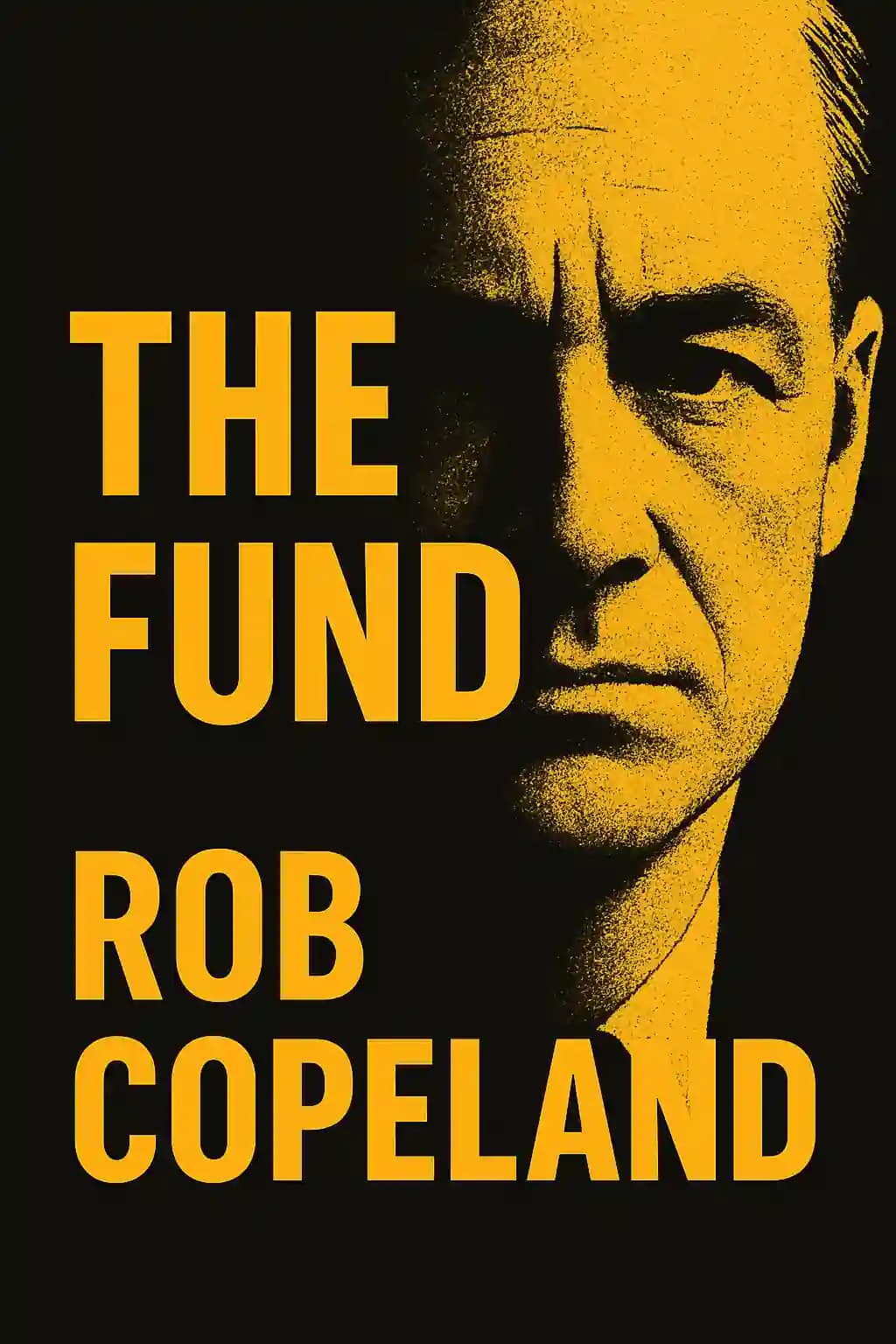
Peek inside Ray Dalio's $150 billion Bridgewater Associates, where surveillance and "Principles" reduced employees to tears. Even as an NYT bestseller, this expose prompted Dalio himself to dismiss it as "tabloid gossip" - while revealing his secretive trading strategies impact billions.
Rob Copeland, author of The Fund: Ray Dalio, Bridgewater Associates, and the Unraveling of a Wall Street Legend, is a seasoned finance reporter for The New York Times and former hedge-fund specialist at The Wall Street Journal. His investigative work on Bridgewater Associates, the world’s largest hedge fund, earned him a New York Press Club Award and established his authority on Wall Street’s inner workings.
The book, a gripping exposé of Ray Dalio’s empire, blends corporate history with themes of leadership, transparency, and the complexities of high-stakes finance, informed by Copeland’s decade-long coverage of the industry.
Copeland’s reporting has been featured on ABC’s Good Morning America, NPR, and prominent finance podcasts, cementing his reputation as a trusted voice in business journalism. His front-page investigations into Silicon Valley and elite financial circles further underscore his expertise. The Fund, published by Macmillan Audio in 2023, is available as a 13-hour audiobook and has sparked widespread discussion for its unflinching portrayal of Bridgewater’s radical corporate culture and Dalio’s legacy.
The Fund is an investigative expose by Rob Copeland that dismantles Ray Dalio’s carefully crafted image as a benevolent financial guru. It reveals Bridgewater Associates’ toxic workplace culture, detailing how Dalio’s “radical transparency” principles fostered paranoia, psychological manipulation, and ethical compromises among employees. The book draws on firsthand accounts of high-profile figures like former FBI director Jim Comey and Pennsylvania Senate candidate David McCormick.
This book is ideal for readers interested in corporate ethics, hedge fund operations, or critiques of Silicon Valley-style leadership cults. Finance professionals, HR leaders, and fans of investigative journalism will gain insights into the dark side of Wall Street’s “principles-driven” success stories. It also appeals to those fascinated by billionaire culture and workplace psychology.
Yes, for its unflinching look at Bridgewater’s contradictions: Dalio’s public persona as a management sage versus accounts of employee surveillance, ideological coercion, and legal intimidation. Copeland’s meticulous reporting—including interviews with insiders—makes it a gripping case study in corporate hubris and the human cost of unchecked power.
The book depicts a pressure-cooker environment where employees undergo:
While Dalio’s Principles promotes idealized management theories, The Fund serves as a counter-narrative—exposing how those same principles reportedly caused emotional harm, stifled dissent, and prioritized Dalio’s ego over employee well-being.
Despite managing $150B+, Copeland suggests Bridgewater’s success relied less on Dalio’s much-hyped algorithms and more on:
Dalio and Bridgewater aggressively disputed Copeland’s reporting, attempting to discredit the author and suppress critical narratives. The firm reportedly pressured media outlets and used legal threats to shape coverage.
As a Pulitzer Prize-contending New York Times finance reporter, Copeland leveraged years of investigative work—including interviews with 100+ Bridgewater insiders—to challenge Dalio’s mythos. His expertise in financial systems adds credibility to the exposé.
Absolutely. It’s a cautionary tale about leadership cults in an era obsessed with “disruptive” management theories. The book resonates amid debates about workplace mental health, CEO accountability, and ethical finance practices in 2025.
Siente el libro a través de la voz del autor
Captura ideas clave en un instante para un aprendizaje rápido
It's a tale of unchecked power, psychological manipulation, and the dangers of conflating wealth with wisdom.
It was like being in an abusive relationship. You start to doubt your own perceptions of reality.
What he built instead was a gilded cage of conformity and fear.
The tragedy is that he never seemed to realize the monster he had created.
Desglosa las ideas clave de Fund en puntos fáciles de entender para comprender cómo los equipos innovadores crean, colaboran y crecen.
Destila Fund en pistas de memoria rápidas que resaltan los principios clave de franqueza, trabajo en equipo y resiliencia creativa.

Pregunta lo que quieras, elige la voz y co-crea ideas que realmente resuenen contigo.

Creado por exalumnos de la Universidad de Columbia en San Francisco
"Instead of endless scrolling, I just hit play on BeFreed. It saves me so much time."
"I never knew where to start with nonfiction—BeFreed’s book lists turned into podcasts gave me a clear path."
"Perfect balance between learning and entertainment. Finished ‘Thinking, Fast and Slow’ on my commute this week."
"Crazy how much I learned while walking the dog. BeFreed = small habits → big gains."
"Reading used to feel like a chore. Now it’s just part of my lifestyle."
"Feels effortless compared to reading. I’ve finished 6 books this month already."
"BeFreed turned my guilty doomscrolling into something that feels productive and inspiring."
"BeFreed turned my commute into learning time. 20-min podcasts are perfect for finishing books I never had time for."
"BeFreed replaced my podcast queue. Imagine Spotify for books — that’s it. 🙌"
"It is great for me to learn something from the book without reading it."
"The themed book list podcasts help me connect ideas across authors—like a guided audio journey."
"Makes me feel smarter every time before going to work"
Creado por exalumnos de la Universidad de Columbia en San Francisco

Obtén el resumen de Fund como PDF o EPUB gratis. Imprímelo o léelo sin conexión en cualquier momento.
Ray Dalio's origin story is the stuff of Wall Street legend. A middle-class kid from Long Island, he bought his first stock at age 12 and was trading by high school. After graduating from Harvard Business School, he founded Bridgewater out of his two-bedroom apartment in 1975. From these humble beginnings, Dalio built Bridgewater into a behemoth, amassing a fortune of over $19 billion. By the 2000s, Bridgewater was the world's largest hedge fund, managing $150 billion and boasting eye-popping returns. But it wasn't just Bridgewater's financial success that set it apart. Dalio had developed a unique management philosophy centered on radical transparency and what he called an "idea meritocracy." Employees were encouraged to challenge each other openly, regardless of rank. Every meeting was recorded. Performance was constantly evaluated through a system of public ratings and rankings. Dalio codified these practices in a 123-page manifesto called "Principles," which became required reading for all Bridgewater employees. He claimed this system allowed the best ideas to rise to the top, creating a workplace nirvana of truth-seeking and personal growth. The reality, as I discovered, was far different.