Capítulo 1
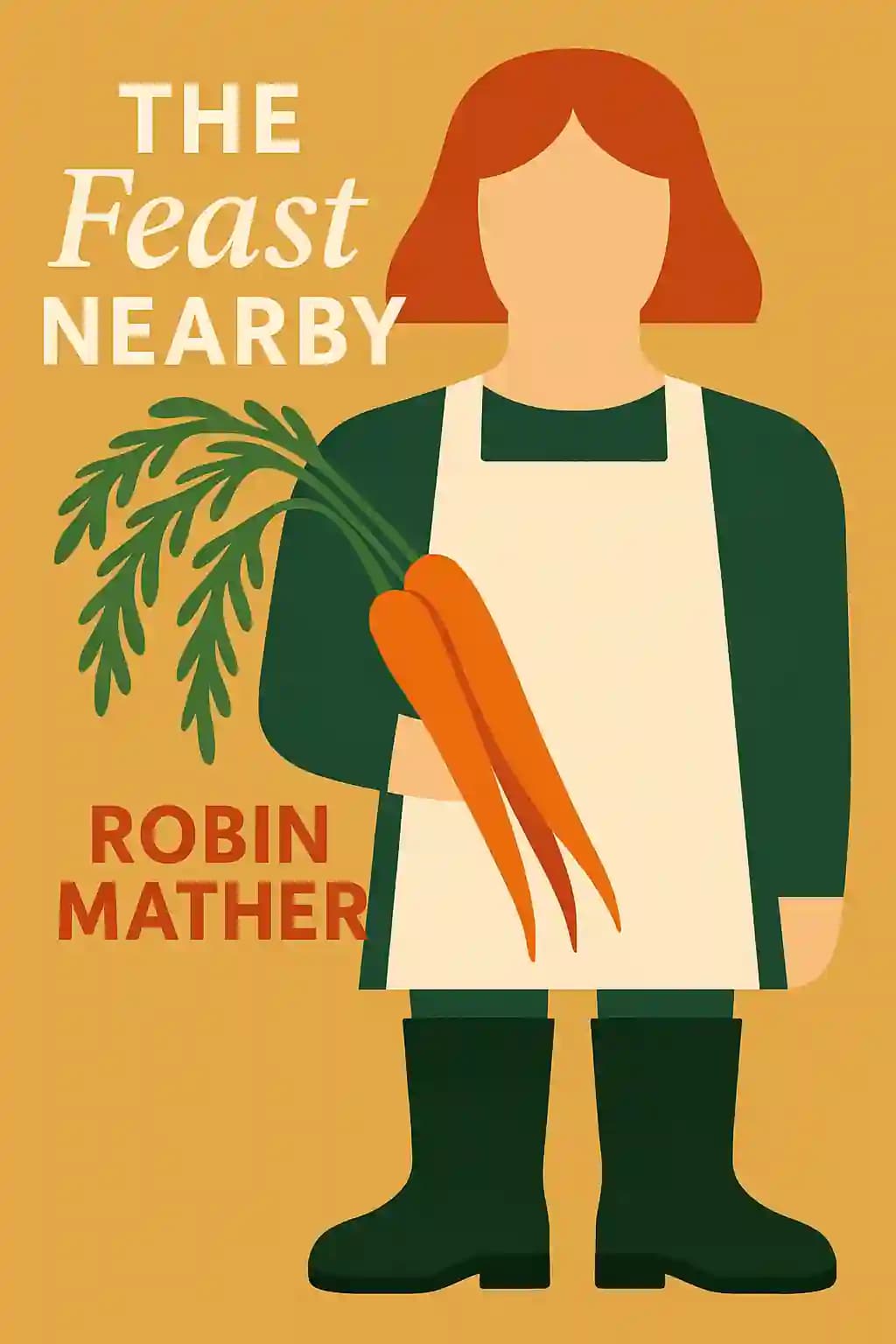
The Feast Nearby: Finding Sustenance in Simplicity
In April 2009, Robin Mather's life collapsed spectacularly-her husband requested a divorce and the Chicago Tribune laid her off within a single devastating week. With newspaper skills no longer in demand and her personal life in shambles, she retreated to her modest 650-square-foot lakeside cottage in rural Michigan with her standard poodle Boon and African Grey parrot Pippin. What could have been a story of despair transformed into one of resilience and rediscovery. As a respected food journalist who had sampled the world's finest cuisines for 25 years, Mather committed to living on just $40 weekly for food while refusing to compromise on eating well. The book became a sensation among sustainability advocates and food enthusiasts alike, with celebrity chef Alice Waters calling it "an inspiring testament to the power of home cooking." Beyond its practical advice, the book tapped into a growing cultural movement questioning industrial food systems and seeking meaning through connection to local food sources. Mather's journey resonated deeply during the economic recession, offering hope that even in hard times, one could live according to deeply held values while discovering unexpected wealth in community, self-sufficiency, and the profound satisfaction of a meal well-made.
Capítulo 2
Starting Over: Finding Strength in Local Connections
The snow melted in irregular patches as I arrived at my cottage on Stewart Lake, nestled within twenty-two thousand acres of Michigan state game land. The late March afternoon cast long shadows across the thawing ground as I unloaded my belongings into what would become my sanctuary. Emotionally devastated from losing both marriage and career in a single tumultuous week, I found myself starting over in just 650 square feet of living space. The cottage warmed quickly as I settled in with Boon and Pippin, my loyal dog and cat who seemed oddly pleased with our new surroundings despite the circumstances that brought us here.
During our first exploratory walk along the shoreline, I noticed the maple trees hadn't begun budding-it was still sugar season in Michigan, that precious window when nights below freezing and days above combine to make the sap flow. This observation triggered vivid memories of my mother's kitchen wisdom, her absolute insistence on using only real maple syrup, educating us about its beneficial minerals, vitamins, and antioxidants that processed syrups couldn't match. With half a gallon of Grade B syrup (now called "Grade A Dark Robust") in my refrigerator, I decided that reconnecting with wholesome foods from my childhood would be my first step toward rebuilding my life.
This decision evolved into the foundation of my year-long experiment in disciplined local eating. Despite my strict $40 weekly food budget-which had to include everything from spices to coffee-I committed to spending those precious dollars with local producers within a 100-mile radius. Through trial and error, I discovered that eating locally wasn't necessarily expensive if you were willing to put in the work: preserving the seasonal bounty through canning tomatoes and beans, freezing berries and vegetables, dehydrating herbs and fruits, and developing relationships with farmers to secure end-of-market bargains.
The natural world became my steadfast guide, dictating my food choices through Michigan's distinct seasons. Spring meant wild ramps and morels, summer brought an abundance of berries and vegetables, fall offered apples and squash, while winter required careful planning and preserved goods. I found unexpected benefits beyond just good meals: reduced meat consumption naturally aligned with my environmental values, a deeper sense of community developed through weekly interactions with local producers at markets and farms, and the profound satisfaction of living according to my principles even in financially challenging times.
My cottage's location proved ideal for this experiment-with no public access to the lake and only a handful of year-round neighbors, wildlife abounded in extraordinary ways. Deer gathered at dawn and dusk, wild turkeys strutted through the yard, coyotes sang in the distance, and various waterfowl from herons to mergansers made the lake their home. Local residents spoke in hushed tones about rumored cougars, adding mystery to the landscape. I counted on the lake's ever-changing beauty and natural riches to sustain me emotionally as I rebuilt my life one locally-sourced meal at a time, finding healing in both the solitude and the seasonal rhythms of this wild place.
Capítulo 3
Nature's Calendar: Living by Seasonal Rhythms
While taking a walk one spring day, I encountered an enormous snapping turtle laying eggs in my driveway. Her mossy shell was massive, with claws as long as my index finger. When she perceived me as a threat, she hissed and advanced, sending me retreating hastily. I grabbed my camera, knowing no one would believe her size without evidence, and kept Boon safely indoors. Eventually, she began her journey back to the lake, surprisingly choosing to navigate down wooden steps rather than around a small fence, tumbling down each step and landing hard before continuing her determined path.
Later, a DNR officer told me her size indicated she was 60-80 years old-she'd been laying eggs in that spot since before any houses were built on the lake. That same day at the farmers' market, I bought Honeoye strawberries from Nathaniel, a Mennonite farmer. The connection struck me: when turtles move, it's strawberry season.
This became my way of marking time-not by calendar dates, but through nature's signals. Michigan's asparagus season marked spring's true arrival, a welcome green tonic after winter's preserved vegetables. The state produces up to twenty-five million pounds annually in its ideal sandy soil, with each crown yielding spears for about six weeks. Despite the documentary "Asparagus! Stalking the American Life" highlighting how cheap Peruvian imports devastated local growers, I preserved this fleeting seasonal pleasure by freezing and pickling enough to last the year.
In early May, I discovered surprisingly early beets at a new farmers' market in Middleville. The vendor explained he grew them in a solar-heated hoop house with automated vents. When I asked about the variety, he immediately identified them as Detroit Dark Red, an heirloom developed in 1892. This encounter taught me how we've come full circle to traditional season-extension methods.
August arrived with the rising shrill whine of cicadas announcing sweet corn season. I sought out heirloom varieties with complex corn flavor rather than just sweetness. The month brought abundant harvests requiring preservation-I canned corn kernels, froze some loose for soups, made creamed corn for baking, and prepared my great-great-grandmother Emery's mustardy corn relish. Green beans received triple-treatment: pressure canning, freezing, and dehydrating.
By learning to read nature's calendar rather than the one on my wall, I developed a deeper connection to the rhythms of the land around me. Each season offered its gifts, and I learned to appreciate them fully without longing for them when they'd passed.
Capítulo 4
The Chicken Chronicles: Self-Sufficiency Takes Wing
In early April, my neighbor Wonder Wally visited to check on me after my divorce. During our conversation, I mentioned how happy I'd been years ago with my flock of Barred Rock laying hens - their gentle personalities and reliable egg production had brought me joy during another challenging time. Days later, Wally appeared with a box of Golden Comet chicks, a heat lamp, feed, wood shavings, and a waterer - one of the kindest gestures I'd ever received. The tiny peeping balls of fluff immediately lifted my spirits.
These sex-link hybrids, known for their exceptional laying abilities and docile temperaments, lived in my kitchen for five weeks before moving to a handsome barn-red coop I'd carefully positioned to maximize morning sun and afternoon shade. I spend just minutes daily tending them, providing fresh water, layer feed supplemented with crushed oyster shells for strong eggshells, and clean straw dusted with Stable-Dry to control moisture and pests. The routine became meditative - checking nesting boxes, refreshing their dust bath area, and ensuring their automatic waterer wasn't clogged. With six chickens producing nearly a dozen eggs every two days, I found myself with an abundance that required creative management.
I learned to freeze excess whites and yolks separately, storing whites in ice cube trays and yolks with a pinch of salt to prevent gelling. Through Mother Earth News, I discovered that unwashed eggs, which retain their protective "bloom," can be stored refrigerated for months - a practice common in Europe but less known in America. This steady supply of fresh eggs, with their deep orange yolks and firm whites, became a cornerstone of my self-sufficient lifestyle and inspired me to learn traditional preservation methods.
Each morning while watching my chickens scratch and peck, I enjoyed coffee from Chiapas, Mexico-beans from small cooperatives where farmers receive fair prices for shade-grown crops that protect local ecosystems. I'd begun roasting my own beans in small batches using a converted popcorn popper, an affordable luxury that allowed me to enjoy freshly roasted coffee at home for a fraction of specialty shop prices. I roast to "full-city" level, just past the first crack when beans expand and caramelize, preserving each variety's unique character rather than darkening them to the point where origin flavors burn away.
The chickens provided more than just eggs-they offered daily entertainment with their distinct personalities and social dynamics, a sense of purpose in their care, and a connection to agricultural traditions stretching back generations. Their daily rhythms became part of mine: morning feeding, afternoon treats of kitchen scraps, and evening settling as they filed into their coop. Their care grounded me in responsibility during a time when much of my life felt uncertain. When I gathered their warm eggs each day, still carrying the heat of creation, I experienced a satisfaction that no store-bought product could provide.
As winter approached, I banked straw against the chicken coop's walls for insulation and installed a heated water bowl to prevent freezing. I hung thick curtains over their windows and run door to block drafts while maintaining ventilation, ensuring my feathered friends would remain comfortable through Michigan's harsh weather. Their continued egg production through the coldest months felt like a small miracle-a reminder that with proper care and attention, life persists and even thrives despite challenging circumstances. Each egg collected from their nesting boxes represented both sustenance and hope.
Capítulo 5
Finding Local Meat: Relationships That Matter
My passion for lamb began my interest in eating locally. The Mather family celebrated important occasions with lamb-grilled, roasted, or skewered-rather than traditional meats like ham. When financially able, I would buy whole lambs directly from shepherds, preferring Corriedale sheep for their ideal size and quality. This practice taught me to use all parts of the animal and adapt my cooking style accordingly.
Following my neighbor's recommendation, I discovered Geukes Market in Middleville, a local butcher shop with freezers full of locally raised meats-beef, pork, lamb-all vacuum-sealed to prevent freezer burn. The shop's walls displayed thank-you notes from 4-H children whose animals they'd purchased at the county fair. After buying bacon and dog bones, I learned they could provide specialty cuts like oxtails and beef short ribs upon request. Back home, I found their bacon superior to commercial varieties-thicker slices with firm white fat that produced little grease and maintained its size while cooking, with a rich smoky flavor.
Don Geukes, the owner, explained how his grandfather Arthur started the business in 1929, choosing the location for its access to water from a creek and the Thornapple River. The business passed to Don's father Chester and aunt Evelyn in 1945, then to Don in 1970. Once subject to state inspections, they now operate under USDA oversight, with an inspector present during slaughter three days weekly.
This federal presence, along with extensive paperwork and changing environmental regulations, has contributed to the decline of small meatpacking operations nationwide-from one in every town to just a quarter of that number today. Despite these challenges, Geukes's "very, very small" operation with just five employees processes about 600 beef cows, 800 hogs, and 500 lambs annually, maintaining quality by working at slower speeds than large packers.
Unlike large operations, small packing houses can better contain any foodborne illness outbreaks due to their local market. Equipment designed for big operations poses another challenge, though Don notes companies now specialize in smaller-scale processing equipment. The 2008 Farm Bill helped by setting aside 5% of USDA loan guarantees for local food production.
Don remains optimistic about the future despite concerns about younger families lacking knowledge of how to cook less-familiar cuts of meat. Though his children likely won't take over the nearly century-old family business when he retires, Don believes someone will want to buy it, preserving this vital local enterprise that benefits the community.
Capítulo 6
The Dairy Dilemma: Finding Ethical Sources
Each morning when adding milk to my coffee, I silently thank Doug and Louisa Westendorp and their children from Nashville, who have operated West-Vu farm for over fifteen years. Their eighty Holsteins provide milk bottled under the Moo-ville Creamery label. Though more expensive, their cream-line milk is something I refuse to compromise on-I'd rather go without milk than buy another brand. In fact, seeing Moo-ville milk in the local grocery helped convince me to buy the cottage.
Locavores often struggle with dairy products due to complex regulations. Finding local milk can be difficult since it's not labeled by origin. The politics of milk are equally complicated-from raw milk controversies to questions about organic versus conventional practices and the use of Monsanto's rBGH hormone.
I prefer Moo-ville's cream-top milk because it's not homogenized, allowing the cream to rise naturally. Their cows have access to green pastures and sunshine rather than being confined. The Westendorps have pledged not to use rBGH, and their dairy has won numerous awards for exceptionally clean milk with low somatic cell counts, indicating healthy udders and well-cared-for animals. Though not certified organic, their local milk keeps remarkably well in my refrigerator.
I also buy Moo-ville butter in one-pound blocks directly from the dairy, freezing extra portions for later use. Visiting their store provides beautiful countryside views and the opportunity for an occasional ice cream treat. The dairy welcomes tours, where visitors can see the grazing cows-from calves to "springing heifers" (pregnant cows about to give birth).
Unlike industrial dairies that may feed their naturally herbivorous cows questionable ingredients like ground poultry feathers or bonemeal to cut costs, the Westendorps focus on their animals' proper nutrition and care. I remain deeply concerned about the FDA's handling of rBGH milk testing, particularly how milk from hormone-treated cows entered the food supply through government cheese programs, potentially exposing vulnerable populations to IGF-1, a powerful tumor promoter linked to cancer risks.
Beyond milk and butter, I've had to get creative with other dairy products. I make my own yogurt, which I can strain to create Greek-style yogurt, whipping cream substitute, or yogurt cheese (quark) for spreads and dips. I also make fromage blanc, a simple cultured fresh cow's milk cheese similar to chevre.
For hard cheeses, I've found Michigan producers like Williams Cheese Company of Linwood, which has been making various cheeses since 1945. I order their cheese trim-the odds and ends from cutting larger blocks-at remarkably reasonable prices. As the local foods movement grows stronger, I expect we'll see more small-scale cheese plants and dairy processors opening in coming years.
Capítulo 7
The Art of Preservation: Extending Summer's Bounty
A lone firefly attached to my bedroom screen late one night, its hypnotic blinking pattern lulling me to sleep after a long evening processing cherries. I'd spent hours pitting eight quarts of ruby Cavalier cherries-four for dehydrating and two for pickling using Sasha-with-the-pipe's Ukrainian method. These sweet cherries, unlike tart pie cherries, make excellent dried fruit without added sugar.
I reflected on cherries' health benefits-their anthocyanins fighting inflammation and heart disease, even helping my mother's gout better than prescription medication. The memory of my sister Tamsen's fierce protection of her cherries and my Russian neighbors in Birmingham (especially pipe-smoking Sasha who taught me his cherry pickling technique) filled my thoughts as I processed the fruit, staining my fingers carmine red while Pippin enjoyed the fresh cherries I shared.
August brings abundant harvests requiring preservation. I can corn kernels, freeze some loose for soups, make creamed corn for baking, and prepare my great-great-grandmother Emery's mustardy corn relish. Green beans get triple-treatment: pressure canning, freezing, and dehydrating. Carrots receive similar preservation methods. Summer squash gets frozen but not canned. From my dish garden, I dry herbs like basil, tarragon, oregano, and thyme, freezing them afterward to preserve their aromatic oils.
I've calculated my yearly food needs by analyzing my cooking patterns. I need about one chicken weekly, purchased whole to save money and use every part including bones for stock. I require 4-6 pounds monthly of both beef/lamb and pork. My meat consumption falls below the American average, which pleases me. For tomatoes, I need over a pint weekly of diced tomatoes plus sauce, paste, and dried versions. I preserve tomatoes through canning, slow-cooking into sauces, and dehydrating, freezing any extras for cooking later in the year.
As fall deepens, I observe nature's signs of the coming winter-from the woolly bear caterpillar with its narrow brown band (folklore says this means a harsh winter) to the frantically gathering squirrels. Having preserved food all summer, my pantry and freezer are well-stocked with fruits, vegetables, and meats. I've adapted to root cellaring techniques, storing winter squashes, potatoes, onions, apples and pears in my cool basement. This preparation has reduced my weekly grocery bill from forty to fifteen dollars, allowing me to stock up on staples when they're on sale.
The gentle hiss of my pressure canner-once intimidating but now reassuring-has become the soundtrack of security. Each sealed jar represents not just food, but independence and resilience.
Capítulo 8
Community Through Exchange: The Economics of Local Living
When neighbor Wally cuts my grass without being asked, I repay him with homemade strawberry preserves that he devours with a spoon. We strike a bartering deal-his garden vegetables for my preserves and a hand-knitted winter hat for his ice fishing. Meanwhile, my friend Jim shows me a secret acre of wild black raspberries on state land, reminding me of childhood berry-picking and the forgotten art of foraging. As I knit Wally's hat from windproof wool, he delivers bags of peppers, cucumbers, and tomatoes from his garden-a perfect exchange between neighbors.
I find myself questioning the dogmatic approach some take to the eat-local movement. There's often a militancy about the "proper" way to eat locally. While some approach local eating with political agendas, my motivations are primarily economic (keeping money in my community and reducing energy costs) and quality-based.
During an unusually cool, damp Michigan summer, I visited S and S farm stand where owner Tom Robertson expressed frustration about farmers' markets getting "tax-supported free rides" while he pays utilities, payroll and property taxes. This made me reconsider my assumptions about supporting local food. Tom's perspective opened my eyes to another overlooked aspect: supporting not just farmers but all local merchants, bakers, and small businesses that make up our local food ecosystem.
I support Michigan-made products like Jiffy Mix and shop at locally-owned supermarkets like Spartan Foods, even though they sell products I might ideologically oppose. By spending money at locally-owned businesses, I'm supporting my neighbors and their livelihoods. This makes me a heretic in some eat-local circles, but I don't care-my decisions are about community, not politics.
John Parker proved an invaluable friend when I needed to install a woodstove as backup heat. After researching options, I settled on a small Jtul stove perfect for my cottage. John helped me build an elevated hearth with fireproof backing and granite slab top, then installed the stove with all its mysterious fittings. While cutting away paneling, we discovered someone's signature from 1943 when the cottage was built, and John added his name beside it. My neighbor Coondog delivered a cord of oak and cherry wood cut to size, generously telling me to pay when I could afford more.
These relationships of mutual support and exchange have become the foundation of my new life-creating wealth that has nothing to do with money and everything to do with connection.
Capítulo 9
Finding Wealth in Simplicity: The Transformation
As bitter winter settled in with temperatures below zero and knee-deep snow, I received an unexpected invitation from John to entertain his visiting family. Initially hesitant about my tiny, modest home compared to my former elegant entertaining style, I decided to embrace my new circumstances rather than grieve what I'd lost.
Despite tight finances, I prepared simple but thoughtful offerings-homemade bread with olive oil and dukkah (an Egyptian spice-nut blend), sharp Colby cheese, spiced pecans, and a blueberry tart. The evening unfolded with laughter and warmth as the Parkers filled my small house with joy for hours longer than planned.
This gathering became a profound realization of how much I'd grown and the richness I'd found in my new life-strength, confidence, and the ability to create meaning through good food, friendship, and self-sufficiency. I had weathered my first serious winter storm without problems. The little woodstove proved trusty and reliable, keeping us all snugly warm. I knew my mind had shifted from my former right-now mentality to the be-prepared attitude I'd wanted to acquire. At last, I could care for myself and all who depend on me through winter's worst.
When I first arrived at the cottage, I was emotionally devastated from losing both marriage and career in a single week. Now, I found myself hosting gatherings with confidence, producing much of my own food, and living according to deeply held values despite financial constraints. The natural world guided my food choices through the seasons, and I discovered unexpected benefits: reduced meat consumption aligned with my environmental values, a deeper sense of community developed through relationships with local producers, and the profound satisfaction of living according to my principles even in challenging times.
What began as a retreat from personal disaster had transformed into a deliberate, meaningful life. I had learned that wealth isn't measured by square footage or salary, but by the ability to create abundance from simple ingredients, to find joy in seasonal rhythms, and to build community through shared meals and mutual support. The feast nearby wasn't just about food-it was about discovering that everything I truly needed was already within reach.