Capítulo 1
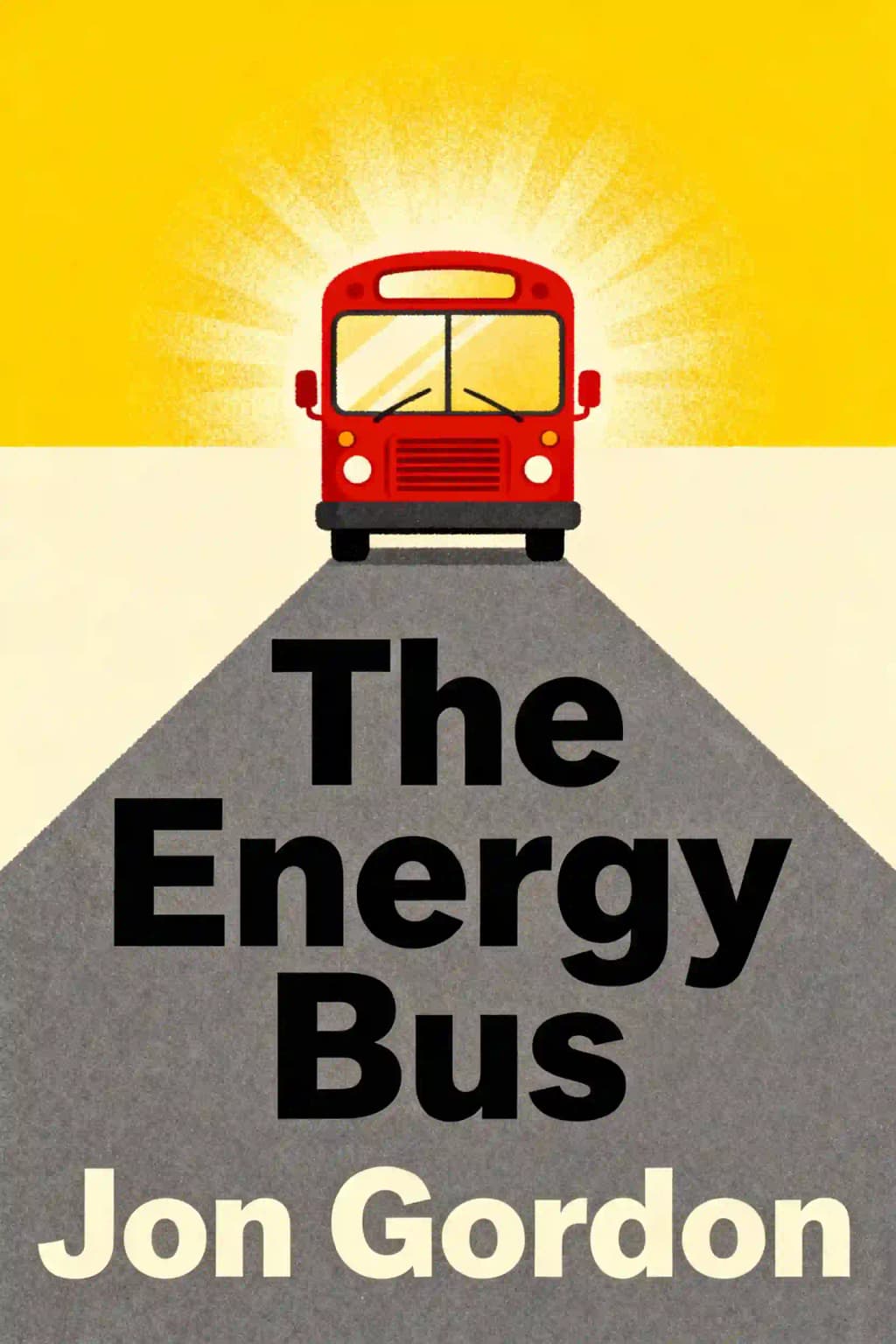
The Energy Bus: Your Ticket to a Life-Changing Journey
The Energy Bus is more than just another self-help book-it's a phenomenon that has transformed organizations worldwide. Since its publication, Jon Gordon's deceptively simple fable has been embraced by Fortune 500 companies, professional sports teams, and even school districts seeking to harness the power of positive energy. Celebrities like Drew Brees and Brad Stevens have publicly praised its impact on their leadership approach. What makes this book particularly remarkable is how it distills complex psychological principles into an accessible story that resonates with readers at all levels. In a world increasingly aware of workplace toxicity and burnout, The Energy Bus offers a refreshing alternative-a roadmap for cultivating positivity that delivers measurable results. As you board this metaphorical bus, prepare for a journey that might just change the trajectory of your career, relationships, and life satisfaction in ways you never imagined possible.
Capítulo 2
When Life Gives You a Flat Tire
Life has a way of forcing change upon us when we resist it voluntarily. For George, the protagonist of The Energy Bus, this wake-up call arrived in the form of a flat tire on a dreary Monday morning. Standing in his driveway, George wasn't just facing a transportation problem-he was confronting the symbolic deflation of his entire life. His marriage was failing, his career was in jeopardy, and perhaps most tellingly, he couldn't think of a single colleague he could call for help. The isolation he felt in that moment perfectly mirrored the walls he had built around himself over years of negative thinking and defensive behavior.
This moment of crisis forced George onto public transportation and into the path of Joy, an extraordinarily positive bus driver whose "Energy Bus" would become the vehicle for his transformation. Joy's initial observation cut straight to George's core: "You're on my bus for a reason, and you need to choose whether to see problems as curses or gifts." This encounter exemplifies how life's greatest teachers often appear in the most unexpected places and forms, challenging our preconceptions about where wisdom can be found.
What makes this opening so powerful is its relatability. Haven't we all experienced those moments when everything seems to fall apart simultaneously? Whether it's a career setback coinciding with personal struggles, or health issues emerging during financial difficulties, these convergences of challenges are surprisingly common. The genius of Gordon's approach is showing how these apparent disasters often serve as doorways to transformation. When George later learns that his flat tire actually saved his life by preventing him from driving with dangerously worn brakes, we're reminded of an essential truth: sometimes what appears to be our greatest misfortune is actually our greatest blessing in disguise.
The flat tire represents more than just an inconvenience-it's the universe's way of saying, "Your current path is unsustainable." By forcing George to step outside his normal routine, it creates the space for new perspectives to enter. This is often how meaningful change begins in our own lives-not through careful planning, but through disruptions that shake us out of autopilot. These disruptions might take various forms: a health scare that prompts lifestyle changes, a relationship ending that leads to self-discovery, or a job loss that opens the door to a more fulfilling career path.
The symbolism of the flat tire extends even further - it represents the deflated state of George's energy and outlook on life. Just as a tire needs proper inflation to function effectively, our lives require positive energy and purpose to move forward smoothly. The breakdown of George's usual mode of transportation forces him to connect with others and experience life from a different vantage point, ultimately leading to the realization that his isolated approach to life was part of his problem all along.
Capítulo 3
Taking the Driver's Seat of Your Life
"You're the driver of your bus." This first rule of the Energy Bus encapsulates a fundamental truth about human existence that's both empowering and challenging. When Joy introduces this concept to George, she's not merely offering a motivational platitude-she's presenting a radical shift in perspective that demands personal accountability and a complete reimagining of how one approaches life's challenges.
Most people live reactively, allowing circumstances, other people, or their own negative thoughts to determine their direction. They become passengers in their own lives, complaining about the journey but never taking the wheel. George epitomized this mindset-blaming his boss, his team members, and even his flat tire for his unhappiness. This victim mentality manifests in countless ways: attributing career stagnation to office politics, blaming relationship problems on partners, or citing "bad luck" for financial struggles.
Taking the driver's seat means accepting complete responsibility for your life's direction. It's understanding that while you can't control every event that happens to you, you maintain absolute control over how you respond. This distinction between events and responses is crucial. As Viktor Frankl famously observed after surviving Nazi concentration camps: "Everything can be taken from a man but one thing: the last of the human freedoms-to choose one's attitude in any given set of circumstances." This profound insight demonstrates that even in the most extreme circumstances, we retain the power to choose our response.
When George initially resists this idea, claiming he feels trapped by responsibilities, Joy challenges him to recognize the power he still possesses-particularly over his attitude and energy. This isn't about denying real constraints or challenges; it's about focusing on your sphere of influence rather than your sphere of concern. For instance, instead of fixating on the economy's impact on his company, George could focus on improving his team's efficiency and innovation.
The practical application of this principle begins with defining your vision. Without a clear destination, even the best driver will wander aimlessly. By having George write down specific visions for his health, family life, and career, Joy helps him create a roadmap for his journey. This exercise transforms vague dissatisfaction into concrete goals that can guide daily decisions and actions. For example, rather than a general goal of "better health," George specifies "walking 30 minutes daily" and "eating vegetables with every meal."
Taking the driver's seat requires daily commitment and conscious choice. It means starting each morning by asking, "Where am I driving my bus today?" It involves regular check-ins to ensure you're still on course and making deliberate adjustments when needed. This might mean scheduling weekly planning sessions, maintaining a journal to track progress, or creating accountability partnerships with others who share similar goals.
The metaphor of being the driver extends beyond individual achievement to leadership roles. When you truly embrace being the driver of your bus, you become better equipped to lead others, showing them through example how to take control of their own journeys while contributing to the larger team mission.
Capítulo 4
The Magnetic Power of Energy and Vision
Everything in our universe, at its most fundamental level, is energy. This scientific reality has profound implications for our daily lives, relationships, and work. As Joy explains to George, Einstein's famous equation E=MC2 demonstrates that even solid matter is ultimately energy in another form. This isn't just theoretical physics-it's a framework for understanding human dynamics.
We intuitively recognize energy exchanges in our interactions. Some people leave us feeling energized and uplifted, while others drain us completely. Certain projects inspire our creativity and passion, while others deplete our reserves. Even the foods we eat either fuel our vitality or leave us lethargic. This energy awareness becomes a powerful lens through which to evaluate our choices.
Our thoughts themselves carry potent energy. When we focus intensely on specific outcomes through visualization and clear intention, we begin mobilizing resources-both internal and external-toward those goals. This is the essence of the law of attraction that Joy describes: "What we think about, we bring about." It's not mystical magic but practical psychology. When you buy a new car model, you suddenly notice that same model everywhere-not because more appeared overnight, but because your reticular activating system (the brain's filtering mechanism) now prioritizes that information.
This principle explains why complaining is prohibited on Joy's bus. Complaints focus attention on problems rather than solutions, creating a negative feedback loop that attracts more negativity. The "Winners, Not Whiners" motto isn't just about maintaining a pleasant atmosphere-it's about directing collective energy toward productive outcomes.
Olympic athletes understand this intuitively. They don't visualize failure; they mentally rehearse perfect performances repeatedly. This practice literally creates neural pathways that support success. When George begins applying these principles to his failing job and marriage, he's not engaging in wishful thinking but in deliberate mental training.
The formula E+P=O (Events plus Perception equals Outcome) further reinforces this concept. While we can't control all events, our perception-where we direct our energy and attention-largely determines outcomes. By choosing to fuel our journey with positive energy through gratitude, visualization, and constructive focus, we create momentum toward our desired destination.
Capítulo 5
Building Your Dream Team: Invitation and Boundaries
Creating positive change rarely happens in isolation-we need others on our journey. Rule #4, "Invite People on Your Bus and Share Your Vision for the Road Ahead," acknowledges this reality while providing a structured approach to building your support team.
When Joy introduces George to this concept, she emphasizes the importance of explicit invitation. It's not enough to assume people know your vision or want to participate. You must extend clear invitations that articulate both the destination and why the journey matters. This transparency allows others to make informed choices about their participation.
George implements this by sending "bus tickets" to his team members and meeting individually with each person to share his vision for their product launch. This personalized approach demonstrates respect for their agency while creating clarity about expectations. The physical return of tickets serves as a tangible commitment mechanism-a psychological contract that increases follow-through.
However, invitation alone isn't sufficient. Not everyone will accept your invitation, and some who initially board may become detrimental to the journey. This reality leads to Rules #5 and #6: "Don't Waste Your Energy on Those Who Don't Get on Your Bus" and "Post a Sign That Says NO ENERGY VAMPIRES ALLOWED."
When Michael, Jamie, and Jose initially reject George's invitation, he's devastated. Their refusal feels like personal rejection rather than a simple choice. Joy helps him recognize that obsessing over those who decline only diverts energy needed for those who accepted. This isn't about writing people off permanently but about respecting their current choice and focusing your limited resources where they can be most effective.
The "No Energy Vampires" rule addresses a different challenge-those who join your journey but drain collective energy through persistent negativity. Joy advises George to establish clear boundaries: either contribute positively or leave the team. This isn't harsh; it's necessary protection for the group's mission and morale.
The ultimatum George gives Larry and Tom represents this principle in action. Larry chooses to adjust his attitude, while Tom refuses and must leave. This difficult conversation demonstrates that sometimes the kindest action for everyone is maintaining clear standards for participation.
These principles apply beyond the workplace. In personal relationships, community organizations, and family dynamics, being intentional about who you invite into your inner circle and establishing healthy boundaries with energy-draining individuals creates space for meaningful connection and progress.
Capítulo 6
The Heart of Leadership: From Manager to Chief Energy Officer
Traditional leadership focuses primarily on processes, metrics, and outcomes. While these elements matter, Joy introduces George to a more profound dimension of influence-leading with heart as a "Chief Energy Officer." This perspective shift transforms George's approach to his team and ultimately saves his failing project.
Jack, a successful businessman on the bus, explains that energy is the true currency of success. While credentials, strategies, and plans have their place, the energy a leader brings determines whether people will follow enthusiastically or comply reluctantly. This energy must be authentic-not manufactured enthusiasm but genuine passion that flows from connection to purpose.
Rule #7, "Enthusiasm Attracts More Passengers and Energizes Them During the Ride," highlights this magnetic quality of authentic excitement. The word "enthusiasm" derives from the Greek "entheos," meaning "filled with divine spirit." When leaders connect with their deeper purpose, this energy naturally radiates outward, drawing others into their vision.
However, enthusiasm alone isn't sufficient. Rule #8, "Love Your Passengers," introduces what might seem like a radical concept in business contexts-that genuine care for team members forms the foundation of sustainable success. While the word "love" might initially sound inappropriate for professional settings, Joy clarifies that this means recognizing each person's inherent value and helping them discover their unique contributions.
The metaphor of the gold-covered rock beautifully illustrates this principle. Just as George discovers that what appeared to be an ordinary black rock was actually gold beneath the surface, effective leaders see the potential in people that others (and sometimes they themselves) cannot yet see. The leader's job becomes removing the "dust" that obscures this brilliance.
The five practical ways to love team members provide actionable guidance: making time for genuine connection, listening with empathy, recognizing contributions, serving rather than expecting service, and creating opportunities for people to utilize their strengths. These practices transform transactional management into transformational leadership.
When George finally embraces this heart-centered approach, his team's energy completely shifts. Even Michael, who had previously quit, asks to rejoin after hearing about the positive changes. The team begins working late into the night not because George demands it but because they're genuinely invested in their shared success.
This approach to leadership requires vulnerability-the courage to care deeply about outcomes and people simultaneously. It means risking disappointment and rejection. Yet as George discovers, the rewards far outweigh these risks, creating teams that don't just perform tasks but push the bus forward together with shared purpose and enthusiasm.
Capítulo 7
Finding Your Purpose: The Ultimate Fuel for the Journey
While positive energy, enthusiasm, and team cohesion provide important momentum, Rule #9 reveals the ultimate fuel for sustained success: "Drive with Purpose." Purpose transcends immediate goals or metrics-it connects daily activities to meaningful impact and larger significance.
Joy illustrates this principle with the story of a NASA janitor who, when asked about his job during the Apollo mission, replied that he was "helping put a man on the moon." This perspective transformed what might have been seen as menial work into participation in a historic achievement. The janitor didn't just clean floors; he contributed to humanity's greatest adventure.
Rather than dictating purpose from above, George wisely invites his team to co-create their shared purpose. Through collaborative discussion, they develop three guiding principles: striving for greatness in all their work, developing Chief Energy Officers throughout the company, and "sharing the light"-seeing their lightbulbs as tools that enhance people's lives rather than just products to sell.
This process transforms the team's energy completely. Personal agendas and office politics dissolve as everyone aligns around their collective purpose. The result is not just increased productivity but a profound shift in how team members relate to their work and each other. When George finds everyone willingly working until 2 A.M., it's not because of pressure or fear but because they're genuinely invested in their shared mission.
Purpose serves as a preventative measure against burnout. When work connects to meaning beyond paychecks or promotions, it remains energizing even during challenging periods. This explains why some people in demanding professions like healthcare or education can maintain passion for decades while others in seemingly easier roles quickly become cynical and disengaged.
Finding purpose doesn't necessarily require dramatic career changes or grand missions. It often involves reframing current responsibilities through a lens of contribution and impact. A customer service representative isn't just answering phones; they're solving problems that affect real people's lives. A financial analyst isn't just manipulating spreadsheets; they're helping ensure organizational sustainability that supports employees' livelihoods.
By connecting daily tasks to meaningful outcomes, purpose transforms mundane activities into meaningful contributions. It answers the fundamental human questions: "Why am I here?" and "Does what I do matter?" When these questions find satisfying answers, energy naturally flows toward the work rather than requiring constant external motivation.
Capítulo 8
Enjoying the Ride: The Ultimate Destination
After nine rules focused on vision, energy, team building, and purpose, Joy concludes with perhaps the most important principle: "Have Fun and Enjoy the Ride." This final rule reminds us that the quality of our journey matters as much as reaching our destination.
George meets 88-year-old Eddy, who despite losing his wife still lives vibrantly-playing piano, writing poetry, and traveling. Eddy's philosophy becomes the perfect capstone to the Energy Bus principles: "The goal in life is to live young, have fun, and arrive at your final destination as late as possible, with a smile on your face."
This perspective challenges our cultural obsession with achievement at the expense of enjoyment. Many people postpone happiness, believing they'll finally enjoy life after reaching certain milestones-the promotion, the retirement, the financial goal. Meanwhile, life itself passes by unappreciated.
The Energy Bus philosophy suggests a different approach: integrating joy into the journey itself. This doesn't mean avoiding difficult work or challenges. Rather, it means finding elements to appreciate even amid struggles. When George's team celebrates their successful presentation, they choose to do so together rather than separately-recognizing that shared joy multiplies rather than divides.
George's transformation becomes complete when he decides to continue riding the bus even after his car is fixed. This choice symbolizes his understanding that community, purpose, and positive energy create more fulfillment than isolated convenience. His gift of a permanent sign displaying the Energy Bus rules ensures these principles will continue benefiting others long after his own journey.
The book's conclusion offers a powerful reframing of life's challenges. When George reflects on his apparent misfortunes-the flat tire, work problems, marital issues-he recognizes them as disguised opportunities that led to transformation. This perspective shift allows him to approach future problems differently, asking what he can learn rather than being overwhelmed by negativity.
Perhaps the most profound application comes when George calls his mother who is undergoing chemotherapy. He realizes he doesn't need to teach her about joy with words-he simply needs to share his love. This moment illustrates that sometimes the greatest gift we can offer others is our authentic presence and positive energy.
As we close our journey through The Energy Bus principles, the invitation becomes clear: life will inevitably include flat tires, energy vampires, and unexpected detours. The question isn't whether these challenges will appear but how we'll respond to them. Will we remain passive passengers complaining about the ride, or will we take the wheel, fuel our journey with positive energy, invite supportive companions, and ultimately enjoy the adventure?
The choice, as Joy would say, is entirely yours.
Capítulo 9
Putting the Energy Bus in Motion: Your Action Plan
The principles of The Energy Bus aren't meant to be merely inspirational-they're designed for practical implementation. The comprehensive action plan provides concrete steps for applying these concepts in real-world settings, transforming philosophical ideas into tangible results.
The journey begins with clarifying your destination through a powerful vision/purpose statement. Unlike vague aspirations, this statement should specifically articulate what you're working to create. By distributing this vision to team members for daily review and visualization, you establish a shared mental picture of success that guides collective effort.
"Zoom focus" takes this vision from abstract to actionable by identifying specific goals and steps required for achievement. This creates a roadmap where progress can be measured and celebrated, preventing the overwhelming feeling that often accompanies ambitious visions.
Building your team requires intentionality-formally inviting key people onto your bus through e-tickets or printed invitations that clearly communicate expectations and opportunities. This explicit process creates psychological commitment that casual conversations cannot.
Maintaining positive energy requires daily practices rather than occasional efforts. The action plan suggests specific rituals like morning meetings that begin with good news, recognition programs that celebrate success, and thank-you walks that combine gratitude with physical movement. These practices fill the environment with positive energy before negativity can breed.
Addressing "energy vampires" requires courage and clarity. The plan outlines a process for identifying negative team members, opening communication channels to address concerns, creating action plans for improvement, and-when necessary-letting people off the bus who refuse to contribute positively.
Perhaps most importantly, the action plan acknowledges that adversity is inevitable for any worthwhile journey. When challenges arise, successful teams don't panic or place blame-they ask what can be learned, how they might grow from the experience, and what opportunities might be hidden within the difficulty.
The practical suggestions for "loving your passengers" transform this concept from abstract to actionable: finding specific ways to recognize contributions, spending quality time with team members, improving listening skills, serving others' growth, and creating opportunities for people to utilize their unique strengths.
Finally, the plan emphasizes that enjoyment isn't peripheral but central to sustainable success. Regularly asking how to achieve goals while having more fun keeps teams energized for the long journey. The ultimate measure of success isn't just reaching destinations but becoming the best possible team along the way.
By implementing these concrete steps, organizations and individuals can transform the Energy Bus principles from inspiring ideas into lived experiences that create measurable results in productivity, engagement, and fulfillment. The journey may not always be easy, but with these practical tools, it can certainly be energizing, purposeful, and ultimately joyful.