Capítulo 1
The End of Cheap Oil: A Reckoning for Modern Civilization
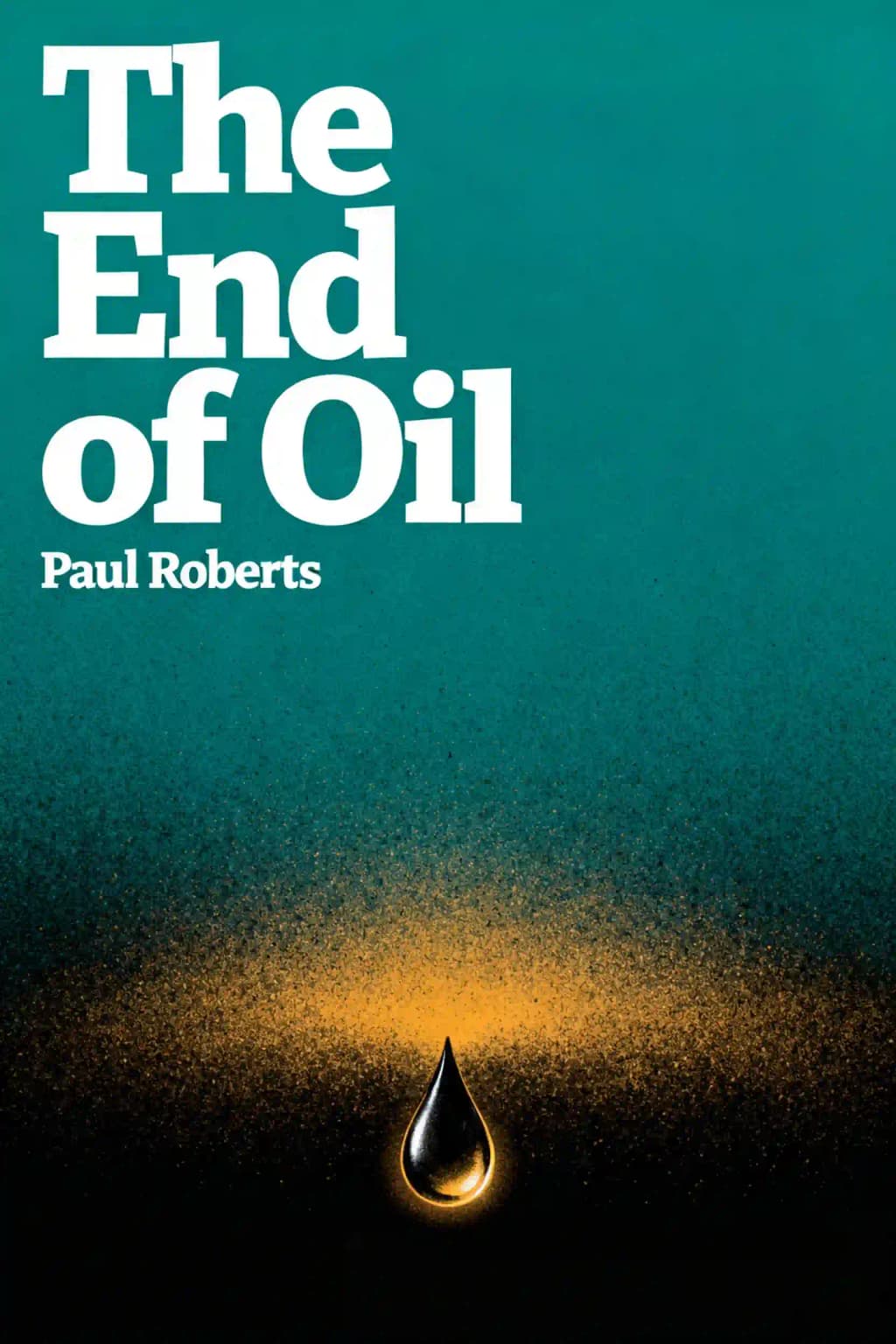
In the scorching heat of Saudi Arabia's "Empty Quarter," a moment of truth unfolded that would shake the foundations of our energy certainty. When asked about the legendary Ghawar oil field, a Saudi engineer casually mentioned its 30 percent "water cut" - a technical admission that the world's largest oil reservoir was showing signs of depletion. This seemingly minor detail reveals the precarious state of our entire energy system. "The End of Oil" has become a cultural touchstone, praised by energy experts and environmentalists alike for its unflinching examination of our hydrocarbon addiction. Even Bill Clinton called it "essential reading," while energy security experts consider it prophetic in its warnings about the coming energy transition. The book's central message - that our energy economy faces inevitable transformation - has only grown more relevant as climate concerns mount and oil reserves become increasingly difficult to access.
Capítulo 2
The Free Ride: How Oil Transformed Our World
For six millennia, human progress has been defined by increasingly sophisticated energy mastery. From animal-drawn plows to coal-fired factories, energy has become the bedrock of modern civilization - the currency of political power and economic success. Our current energy system, dominated by hydrocarbons, has enabled unprecedented prosperity but contains fatal flaws that threaten its continued viability.
The rise of oil fundamentally transformed human existence. By 1913, over a million vehicles raced across America and Europe, almost all running on petroleum products. Unlike previous energy transitions where alternatives existed, the automobile age offered no choice: if people wanted mobility, oil was the only option. This transformation reshaped society, enabling new lifestyles like commuting and suburbia while making oil-powered transportation essential to economic success.
The oil industry reinvented itself to meet exploding demand, which grew from 500,000 barrels daily in 1900 to 4 million by 1929. Companies like Standard Oil, Royal Dutch-Shell and British Petroleum built global networks spanning production, transportation and refining. As domestic supplies proved insufficient, they expanded globally, particularly to the Middle East.
By 1946, America became a net oil importer for the first time - an economic and military giant whose lifeblood was increasingly controlled abroad. As oil's importance grew, foreign producers demanded greater control and profits. Venezuela raised prices while making diplomatic overtures to Middle Eastern allies. Arab nations, angered by Israel's creation, threatened embargoes. Iran nationalized its oil industry in 1951, expelling Western companies. By 1961, OPEC's formation shifted control from international companies to "petrostates."
Oil also revealed environmental downsides. Production and refining contaminated waterways, while vehicle exhaust created serious air pollution. Los Angeles experienced its first smog alerts during World War II, with conditions worsening by the 1960s. Similar problems emerged in Mexico City, London, and Tokyo.
In 1970, U.S. oil production peaked, with flows from major fields declining and imports surging. Almost overnight, oil transformed from an economic success factor to a source of vulnerability - a pattern that would eventually repeat globally.
Capítulo 3
The Last of the Easy Oil: Facing Geological Reality
Political pressure often forces government agencies to provide overly optimistic oil forecasts. During the 1990s, a USGS report with low Arctic National Wildlife Refuge reserve estimates was withdrawn and rewritten with more favorable numbers after pressure from Alaskan lawmakers. Basing energy policy on such compromised forecasts would be "a huge mistake."
The reality on the ground contradicts this optimism. In Azerbaijan, despite government confidence, Western oil companies have experienced numerous disappointments. ExxonMobil's Nakhchivan field came up dry despite drilling to record depths of 22,000 feet. This wasn't isolated - Eni Agip, TotalFinaElf, ChevronTexaco and BP all failed to find "commercial volumes" in their Azeri prospects.
These setbacks reflect a global pattern of declining discoveries. In 2002, worldwide discoveries totaled just six billion barrels - far below the twenty-seven billion consumed. The remaining oil will be increasingly difficult to extract, with greater technical challenges and environmental concerns. Arctic reserves may be substantial but require specialized equipment in harsh conditions and face strong environmental opposition. Alberta's tar sands present their own problems, producing massive carbon dioxide emissions during refining.
Even OPEC's reliability is questionable. After analyzing Saudi technical production reports, Bush energy adviser Matthew Simmons concluded Saudi Arabia "has very likely gone over its peak," which would mean "planet earth has passed its peak of production."
The real danger isn't that oil will suddenly vanish but that we lack the political will to prepare for its inevitable decline. As energy expert Joseph Romm warns, "when it does peak, it will be too late to do anything about it."
Capítulo 4
The Hydrogen Hope: Promise and Reality of Alternative Energy
In March 2000, Ballard Power Systems raised an astounding $340.7 million for their hydrogen fuel cell technology - nearly double what analysts expected. The timing couldn't have been better - tech stocks were booming and Ballard's fuel cells were gaining recognition as the power source of the future.
These remarkable devices generate electricity by combining hydrogen and oxygen with only water vapor as emission. Though Ballard hadn't invented fuel cells, they had made two crucial advances: dramatically shrinking the size while increasing power output, and forming strategic alliances with automotive giants Ford and DaimlerChrysler.
William Clay Ford himself had declared fuel cells would end the internal combustion engine's reign, while DaimlerChrysler proclaimed hydrogen "the best opportunity" to replace fossil fuels. The hydrogen fuel cell stands at the vanguard of an energy insurrection - clean, quiet, and nearly three times as efficient as the best internal-combustion engines.
There's poetic elegance to building our future on hydrogen - the smallest, simplest, and most ancient element, created after the universe's birth and forming 75% of its mass. Hydrogen's value lies in its energy storage capabilities. During photosynthesis, solar energy splits water molecules, attaching energy to hydrogen atoms which then bind with carbon to create energy-rich compounds. When these bonds break, hydrogen reunites with oxygen, releasing stored energy while forming water again.
Hydrogen is superior to hydrocarbons because it contains more energy per pound. While carbon also releases energy when oxidized, it carries less energy than hydrogen. The more carbon a fuel contains, the less energy it releases - coal (1:1 carbon-hydrogen ratio) has the lowest energy content, oil (1:2) more, and methane (1:4) the most. Pure hydrogen produces nearly triple the energy of gasoline with far fewer emissions.
However, the hydrogen infrastructure presents enormous economic challenges. Converting existing stations would cost $30 billion just to cover 33% of U.S. locations. Even with optimistic projections, hydrogen would cost around $3 per gallon-equivalent - triple gasoline's pretax cost. Manufacturing costs remain prohibitive. While conventional engines cost about $50 per kW, automotive fuel cells still cost over ten times that amount.
Many experts believe fundamental engineering challenges remain, particularly finding alternatives to expensive platinum catalysts. Even with mass production, costs might remain 2-3 times higher than conventional vehicles. Without massive political intervention including research funding, infrastructure investment, and regulatory incentives, fuel cells cannot compete against entrenched technology.
Capítulo 5
Energy Is Power: The Geopolitics of Oil
In his elegant Riyadh office, Saudi oil minister Ali Bin-Ibrahim al-Naimi diplomatically downplays tensions with Russia over oil production. "We don't like to talk about 'confrontation,'" he says. "Rather, we seek a spirit of cooperation." But when pressed about competition with Russia, al-Naimi reveals Saudi power: "If we were in competition, we would pull out all the plugs and put ten million barrels a day on the market and knock everyone out of business for two to three years."
This Saudi-Russian rivalry exemplifies energy geopolitics - where business and politics merge into a swift current that shapes global markets. A single oil "event" sends shockwaves through the world order, shifting billions in wealth daily. Six of the last seven global recessions followed oil price spikes, and many economists now fear price volatility poses greater risks than terrorism or war.
Three elements define oil geopolitics. First is America's dominant role. Consuming one-fourth of global production, U.S. demand exerts constant pull on world markets. This dependence creates vulnerability but also grants enormous influence - America remains the third-largest producer and its market is both the largest and fastest-growing. No producer can afford to miss the American market - Saudi Arabia even sells oil to Americans at a discount.
The second factor is Middle Eastern oil, particularly Saudi Arabia's 265 billion barrels - over a quarter of world reserves. Saudi crude is prized "Arab light" that refines easily and literally gushes from the ground without pumping. With production costs around $1.50 per barrel (compared to $15 elsewhere), the Saudis maintain enormous spare capacity, making them the undisputed "swing producer" who can flood markets to discipline competitors or stabilize global supply during crises.
The third factor is price - the electrical charge driving the entire geopolitical machine. Price determines money flow, political influence, economic growth, and energy consumption patterns. All players attempt to manipulate it, though price manipulation often backfires catastrophically.
The modern oil geopolitical order emerged from the colonial relationship between Western oil companies and producing states. The transformation culminated in the 1973 oil embargo when OPEC quadrupled prices, creating the largest wealth redistribution in history. By 1979, OPEC was earning nearly three-quarters of a trillion dollars annually in today's money.
The petrodollars weren't always spent prudently. Royal families and dictators splurged on mansions, statues, and weapons. Venezuela's oil wealth funded luxury imports and record Scotch whiskey consumption. Oil wealth quickly found political applications - Iran funded terrorists, while the Saudis exported fundamentalism to Afghanistan and Pakistan, inadvertently sowing the seeds of militant Islam.
OPEC's fundamental weakness was misunderstanding oil market dynamics. Instead of using their low production costs to undercut competitors while maintaining reasonable prices, they pushed prices too high. This triggered predictable responses: importing nations turned to non-OPEC suppliers, switched to alternative fuels, and aggressively pursued conservation. By 1986, global oil demand had fallen by five million barrels daily while non-OPEC production increased by fourteen million barrels, slashing OPEC's market share from over 50% to just 29%.
Capítulo 6
Too Hot: Climate Change and the Carbon Crisis
In Siberia's frigid northern coast, the world's most complex energy problem is playing out in a bizarre dance. Since the 1970s, temperatures there have risen five degrees Celsius, causing the Arctic ice sheet to recede by 3 percent. The warming is melting ancient inland ice fields, exposing dark soil that absorbs more heat, accelerating the warming in a dangerous feedback loop.
Yet not everyone views this warming with alarm. While global warming brings drought, crop failures, and flooding to Africa, Asia, and southern Europe, northern countries like Russia may actually benefit. Milder winters could increase potato yields by one-third, while an ice-free northern sea route could allow ships to travel between Europe and Japan two weeks faster than via the Suez Canal.
Perhaps most ironically, Russian oil companies and their Western partners stand to benefit. Though warming will turn the tundra into swamps complicating land drilling, thinning ice will make offshore Arctic oil and gas extraction easier and cheaper. For Russia's cash-strapped government, which depends on oil exports for a third of its revenue, Arctic oil could "boost Russia's economic security and help to restore our previous glory."
Climate change represents our greatest energy accounting error. While fossil fuels have driven industrial success and economic vitality, we've omitted serious costs including geopolitical instability, price volatility, and rising global temperatures from centuries of carbon dioxide emissions.
The economic impact of climate change could reach tens of trillions of dollars this century. Yet addressing it requires substantial changes to our energy economy, since 90 percent of man-made CO2 comes from burning gas, oil, and coal, which provide 85 percent of global energy.
Climate change will devastate the world's poorest regions first. According to Oxford University research, even a half-degree temperature change would alter Asian monsoon patterns, reducing crop yields and displacing millions. Bangladesh faces 26 million potential refugees, Egypt 12 million, and India over 20 million.
China faces particularly severe agricultural impacts that could produce 100 million famine refugees, potentially creating unprecedented political instability. Despite understanding these connections between energy and climate, most governments, companies and individuals resist committing to radical changes needed.
The 1997 Kyoto Protocol reflected global urgency about climate change, with nations promising to reduce carbon emissions below 1990 levels by 2012. Despite initial celebration by climate activists, Kyoto collapsed largely due to political calculations. The Clinton administration recognized climate's importance but wouldn't risk offending powerful interests before the 2000 election.
Kyoto fundamentally failed to reflect climate change's true nature as a long-term, cumulative problem. What matters isn't yearly emissions but atmospheric carbon accumulation over centuries. We have a "carbon budget" of 1.225 trillion tons through 2300 to keep concentrations below 450ppm - averaging 4.1 billion tons yearly.
Climate economists now favor flexibility over rigid targets. While long-term concentration goals remain essential, we need adaptability in how and when targets are met. The most cost-effective approach pursues the cheapest reductions first, regardless of location - like improving China's inefficient energy sector rather than making costlier changes in already-efficient Western systems.
Capítulo 7
Give the People What They Want: The Demand Challenge
In eastern China during summer 2002, a fierce domestic petroleum battle was unfolding. PetroChina and Sinopec, commercial spinoffs of China's state oil company, were aggressively competing for market dominance before the government opened retail gasoline markets to foreign companies. Both corporations spent billions acquiring prime highway locations, building new stations, renovating old ones, and pressuring independent operators to sell through price cuts and intimidation tactics.
This battle reflects China's dramatic transformation from a bicycle-dominated society to a car-hungry economy. Just a decade earlier, China had little need for gasoline, with roads dominated by diesel trucks and a few Soviet-designed limousines for party officials. Now, China's burgeoning middle class craves automobiles, driving automakers to produce a million cars in 2002 - up 50% from the previous year. Analysts expect 15-20% growth over the next decade, making China the world's hottest car market.
China exemplifies the larger challenge facing the global energy economy: explosive demand growth that strains our ability to produce adequate supplies. Over the next two decades, global energy consumption will grow 1.5-2.5% annually - potentially doubling by 2032. Developing nations, especially in Asia, will account for 60% of world energy demand by 2020, up from 45% today.
Despite China's industrial ambitions, most Chinese still live in energy poverty. The peculiar habit of public spitting stems partly from respiratory infections caused by inadequate home heating - coal being reserved primarily for industry rather than peasant homes. In northern provinces, homes get so cold that interior walls frost over in winter. Though China has embraced car culture as a "pillar industry" for economic development, the results are often obsolete vehicles recycled from 1980s designs.
The relationship between energy use and economic growth reveals a troubling pattern. Advanced economies like the United States consume vastly more energy per capita (7,500 gallons of oil equivalent yearly versus China's 800 gallons). While modernizing economies typically become more energy-efficient over time, the efficiency gains often get reinvested in greater consumption rather than conservation. After the 1975 Arab oil embargo, U.S. fuel economy improved dramatically, but when oil prices fell in the mid-1980s, Americans chose larger, more powerful vehicles instead of further efficiency gains.
Shanghai epitomizes China's emerging car culture. With 13 million residents earning twice China's average income, the city has invested over $10 billion in transportation infrastructure. Transportation patterns have shifted dramatically - in 1995, only 5% used cars while most traveled by bicycle (33%), foot (31%), and bus (25%). By 2000, car use tripled to 15%, and will exceed 50% by 2020. This motorization brings severe costs: congestion, respiratory illness, and a sevenfold increase in carbon emissions.
China faces a growing energy security crisis. Despite increasing domestic production from 2.8 to 3.2 million barrels daily since 1990, China has only 2% of world oil reserves but one-fifth of its population. Its major fields are already declining, with production growing at under 2% while demand surges at 7%. By 2020, China will likely import 8 million barrels daily, draining currency reserves and making the country vulnerable to oil market volatility.
Capítulo 8
Big Oil Gets Anxious: The Industry's Natural Gas Pivot
The global energy industry is positioning itself for a massive shift toward natural gas, which many believe can close the gap between energy supply and demand. Projects like Sempra Energy's Costa Azul LNG terminal in Mexico exemplify this transition. The $400 million facility will transform imported liquid methane into natural gas for energy-hungry Southern California, with at least five other terminals planned for Baja. This "dash for gas" accelerated after Federal Reserve Chairman Alan Greenspan urged expansion of LNG import capacity in 2003, instantly transforming LNG into a hot investment opportunity.
Natural gas has fundamentally transformed the global energy mix over thirty years. Once accounting for barely 20% of global demand (compared to oil's 50%), gas now exceeds coal's share and could become the world's dominant energy source by 2025. Energy companies, utilities, and governments are investing hundreds of billions in gas infrastructure globally. Gas parallels oil's earlier rise: it's abundant (with reserves potentially lasting over half a century), versatile (powering everything from plants to vehicles), and cleaner (containing less carbon and more hydrogen than oil or coal).
Despite its advantages, natural gas presents significant challenges. It still produces emissions, and its largest supplies lie far from major markets, potentially replacing one insecure energy infrastructure with another. Gas facilities require massive investment - a single LNG operation can cost $4 billion, exceeding what most energy companies can handle alone. The industry's rush toward gas isn't merely about environmental benefits; it reflects oil's diminishing reliability as a profit generator.
The oil industry's fundamental business model had remained relatively stable throughout the twentieth century. Dominated by integrated majors controlling the entire production chain from wellhead to gas pump, the industry's profits came primarily from refining and marketing petroleum products. However, by the 1970s, this century-old model faced unprecedented challenges that would elevate natural gas from profitable sideline to transformative business opportunity.
The rise of OPEC effectively "disintegrated" the majors, severing them from their supply and drastically reducing their production. ExxonMobil now produces less than half the volume of Saudi Aramco. Forced to buy crude on the open market or explore costlier regions, companies initially passed these costs to consumers. But in the 1980s, state-owned companies began competing in the downstream market while price gluts triggered a mergers-and-acquisitions frenzy that fundamentally changed the industry.
Just off the Mexicali-Tijuana Highway sits the Termoelectrica de Mexicali power plant, a gleaming symbol of the emerging gas economy. Completed by Sempra Energy in 2003 for $350 million, this combined-cycle gas turbine plant produces 600 megawatts - enough for 600,000 Mexican homes. Though ostensibly serving both sides of the border, analysts note it primarily targets the lucrative Southern California market.
Power generation has become the primary driver for natural gas expansion, particularly as traditional power sources falter. Oil has grown too expensive for power plants, while nuclear power faces insurmountable economic and political obstacles. Even coal, despite its abundance and low cost, struggles with high construction costs and severe environmental impacts.
Despite its promise, the gas economy faces significant supply constraints. With no slack in the system, the slightest blip in demand sends prices skyward before they plummet just as quickly. This volatility is devastating for an economy increasingly powered by gas-fired electricity. As gas prices rise, utilities raise power rates while industries dependent on natural gas shut down plants and move overseas.
Capítulo 9
And Now for Something Completely Different: The Alternative Energy Landscape
Anastasios Melis's discovery at UC Berkeley in 1999 showed that Chlamydomonas reinhardtii algae could produce significant hydrogen when deprived of sulfur. By 2003, despite doubling the hydrogen output, Melis estimated commercial viability would require a twentyfold increase, likely taking another decade. His company, Melis Energy, struggled to secure adequate funding, raising less than $1 million of the $20 million needed - partly due to bad timing and America's lack of commitment to clean energy alternatives.
This case exemplifies the broader challenges facing alternative energy technologies. While our hydrocarbon-based energy system faces inevitable decline and climate problems, the path to replacement remains uncertain. According to the UN's climate panel, we need one-seventh of our energy from carbon-free sources by 2030, one-third by 2050, and over half by 2075 to avoid climate catastrophe. Yet progress has been discouragingly slow, with renewables providing just 8% of global energy (mostly hydropower), while solar and wind together contribute less than half of 1%.
In Freiburg, Germany's "Solar City," the Fraunhofer Institute represents the vanguard of solar innovation. Director Joachim Luther explains that solar energy has the greatest potential among renewables because sunlight is universally available. Solar produces electricity without emissions, works at any scale from rooftops to desert arrays, and is theoretically capable of providing the 28 terawatts of carbon-free electricity needed by 2050 - using just 1% of Earth's surface.
Despite these advantages, solar faces two major obstacles: prohibitive costs and a reputation damaged by failed 1970s initiatives. Solar received a crucial boost in 1995 when Japan launched an ambitious rooftop PV subsidy program, followed by similar German initiatives two years later. These policies sparked rapid market growth, with Japan alone installing 25,000 rooftop systems in 2002. Between 1995 and 2002, annual global installations jumped from 80 to 500 megawatts, with the industry now growing at 30% annually.
The Stateline Wind Farm on the Washington-Oregon border exemplifies wind power's emergence as a mainstream energy source. With 454 towers spanning 70 square miles, each turbine generates 660 kilowatts at peak efficiency, allowing Florida Power & Light to produce electricity at around three cents per kilowatt-hour.
Wind power's advantages include declining costs (down 20% since 1998), no fuel costs, long-term price stability, modular flexibility, and zero emissions. Wind farms can be built quickly, scaled easily to match demand, and require less capital than conventional plants. With government subsidies and high natural gas prices, wind power is increasingly competitive, expected to reach 3 cents per kilowatt-hour by 2010 without subsidies.
Renewable energy advocates project that wind and solar together could meet one-fifth of power demand in industrialized nations by 2030. However, these technologies face significant challenges. Both require substantial space and resources. Wind farms often face political opposition, and many prime locations are remote from population centers. Most critically, renewables lack the dependability of conventional power sources. Coal, gas and nuclear plants deliver 80-90% of their listed capacity year-round, making them reliable for constant "base load" requirements. Solar and wind suffer from intermittency, delivering only 20-45% of their rated capacity.
Given renewables' limitations, many energy experts believe our best approach isn't displacing hydrocarbons but using them more cleanly by capturing their carbon. This process involves "decarbonizing" fuels like natural gas and coal - separating hydrogen from carbon and sequestering the carbon dioxide underground.
Capítulo 10
Less Is More: The Untapped Potential of Energy Efficiency
In April 2001, Dick Cheney warned of an energy crisis as America faced record gas prices, foreign oil dependence, and California blackouts. Yet efficiency experts like Amory Lovins argued that potential energy savings in the U.S. exceeded our physical oil and gas reserves, available at lower costs than market prices.
During early industrialization, energy efficiency drove innovation due to high costs. A barrel of oil now yields five times more energy "services" than 150 years ago, making industrialized economies roughly three times more efficient than developing ones. This focus waned mid-century as energy became cheap, especially in the U.S., while Europe and Japan maintained conservation through taxation.
The 1970s oil crisis renewed interest in efficiency. Expert Arthur Rosenfeld identified massive potential in reducing waste - equivalent to twelve million daily barrels, over half of U.S. demand. Unlike Carter's call for sacrifice, this new conservation promised better services with less energy.
Between 1974-1986, Western economies made remarkable progress. More efficient appliances, better building insulation, and improved vehicles led to reduced U.S. oil demand despite 27% economic growth. This proved conservation could be America's strategic response to OPEC.
Significant efficiency opportunities remain untapped. Power sector improvements could cut electricity rates by 40% and halve CO2 emissions. Upgrading furnaces could reduce North American gas demand by 25% within fifteen years, while automotive efficiency could double using existing technology.
Most industrialized consumers have become energy illiterate, unlike those in developing nations who carefully track consumption. Traditional economists view efficiency gains as largely exhausted, predicting only marginal improvements of 1.5% annually. However, Lovins counters that 1996-1999 saw improvements rivaling the 1979-1985 period, driven by cost savings rather than energy prices.
Energy efficiency offers multiple benefits beyond conservation. More efficient systems typically increase productivity and reduce operating costs. Building retrofits usually yield 20% returns on investment, outperforming many financial investments with less risk.
Despite these advantages, institutional barriers persist. Construction often prioritizes minimal upfront costs over energy efficiency, exemplified by the use of minimum-gauge electrical wiring despite thicker wires paying for themselves through energy savings within months.
Capítulo 11
Energy Security: The Coming Global Crisis
It's noon on a broiling August day, and I'm cruising Wenatchee, Washington, hunting for gas bargains. A week before Labor Day, prices have already surged past two dollars a gallon due to refinery outages and pipeline ruptures. Oil traders seem more concerned with international events - Nigeria's ethnic unrest cutting exports, Venezuela's unrecovered production after the 2002 strike, and most critically, Iraq.
Saboteurs have just blown up the crucial pipeline between Kirkuk's oil fields and Turkey's Mediterranean export facilities, costing Iraq $6.25 million daily in lost revenue. This undermines U.S. efforts to revive Iraqi oil and stabilize global markets. Acting oil minister Thamer al-Ghadaban admits the security vacuum makes protection nearly impossible.
Iraq exemplifies the fiction of "energy security" in our global economy. Beyond terrorism and sabotage, true energy security means meeting immediate demand with adequate fuel at affordable prices. Today's global energy system barely meets industrial world needs, with non-OPEC fields declining and OPEC facing political instability despite vast reserves. Alternative energy sources face similar challenges in an era of skyrocketing demand.
Outside Dhabol, India stands a monument to the modern energy gap - a padlocked $2 billion gas-fired power plant built by Enron in the 1990s. This failed flagship privatization project exemplifies the challenge of energy security in developing nations. Enron's strategy of selling overpriced electricity collapsed when Indian utilities couldn't honor contracts, as consumers were accustomed to subsidized rates or simply not paying bills.
Energy poverty affects half the world's population - 3 billion people rely on primitive fuels like wood, dung, or coal for cooking and heating. This creates a devastating ripple effect through developing economies. Families spend hours daily hunting for fuel, causing deforestation and environmental damage. Wood fires produce toxic smoke that causes respiratory illness, particularly among women and children. The dim light prevents education and advancement.
Developing nations could potentially "leapfrog" directly to a 21st-century energy economy with cutting-edge technologies and efficiency programs, bypassing the industrial world's "smokestack" phase. However, they lack not just modern fuels but the capital and expertise to build and maintain energy infrastructure - pipelines, refineries, power plants, and transmission lines.
The quest for energy security, tied directly to economic survival, supersedes most other concerns. Nations lacking adequate energy must find it, while those with resources exploit them by whatever means necessary. China's Three Gorges Dam, which displaced a million people, will seem benign compared to future energy development in the developing world.
China is becoming the world's largest coal economy, needing to build sixty 400-megawatt coal-fired power plants annually for the next decade. After a brief decline in the 1990s, Chinese coal consumption rose nearly 8% in 2002. Together with India, China will account for two-thirds of global coal demand growth, with coal providing over a third of regional energy by 2050.
Despite hopes for future energy transitions, oil remains the most important and increasingly insecure fuel. Non-OPEC production is falling surprisingly fast while global demand increases by two million barrels daily. By 2020, OPEC must more than double production from 26 million to 54 million barrels daily to meet world demand, requiring a staggering $2.2 trillion in investment.
Saudi Arabia represents the greatest potential disruption to global oil markets. Intelligence experts warn the kingdom teeters on the edge of fundamentalist rebellion. While conventional wisdom suggests even radical governments would eventually sell oil for economic reasons, some Saudis are reportedly so disgusted with corruption and Western influence that they might accept taking Saudi oil off the market for years, despite economic self-destruction.
Capítulo 12
How Do We Get There? Pathways to a New Energy Economy
Since 1999, intelligence experts have gathered annually to discuss the "Geopolitics of Energy in 2015," mapping potential pathways to a new energy economy. Their scenarios range from optimistic technology breakthroughs to grim disruptions, with many participants skeptical that meaningful change can occur without a monumental forcing event.
Our energy system faces inevitable disruption as demand exceeds safe supply capacity, especially in developing nations. Competition for resources will drive international conflicts while markets continue ignoring fossil fuels' external costs. Yet the alternative - revolutionizing energy production and use to satisfy larger demand while producing less carbon - requires technological breakthroughs unlikely without carbon pricing in major economies including the U.S., China, and Russia.
Most energy experts believe the likeliest disruption involves Middle East upheaval, particularly a Saudi succession battle between conservative Wahhabi clerics and pro-Western moderates that could halt Saudi exports and cut global production by nearly 12%. Given oil's economic importance, U.S. military intervention would seem inevitable - especially to prevent fundamentalist control of the world's largest reserves.
A more optimistic scenario might unfold if a less severe disruption occurred after American confidence in traditional energy policy had already been shaken by smaller crises: blackouts, gas price spikes, Iraq difficulties, and sustained high oil prices. With "energy security" becoming mainstream news, and pipeline "wars" between China and Japan making headlines, the public might be more receptive to transformative solutions.
A sweeping new energy policy would focus on long-term goals like staying within a carbon budget and moving toward hydrogen, while emphasizing a "bridge economy" - a transitional phase arresting current energy trends while creating flexibility for a new system. This transition would have three immediate objectives: expanding natural gas imports, deploying a carbon tax, and dramatically improving automotive efficiency.
The bridge economy would begin with dramatically increasing gas availability. Government would accelerate construction of the Alaska-Canada pipeline through price supports and "soft financing," while expediting approval for LNG terminals along U.S. coasts. This gas would primarily feed power generation as coal plants were replaced by cleaner facilities, including microturbines.
The second component would be adopting a carbon penalty while "de-Kyoto-izing" the climate debate. Rather than focusing on the 1997 treaty, America would launch its own emissions reduction campaign with a carbon budget for each industrial sector. To minimize economic pain, the cap-and-trade system could start in 2018 at just $5-10 per ton, gradually rising to $100.
The final piece would be a multi-front campaign to cut America's energy consumption, particularly in transportation. Rather than forcing immediate technology shifts, government would make gas-guzzlers less attractive through "feebates" - adding $5,000 to inefficient vehicles while rebating efficient ones. This market-based approach would harness consumer preferences to drive manufacturer decisions.
While optimistic forecasts show what's possible, the transition to a new energy system remains enormously challenging with highly uncertain outcomes. By 2030, we'll likely have a hybrid energy economy still heavily reliant on hydrocarbons but with alternatives gaining market share - though which alternatives and at what price remains unclear. Our climate will be warmer with permanent environmental changes, but the severity remains unknown.
Any delay in transforming our energy system is dangerous. Energy poverty is already causing instability and conflict. Starting now gives us more options and freedom in addressing our energy problems. We can pursue incremental, cost-effective improvements rather than making desperate, potentially ruinous last-minute changes. Each year of inaction widens our energy gaps and brings us closer to the point of no return. The energy economy is already changing - the question isn't whether our energy systems will transform, but whether we can live with the outcome if we don't take a proactive role in shaping that transformation.