Capítulo 1
The Brain's Invisible Universe: A Journey Inside Your Mind
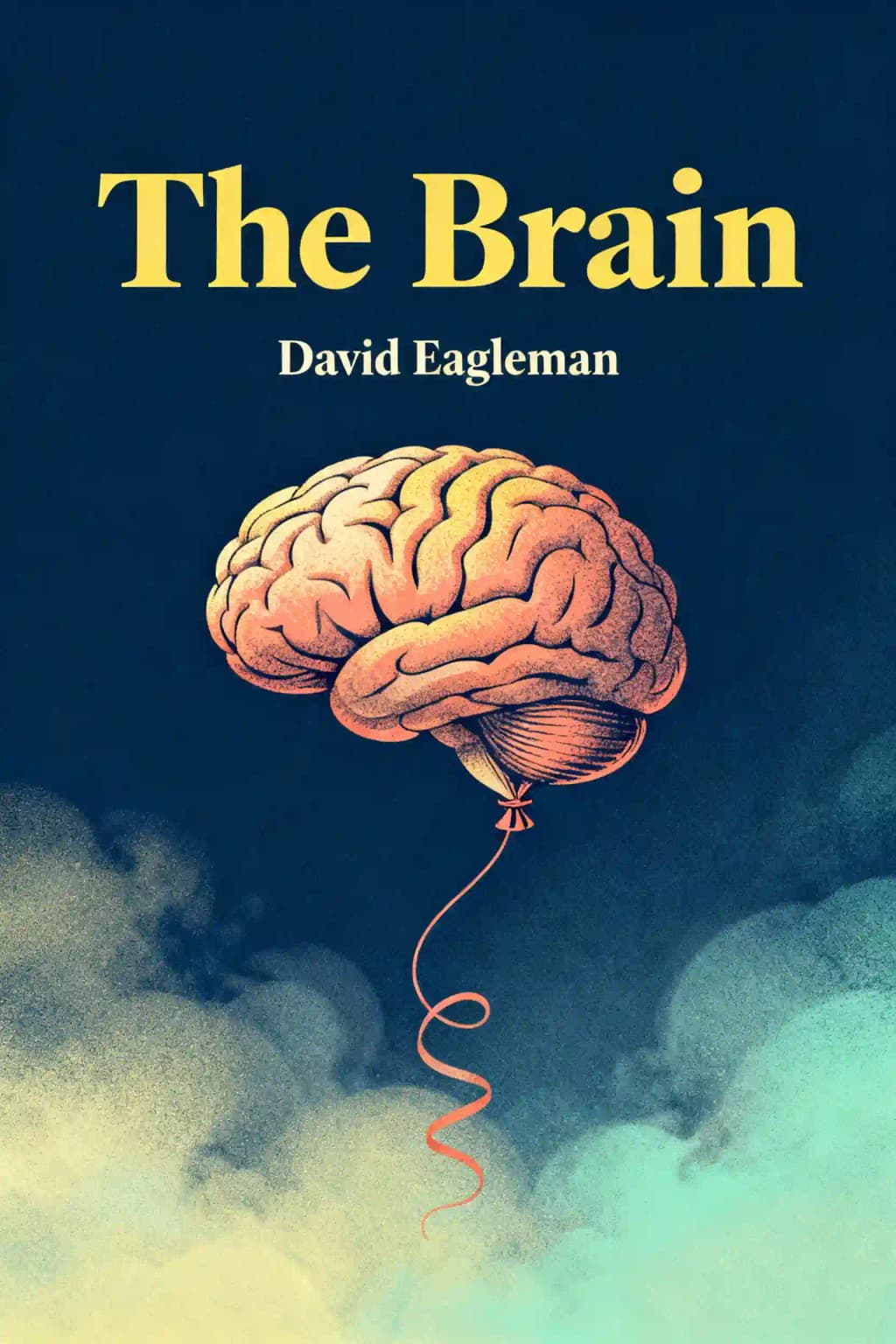
Imagine waking up tomorrow with a nickel-sized tumor pressing against your amygdala-the brain's fear and aggression center. Would you still be you? This was the tragic reality for Charles Whitman, who in 1966 murdered sixteen people before being killed by police. In his suicide note, he requested an autopsy, suspecting something was wrong with his brain. He was right. This case illustrates neuroscientist David Eagleman's central premise: you are your brain, and changes to this three-pound organ fundamentally change who you are. Named one of TIME magazine's 100 most influential people, Eagleman has captivated millions through his PBS series and TED talks that make complex neuroscience accessible. His work bridges the gap between academic brain research and our everyday experience as brain owners, inviting us on a journey into our inner cosmos where we might glimpse something unexpected: ourselves.
Capítulo 2
The Unfinished Brain: How Experience Shapes Who We Are
While dolphins swim immediately after birth and giraffes stand within hours, human babies are remarkably helpless, unable to walk for a full year or effectively communicate for even longer. This apparent disadvantage is actually our greatest evolutionary strength. Rather than being "hardwired" for specific environments like most animals, human brains are "livewired"-designed to be shaped by experience. This remarkable adaptability allows us to thrive across incredibly diverse environments from frozen Arctic tundra to bustling modern cities, though it requires an unusually long period of dependency during development, lasting well into our teenage years.
The flexibility of young brains comes not from growing new cells but from intricate connection patterns between existing neurons. At birth, neurons are largely unconnected, like a vast network of telephone poles without wires. During the first two years, up to two million new synaptic connections form every second - a pace unmatched in nature - reaching approximately 100 trillion by age two, double the number found in an adult's brain. Then a fascinating process of pruning begins, systematically eliminating 50% of these connections. Like paths in a forest, frequently used neural connections strengthen and remain, while unused ones gradually weaken and disappear. You literally become who you are not through what grows in your brain, but through what's strategically removed.
This brain-shaping strategy is incredibly powerful but comes with significant risks. The tragic case studies of children from Romanian orphanages dramatically demonstrate the devastating consequences when developing brains lack proper nurturing environments. These institutionalized children developed "indiscriminate friendliness" - approaching strangers as readily as caregivers, showed dramatically reduced neural activity in EEG studies, had significantly lower IQs averaging 70 points, and exhibited severely delayed language development. Charles Nelson's landmark Bucharest Early Intervention Project revealed that without consistent emotional care and cognitive stimulation, human brains cannot develop normally. However, the study also showed that recovery is possible when children are placed in loving foster environments, with notably better outcomes for those removed from institutions before age two, highlighting a critical developmental window.
The teen brain undergoes equally dramatic changes, explaining many characteristic adolescent behaviors. The medial prefrontal cortex becomes hyperactive during adolescence, peaking around age fifteen, causing intense self-consciousness and social anxiety - explaining why teens often feel like everyone is watching and judging them. Meanwhile, the pleasure-seeking system (nucleus accumbens) matures before the decision-making system (orbitofrontal cortex), creating a perfect storm for risk-taking behavior. Additionally, areas involved in social considerations are more strongly connected to action-driving brain regions than in adults, making teens especially susceptible to peer pressure and social influence. These neural changes aren't attitude problems but represent scheduled brain development essential for learning independence.
Even after major brain transformations complete around age twenty-five, our brains remain remarkably plastic, constantly adapting to new experiences and learning. London cab drivers who master "the Knowledge" - memorizing an astounding 320 routes, 25,000 streets, and 20,000 landmarks - develop physically larger posterior hippocampi, with size directly correlating to years on the job. Einstein's brain, studied after his death, revealed an enlarged "Omega sign" fold in his motor cortex, likely from years of violin playing started in childhood. Every significant experience - from our family relationships to the movies we watch, the skills we practice, and the environments we inhabit - leaves physical footprints in our neural architecture, making each brain as unique as a fingerprint.
Capítulo 3
Memory: The Fragile Thread of Identity
While our physical bodies completely replace their atoms every seven years, memory might seem like the thread connecting all versions of ourselves. Yet memory itself is fragile and constantly changing. Rather than being perfect recordings, memories are fragile brain states that must be resurrected each time we remember, much like opening a document, editing it, and saving it anew each time - with subtle changes occurring in each iteration.
When we experience events-like a friend's birthday dinner-specific neural patterns activate for each detail (conversation, smells, tastes), becoming linked in associative networks through the hippocampus. These networks form through a process called long-term potentiation, where repeatedly activated neural pathways become strengthened, like well-worn paths in a forest. Later, encountering a single element (like tasting a similar cake) can reactivate the entire constellation of connected neurons, bringing back the memory-though never as complete as we might imagine. The memory fades because neurons multitask in different constellations, making our memories muddied as neurons participate in new memory networks. This explains why eyewitness testimony can be notoriously unreliable, even when witnesses are completely confident in their recollections.
Elizabeth Loftus's pioneering research revealed how susceptible our memories are to manipulation. In her experiments, simply changing a word in a question about car crashes altered participants' speed estimates - asking about cars "smashing" versus "hitting" led to consistently higher speed estimates. More dramatically, she successfully implanted entirely false memories in subjects' minds about being lost in shopping malls as children. Through careful suggestion and guided imagery, not only did participants accept these fabricated memories, they embellished them with vivid details over time - adding specific stores they visited, what they were wearing, and even the emotions they felt. Even Loftus herself experienced this phenomenon when temporarily believing she had discovered her mother's drowned body as a child, complete with detailed visual memories, before learning this never happened. This demonstrated how even experts in memory research aren't immune to false memory formation.
As we age, diseases like Alzheimer's and Parkinson's threaten our brain health and identity. The Religious Orders Study, tracking over 1,100 nuns, priests and brothers since 1994, has yielded surprising insights: having brain tissue riddled with Alzheimer's pathology doesn't necessarily cause cognitive problems. Some participants maintained sharp minds despite having brains that should have indicated severe dementia. The key protective factor is "cognitive reserve"-built through mental exercise, social activity, and positive psychological traits like conscientiousness and purpose. Activities like learning new languages, playing musical instruments, and maintaining strong social connections appear particularly beneficial. Like a well-stocked toolbox, a cognitively fit brain develops multiple pathways to accomplish tasks, allowing it to compensate when disease damages some neural networks.
The most fundamental aspect of who we are is consciousness-that feeling of being here, experiencing the world from our unique vantage point. EEG measurements reveal the difference between conscious and unconscious states isn't about activity levels but coordination patterns. When awake, billions of neurons engage in complex, independent conversations, creating a rich tapestry of neural activity that supports our conscious experience. During deep sleep, these same neurons synchronize into simpler, rhythmic patterns-like a stadium crowd shifting from thousands of individual conversations to a repetitive Mexican wave. This distinction helps explain why we can be technically "active" during sleep yet have no conscious awareness of it.
Capítulo 4
The Reality Illusion: How Your Brain Creates Your World
Though we feel immersed in an irrefutable external reality, optical illusions reveal how our perception is largely constructed by our brains. The rotating snakes illusion creates motion where none exists, while the checkerboard illusion shows identical squares appearing dramatically different. These phenomena demonstrate that our perception has less to do with what's happening externally and more with internal neural processing.
Despite feeling like we have direct access to the world through our senses, all sensory experience actually occurs within the brain. Sealed inside our skulls, our brains never directly experience external reality. Instead, sensory organs translate diverse information sources-photons, air compression waves, molecular concentrations, pressure-into electrochemical signals that race through networks of billions of neurons. Everything we experience is essentially an electrochemical rendition in a dark theater, with the brain making its best guesses about what exists "out there" by detecting patterns across different sensory inputs.
Mike May lost his sight at age three and a half from a chemical explosion. After forty years of blindness, stem cell treatment repaired his corneas, but when the bandages came off, he couldn't make sense of visual information. Despite physically functioning eyes, he couldn't recognize faces or judge depth-vision requires more than just functioning eyes. His visual cortex had been repurposed for other senses during decades of blindness, demonstrating that vision emerges from billions of neurons working together in specific patterns.
Vision develops through active engagement with the environment. In a landmark 1963 MIT experiment, two kittens experienced identical visual input in a striped cylinder, but only the kitten that walked independently developed normal vision, while the passive kitten carried in a gondola never learned to see properly. This demonstrates that vision is a whole-body experience requiring cross-referencing between actions and sensory consequences.
The brain processes different sensory inputs at varying speeds-visual data takes longer to process than auditory information. This explains why sprinters respond faster to a starting pistol (160 milliseconds) than to a light flash (190 milliseconds). Yet remarkably, when we clap our hands, the sight and sound appear perfectly synchronized. This happens because our brain collects all sensory information before constructing a coherent reality, effectively making us live slightly in the past.
Our perception is heavily influenced by our brain's expectations. The hollow mask illusion demonstrates this-when viewing a concave mask from behind, we perceive it as convex because our internal model expects faces to protrude outward. Similarly, despite our eyes making jerky movements called saccades several times per second, we perceive a stable world because our internal model assumes stability.
Capítulo 5
The Unconscious Mind: Who's Really in Control?
Each morning, human consciousness flickers to life-the most complex object on our planet becoming aware of its existence. While your brain's biological material remains unchanged from sleep to wakefulness, slight shifts in activity patterns enable experiences: extracting meaning from squiggles on a page, feeling sun on skin, becoming aware of identity and desires. But how much control does your conscious awareness actually have?
Even simple acts like reading involve complex unconscious processes-your eyes make rapid ballistic jumps you never notice, your brain stabilizes perception, and deciphers symbols automatically. The conscious you is only the smallest part of your brain's activity, with actions, beliefs and biases driven by neural networks beyond conscious access.
Even lifting a coffee cup requires trillions of electrical impulses meticulously coordinated by the brain. The visual system scans, memories trigger, and signals deploy from frontal to motor cortex to coordinate muscle contractions. Nerves return information about weight, position, temperature, and grip, while compensating signals flow back in a complex choreography between brain regions. Yet despite this neural lightning storm, we remain oblivious to these calculations.
Our brains rewrite themselves to build dedicated circuitry for practiced skills-whether walking, swimming, or driving. Once etched into neural pathways, these skills run without conscious effort, freeing resources for other tasks. The consequence is that new skills sink below conscious access; you lose awareness of how you perform complex actions like walking up stairs while conversing.
The unconscious mind shapes our lives in profound ways beyond body control. When speaking, words flow faster than conscious control could manage. Ideas emerge after unconscious processing for hours or months. Environmental influences like "priming" steer behavior without awareness-holding warm drinks makes us judge relationships more favorably; foul smells lead to harsher moral judgments; hard chairs make us tougher negotiators. "Implicit egotism" explains why dentists are disproportionately named Dennis or Denise, and people often marry others with matching initials.
If unconscious processes handle so much, why aren't we mindless zombies? Consciousness engages when the unexpected happens-like seeing someone in a bee costume with a briefcase. People break from automated routines and stare when confronted with something that challenges unconscious expectations. Consciousness comes online to rapidly model what's happening when the brain can no longer operate on autopilot in a world that throws curveballs.
Capítulo 6
The Neural Parliament: How We Make Decisions
During brain surgery to treat tremors, electrodes lowered into a patient's brain allow researchers to eavesdrop on neurons firing-each making distinctive popping sounds. When shown an ambiguous image like the young lady/old woman illusion, the patient's brain makes perceptual decisions that researchers can hear as changing patterns of neural activity. Though the image remains unchanged, the brain reflexively resolves ambiguity by making choices, with some neurons speeding up and others slowing down.
Even simple choices, like deciding between mint or lemon frozen yogurt, unleash hurricanes of neural activity. Within our brains, neural populations compete like political parties struggling for dominance. Each flavor is represented by its own coalition of neurons that tries to gain the upper hand by intensifying its activity and suppressing the other's. Unlike computers, the brain runs on conflict between different possibilities, all competing until one triumphs. This explains why we can argue with ourselves-it's different parts of us battling for control.
Emotions aren't just adding richness to our lives-they're essential for decision-making. When the orbitofrontal cortex is damaged, as in Tammy Myers' case, people can articulate pros and cons but remain paralyzed by indecision. Without bodily signals providing emotional summaries, no choice feels different from another. Our bodies constantly communicate with our brains, providing quick summaries of situations-like the "bad news" headline when facing a growling dog.
Each decision involves our past experiences and present situation, but also predictions about the future. We're wired to seek rewards-things that move our bodies closer to ideal set points. While animals chase only basic needs, humans pursue abstract rewards like community value, often overriding biological needs for ideals. To compare options, we assign value to each in the common currency of anticipated reward. Our brains simulate different outcomes, mentally time-traveling to worlds that don't yet exist.
Options right in front of us tend to be valued higher than those we merely simulate. The 2008 economic downturn exemplifies this-homeowners took loans with low initial rates that later increased, appealing to neural networks desiring instant gratification. This now-versus-future battle explains why car dealers want you to test-drive cars and clothing stores want you to try on clothes. To the brain, the future is only ever a pale shadow of the now.
To overcome the seduction of immediate rewards, we can use a "Ulysses contract"-named after the legendary hero who had himself tied to his ship's mast to resist the Sirens' song. This involves arranging things in the present so our future selves can't misbehave. Examples include meeting friends at the gym to ensure attendance, students swapping passwords during finals week, or alcoholics removing alcohol from their homes.
Capítulo 7
The Social Brain: Wired for Connection
Though we perceive ourselves as independent, human brains operate within complex webs of interaction that make our species function like a single, shifting mega-organism. Substantial brain circuitry is dedicated to social functions-monitoring others, communicating, feeling empathy, judging intentions, and reading emotions. Our social nature is so deeply wired that we readily attribute intentions and emotions to simple geometric shapes in motion, as demonstrated in Heider and Simmel's 1944 experiment where viewers interpreted triangles and circles as characters in a dramatic narrative.
As we mature, our social challenges become increasingly complex, requiring us to interpret not just words but inflection, facial expressions, and body language. These operations happen so instinctively they're virtually invisible. The importance of this social machinery becomes apparent when examining autism, which affects 1% of the population and involves diminished activity in brain regions that search for social cues. Our brains automatically mirror others' expressions-even subtly-helping us decode emotions, which explains why long-married couples grow to resemble each other.
Our capacity for empathy explains why fictional characters in movies and books can provoke genuine emotional responses. When we witness someone in pain, most of our brain's "pain matrix" activates-not the sensory components but the emotional experience areas. We literally feel others' pain through neural simulation, which evolved as a useful predictive mechanism about others' behavior.
Social rejection physically hurts our brains. Neuroscientist Naomi Eisenberger demonstrated this by having volunteers play a ball-tossing computer game while in an fMRI scanner. When participants were excluded from the game, their pain matrix activated-showing that social rejection literally hurts. This neural wiring explains our constant drive to form groups through family, friendship, work, religion, culture, and countless other affiliations.
For every ingroup, there must exist outgroups-a dynamic that explains humanity's darkest chapters. Throughout history, groups have inflicted violence on defenseless others who posed no direct threat, from the Armenian genocide to the Holocaust to the Rwandan massacre. Brain imaging experiments reveal how empathy changes based on group membership. When participants watched hands labeled with different religious identities being stabbed with needles, they showed stronger empathic neural responses when the hand belonged to their ingroup.
Beyond reduced empathy, dehumanization represents an even more extreme neural shift. Researcher Lasana Harris found that when people view photos of stigmatized groups like the homeless, their medial prefrontal cortex (which activates when thinking about other people) shows reduced activity-essentially processing these individuals more like objects than humans. This dehumanization, amplified through propaganda, enables genocide by shutting down the neural systems that recognize others' humanity.
Capítulo 8
The Future Brain: Beyond Human Limits
The brain's tremendous plasticity-its ability to adjust and rewire itself-explains both our past success and future potential. This flexibility allows humans to adapt to diverse environments and learn whatever skills are needed for survival. The case of Cameron Mott dramatically demonstrates this plasticity: after surgeons removed half her brain to treat severe epilepsy, the remaining half rewired itself to handle all functions, leaving her with only slight weakness on one side.
We've become increasingly adept at connecting machinery directly to our bodies. Cochlear implants restore hearing by digitizing sound and feeding it to the auditory nerve, while retinal implants do the same for vision. Though initially met with skepticism, these devices succeed because the brain learns to interpret their signals like a new language. As cochlear implant recipient Michael Chorost describes, unintelligible signals like "Zzzzzz szz szvizzz ur brfzzzzzz?" gradually transform into clear speech: "What did you have for breakfast?"
Our standard senses-sight, hearing, touch, smell, and taste-capture only a tiny fraction of available environmental information. The brain functions as a general-purpose computing device that can process whatever data it receives, regardless of source. This explains the incredible diversity of sensory systems across the animal kingdom: snakes detect heat, knifefish sense electrical fields, and cows orient to magnetic fields.
Beyond sensing the world, we're transforming how we interact with it. Jan Scheuermann, paralyzed by spinocerebellar disorder, can control a robotic arm through electrodes implanted in her motor cortex. When she thinks about moving, the arm responds-reaching, grasping, and releasing on command. This points to a future where we enhance our bodies beyond human fragility, potentially controlling machines at a distance through wireless brain interfaces.
Despite our technological advances, we face one unavoidable problem: our brains and bodies deteriorate and die. Some researchers are fighting this fate. The Alcor Life Extension Foundation preserves 129 people through cryopreservation, hoping future technology will revive them. Upon legal death, bodies are cooled in ice baths, perfused with protective chemicals, and rapidly cooled to below -124C to prevent ice formation. The vitrified bodies or heads are stored in liquid nitrogen-filled dewars at -196C.
Rather than preserving physical brains, some researchers pursue extracting their information directly. Our exponentially growing computational power-doubling approximately every eighteen months for decades-suggests this might eventually be possible. Today's supercomputers, a thousand times more powerful than those of twenty years ago, hint at a future where we could scan a working copy of the human brain onto a computer.
Perhaps consciousness could exist on different hardware, just as software runs on various machines. The computational hypothesis suggests what matters isn't the biological neurons themselves but how they communicate-the computations they implement. If true, your mind could theoretically run on any substrate that preserves the right computational patterns, swapping cells for circuitry or oxygen for electricity.
In the coming years, we'll discover more about the human brain than our current theories can describe. We're surrounded by mysteries-both recognized and unregistered. Only one certainty exists: our species stands at the beginning of something transformative. We're at an unprecedented moment where brain science and technology are co-evolving, poised to change who we are. For thousands of generations, humans have lived the same life cycle: birth, controlling a fragile body, experiencing a narrow strip of sensory reality, then death. Science now gives us tools to transcend this evolutionary story. Who we become is up to us.