Capítulo 1
The Revolution That Shook the World: Toussaint L'Ouverture's Haiti
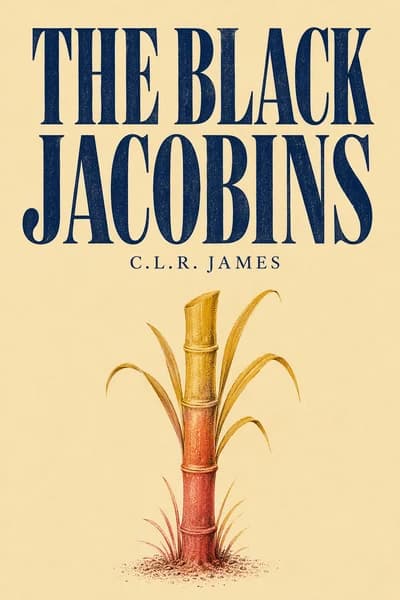
The Black Jacobins by C.L.R. James stands as one of the most influential historical works of the 20th century, transforming our understanding of revolution, race, and colonialism. Published in 1938, this masterpiece has shaped generations of activists, scholars, and revolutionaries worldwide. When Nelson Mandela was imprisoned on Robben Island, he specifically requested this book, recognizing its power to illuminate liberation struggles. Malcolm X, Angela Davis, and countless other civil rights leaders have cited it as foundational to their political education.
What makes this book extraordinary is how it centers Black agency in world history. Rather than portraying enslaved people as passive recipients of freedom bestowed by benevolent whites, James reveals how they seized their own destiny through strategic brilliance and revolutionary courage. The Haitian Revolution (1791-1804) emerges not as a footnote but as a pivotal moment that fundamentally altered global politics, challenging the very foundations of slavery, colonialism, and white supremacy.
Through meticulous research and vivid storytelling, James introduces us to Toussaint L'Ouverture-a self-educated former slave who outmaneuvered Napoleon's generals and nearly established a free Black state amid the Age of Revolution. This isn't just history; it's a revolutionary manifesto disguised as scholarship, a work that continues to inspire movements for justice and self-determination across the Global South. In exploring this remarkable story, we discover not just what happened in Haiti, but how the oppressed can transform themselves into the makers of history.
Capítulo 2
The Brutal Economics of Colonial San Domingo
San Domingo-today's Haiti-was once the crown jewel of the French colonial empire, a land of staggering wealth built upon unimaginable human suffering. By 1789, this small Caribbean island generated more wealth than all of Britain's thirteen American colonies combined. The colony's sugar, coffee, and indigo plantations produced two-thirds of France's overseas trade, fueling European capitalism and luxury while half a million enslaved people endured conditions so brutal that death rates far outpaced birth rates.
The transatlantic slave trade that supplied San Domingo's plantations transformed African societies in devastating ways. What were once limited tribal conflicts became catastrophic wars as European demand for slaves incentivized mass kidnapping and violence. Communities that refused to provide captives faced enslavement themselves, creating a vicious cycle that tore apart social structures across the continent. Once captured, Africans faced the horrors of the Middle Passage-forced marches to coastal stockades, followed by the nightmarish journey across the Atlantic where up to 15% died from disease, malnutrition, or suicide.
Those who survived found themselves in a system designed to break their spirit and extract maximum labor. The Code Noir, supposedly created to regulate treatment of slaves, was routinely ignored as planters subjected their human property to unrelenting cruelty. Whippings were administered with scientific precision-different names designated varying degrees of torture. Mutilations, burnings, and sexual violence were commonplace. One particularly sadistic punishment involved forcing a slave to defecate into another's mouth, then sealing it shut until death.
What's remarkable isn't just the brutality, but the persistence of humanity despite it. As James writes, "The difficulty was that though one could trap them like animals, transport them in pens, work them alongside an ass or a horse and beat them with the same stick, stable them and starve them, they remained, despite their black skins and curly hair, quite invincibly human beings."
This invincible humanity expressed itself through resistance. Some fled to the mountains to form maroon communities-independent settlements of escaped slaves who conducted raids on plantations. Others, like the visionary leader Mackandal, organized poison plots targeting white colonists. Even those who couldn't escape maintained cultural practices, religious rituals, and dreams of freedom that the system could never fully extinguish.
Capítulo 3
A Society Ripe for Revolution
Colonial San Domingo was a powder keg of contradictions waiting to explode. At the top sat the grands blancs (great whites)-wealthy plantation owners who controlled vast estates and dreamed of greater autonomy from France. Below them were the petits blancs (small whites)-shopkeepers, artisans, and overseers who compensated for their lack of wealth with fanatical racism. A growing population of free people of color (mostly mulattoes) occupied a precarious middle position-often wealthy and educated, yet subjected to increasingly humiliating legal restrictions.
The mulatto population presented a particular challenge to the racial hierarchy. Many were the children of white planters and enslaved women, and some had been educated in France and owned substantial property-including slaves. By 1789, they nearly equaled whites in number and owned about one-third of the plantation property and one-quarter of the slaves. Yet they faced absurd restrictions: they couldn't wear European clothes, sit with whites in church, or use the title "monsieur."
The prosperity that masked these tensions was itself built on shaky foundations. San Domingo's economic boom following the Seven Years' War (1756-1763) had created unprecedented wealth, but also deepened dependence on slave labor. The colony imported around 40,000 slaves annually by the late 1780s, meaning most enslaved people were African-born and harbored fresh memories of freedom.
Meanwhile, revolutionary ideas were circulating throughout the Atlantic world. The American Revolution had demonstrated that colonies could successfully rebel against European powers. In France, Enlightenment philosophers like Abbe Raynal openly questioned slavery's morality, even as they benefited from the wealth it generated. Raynal's famous prediction-that a "Black Spartacus" would arise to lead slaves to freedom-would prove prophetic.
When revolution erupted in France in 1789, it sent shockwaves through San Domingo. The Declaration of the Rights of Man and Citizen proclaimed liberty and equality as universal principles, yet left ambiguous whether these applied to colonies and enslaved people. This ambiguity created space for competing interpretations and claims that would soon tear the colony apart.
Capítulo 4
From Spark to Conflagration: The Revolution Begins
On the night of August 22, 1791, the world witnessed something unprecedented-a carefully organized slave insurrection that would forever change history. Under the leadership of Boukman, a Vodou priest, enslaved people from plantations across San Domingo's Northern Plain gathered in the Bois Caiman (Alligator Woods) for a ceremony that blended spiritual practice with revolutionary planning. There, they swore to fight for freedom or die trying.
The uprising began with a ferocity born of centuries of oppression. Plantation houses went up in flames, and some masters who had been particularly cruel met violent ends. Within days, the rebels controlled much of the Northern Plain, the richest agricultural region in the colony. What distinguished this revolt from previous ones was not just its scale, but its organization and clear political aims. The insurgents didn't just want better treatment-they demanded freedom.
Among the early leaders were Jean-Francois and Biassou, who adopted grandiose military titles and attempted to impose discipline on their forces. But the most significant figure to emerge was Toussaint L'Ouverture-a literate, middle-aged former slave who had been a coachman and healer on the Breda plantation. Unlike many rebels, Toussaint was already free when the revolution began, having been emancipated by his master years earlier.
What made Toussaint extraordinary wasn't just his intelligence, though contemporaries noted his remarkable mind. It was his ability to see beyond immediate circumstances to long-term strategic goals. While others fought with passionate fury, Toussaint built a disciplined army and developed political objectives that extended beyond simple revenge.
Meanwhile, the colony's white population fractured along class lines. The grands blancs initially sought autonomy from France while maintaining slavery. The petits blancs embraced revolutionary rhetoric but opposed racial equality. And colonial officials attempted to maintain order while awaiting direction from a France that was itself in revolutionary turmoil.
The free people of color, led by figures like Andre Rigaud and Alexandre Petion, launched their own insurrection in the West Province, demanding full citizenship rights as promised by the French Revolution. Though initially separate from the slave revolt, these two revolutionary currents would eventually converge and diverge in complex ways throughout the conflict.
When news of these colonial upheavals reached Paris, they ignited fierce debates in the National Assembly. Maximilien Robespierre famously declared: "Perish the colonies rather than a principle!" But most French revolutionaries, including many radicals, hesitated to extend freedom to the colonies, fearing economic collapse if slavery ended.
Capítulo 5
The Rise of Toussaint L'Ouverture
How does a former slave transform himself into a military genius and statesman capable of outmaneuvering European powers? Toussaint L'Ouverture's rise from obscurity to leadership reveals both his remarkable personal qualities and the revolutionary moment that made his ascent possible.
Born around 1743 on the Breda plantation, Toussaint had advantages unusual for an enslaved person. His father, reputedly an African prince, passed down knowledge of herbal medicine and leadership. As a coachman rather than a field slave, Toussaint had mobility and access to his master's library. He taught himself to read French and Latin, studying military treatises and Enlightenment philosophy. His knowledge of medicinal plants earned him respect among both blacks and whites.
Physically, he was unimposing-short, wiry, and with a face marked by smallpox. Yet he possessed extraordinary stamina, often riding 125 miles in a day and requiring little sleep. His personality combined stern discipline with personal modesty. He dressed simply, ate sparingly, and maintained rigid self-control. This asceticism would later contrast sharply with the flamboyance of other revolutionary leaders.
When the revolution began, Toussaint didn't immediately join the rebels. Nearly fifty years old and already free, he helped his former master escape, then spent weeks contemplating his course. This deliberation typified his approach-strategic rather than impulsive, calculating rather than emotional.
By late 1791, Toussaint had joined the rebel forces, quickly rising through the ranks due to his organizational abilities and military insight. He trained his soldiers in European tactics while adapting them to local conditions. Where other leaders relied on machetes and improvised weapons, Toussaint created disciplined units capable of facing European armies in conventional battle.
His political vision evolved gradually. Initially fighting under Spanish auspices (Spain controlled the eastern part of Hispaniola and opportunistically supported the rebels against the French), Toussaint came to recognize that Spain had no intention of ending slavery. When France abolished slavery in 1794-a decision forced by the revolution's momentum rather than moral conviction-Toussaint switched allegiance, bringing his forces to the Republican side.
This decision reflected his growing conviction that Black freedom could best be secured within the French revolutionary framework. Liberty, equality, and fraternity weren't just slogans to him-they were principles worth fighting for, provided they extended to all people regardless of color.
Capítulo 6
Diplomatic Genius Amid Imperial Machinations
Toussaint's greatness lay not just in battlefield victories, but in his diplomatic maneuvering among competing imperial powers. By 1796, he had become the dominant military figure in San Domingo, though still nominally subordinate to French commissioners sent to govern the colony. His challenge was to secure Black freedom while navigating the treacherous waters of European power politics.
The British, seeing an opportunity to seize France's richest colony during the revolutionary wars, had invaded San Domingo in 1793. Despite committing substantial forces, they found themselves bogged down by disease and Toussaint's guerrilla tactics. By 1798, after losing over 15,000 men (mostly to yellow fever), the British were ready to negotiate withdrawal.
In these negotiations, Toussaint revealed his diplomatic skill. Though officially representing France, he conducted talks with British General Thomas Maitland that served his own strategic interests. The resulting agreement allowed British evacuation without harassment and established trade relations that would benefit San Domingo even if France attempted a blockade.
When Maitland secretly offered Toussaint a British alliance and recognition as king of an independent San Domingo, he declined-not from lack of ambition, but from strategic calculation. He recognized that premature declaration of independence would unite European powers against him. Instead, he maintained nominal allegiance to France while building autonomous power.
Simultaneously, Toussaint negotiated with the United States under President John Adams. The resulting trade agreement gave San Domingo access to American goods and markets, reducing dependence on France. Toussaint understood that economic viability was as important as military strength for securing Black freedom.
His relationship with successive French commissioners revealed similar diplomatic finesse. When commissioners like Leger-Felicite Sonthonax or Gabriel Hedouville attempted to assert authority, Toussaint outmaneuvered them-sometimes through cooperation, sometimes through subtle undermining, and occasionally through outright defiance when they threatened policies harmful to the Black population.
Perhaps most challenging was Toussaint's relationship with Andre Rigaud, the mulatto leader who controlled much of southern San Domingo. The tension between these two figures reflected deeper divisions-between formerly enslaved Blacks and free people of color, between northern and southern regions, between different visions of post-revolutionary society. When civil war erupted between them in 1799, Toussaint defeated Rigaud not just through military superiority, but by convincing French authorities that Rigaud represented a threat to Republican principles.
Through all these complex maneuvers, Toussaint maintained focus on his central aim: securing irreversible freedom for the formerly enslaved. Every alliance, every compromise, every conflict was calculated toward this end.
Capítulo 7
The Black Consul's Vision for San Domingo
By 1800, Toussaint had achieved de facto control of San Domingo. With Rigaud defeated and French commissioners marginalized, he could finally implement his vision for the colony's future. This vision was both revolutionary and paradoxical-maintaining Black freedom while restoring plantation agriculture.
Toussaint recognized that San Domingo's economy, devastated by years of warfare, needed revival. The plantation system had produced immense wealth before the revolution, and he believed similar productivity could be achieved without slavery. His solution was a system of "cultivators" bound to plantations but legally free, receiving one-quarter of the produce they generated.
This policy reflected Toussaint's complex worldview. Having internalized aspects of European economic thinking, he believed large-scale agriculture was necessary for prosperity. Yet he remained absolutely committed to Black freedom, creating a system that, while coercive, differed fundamentally from slavery in its legal protections and material rewards for workers.
Implementation required military discipline. Toussaint appointed inspectors (often military officers) to oversee plantations and ensure productivity. Workers couldn't leave plantations without permission, and vagrants were forcibly returned to agricultural labor. These measures generated resentment, particularly among those who had fought for freedom and now found themselves compelled to work the same land under different masters.
Alongside economic reconstruction, Toussaint pursued social transformation. He encouraged education, establishing schools and bringing teachers from abroad. He promoted Catholicism while tolerating Vodou practices. He welcomed back white planters who accepted the new order, believing their technical knowledge was valuable for reconstruction.
His personal style reflected these contradictions. Though living simply himself, he encouraged European refinement among the new Black elite. He hosted elaborate dinners where Black generals and white planters sat together-a revolutionary social arrangement in a world still dominated by racial hierarchy. At these gatherings, he demonstrated his own cultural sophistication while building bridges between formerly antagonistic groups.
Toussaint's constitution of 1801 formalized this vision. Though nominally acknowledging French sovereignty, it effectively established San Domingo as an autonomous state under his lifetime governorship. It abolished slavery forever, guaranteed equal rights regardless of color, and created institutions for self-government. Yet it also imposed strict labor regulations and centralized power in Toussaint's hands.
This constitution represented both the culmination of Toussaint's revolutionary achievement and the catalyst for his downfall. By declaring autonomy without directly claiming independence, he hoped to secure Black freedom while avoiding direct confrontation with France. It was a delicate balance that would soon be shattered.
Capítulo 8
Tragedy and Triumph: Bonaparte's Expedition and Haitian Independence
Napoleon Bonaparte's rise to power in France spelled doom for Toussaint's careful balancing act. The new First Consul had no patience for colonial autonomy and harbored ambitions to restore France's American empire, with Louisiana and San Domingo as its cornerstones. More fundamentally, Bonaparte represented the ascendant French bourgeoisie, whose prosperity depended on colonial trade and who increasingly favored restoring slavery.
In December 1801, Bonaparte dispatched his brother-in-law, General Charles Leclerc, with over 20,000 troops-France's largest overseas expedition to date. Their instructions were clear but duplicitous: publicly acknowledge Black freedom while secretly preparing to disarm the Black population and eventually restore slavery.
Toussaint had anticipated this threat, preparing defensive positions and instructing his generals to employ scorched earth tactics if invaded. When Leclerc arrived in February 1802, he found ports blocked and coastal cities in flames. Henri Christophe, commanding at Le Cap, famously told French emissaries: "I will burn the city to ashes and defend myself in the mountains" before setting the capital ablaze.
The ensuing war demonstrated both Toussaint's military genius and the tragic divisions within revolutionary leadership. While Toussaint, Christophe, and Jean-Jacques Dessalines initially presented unified resistance, Leclerc's strategy of separate negotiations eventually succeeded in detaching key generals from Toussaint's command.
After months of fierce fighting, Toussaint agreed to terms-believing he could preserve essential gains while avoiding further bloodshed. This fateful decision led to his capture during a supposed peace conference in June 1802. Shipped to France in chains, he was imprisoned in Fort de Joux in the Jura Mountains, where cold, malnutrition, and neglect led to his death in April 1803.
Toussaint's final words proved prophetic: "In overthrowing me, you have cut down in San Domingo only the trunk of the tree of liberty. It will spring up again from the roots for they are numerous and deep."
Indeed, when Leclerc began disarming the Black population and rumors spread that slavery would be restored (as it already had been in Guadeloupe), resistance reignited. Yellow fever decimated French forces, killing Leclerc himself in November 1802. His successor, Rochambeau, escalated brutality, using dogs to hunt rebels and conducting mass drownings of suspected insurgents.
These atrocities unified Black and mulatto forces under Dessalines, who abandoned Toussaint's caution in favor of outright independence. On January 1, 1804, following the defeat of Napoleon's expedition, Dessalines proclaimed the independent Republic of Haiti-the world's first Black republic and only the second independent nation in the Americas.
This victory came at tremendous cost. The war had killed perhaps a third of Haiti's population. Plantations lay in ruins, and the new nation faced diplomatic isolation and economic devastation. Dessalines' subsequent massacre of remaining whites, though understandable as a reaction to generations of brutality, further isolated Haiti internationally.
Yet the achievement remains monumental. An enslaved people had overthrown their masters, defeated three European empires (France, Britain, and Spain), and established independence against overwhelming odds. The Haitian Revolution forced the world to confront the contradiction between Enlightenment ideals of universal rights and the reality of slavery and colonialism.
Capítulo 9
The Enduring Legacy of the Black Jacobins
The Haitian Revolution's impact extended far beyond the Caribbean. By demonstrating that enslaved people could successfully overthrow their masters, it sent shockwaves through slave societies across the Americas. Plantation owners from Cuba to Virginia lived in terror of "another Haiti," implementing harsher controls while accelerating the domestic slave trade.
For enslaved people, Haiti became a symbol of possibility-proof that freedom could be seized rather than granted. Stories of Toussaint and Dessalines circulated through slave quarters, inspiring resistance and sustaining hope. When Denmark Vesey planned his 1822 rebellion in Charleston, he invoked Haiti and claimed to have arranged for Haitian ships to support the uprising.
The revolution also transformed European politics. Napoleon's failure in Haiti led directly to his decision to sell Louisiana to the United States in 1803, doubling American territory and altering the continent's future. France's retreat from the Americas marked a turning point in its imperial ambitions.
For later anticolonial movements, the Haitian Revolution provided both inspiration and warning. Its success demonstrated that determined resistance could defeat imperial powers. Yet Haiti's subsequent isolation and impoverishment-enforced by European and American economic and diplomatic pressure-illustrated the challenges facing newly independent nations in a hostile international system.
C.L.R. James wrote The Black Jacobins in 1938, as fascism spread across Europe and anticolonial movements stirred in Africa and Asia. He explicitly connected Haiti's struggle to contemporary liberation movements, particularly in his native Caribbean and in Africa. The book's appendix, "From Toussaint L'Ouverture to Fidel Castro," added in 1963, extended this analysis to the Cuban Revolution.
James's portrayal of Toussaint is complex and nuanced. While celebrating his extraordinary achievements, James also critiques Toussaint's failure to fully trust the revolutionary masses. By attempting to rebuild the plantation economy and reconcile with former slave owners, Toussaint alienated the very people who had fought for freedom. James draws parallels to later revolutionary leaders who similarly struggled to balance pragmatic compromises with revolutionary principles.
Perhaps most significantly, The Black Jacobins challenges Eurocentric narratives of history. Rather than portraying enslaved people as passive recipients of freedom bestowed by enlightened Europeans, James shows how they seized freedom through their own agency and courage. The Haitian Revolution emerges not as a peripheral event but as central to world history-a pivotal moment when the oppressed transformed themselves into makers of history.
In our contemporary world, still grappling with legacies of slavery and colonialism, The Black Jacobins remains essential reading. It reminds us that freedom is rarely granted but must be fought for, that revolutions contain both triumph and tragedy, and that history is made not just by great individuals but by the collective action of ordinary people demanding justice.
Capítulo 10
The Revolutionary Leader's Dilemma
Toussaint L'Ouverture's life embodied the central dilemma facing revolutionary leaders: how to translate radical ideals into practical governance without betraying the revolution's core principles. His trajectory from enslaved coachman to de facto ruler of San Domingo reveals both the possibilities and limitations of revolutionary transformation.
What made Toussaint exceptional was his ability to operate simultaneously on multiple levels-as military strategist, diplomat, administrator, and visionary. He could shift seamlessly from battlefield tactics to international negotiations, from economic planning to constitutional design. This versatility allowed him to build a revolutionary state while defending it against external threats.
Yet Toussaint's greatest strength-his strategic pragmatism-eventually contributed to his downfall. By attempting to reconcile irreconcilable interests, he created contradictions that undermined his position. He sought to maintain nominal allegiance to France while building autonomous power, to restore plantation agriculture while preserving Black freedom, to incorporate former slave owners while protecting the formerly enslaved.
These contradictions became most apparent in his labor policies. The plantation system he implemented, while legally distinct from slavery, imposed restrictions that many former slaves experienced as a betrayal of revolutionary promises. When his nephew, General Moise, supported laborers who resisted these policies, Toussaint had him executed-a decision that alienated his popular base and left him vulnerable when French forces arrived.
James draws explicit parallels between Toussaint and later revolutionary leaders, particularly Lenin. Both faced the challenge of building a new society amid hostile international conditions, both combined theoretical insight with practical leadership, and both made compromises that sometimes contradicted their revolutionary principles. James suggests that Toussaint's failure to fully trust and mobilize the masses-relying instead on his own brilliance and a small circle of leaders-limited the revolution's transformative potential.
This analysis reflects James's own political evolution. Writing as a Trotskyist in the 1930s, he was grappling with questions about revolutionary leadership, state power, and mass participation that remained relevant to anticolonial struggles in his own time. His portrayal of Toussaint offers both inspiration and warning to those seeking to transform oppressive systems.
Perhaps Toussaint's ultimate tragedy was that he was, in James's words, "a leader of a revolution before the revolutionary age." Operating without historical precedent or theoretical framework, he had to invent new forms of Black self-governance while defending against overwhelming external threats. That he achieved as much as he did testifies to his extraordinary capabilities; that he ultimately failed reflects not personal inadequacy but the immense challenges facing any revolutionary movement that threatens established power.
Capítulo 11
The Revolution's Global Reverberations
The Haitian Revolution didn't just transform one small Caribbean colony-it sent shockwaves through the entire Atlantic world, challenging fundamental assumptions about race, freedom, and colonial power. Its impact extended from the plantations of the American South to the revolutionary movements of Latin America, from the corridors of European power to the emerging abolitionist movements.
For enslaved people throughout the Americas, Haiti represented both inspiration and possibility. News of the revolution spread through formal and informal networks, carried by sailors, merchants, and the enslaved themselves. In Jamaica, a planned 1791 rebellion explicitly referenced events in San Domingo. In the United States, both Gabriel Prosser's conspiracy (1800) and Denmark Vesey's plot (1822) drew inspiration from Haiti.
For slave owners, Haiti represented their worst nightmare-proof that the enslaved could successfully overthrow the entire system. Thomas Jefferson, himself a slave owner and U.S. president during Haiti's independence, refused to recognize the new nation despite its assistance during the American Revolution. Southern states passed new restrictions on slave movement and assembly, while increasing surveillance of free Black populations who might spread "dangerous" ideas.
In Latin America, Haiti's example influenced independence movements in complex ways. Simon Bolivar, the great liberator of South America, received crucial military support from Haiti during his darkest hour in 1815. President Alexandre Petion provided Bolivar with weapons, supplies, and volunteers-asking in return only that he free the enslaved in territories he liberated. This alliance between the world's first Black republic and the emerging nations of Spanish America represented a revolutionary internationalism often overlooked in conventional histories.
European powers responded to Haiti with a combination of hostility and exploitation. France eventually recognized Haitian independence in 1825, but only after imposing an indemnity of 150 million francs-ostensibly compensation for property (including human property) lost during the revolution. This crushing debt, requiring payments until 1947, crippled Haiti's development and represented a form of economic recolonization.
Britain, while officially abolishing its own slave trade in 1807, maintained complex economic relationships with Haiti while working to limit its influence. The United States refused diplomatic recognition until 1862, during its own Civil War, when Haiti's example became useful rather than threatening to Northern interests.
Within the broader Black Atlantic world, Haiti remained a powerful symbol of possibility. Throughout the 19th century, Black intellectuals and activists from the United States, Jamaica, and elsewhere visited Haiti, wrote about its revolution, and incorporated its example into their own freedom struggles. Frederick Douglass, who served as U.S. minister to Haiti in the 1890s, consistently held up the Haitian Revolution as proof of Black capacity for self-government and resistance.
Even in the 20th century, Haiti's revolutionary legacy continued to inspire. When American forces occupied Haiti from 1915 to 1934, they faced resistance movements explicitly invoking Toussaint and Dessalines. The Negritude movement, which celebrated Black cultural identity and resistance to colonialism, drew inspiration from Haiti's example. And as James himself noted, the Cuban Revolution of 1959 represented another chapter in the Caribbean's long struggle for genuine independence.
Capítulo 12
From History to Memory: Reclaiming Revolutionary Legacies
The story of the Haitian Revolution isn't just about what happened between 1791 and 1804-it's also about how those events have been remembered, forgotten, and reclaimed over subsequent centuries. The Black Jacobins itself represents a pivotal moment in this ongoing process of historical recovery and reinterpretation.
When James published his book in 1938, mainstream Western historiography had largely erased or marginalized the Haitian Revolution. Where it appeared at all, it was often portrayed as a chaotic explosion of violence rather than a coherent political movement with sophisticated leadership and clear objectives. By centering Black agency and placing the revolution in its proper global context, James challenged fundamental assumptions about history, race, and revolution.
His timing was significant. Writing on the eve of World War II, as fascism spread across Europe and anticolonial movements stirred in Africa and Asia, James recognized the contemporary relevance of Haiti's struggle. The book's dedication-"To the black masses in the Caribbean"-explicitly connected historical analysis to present political struggles.
James's portrayal of Toussaint reflected his own political commitments as a Marxist and anticolonialist. He presented Toussaint not as an exceptional individual divorced from his context, but as a leader whose strengths and limitations reflected the revolutionary moment that produced him. This approach challenged both racist dismissals of Black capability and liberal celebrations of individual genius divorced from social forces.
The Black Jacobins helped inspire subsequent generations of historians who have further enriched our understanding of the Haitian Revolution. Scholars like Carolyn Fick have explored the revolution "from below," examining the contributions of ordinary enslaved people whose actions shaped events as much as their leaders' decisions. Others like Laurent Dubois have placed Haiti in broader Atlantic context, showing how revolutionary ideas circulated among diverse populations across national and imperial boundaries.
This scholarly reclamation has been accompanied by cultural and political reclamations. Haitian artists and intellectuals have consistently invoked revolutionary heritage in their work, from the indigenist movement of the early 20th century to contemporary literature and visual art. When massive protests erupted against Haiti's authoritarian government in 2018-2019, demonstrators carried images of Toussaint and Dessalines alongside contemporary demands for justice and democracy.
Internationally, Haiti's revolutionary legacy has been incorporated into broader narratives of Black resistance and anticolonialism. The revolution features prominently in discussions of the Black radical tradition, Pan-Africanism, and Global South solidarity. Artists from Edouard Glissant to Edwidge Danticat have explored its complexities and contradictions in literature, while musicians from Bob Marley to Arcade Fire have referenced it in their work.
Yet this reclamation remains incomplete and contested. Haiti itself continues to struggle with poverty, political instability, and foreign intervention-conditions that can be traced directly to the international response to its revolution. The "silencing" of Haiti's revolutionary history in mainstream Western narratives persists in more subtle forms, as its significance is acknowledged but its radical implications contained.
The Black Jacobins reminds us that history is never merely academic-it shapes how we understand the present and imagine possible futures. By recovering the revolutionary agency of the enslaved people of San Domingo, James offered not just historical correction but political inspiration. He showed that those deemed powerless can transform themselves into history's protagonists, that systems of oppression that appear permanent can be overthrown, and that freedom must be seized rather than bestowed.
In our contemporary world, still grappling with legacies of slavery, colonialism, and racial hierarchy, these lessons remain as urgent and necessary as when James first articulated them. The story of the Black Jacobins isn't finished-it continues wherever people struggle against oppression and fight for a more just world.