Capítulo 1
The Great Power Struggle That Could Redefine Our Century
Kevin Rudd's "The Avoidable War" arrives at a critical inflection point in global politics. As tensions between China and the United States escalate to their highest levels in decades, Rudd offers an insider's perspective on what may be the defining geopolitical relationship of our time. The book has become required reading in diplomatic circles and intelligence agencies worldwide, with former U.S. Secretary of State Henry Kissinger calling it "the most insightful and compelling analysis of U.S.-China relations available." Drawing on his fluency in Mandarin, decades of diplomatic experience, and personal relationships with leaders including Xi Jinping, Rudd provides a roadmap for navigating what he calls "the decade of living dangerously" - the 2020s, when the risk of conflict between these superpowers has never been higher.
Capítulo 2
Inside Xi Jinping's Strategic Vision for China and the World
At the heart of China's approach to the United States lies Xi Jinping's unprecedented consolidation of power and his vision for China's future. Unlike his predecessors who followed Deng Xiaoping's cautious maxim to "hide your strength; bide your time; never take the lead," Xi has boldly declared that "time and momentum are on our side." This dramatic shift reflects Xi's confidence in China's rising power and his determination to restore what he sees as China's rightful place in the global order.
Xi has methodically eliminated political rivals through an anti-corruption campaign that served both legitimate and political purposes. He has abandoned any pretense of liberalization, tightened party control over business, and stoked nationalist, anti-American sentiment throughout Chinese society. Under his leadership, China has moved away from Deng's market reforms toward a more state-controlled economy while pursuing an increasingly assertive foreign policy.
From Washington's perspective, Xi aims to export his political model globally by leveraging China's economic influence. His goal appears to be creating an international system that accommodates Chinese interests and values rather than Western ones. With the removal of presidential term limits in 2018, Xi could potentially remain China's paramount leader well into the 2030s - precisely when China will likely become the world's largest economy, emboldening him to pursue even more ambitious global objectives.
Xi's understanding of America exceeds any American leader's understanding of China. He visited the U.S. as a junior official in the 1980s, staying with an Iowa family, and later as vice president hosted by Joe Biden. His daughter attended Harvard. However, Xi neither speaks nor reads English, meaning his understanding comes through official translations and briefings that lack nuance and tend toward negativity - a situation compounded by officials' fear of providing analyses that contradict his worldview.
Capítulo 3
The Dangerous Dance of Great Powers
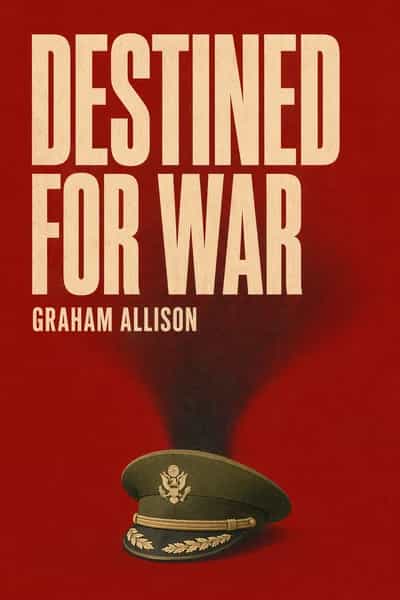
The relationship between China and the United States has deteriorated dramatically in recent years, creating what Harvard's Graham Allison calls a "Thucydidean dynamic." In Thucydides's analysis of the Peloponnesian War, "it was the rise of Athens and the fear that this instilled in Sparta that made war inevitable." This trap occurs when a rising power threatens to displace a ruling power, creating structural stress that historically leads to violent conflict. Of the 16 such cases Allison studied over the past 500 years, 12 ended in war.
The elements of Thucydides's Trap are already present in today's U.S.-China relationship. China's military modernization extends far beyond Taiwan contingencies, with its expanding navy, submarine capabilities, and first-ever blue-water fleet enabling force projection across the Indo-Pacific and beyond. The People's Liberation Army Navy now possesses the largest naval force in the world by number of ships, including two aircraft carriers with a third under construction. Beijing has established a string of available ports from Southeast Asia to East Africa, known as the "String of Pearls," and conducts increasingly sophisticated joint military exercises with Russia. Chinese technological advances in space, cyber, and AI, coupled with successful intelligence operations penetrating American computer systems and research institutions, have convinced Washington that China's strategic ambitions are both regional and global.
This military buildup occurs against a backdrop of deep mutual distrust and competing narratives about international order. Most Americans struggle to understand China's politics and decision-making processes - unsurprising given the linguistic, cultural and philosophical divides. The Chinese Communist Party's opaque nature and centralized control further complicate efforts to interpret Beijing's true intentions. This creates profound uncertainty about what China represents and what its rise means for American interests and global leadership. The deepening chasm of distrust has grown over years, with each side viewing the other's diplomatic language as fiction. Washington no longer believes in China's "peaceful rise," while Beijing rejects American claims it has no interest in "containment." Recent flashpoints - from trade disputes and technology competition to tensions over Taiwan and the South China Sea - have only heightened these suspicions.
The economic interdependence between the two powers adds another layer of complexity to this relationship. Unlike the Cold War's relatively clear division between the U.S. and Soviet blocs, China and America remain deeply integrated through trade, investment, and global supply chains. This creates what some scholars call "weaponized interdependence," where economic ties can become tools of strategic competition. The challenge for both nations lies in managing this rivalry without triggering the very conflict that historical precedent suggests is likely.
Capítulo 4
Xi's Concentric Circles of Strategic Interest
To understand China's strategy toward the United States requires placing America within Xi Jinping's broader worldview, which comprises ten concentric circles of interest beginning with his own position in the party and expanding outward through domestic priorities to international aspirations.
The first circle is maintaining the Communist Party's power, with Xi determined to secure his position and establish a legacy surpassing Deng Xiaoping's and equaling Mao Zedong's. The second focuses on preserving China's unity and territorial integrity, with Taiwan's "return" representing the final unfinished task from Mao's 1949 revolution. The third prioritizes economic prosperity as essential for maintaining living standards and social stability, while the fourth addresses environmental challenges that have emerged as critical priorities after decades of devastating pollution.
The fifth circle involves military modernization, with Xi transforming the PLA from a mass land army into a technologically advanced force capable of rivaling competitors and projecting power beyond China's shores. The sixth focuses on managing China's fourteen neighboring states through political and economic diplomacy to secure accommodating relationships. The seventh aims to secure China's maritime periphery by creating sufficient doubt in American minds about winning any armed conflict in the region. The eighth extends China's influence across the Eurasian continent through initiatives like the Belt and Road.
The ninth circle involves building extensive ties in the developing world, where China has made its economic relationships more important than those countries' ties to America through large-scale trade and investment. The final circle aims to reshape the institutional rules and norms governing the international order, challenging American leadership through changing existing norms, installing China-friendly candidates in leadership positions of international institutions, and creating new multilateral institutions outside the UN and Bretton Woods framework.
Capítulo 5
The Politics of Staying in Power
Xi Jinping's absolute top priority is ensuring the Communist Party remains permanently in power with himself as paramount leader. Haunted by the Soviet Communist Party's 1991 collapse, Xi is determined to prevent a similar fate in China. He has systematically reversed the trend of party powers migrating to state bureaucracy, bringing the party back to the epicenter of political and economic policy-making while reasserting Marxist-Leninist ideology across Chinese life. This includes mandatory party education in schools, universities, and workplaces, along with the establishment of party committees in private companies and joint ventures.
Xi's cornerstone vision is the China Dream, defined by two major milestones: becoming a "moderately prosperous society" by 2021 (achieved by doubling per capita income to $10,000 from 2010 levels) and becoming a fully advanced economy by 2049 (the PRC's centenary) with income levels matching America's. This would achieve what Xi calls "the great rejuvenation of the Chinese nation" - restoring China to its central global role held before the Century of Humiliation. The vision encompasses military modernization, technological self-sufficiency, and cultural influence, aiming to make China a comprehensive global power.
Economic growth remains the core of this dream, creating significant tension between Xi's economic objectives and his political goal of maximizing party control. This tension has manifested in increasing state intervention in private businesses, with party secretaries embedded in firms and heated debate over state equity acquisition in successful private companies. The government has implemented a "mixed ownership" model, encouraging state-owned enterprises to acquire stakes in private firms, while also imposing stricter regulatory oversight on key sectors like technology, education, and real estate.
The crackdown on Jack Ma and his companies Alibaba and Ant Group in 2020-2021 exemplifies this tension. After Ma's public criticism of financial regulators, authorities suspended Ant Group's IPO, launched antitrust investigations into Alibaba, and imposed record fines. This demonstrated Xi's willingness to subordinate even China's most successful private enterprises to party control, despite risking business confidence, investment, and capital flight that could undermine China's economic growth. Similar regulatory actions against other tech giants like Tencent and Didi have reinforced this message, creating uncertainty in China's private sector.
The party has also expanded its surveillance capabilities through social credit systems, facial recognition technology, and digital payment monitoring, ensuring comprehensive oversight of both society and economy. This has been accompanied by an intensified anti-corruption campaign that serves both to clean up governance and eliminate potential political rivals, consolidating Xi's power while maintaining popular support through appeals to nationalism and promises of continued prosperity.
Capítulo 6
Taiwan: The Most Dangerous Flashpoint
Many Americans underestimate how central Taiwan is to the CCP's priorities and China's view of its relationship with the United States. While often marginal in Washington policy debates, Taiwan remains core to Beijing's concerns. In Beijing's eyes, the U.S. represents the paramount obstacle to completing China's "sacred historical mission" of national unification. This mission dates back to 1949 when the Nationalist forces retreated to Taiwan, creating what Beijing views as an unfinished civil war. The CCP has made the reunification of Taiwan a cornerstone of its "national rejuvenation" campaign and Xi Jinping's "China Dream."
The Taiwan situation has grown more volatile since democratization in the 1990s. Beijing's gradualist strategy of economic absorption, which included preferential trade agreements, business investments, and cultural exchanges, suffered a significant setback in 2019 when Hong Kong's autonomy was crushed through the implementation of the national security law. This action effectively destroyed any remaining Taiwanese support for the "one country, two systems" model, which Beijing had proposed as a framework for reunification. Recent polls show that over 80% of Taiwanese reject this model, and support for maintaining the status quo or moving toward independence has strengthened.
Xi has concluded the gradualist approach failed, merely giving pro-independence forces time to cultivate nationalist sentiment among younger Taiwanese generations, who increasingly identify as distinctly Taiwanese rather than Chinese. This demographic shift poses a significant challenge to Beijing's reunification goals, as younger Taiwanese show little interest in closer ties with mainland China.
After the Democratic Progressive Party's Tsai Ing-wen won reelection in 2020, Xi publicly reaffirmed China's willingness to use force for reunification, warning Taiwan that independence would "only bring profound disaster." He has accelerated military modernization specifically for Taiwan contingencies, including developing amphibious assault capabilities, advanced missile systems, and cyber warfare tools. The People's Liberation Army has increased naval exercises simulating blockades in the Taiwan Strait, with record numbers of aircraft incursions into Taiwan's air defense identification zone. Beijing has also launched aggressive diplomatic campaigns to isolate Taiwan internationally, pressuring countries to cut formal ties and blocking Taiwan's participation in international organizations like the WHO.
Xi is likely working on a timeline to secure Taiwan during his political lifetime - possibly by the mid-2030s - making Beijing's approach increasingly hard-line throughout the 2020s. This timeline aligns with the PLA's modernization goals and China's broader strategic objectives. Military analysts suggest that China's military capabilities for a Taiwan invasion will reach their peak around 2027-2035, creating a dangerous window of opportunity that could tempt Beijing to act, especially if they perceive weakness in U.S. commitment to Taiwan's defense or internal political instability in Taiwan itself.
Capítulo 7
China's Military Transformation Under Xi
Xi Jinping views military strength as the ultimate linchpin of China's future power, declaring: "Without a strong military, the country can neither be safe nor strong." Unlike his predecessors, Xi has launched fundamental reforms to transform the PLA from an antiquated Mao-era force focused on continental defense into a high-tech military capable of projecting air and naval power beyond China's shores.
Xi's 2015 military strategy document marks a significant shift with four major elements: embracing informationized warfare across all domains; emphasizing integrated joint operations; elevating naval power in China's strategy; and extending China's maritime operations beyond "near seas" to "open seas" and "far seas" as part of a new forward defense strategy. This approach fundamentally transforms the PLA from its historical focus on internal security to projecting power beyond China's shores, directly challenging American naval dominance in the western Pacific.
The 2015 strategy declares "the traditional mentality that land outweighs sea must be abandoned," calling instead for "highlighting maritime military struggle." This doctrinal shift extends China's military reach to the mid-Pacific through antiaccess/area denial strategies against US forces, while securing sea lines of communication and protecting Chinese interests abroad. China commissioned its first domestically-built aircraft carrier in 2019, with four more planned by 2035.
Xi has placed information technology at the center of military strategy, emphasizing long-range smart weapons, unmanned equipment, and cyberspace as "the commanding heights in strategic competition." He has also rapidly accelerated China's offensive and defensive cyber capabilities and declared China's ambition to become "a major global space player by around 2030" and the "global leader in space equipment and technology by 2045."
Capítulo 8
America's Strategic Awakening
The history of the twentieth century demonstrates that American power, once fully awakened and harnessed, can be formidable. Following Xi Jinping's strategic shifts, evidence suggests America has begun to stir from what Rudd calls its "strategic slumber."
Politicians taking a hard line on China now enjoy broad public support, with 76 percent of Americans holding unfavorable views of China in 2021 - a historic high, up from just 40 percent in 2012. A bipartisan 63 percent identify China as a critical threat to America's vital interests, while the number of Americans labeling China their greatest enemy doubled in a single year to 45 percent.
In 2018, Foreign Affairs published "The China Reckoning" by Kurt Campbell and Ely Ratner, both former Obama officials who would later join the Biden administration. The article captured Washington's profound shift - a shattering of the consensus on engagement with China. By Trump's first year in office, this coalesced into a new strategic consensus embodied in three key documents that explicitly rejected the decades-old assumption that supporting China's rise would liberalize it, instead declaring China a "rival" seeking "to displace the United States in the Indo-Pacific region."
When President Biden took office in January 2021, he demonstrated striking continuity in both the strategic thrust and many details of Trump's approach to China, while moderating the rhetorical tone and launching a diplomatic offensive to reassure allies that America remained reliable. This confirms that U.S.-China relations have entered a radically different era compared to pre-2017, regardless of which party holds power in Washington.
Capítulo 9
The Decade of Living Dangerously
Rudd presents multiple scenarios for how U.S.-China relations might unfold by 2030, ranging from Chinese military action against Taiwan to a new Cold War standoff. The sobering reality is that five of the ten scenarios involve major armed conflict. Wars radically change history in unpredictable ways, as evidenced by the collapse of empires after World War I, the rise of fascism and Bolshevism in the 1920s and 1930s, and the chaotic interwar period that reshaped global power dynamics. The Spanish Civil War and Japan's invasion of China in the 1930s similarly demonstrated how regional conflicts can rapidly escalate into global confrontations.
One of the most likely unintentional conflict scenarios could arise from collision between Chinese and American naval vessels in the South China Sea, where several near misses have already occurred. In 2018 alone, the USS Decatur came within 45 yards of a Chinese destroyer, while multiple other incidents involved dangerous maneuvers and aggressive positioning. Despite bilateral protocols to manage incidents, such as the Code for Unplanned Encounters at Sea (CUES) and the Military Maritime Consultative Agreement (MMCA), collisions causing vessel sinking or loss of life could trigger rapid escalation. The proliferation of Chinese coast guard, customs, fisheries, and intelligence vessels engaged in "gray-zone" activities exponentially increases the probability of incidents. These vessels often operate under ambiguous command structures and with unclear rules of engagement, creating additional layers of risk.
Xi's optimal scenario would see China achieving regional and global preeminence by decade's end without firing a shot. Under this "peaceful rise" strategy, America and its allies would conclude that China's momentum was unstoppable without crippling expenditure of blood and treasure. This scenario depends on three critical variables: success of China's economic model adjustment from export-led growth to domestic consumption, closing the technology gap with America in crucial sectors like semiconductors and artificial intelligence, and America's inability to rebuild its power and harness allies into an effective counterbalancing coalition. China's Belt and Road Initiative, military modernization program, and diplomatic efforts in the Global South all support this strategic vision of displacing American influence through primarily non-military means.
The increasing militarization of space and cyberspace adds new dimensions of risk, as does the integration of artificial intelligence into military systems. These technological developments could lead to faster escalation cycles and reduced human decision-making time in crisis situations. Additionally, the competition for critical resources, including rare earth minerals and semiconductor manufacturing capacity, creates potential flashpoints beyond traditional territorial disputes.
Capítulo 10
The Case for Managed Strategic Competition
Rudd argues that the best way forward may be a framework of managed strategic competition anchored in three core propositions: First, both sides must understand each other's strategic redlines to prevent conflict through miscalculation. Second, they should channel rivalry into competition for military, economic, and technological capabilities, deterring armed conflict while maximizing their appeal globally. Third, this framework would create space for strategic cooperation in defined areas of mutual interest.
Despite widespread skepticism, the U.S. and China need procedures and mechanisms similar to those established between the U.S. and Soviet Union after the Cuban Missile Crisis - preferably without first experiencing a near-death confrontation. This framework would establish hard limits on security policies while allowing full competition diplomatically, economically, and ideologically.
Building this framework requires identifying immediate steps for substantive dialogue and agreeing to hard limits. Both sides could abstain from cyberattacks on critical infrastructure. Washington could return to strictly adhering to the One-China policy, while Beijing could reduce provocative military exercises in the Taiwan Strait. China could commit to not reclaiming or militarizing more islands in the South China Sea and respect freedom of navigation, allowing the U.S. to reduce operations there.
Within agreed guardrails, both sides would continue competing for strategic and economic influence globally. Despite competition, space would remain for cooperation in critical areas, as occurred between the U.S. and Soviet Union during the Cold War. Beyond climate change collaboration, the countries could conduct nuclear arms control negotiations, work on North Korean nuclear disarmament, prevent Iran from acquiring nuclear weapons, undertake regional confidence-building measures, improve global financial stability, and jointly build better vaccine distribution systems for developing nations.
Capítulo 11
A Call for Strategic Wisdom
The underpinning logic of managed strategic competition may appear contradictory, as it provides both China and the United States opportunities to advance their respective objectives. But that's precisely the point - for any framework to effectively reduce conflict risk, it must be balanced and acceptable to both capitals. While imperfect, this approach presents only two alternatives: managed competition with clear rules and peace prospects, or unmanaged competition with no guardrails and growing risks of crisis, conflict, or war. Historical examples like the Cold War demonstrate how established protocols and communication channels, even between adversaries, can prevent catastrophic escalation.
Few armchair strategists have seriously contemplated the human cost of a U.S.-China conflict - the deaths of Chinese, American and Taiwanese service members and civilians - or how the CCP would see itself fighting for survival, potentially escalating to weapons of mass destruction. Military simulations suggest casualties could reach into the hundreds of thousands within days. Economic modeling indicates that even a limited conflict could trigger a global depression, disrupting supply chains and devastating Asian economies. There's no guarantee any war would remain limited, as preemption or rapid escalation incentives could prove irresistible during crisis. The interconnected nature of modern economies and military technologies makes containment particularly challenging.
This deeply realist approach accepts strategic realities rather than wishing them away. It doesn't rely on trust but on minimum rules with clear guidance and verification processes, similar to arms control agreements of the past. Practical measures could include military-to-military hotlines, cyber incident protocols, and crisis communication mechanisms. Regular strategic dialogues between senior officials can help manage tensions before they escalate. However, if successful in delivering strategic stability, new trust levels may emerge through experience, potentially leading to new modes of thinking about each other.
Common global challenges like climate change, pandemics, and technological disruption might assume greater importance as interstate rivalry subsides. Both nations have demonstrated capacity for cooperation on specific issues, as seen in joint climate commitments and pandemic response efforts. But first we must navigate through this most dangerous decade of the 2020s, where technological advancement, military modernization, and geopolitical tensions create unprecedented risks. Success requires not just diplomatic skill but strategic patience and wisdom from both sides to recognize their mutual interest in avoiding catastrophic conflict.