Capítulo 1
When Jerks Rule the World: Surviving Toxic People
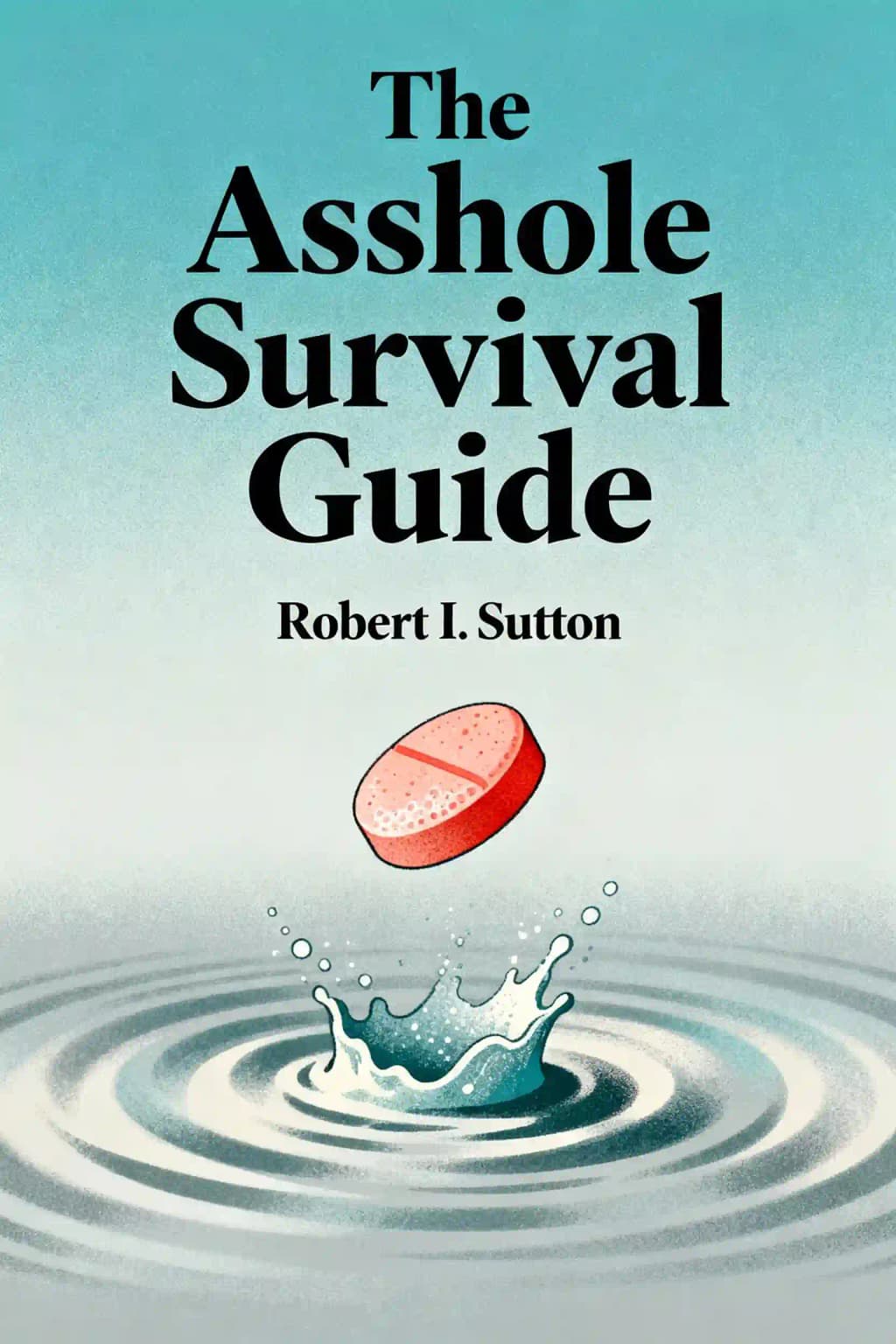
Have you ever had a boss who made your stomach churn each morning as you prepared for work? Or perhaps a colleague whose mere presence in a meeting room sent your anxiety levels soaring? You're not alone. In his searingly practical book "The Asshole Survival Guide," Stanford professor Robert Sutton offers a lifeline to anyone drowning in a sea of workplace jerks. This isn't just another theoretical management text-it's the product of over 8,000 personal stories sent to Sutton after his previous bestseller "The No Asshole Rule" struck a global nerve. The book has garnered praise from figures ranging from business leaders to Hollywood celebrities, with Daniel Pink calling it "an essential guide to surviving the jerks in your workplace." Its cultural impact extends beyond business circles, becoming part of the broader conversation about dignity and respect in professional settings. Whether you're dealing with screaming bosses, backstabbing colleagues, or soul-crushing corporate cultures, Sutton's research-backed strategies provide both immediate relief and long-term solutions.
Capítulo 2
The Devastating Impact of Workplace Jerks
The evidence is overwhelming: workplace jerks aren't just annoying-they're dangerous. Medical research shows that when Israeli doctors were insulted by a visiting consultant during routine procedures, their diagnostic accuracy plummeted by over 50%. In another striking example, surgeons who experienced rudeness from team members made significantly more mistakes during complex procedures. Assembly line workers become detached and less productive after abusive encounters, with studies showing a 25-35% drop in output quality following hostile interactions. The financial toll is staggering-estimated at $23.8 billion annually in the US alone through increased absenteeism, healthcare costs, and lost productivity. This includes direct costs like turnover expenses, which can reach 150% of an employee's annual salary.
Most concerning are the health impacts, which extend far beyond temporary stress. People subjected to persistent workplace abuse experience anxiety, depression, and sleep problems, with 75% reporting significant impacts on their mental health. Long-term studies reveal increased risks of heart disease and premature death, with victims showing cortisol patterns similar to those under chronic stress. One Stanford study found that people with abusive bosses had 50% higher healthcare costs than those with respectful supervisors. Additionally, researchers discovered that employees working under toxic leaders were three times more likely to develop serious cardiovascular conditions.
The damage spreads like a virus through organizations. When someone acts like a jerk, others often respond in kind, creating toxic spirals that poison entire organizations. A single toxic team member can reduce group performance by 30-40%, according to research from Will Felps at the University of New South Wales. This ripple effect extends beyond immediate colleagues - studies show that witnessing workplace incivility makes customers 45% less likely to patronize a business and employees 66% more likely to cut back on their work efforts.
What makes this particularly insidious is how normalized such behavior has become in many workplaces. From Wall Street trading floors to hospital operating rooms, abusive behavior is often excused as "just how things work here" or even celebrated as a sign of passion or commitment. This normalization creates a dangerous feedback loop - in one study, 94% of workers who experienced workplace incivility admitted to retaliating against their aggressor, perpetuating the cycle of toxicity.
The first step in addressing these problems is recognizing their severity. As Sutton emphasizes, workplace jerks aren't just an annoyance-they represent a genuine threat to your physical health, emotional wellbeing, and professional success. Understanding this reality helps overcome the common tendency to downplay or normalize toxic behavior. Research shows that organizations that actively address workplace incivility see up to 30% improvements in employee engagement, 25% reduction in turnover, and significant increases in both productivity and innovation. Companies like Microsoft and Google have implemented "no-jerks" policies, demonstrating that maintaining civil workplaces isn't just ethical - it's good business.
Capítulo 3
Diagnosing Your Asshole Problem
Before developing survival strategies, you need an accurate diagnosis of your situation. Sutton provides a framework of six key questions to assess the severity of your problem.
The first question is deceptively simple: Are you really dealing with an asshole? Cultural and organizational norms create vast differences in what's considered acceptable behavior. What feels like abuse to you might be standard practice elsewhere. A software engineer from Eastern Europe was shocked by his American colleagues' sensitivity to direct criticism, while they found his bluntness offensive. Neither side was inherently wrong-they operated from different cultural frameworks.
The next five questions examine severity: How long does the ugliness persist? Are you dealing with temporary or certified assholes? Is it an individual or systemic problem? What are the power dynamics? And how much are you suffering?
Duration matters enormously. Brief encounters with jerks-like CNN anchor Don Lemon's experience with a racist comment from a colleague-can cause momentary distress. But persistent exposure to toxic behavior creates cumulative damage that's much harder to overcome.
The distinction between temporary and certified assholes is crucial. Everyone has bad days when stress or personal problems cause them to behave poorly. Certified assholes, however, display persistent patterns of demeaning behavior, like Navy Captain Holly Graf, who was relieved of command after investigators found she had "demeaned, humiliated, publicly belittled and verbally assaulted" subordinates for years.
Systemic problems are particularly dangerous. A European professor described his university as "an airport for assholes" where even civilized faculty soon became infected with bad behavior. This contagion occurs because emotions spread rapidly-rudeness, insults, and sabotage are wildly contagious. In toxic environments, people either unknowingly become mean or turn into strategic assholes for self-defense.
Power dynamics dramatically affect your options. Powerless assholes pose little threat, while "petty tyrants" with modest but real power can make your life miserable. Most dangerous are the "grinfuckers"-people who smile and agree to your face but undermine you behind your back, either by failing to implement ideas or deliberately sabotaging them while blaming you for the failures.
The final diagnostic question is perhaps most important: How much are you suffering? If the impact is mild, simple protective measures may suffice. But when people experience physical symptoms, poor performance, or want to quit, more extreme action is needed.
Capítulo 4
When Walking Away Is the Wisest Choice
Contrary to Vince Lombardi's famous quote that "Winners never quit and quitters never win," sometimes quitting is the smartest choice when facing toxic situations. Research shows that people often react to mean-spirited acts by leaving the scene-Yale sociologist Philip Smith found over 50% of rudeness victims react with some form of "exit."
Studies by Bennett Tepper confirm employees with abusive supervisors are more likely to quit, while those trapped with such bosses suffer depression and emotional exhaustion. However, many people who can leave don't-either because they believe their work is too important, feel obligated to protect weaker colleagues, or are determined to defeat their tormentors.
Many suffer from "Asshole Blindness," failing to recognize how severe their situation is. This blindness stems from habituation (getting used to terrible treatment) and deluded justifications. The "sunk cost fallacy" makes people justify continuing in toxic environments because they've already invested so much time. People tell themselves lies like "It's not that bad," "It's getting better," or "I'm tough enough to handle it."
When you do decide to leave, how you depart matters tremendously. JetBlue flight attendant Steven Slater's dramatic exit-cursing out passengers over the microphone, grabbing two beers, and escaping down the emergency slide-briefly made him a folk hero. But it ultimately cost him his job, resulted in criminal charges, and required $10,000 in restitution payments.
Sometimes escaping assholes doesn't require leaving your organization entirely. Research by Gallup and Google's People Analytics confirms "people leave bosses, not companies"-even within the worst organizations, there are significant differences between toxic and terrific teams. Smart companies like Salesforce.com facilitate internal transfers, allowing engineers to switch teams without permission from their current bosses.
For short encounters with irritating people, finding graceful exits is key. One product manager would excuse himself from frustrating meetings by saying, "Forgive me, but I need to call my eighty-five-year-old mother"-an excuse nobody questioned.
Online harassment requires its own escape strategies. A 2014 Pew Research survey found 73% of adults have witnessed online harassment and 40% have experienced it personally. The most effective responses are avoidance strategies: 60% of victims simply ignored harassment (with 80% reporting success), while others unfriended, blocked, changed usernames, or abandoned platforms.
It's far better to avoid assholes from the beginning than to escape them later. Experienced professionals develop radar for detecting potential jerks through careful observation: how they treat subordinates, their talking-to-listening ratio, and whether they constantly criticize others.
Capítulo 5
Strategic Avoidance: Minimizing Exposure
When complete escape isn't possible, the goal becomes limiting the frequency, duration, and intensity of exposure to toxic people. University of Toronto researcher Katy DeCelles offers succinct advice: "Don't engage with crazy." This wisdom comes from her studies of abusive behavior across settings from basketball courts to prisons to airplanes.
Physical distance provides powerful protection. MIT professor Tom Allen's research shows that people communicate four times more frequently with colleagues sitting six feet away versus sixty feet away, and communication becomes rare beyond 150 feet. Even in the digital age, proximity still determines interaction frequency across all communication channels.
When you can't avoid assholes completely, "ducking" can limit exposure. Victims in workplace bullying studies practiced this "nearly as an art form"-like the vice president who minimized time in the office to avoid an abusive owner who "would scream and yell every day." Sutton himself used similar tactics with a mean-spirited colleague, often leaving meetings early when her behavior became unbearable.
Some assholes take pleasure in your pain-their brains' pleasure centers actually light up when seeing others suffer, as University of Chicago research on adolescent bullies shows. A former doctoral student with an abusive advisor learned to respond increasingly slowly to demeaning emails and late-night rants-first taking hours, then days, then weeks before replying. This "rhythm method" trained her advisor to back off, as he received less immediate gratification.
Invisibility can provide protection when attracting an asshole's attention would be worse. People surrounded by assholes master the art of being present but unnoticed-like animals that camouflage themselves to avoid predators. They speak quietly, present themselves as boring, produce work that's neither excellent nor terrible, dress to blend in, and maintain blank expressions.
Finding "blockers" who can absorb abuse meant for you is another effective strategy. Good bosses serve as human shields, protecting their people from difficult superiors and customers. Organizations designate specific roles as "flak catchers"-receptionists, executive assistants, spokespersons, and complaint department staff who absorb "jolts from the dissatisfied."
Safety zones provide spaces to prepare for, hide from, and recover from encounters with assholes. Examples include Tokyo's Mitsui Garden Hotel "crying rooms" where female guests can "de-stress," coffee shops, bars, hallways, and bathrooms that function as private retreats.
People who regularly deal with assholes often develop communication networks to prepare for and avoid incoming jerks. Through texts, emails and whispers, colleagues warn each other when known troublemakers are approaching. Some border guards used coded paperwork markings to alert colleagues about abusive travelers, while restaurant staff at Danny Meyer's establishments use OpenTable to flag difficult customers with codes like "S.O.E." (sense of entitlement) or "HWC" (handle with care).
Capítulo 6
Mental Armor: Protecting Your Inner World
When you can't physically escape toxic people, psychological techniques can reduce the emotional damage they cause. West Point cadet Becky Margiotta demonstrated this brilliantly when faced with screaming upper-class cadets. Instead of taking their abuse personally, she began viewing their hazing as "incredibly entertaining." By appreciating their "wit and skill" and finding humor in their ridiculous behavior, she reduced the emotional sting of their attacks.
This reframing technique helps you avoid destructive "personalization" where you believe others' negative behavior is about you. Research at Stanford showed that when students were taught to reframe angry faces as "not angry at you but just had a bad day," they were less upset by subsequent angry images.
Another approach involves downplaying the threat-acknowledging you're dealing with jerks but reframing them as less harmful than initially perceived. Like cognitive behavioral therapy, it helps people question destructive labels and tunnel vision. Experienced bill collectors demonstrated this when helping Sutton after difficult calls, explaining that compared to truly awful debtors, his experience wasn't so bad.
The "silver lining" technique involves acknowledging poor treatment while concentrating on positive aspects. Journalist Andrew Beaujon explored why journalists fondly remember nasty editors, finding they valued the crucial journalism lessons learned ("the pony under all that poop") and treasured rare moments of praise from otherwise cruel bosses.
Michelle Obama's motto "when they go low, we go high" exemplifies another protective approach. By refusing to stoop to your tormentor's level, you maintain moral superiority and avoid triggering vicious cycles of mutual hostility. At Philz Coffee, employees embrace "kill 'em with kindness" as protective armor against difficult customers. As CEO Jacob Jaber advises his baristas: "Be nice to 'em. Fuck 'em. But be nice."
Even when a jerk doesn't deserve forgiveness, developing sympathy can protect you from feeling demeaned. Research shows that privately forgiving offenders-without condoning their behavior-helps victims let go of resentment. In experiments, students who practiced forgiving thoughts about people who hurt them experienced reduced anger, sadness, and physiological distress compared to those harboring grudges.
Humor serves as powerful protective armor. Research using Martin's "Coping Humor Scale" shows people suffer less emotional harm when they find something funny in distressing situations. Danish employees experiencing frequent workplace slander use humor as a coping strategy more than those facing occasional or no bullying. Giving tormentors humorous nicknames like "boardhole," "bosshole," or "the Sea Witch" helps reduce pain.
The mantra "this too shall pass" harnesses our capacity for mental time travel. Research by Bruehlman-Senecal and Ayduk shows that "temporal distancing"-imagining how you'll feel about current problems in the distant future-reduces immediate negative emotions like anxiety, anger and disappointment.
In extreme cases, emotional detachment becomes necessary for survival. Sutton presents a hierarchy of detachment, starting with Level 1: Tune out during downtime. Research shows employees who can "switch off" from work during off hours experience fewer health problems, less fatigue, better job performance, and less work-family conflict. Level 2 involves detaching during just the worst encounters, while Level 3-the most extreme form-means tuning out as much as possible, most of the time.
However, Sutton warns that reframing alone is dangerous. It can fuel "Asshole Blindness" that prevents you from seeing when escape is the better option. It doesn't change what actually happens to you or others-only how you think about it. Sometimes, you need to fight back.
Capítulo 7
Fighting Back: When Confrontation Becomes Necessary
Fighting back against assholes is risky business. Once they notice your efforts to challenge their rudeness or contempt, they can become vindictive. That's why strategies for reforming, repelling, defeating, or expelling jerks require greater thought and vigilance than simply escaping, avoiding, or reframing.
Before taking action, assess three key resources: First, your power relative to the assholes. The less power you have, the fewer options available and the more risk you face. Second, gather documentation-save emails, social media exchanges, and keep careful notes. Solid evidence prevents "he said, she said" situations. Third, build unity or solidarity. When bullied employees band together, studies show 58% of abusers are punished and no victims are fired, compared to solo fighters who see only 27% of bullies punished while 20% of complainants lose their jobs.
Calm, rational confrontation works best with temporary or clueless assholes, when you have a trusted relationship, or when you hold power over them. People who pride themselves on civility often respond well-like the CEO who was horrified when female executives gently showed him data proving he repeatedly interrupted women but never men in meetings.
With more difficult jerks, aggressive confrontation may be necessary. Research shows people with Machiavellian personalities-who view others as mere tools-become more exploitative when dealing with fair and cooperative people, but back off when facing uncooperative individuals like themselves. "Porcupine power"-glaring, raising your voice, making threats, even throwing tantrums-can effectively deter those who interpret kindness as weakness.
Sometimes the best defense is strategic kindness. A software engineer discovered that her notoriously short-tempered QA colleague could be calmed by bringing dark chocolate during stressful product release cycles. This "chocolate bombing" blunted the worst of her temper. More intense forms of flattery can be effective against narcissistic jerks who crave constant praise while being thin-skinned themselves.
The desire for revenge is deeply human but often counterproductive. Columbia University's Harvey Hornstein found that successful payback must be well-targeted, well-timed, and well-tempered. However, his research showed 68% of revenge efforts failed to stop abusive bosses. More troublingly, revenge often harms the avenger more than the target. People who ruminate about getting even suffer anxiety, depression, and sleep problems.
Organizations that enforce "no asshole" rules actively recruit civilized people, teach respectful behavior, reward those who exhibit it, and expel persistent rule-breakers. For a system to be credible, leaders must enforce standards with the most powerful and profitable jerks-like CEO Bill Carmody who rejected an abusive potential client despite the financial opportunity.
Despite anti-bullying laws and workplace regulations, legal solutions often prove ineffective. School anti-bullying laws typically only require written policies without enforcement mechanisms, and workplace bullying remains legal in all fifty U.S. states unless it specifically targets protected groups. Even when organizations have official systems to prevent abusive behavior, using them can be risky-victims may be branded as troublemakers, especially when confronting politically powerful people with allies.
Fighting back isn't just about winning-it's about preserving your dignity. Research by Bennett Tepper shows that employees who engage in "upward hostility" against abusive bosses actually suffer less psychological damage than those who remain passive victims. This protective effect comes from refusing to be treated like dirt, which signals to yourself and others that you have strength and self-respect.
Capítulo 8
Becoming Part of the Solution
Living by the "no asshole rule" isn't just organizational policy but personal philosophy that requires concrete action. Sutton outlines seven key principles for becoming part of the solution rather than the problem.
First, follow the da Vinci rule: "It is easier to resist at the beginning than at the end." Chef Anthony Bourdain exemplified this by refusing lucrative business opportunities with difficult people, asking "If the phone rings at 11 p.m., do you want it to be that asshole?" The longer you remain in toxic environments or relationships, the harder it becomes to escape.
Second, protect others, not just yourself. This can be done through formal authority, implementing civility practices, or creating informal support systems. Breaking cycles of abuse is crucial-as demonstrated by surgical residents who documented "Attending Asshole of the Week" incidents and later ran their own departments with unwritten "no asshole" rules.
Third, use the "Benjamin Franklin effect" to turn potential assholes into friends. Before permanently labeling someone an asshole, consider alternative explanations for their behavior. Some people have "a bad user interface but a good operating system." When dealing with apparent jerks, try responding with civility and warmth, or employ the "Benjamin Franklin effect"-asking them for small favors. This works because psychological research shows we tend to like people we do nice things for, creating a virtuous cycle of positive interaction.
Fourth, take a hard look in the mirror. If you seem to encounter assholes everywhere, consider whether you might be the problem. Over 50% of Americans report experiencing workplace bullying, but less than 1% admit to doing it-those numbers don't add up. We humans suffer from overconfidence bias, seeing ourselves through rose-colored glasses while others judge our weaknesses more accurately.
Fifth, apologize when you've behaved poorly-but only if you really mean it. A well-crafted apology can reduce pain, repair relationships, and prompt self-improvement. Film director John Carney's apology to Keira Knightley exemplifies the most important elements: accepting full responsibility without qualification, making repairs, expressing regret, explaining why it happened, and committing to change.
Sixth, avoid becoming a toxic enabler who makes it easier for jerks to avoid consequences. These "handlers" often work in a "good cop/bad cop configuration," softening blows and reassuring victims after the abuser's emotional storms. While they provide temporary relief, they ultimately enable destructive behavior to continue without correction.
Finally, practice mental time travel. "No one ever says, when they are on their deathbed, 'I wish I had been meaner.'" This technique helps people live the no asshole rule by imagining how they'll feel looking back from the future. A former FBI agent who described himself as "a recovering asshole" fights his bad behavior "one day at a time" by focusing on wanting to feel proud of how he treated others.
Two intertwined ideas summarize how to deal with asshole problems: "it's on you" AND "you are not alone." If you feel oppressed or disrespected, you must create and refine your own survival plan-there are no one-size-fits-all solutions. But by realizing you're not alone and turning to fellow targets, friends, and family for support, you increase your chances of crafting better strategies, maintaining dignity through difficult times, and emerging stronger.
As in the German fable about porcupines who must find the right distance to share warmth without pricking each other, we must learn to share warmth with others without causing injury-a distance called "decency and good manners." In a world where jerks sometimes seem to rule, maintaining this balance isn't just about survival-it's about preserving our humanity.