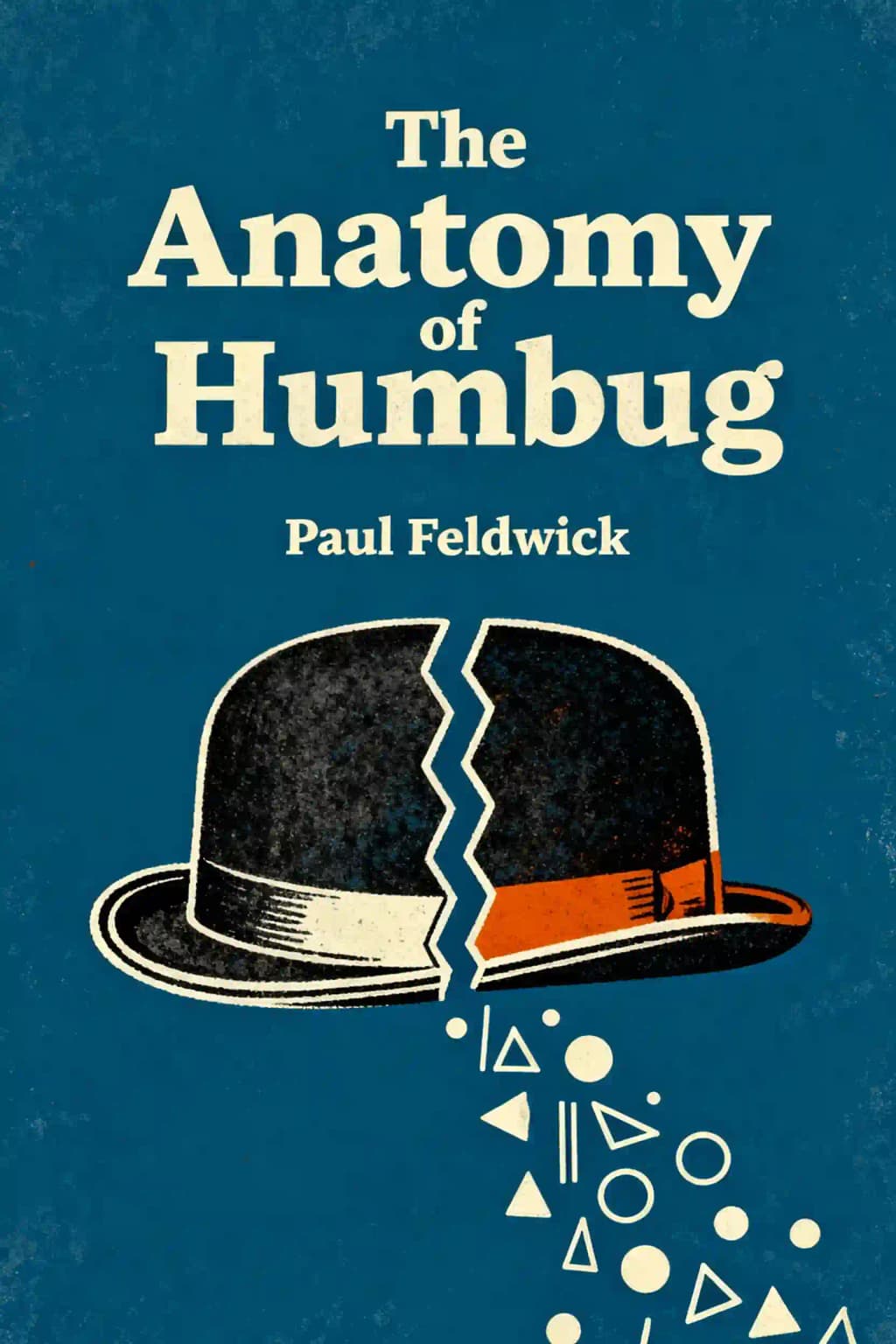
The Anatomy of Humbug: How to Think Differently about Advertising book cover

The Anatomy of Humbug

How to Think Differently about Advertising

Paul Feldwick
4.22 (372 Reviews)

Resumen de The Anatomy of Humbug

Dive into advertising's untold history as Paul Feldwick dismantles industry myths, challenging conventional wisdom from USP to emotional appeal. Praised by top marketers for revealing how successful advertising actually works - through unconscious appeal, showmanship, and the artful science of humbug.

Temas clave en The Anatomy of Humbug

  • advertising theory
  • marketing history
  • persuasion models
  • consumer mythology
  • brand communication strategy

Citas de The Anatomy of Humbug

  • The past was primitive, but now we are enlightened.

  • Advertising is the art of getting a unique selling proposition into the heads of the most people at the lowest possible cost.

  • Nobody really understands how advertising works.

  • The world has changed and the old rules no longer apply.

  • Advertising had reached the status of a science based on fixed principles.

Personajes en The Anatomy of Humbug

  • Paul FeldwickAuthor and former strategist at BMP/DDB
  • John E. KennedyCopywriter who defined advertising as salesmanship
  • Albert LaskerPartner at Lord and Thomas advertising agency
  • Claude HopkinsAuthor of Scientific Advertising and copywriter

Sobre el Autor

Sobre el autor de The Anatomy of Humbug

Paul Feldwick, author of The Anatomy of Humbug: How to Think Differently About Advertising, is a distinguished advertising strategist and thought leader. He brings over three decades of experience at agencies like Boase Massimi Pollitt (BMP) and DDB Worldwide, where he served as Global Brand Planning Director.

His book offers a critical exploration of advertising theory, dissecting six historical frameworks—from salesmanship to showmanship. Feldwick challenges industry norms and inspires creative communication strategies.

Feldwick’s expertise stems from his hands-on role in shaping iconic campaigns and his academic background, including Master’s degrees from the University of Bath and Ashridge Business School. A former chair of the IPA Effectiveness Awards and the Account Planning Group, he blends practical insight with rigorous analysis, as seen in his other work, Why Does The Pedlar Sing?, which examines creativity and brand storytelling.

Recognized by industry leaders like Rory Sutherland and Patrick Barwise, The Anatomy of Humbug has become a seminal text for professionals seeking to navigate the evolving media landscape with historical wisdom and innovative thinking.

Descargar resumen de The Anatomy of Humbug: How to Think Differently about Advertising

Obtén el resumen de The Anatomy of Humbug: How to Think Differently about Advertising como PDF o EPUB gratis. Imprímelo o léelo sin conexión en cualquier momento.

Preguntas Frecuentes Sobre Este Libro

The Anatomy of Humbug deconstructs advertising’s core theories, challenging assumptions like the “Unique Selling Proposition” or emotional subliminal messaging. Paul Feldwick argues no single theory fully explains advertising’s impact, advocating instead for a flexible, historically informed approach. He traces ideas from 19th-century showman P.T. Barnum to modern ad legends like Bernbach, revealing how context and creativity shape effective campaigns.

Marketing professionals, advertisers, and business students will benefit most. It’s ideal for those seeking to rethink outdated advertising dogma or understand the field’s evolution. Executives managing brand strategies and creatives exploring psychological persuasion techniques will also find actionable insights.

Yes—it’s praised as a “genuinely original” and “thought-provoking” analysis by industry leaders like Rory Sutherland and Judie Lannon. The book synthesizes decades of advertising history with practical critique, making it essential for navigating today’s fragmented media landscape.

Feldwick identifies two dominant frameworks: Salesmanship (conscious persuasion via rational messaging) and Seduction (subconscious emotional influence). He critiques both, emphasizing the role of “showmanship” and cultural context. The book also explores “humbug”—strategic deception that entertains while selling—as a timeless advertising tactic.

Feldwick argues that rigid adherence to theories like USP or emotional branding leads to ineffective campaigns. He highlights contradictions, such as agencies crafting humorous, surreal ads while claiming to prioritize rational messaging. Historical examples, like 19th-century patent medicine promotions, show how adaptable strategies outperform dogma.

P.T. Barnum’s provocative showmanship and communications theorist Paul Watzlawick’s insights on human interaction are central. Feldwick also references ad pioneers David Ogilvy, Bill Bernbach, and Rosser Reeves, contrasting their philosophies to reveal evolving industry norms.

Yes—Feldwick asserts creativity thrives when freed from theoretical constraints. He cites iconic campaigns (e.g., laughing aliens, singing polar bears) that succeeded by prioritizing novelty and cultural resonance over formulaic messaging. Creativity, he argues, must align with audience expectations and medium-specific opportunities.

Feldwick warns against over-reliance on data and short-term metrics, urging a return to brand-building and emotional engagement. He advocates for adaptive strategies in digital spaces, where audience fragmentation demands tailored, platform-native creativity.

Some reviewers note the book focuses more on deconstructing theories than offering step-by-step solutions. Others suggest Feldwick’s historical approach, while valuable, may feel abstract for practitioners seeking immediate tactics.

Both critique rationalist approaches to marketing, but Sutherland leans into behavioral economics, while Feldwick prioritizes historical analysis. Feldwick’s work is more focused on advertising’s evolution, whereas Alchemy explores broader decision-making irrationalities.

Its emphasis on adaptability resonates amid AI-driven ad tools and shifting consumer trust. Feldwick’s framework helps navigate trends like viral TikTok campaigns or interactive AR experiences, where traditional theories fall short.

“Fame” refers to brands becoming cultural icons through memorable, widely recognized campaigns—even if they lack overt sales pitches. Examples include John Lewis’ Christmas ads or Old Spice’s surreal humor, which prioritize shareability over direct persuasion.

Explora Tu Forma de Aprender

The Anatomy of Humbug: How to Think Differently about Advertising no es solo un libro — es una clase magistral en Business. Para ayudarte a absorber sus lecciones de la manera que mejor te funcione, ofrecemos cinco modos de aprendizaje únicos. Ya seas un pensador profundo, un aprendiz rápido o un amante de las historias, hay un modo diseñado para tu estilo.

Modo Resumen Rápido

Lee o escucha el resumen de The Anatomy of Humbug: How to Think Differently about Advertising en 9 minutos

Desglosa las ideas clave de The Anatomy of Humbug: How to Think Differently about Advertising en puntos fáciles de entender para comprender cómo los equipos innovadores crean, colaboran y crecen.

play
00:00
00:00

Modo Divertido

Lecciones de The Anatomy of Humbug: How to Think Differently about Advertising Contadas en Historias de 25 Min

Experimenta The Anatomy of Humbug: How to Think Differently about Advertising a través de narraciones vívidas que convierten las lecciones de innovación en momentos que recordarás y aplicarás.

play
00:00
00:00

Modo Personalizar

Experimenta The Anatomy of Humbug: How to Think Differently about Advertising con tu propio estilo de aprendizaje

Pregunta cualquier cosa, elige tu estilo de aprendizaje y co-crea ideas que realmente resuenen contigo.

Personalize Mode

Creado por exalumnos de la Universidad de Columbia en San Francisco

BeFreed Reúne a una Comunidad Global de 1,000,000 Mentes Curiosas

"Instead of endless scrolling, I just hit play on BeFreed. It saves me so much time."

@Moemenn
platform
star
star
star
star
star

"I never knew where to start with nonfiction—BeFreed’s book lists turned into podcasts gave me a clear path."

@Chloe, Solo founder, LA
platform
comments
12
likes
117

"Perfect balance between learning and entertainment. Finished ‘Thinking, Fast and Slow’ on my commute this week."

@Raaaaaachelw
platform
star
star
star
star
star

"Crazy how much I learned while walking the dog. BeFreed = small habits → big gains."

@Matt, YC alum
platform
comments
12
likes
108

"Reading used to feel like a chore. Now it’s just part of my lifestyle."

@Erin, Investment Banking Associate , NYC
platform
comments
254
likes
17

"Feels effortless compared to reading. I’ve finished 6 books this month already."

@djmikemoore
platform
star
star
star
star
star

"BeFreed turned my guilty doomscrolling into something that feels productive and inspiring."

@Pitiful
platform
comments
96
likes
4.5K

"BeFreed turned my commute into learning time. 20-min podcasts are perfect for finishing books I never had time for."

@SofiaP
platform
star
star
star
star
star

"BeFreed replaced my podcast queue. Imagine Spotify for books — that’s it. 🙌"

@Jaded_Falcon
platform
comments
201
thumbsUp
16

"It is great for me to learn something from the book without reading it."

@OojasSalunke
platform
star
star
star
star
star

"The themed book list podcasts help me connect ideas across authors—like a guided audio journey."

@Leo, Law Student, UPenn
platform
comments
37
likes
483

"Makes me feel smarter every time before going to work"

@Cashflowbubu
platform
star
star
star
star
star

"Instead of endless scrolling, I just hit play on BeFreed. It saves me so much time."

@Moemenn
platform
star
star
star
star
star

"I never knew where to start with nonfiction—BeFreed’s book lists turned into podcasts gave me a clear path."

@Chloe, Solo founder, LA
platform
comments
12
likes
117

"Perfect balance between learning and entertainment. Finished ‘Thinking, Fast and Slow’ on my commute this week."

@Raaaaaachelw
platform
star
star
star
star
star

"Crazy how much I learned while walking the dog. BeFreed = small habits → big gains."

@Matt, YC alum
platform
comments
12
likes
108

"Reading used to feel like a chore. Now it’s just part of my lifestyle."

@Erin, Investment Banking Associate , NYC
platform
comments
254
likes
17

"Feels effortless compared to reading. I’ve finished 6 books this month already."

@djmikemoore
platform
star
star
star
star
star

"BeFreed turned my guilty doomscrolling into something that feels productive and inspiring."

@Pitiful
platform
comments
96
likes
4.5K

"BeFreed turned my commute into learning time. 20-min podcasts are perfect for finishing books I never had time for."

@SofiaP
platform
star
star
star
star
star

"BeFreed replaced my podcast queue. Imagine Spotify for books — that’s it. 🙌"

@Jaded_Falcon
platform
comments
201
thumbsUp
16

"It is great for me to learn something from the book without reading it."

@OojasSalunke
platform
star
star
star
star
star

"The themed book list podcasts help me connect ideas across authors—like a guided audio journey."

@Leo, Law Student, UPenn
platform
comments
37
likes
483

"Makes me feel smarter every time before going to work"

@Cashflowbubu
platform
star
star
star
star
star

"Instead of endless scrolling, I just hit play on BeFreed. It saves me so much time."

@Moemenn
platform
star
star
star
star
star

"I never knew where to start with nonfiction—BeFreed’s book lists turned into podcasts gave me a clear path."

@Chloe, Solo founder, LA
platform
comments
12
likes
117

"Perfect balance between learning and entertainment. Finished ‘Thinking, Fast and Slow’ on my commute this week."

@Raaaaaachelw
platform
star
star
star
star
star

"Crazy how much I learned while walking the dog. BeFreed = small habits → big gains."

@Matt, YC alum
platform
comments
12
likes
108

"Reading used to feel like a chore. Now it’s just part of my lifestyle."

@Erin, Investment Banking Associate , NYC
platform
comments
254
likes
17

"Feels effortless compared to reading. I’ve finished 6 books this month already."

@djmikemoore
platform
star
star
star
star
star

"BeFreed turned my guilty doomscrolling into something that feels productive and inspiring."

@Pitiful
platform
comments
96
likes
4.5K

"BeFreed turned my commute into learning time. 20-min podcasts are perfect for finishing books I never had time for."

@SofiaP
platform
star
star
star
star
star

"BeFreed replaced my podcast queue. Imagine Spotify for books — that’s it. 🙌"

@Jaded_Falcon
platform
comments
201
thumbsUp
16

"It is great for me to learn something from the book without reading it."

@OojasSalunke
platform
star
star
star
star
star

"The themed book list podcasts help me connect ideas across authors—like a guided audio journey."

@Leo, Law Student, UPenn
platform
comments
37
likes
483

"Makes me feel smarter every time before going to work"

@Cashflowbubu
platform
star
star
star
star
star

¿Ver Más Historias?

Cómo la gente habla de BeFreed en la web
1.5K Ratings4.7
Comienza tu viaje de aprendizaje, ahora