Capítulo 1
The Art of Strategic Manipulation: Power's Timeless Dance
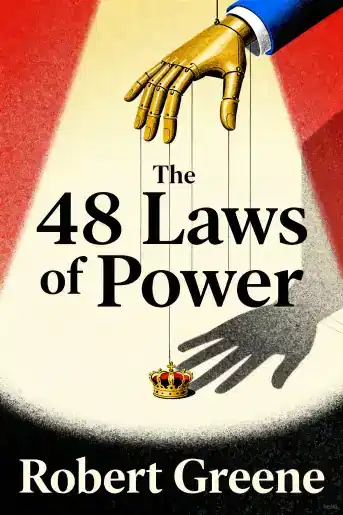
Robert Greene's "The 48 Laws of Power" has become a modern classic that sits on the bookshelves of everyone from hip-hop artists like Jay-Z and 50 Cent to Wall Street executives and prison inmates. Since its publication in 1998, this provocative manual has sold over 1.2 million copies and been translated into 24 languages. What makes it so compelling is its unflinching examination of how power actually works-not how we wish it worked. Drawing from 3,000 years of history, Greene distills the strategies of history's greatest power players into 48 essential laws that reveal the often uncomfortable truth: power follows its own amoral rules, and those who ignore them do so at their peril.
Capítulo 2
The Shadow Game: Concealing Your Intentions
The most fundamental principle of power is that what remains hidden controls what is seen. When you reveal your intentions, you give others the blueprint to your strategy, allowing them to prepare defenses or counter-attacks. Consider Bismarck, who in 1850 shocked the Prussian parliament by giving an impassioned speech against war with Austria-despite being a passionate supporter of Prussian power who dreamed of German unification. By contradicting everything he stood for, he confused his opponents and changed crucial votes, helping prevent a premature war. Weeks later, the grateful king made him a cabinet minister, from which position he eventually led Prussia into war against Austria years later when the military was ready.
The art of concealment isn't just about hiding your plans-it's about actively misdirecting attention. Like a magician who draws your eye to his right hand while performing the trick with his left, you must create smoke screens that divert attention from your real purpose. This might mean supporting ideas contrary to your true beliefs or creating a bland, unreadable exterior behind which you can maneuver freely.
Communication itself becomes a strategic tool in this shadow game. The less you say, the more attention people give your words. Louis XIV evolved from a verbose youth to a taciturn king whose silence kept others off-balance. Even artists like Andy Warhol discovered that the less they explained their work, the more people talked about it, increasing its value. Silence also protects you from saying something foolish, as demonstrated by the fatal case of Kondraty Ryleyev, whose sarcastic comment after surviving a hanging cost him his pardon from Czar Nicholas I.
Remember: in the realm of power, everything is judged by appearances. What is unseen counts for nothing. Your ability to control these appearances while concealing your true intentions is the foundation upon which all other power strategies are built.
Capítulo 3
Reputation as Currency: Guard It With Your Life
Your reputation is the cornerstone of your power-a carefully crafted perception that precedes you into every room and situation. Through reputation alone, you can intimidate and win battles before they begin. Consider the legendary Chinese general Chuko Liang, who found himself trapped in a small town with only a hundred soldiers when an enemy force of 150,000 approached. Rather than panic, he ordered his troops to hide, opened the city gates, and sat visibly on the wall playing a lute. When enemy commander Sima Yi arrived and saw this scene, he immediately ordered a retreat despite the obvious opportunity to capture the renowned general.
Why? Because Liang's reputation as "The Sleeping Dragon"-the cleverest strategist in China who always had tricks ready-was so powerful that it made a vast army retreat without a single arrow being fired. His reputation had become a weapon more powerful than any army.
Reputation functions as both shield and sword. As a shield, it protects you from attacks-people hesitate to challenge someone with a formidable reputation. As a sword, it cuts through resistance before you even enter the room. The same deeds appear brilliant or dreadful depending entirely on the doer's reputation. In ancient China, Mi Tzu-hsia's actions were first praised by the ruler when he was in favor, then punished when his reputation fell.
To wield this power effectively, establish one outstanding quality that sets you apart-generosity, honesty, or cunning-and make it widely known. Make your reputation simple, based on a single sterling quality that becomes your calling card. Guard it carefully, anticipating attacks, and never appear desperate in self-defense. When attacking another's reputation, do so with skill-Edison's crude attempts to discredit Tesla's AC current through animal electrocutions ultimately damaged his own reputation more than his rival's.
Unlike other forms of power, reputation has no possible reversal. Even a reputation for insolence and arrogance can be valuable, as Oscar Wilde proved. Since we must depend on others' opinions, there's nothing to gain by neglecting your reputation.
Capítulo 4
The Art of Attention: Creating Compelling Spectacles
In our increasingly crowded and distracted world, attention has become the scarcest resource. Those who master the art of commanding attention wield extraordinary power. P.T. Barnum understood this perfectly, employing countless attention-grabbing stunts: having a beggar mysteriously lay bricks in the street to draw curious crowds to his museum; hiring terrible musicians to play "FREE music for the millions" so people would pay to escape inside his museum; circulating anonymous letters claiming his 161-year-old attraction Joice Heth was actually an automaton.
The key insight Barnum grasped was that once people's eyes are on you, you gain legitimacy, and that the quality of attention is irrelevant-negative or positive, it fuels success. The worst fate for someone seeking power is to be ignored.
Creating mystery is particularly effective in our increasingly banal world. When Margaretha Zelle arrived in Paris in 1904 with half a franc to her name, she transformed herself into Mata Hari-a mysterious Oriental dancer who captivated Europe's elite. Though she had no dance experience, she created an elaborate persona wrapped in veils and Eastern mystique, telling constantly changing stories about growing up in Java, India, or Sumatra. Her performances caused riots and critics raved about her "hypnotizing charm" and "mysticism." What separated Mata Hari from thousands of other beautiful girls in Paris wasn't superior beauty or dance skill, but her carefully cultivated mystery.
The visual contains tremendous emotional power that bypasses rational thought. Words put you on the defensive-if you must explain yourself, your power is already questioned. Images impose themselves as given facts, discouraging questions while forging bonds that transcend social differences. The symbol carries this same force, whether visual (like Diana's statue) or verbal descriptions of something visual (like "the Sun King"). Symbols are shortcuts containing dozens of meanings in one object or phrase.
Remember that in sequences, the first image symbolizes power, while the central image has primary importance. Most effective of all is creating new combinations of images and symbols not previously seen together, giving viewers a sense of participation through their associations.
Capítulo 5
The Power of Indirection: Getting Others to Do the Work
True power comes not from exhausting yourself with labor but from harnessing the energy, creativity, and labor of others. Nikola Tesla, a brilliant Serbian scientist, learned this lesson the hard way when he worked eighteen-hour days improving Thomas Edison's primitive dynamos. When Tesla offered to redesign them completely, Edison promised him $50,000 for the task. After a year of relentless work, Tesla delivered greatly improved dynamos with automatic controls. But when he asked for his payment, Edison dismissed it as "American humor" and offered only a small raise.
The world of power operates like a jungle: there are hunters and killers, and there are creatures who live off the hunting of others. These less imaginative types understand that if they wait long enough, they can always find someone else to do the work for them. At this very moment, while you slave away on some project, vultures circle above trying to profit from your creativity.
The essence of this law is learning to get others to do the work while you take the credit, making you appear godlike in strength and power. You can also "stand on the shoulders of giants" by using the vast storehouse of knowledge and wisdom from the past-borrowing from ancient masters, historians, and strategists. As Bismarck said, "Fools say that they learn by experience. I prefer to profit by others' experience."
The painter Peter Paul Rubens employed dozens of specialized painters in his studio while creating the impression he did all the work himself. When important clients visited, he would dismiss his painters and work at an incredible pace while being observed, leaving clients in awe of his seemingly superhuman productivity.
In seeking power, you'll need help from others, particularly those more powerful than you. The fool flits from person to person, but true power comes from attaching yourself to a single, appropriate source. Scientists like Tesla ruined themselves by refusing patrons like J.P. Morgan in the name of "independence," only to end up dependent on dozens of lesser patrons.
Capítulo 6
Strategic Manipulation: Making Others Come to You
Throughout history, aggressive leaders initiate bold moves that bring initial power, but eventually everything turns against them as they exhaust themselves responding to enemies and unforeseen consequences. True power comes not from aggressive action but from making others come to you. When you make others react to your moves, you control the situation. This requires mastering your own emotions while exploiting others' tendency to react emotionally when baited.
Consider Talleyrand's masterful manipulation of Napoleon after his exile to Elba. Rather than wasting energy trying to convince others Napoleon remained dangerous, he laid an irresistible trap that played on Napoleon's impetuosity and need for glory. By making your opponent come to you, you drain their energy while conserving yours.
Another benefit: forcing opponents onto your territory makes them nervous and prone to mistakes. In negotiations, lure others into your space where they feel subtly defensive while you remain comfortable. The sweetness of your bait creates the illusion that your opponent controls the situation, blinding them with their own desires. Daniel Drew mastered this in stock manipulation, dropping fake "inside tips" for greedy investors to find. Even pickpockets use this principle, placing "Beware of Pickpockets" signs that cause people to instinctively touch their wallets, revealing their location.
Sometimes it's better to be overt about forcing others' hands-the psychological impact of making others come to you demonstrates power and commands respect. Brunelleschi used this when city officials hired Ghiberti to work with him on Florence's cathedral dome. Feigning illness, Brunelleschi forced officials to recognize Ghiberti's incompetence and fire him.
While generally wise to make others exhaust themselves chasing you, there are cases where striking suddenly and aggressively so demoralizes the enemy that their energies sink. Fast attack can be an awesome weapon, forcing people to react without time to think or plan, causing errors of judgment. Choose your tactics based on the situation: if time is on your side and forces are equal, make them come to you; if time works against you and enemies are weaker, strike quickly before they can recover.
Capítulo 7
The Art of Timing: Patience and Strategic Boldness
Mastering the art of timing means understanding that patience and the ability to keep your emotions in check are crucial power skills. Joseph Fouche's remarkable survival through France's revolutionary turmoil serves as a masterclass in strategic timing. He not only sensed the spirit of the times but demonstrated an uncanny ability to detect precisely when to switch allegiances and when to remain still. His genius lay in recognizing Napoleon's ascending power early, strategically appearing dormant during the crucial coup, which earned him the prestigious position of minister of police. Later, when he perceived Napoleon's inevitable decline, he orchestrated a careful conspiracy against his former benefactor.
Fouche's career offers several essential timing lessons that extend beyond his era. First, recognize the spirit of the times by looking beyond surface-level events to identify underlying currents and dormant forces. This requires developing a keen sense of observation and the ability to detect subtle shifts in power dynamics. Second, understanding prevailing winds doesn't mean blindly following them-sometimes the most strategic move is to bet against the current trend, anticipating the inevitable reaction that follows any extreme. Finally, patience becomes essential-when circumstances are unfavorable, maintain a low profile while quietly building support networks and resources. Time becomes your strongest ally if you learn to wait strategically.
Yet timing also demands boldness at crucial moments. The psychological impact of boldness versus hesitation creates dramatically different outcomes: while hesitation builds mental and physical barriers, boldness eliminates them through decisive action. Bold moves, particularly audacious lies, become more convincing through their very audacity-the sheer confidence behind them often overshadows any inconsistencies. This principle operates on a deep psychological level, as people instinctively sense weakness like predators sensing prey. Early compromises, especially in first encounters, can trigger aggressive responses even from typically non-confrontational individuals.
Bold moves create an illusion of greater power and capability, particularly when executed with swift, decisive action. Like a snake striking, quick bold moves establish precedents that intimidate opponents and admirers alike. Half-measures and hesitation create self-imposed limitations and allow others time to analyze, doubt, and potentially counter your moves. Bold action closes these gaps, leaving no room for opposition to form.
The most crucial aspect of boldness is its ability to distinguish you from the common crowd. While timid individuals blend into obscurity, bold actors naturally draw attention and, consequently, power. This trait isn't necessarily innate-even Napoleon, despite his military prowess, had to deliberately cultivate boldness on the battlefield while remaining notably awkward in social situations. This demonstrates that boldness can be developed through practice and conscious effort, particularly in negotiations where people often undervalue their position and potential.
In modern contexts, this combination of patient timing and strategic boldness applies to business negotiations, career moves, and personal relationships. Success often comes to those who can maintain strategic patience while preparing for moments that demand decisive, bold action. The key lies in developing both capabilities and knowing when to deploy each.
Capítulo 8
The Power of Surrender: Transforming Weakness into Strength
When someone pushes you, rather than pushing back, try this: bend, turn the other cheek, yield. This often neutralizes aggressive behavior because the aggressor expected resistance. By surrendering, you actually control the situation-your surrender is merely part of a larger plan.
The key distinction: inwardly you remain firm while outwardly bending. Without a reason to get angry, your opponents become confused rather than more violent, giving you time and space to plot your counterattack. In the battle between intelligence and brute aggression, surrender is the supreme weapon, though it requires self-control. You must remember you're only appearing to surrender, like an animal playing dead to survive.
This strategy worked for King Goujian of Yue in ancient China. After suffering defeat, rather than fleeing, he surrendered to his conqueror and worked as a stable servant for three years. During this time, he gathered intelligence and plotted revenge. When drought and internal turmoil weakened his enemy's kingdom, Goujian raised an army and conquered with ease. His surrender had given him the time and flexibility to plan a devastating counterblow.
Japan employed a similar strategy when faced with Western powers in the mid-nineteenth century. Rather than fighting foreign influence, they embraced it, learning Western ways while maintaining their own culture, with the long-term goal of eventually surpassing the foreigners who underestimated them.
Surrender can also be a form of mockery that turns power against itself, as demonstrated by prisoners in a Czechoslovakian penal camp who "overobediently" lost a relay race against guards by exaggerating their weakness, making the entire event ridiculous while technically complying with orders.
The point of surrendering is to preserve yourself for a later date when you can reassert your position. It specifically helps you avoid martyrdom. However, there are rare instances when an enemy won't relent, and martyrdom seems the only option. Yet martyrdom-surrender's reversal-is a messy, inexact tactic, as violent as the aggression it opposes. For every famous martyr, thousands more have inspired neither religion nor rebellion.
Capítulo 9
Formlessness: The Ultimate Strategy
By taking a shape, by having a visible plan, you open yourself to attack. Instead of taking a form for your enemy to grasp, keep yourself adaptable and on the move. Accept the fact that nothing is certain and no law is fixed. The best way to protect yourself is to be as fluid and formless as water; never bet on stability or lasting order.
The Spartans learned this lesson the hard way. Their rigid society entirely dedicated to warfare created the world's most powerful infantry, but unlike Athens, which adapted through sea trade and constant social innovation, Sparta remained rigid and unchanging. When war finally erupted between them in 431 B.C., Sparta eventually won after twenty-seven years. But victory brought wealth they weren't equipped to handle. Their governors became corrupt, and the fluid Athenian way of life slowly broke down Spartan discipline. Thirty years after defeating Athens, Sparta lost a battle to Thebes and collapsed overnight, never to recover.
Contrast this with Mao Tse-tung's Communist forces, who confused the Nationalists with their fluid strategy-dispersing to remote corners, harassing with small units that never linked up, seizing towns only to abandon them weeks later. The Nationalists attributed this to cowardice and inexperience, but a pattern emerged: after Nationalists took the cities, the Communists used Manchuria's vast spaces to surround them. When Chiang sent reinforcements between cities, Communists encircled these armies, breaking them into isolated units with cut supply lines. Cities began collapsing even before direct attacks; by November 1948, the Nationalists surrendered Manchuria-a humiliating defeat that proved decisive.
Humans distinguish themselves by constantly creating forms-for emotions, communication, and social rituals. These forms evolve continuously, with changes signifying vitality while rigidity resembles death. The powerful often begin as creative innovators who introduce new forms, which society rewards. Their downfall comes later when they grow conservative and predictable-their congealed habits making them easy targets.
Power thrives only when flexible, like water or mercury, taking the shape of its container while constantly changing. This formlessness confounds enemies who find nothing solid to attack. Human creations evolve toward abstraction-from material to mental-as seen in art's movement toward conceptualism and warfare's progression from physical formations to psychological operations.
In today's world of "wars of detachment," formlessness is crucial-the psychological requirement being to take nothing personally and never show defensiveness. Baron James Rothschild exemplified this approach, never revealing hurt feelings and adapting seamlessly to France's changing political regimes while other wealthy families were ruined by clinging to rigid forms.
Capítulo 10
The Eternal Dance of Power
Greene's 48 Laws reveal power not as a static possession but as a dynamic dance-one that requires constant adaptation, strategic thinking, and psychological insight. What makes these laws so compelling is their timelessness; the same principles that guided Talleyrand through the French Revolution or helped Queen Elizabeth I maintain her throne for decades still operate in boardrooms, political campaigns, and social media today. Modern examples abound: tech CEOs employing careful image management, political leaders mastering the art of timing, and social media influencers cultivating mysterious personas-all unconsciously following patterns established centuries ago.
The laws teach us that power is neither good nor evil but simply exists as a force that follows its own rules. Those who understand these rules and apply them skillfully gain advantage; those who ignore them do so at their peril. Consider how Steve Jobs wielded power through calculated unpredictability, or how Warren Buffett's cultivated image of folksy wisdom masks a master strategist. The laws manifest in subtle ways: the colleague who builds influence through selective absence, the negotiator who gains leverage by appearing to care less, or the leader who maintains authority by keeping their intentions obscure.
In a world that often pretends power operates according to idealistic principles, "The 48 Laws of Power" strips away comforting illusions to reveal the mechanisms that actually drive history and human behavior. It's this unflinching honesty, combined with Greene's masterful storytelling, that makes this book both disturbing and irresistible-a mirror reflecting not the world as we wish it to be, but the world as it truly is. The laws reveal themselves in everyday scenarios: office politics where information becomes currency, social circles where reputation management determines status, and business negotiations where patience and timing eclipse raw force.
The book's enduring relevance stems from its recognition that power dynamics remain remarkably consistent across cultures and epochs. Whether in ancient Chinese courts or modern corporate environments, the fundamental patterns persist: the importance of appearing effortless while working diligently behind the scenes, the strategic value of keeping others dependent, and the crucial skill of reading people's hidden motivations. These principles apply equally to a CEO orchestrating a company merger, a diplomat navigating international relations, or an entrepreneur building a brand.
Greene's analysis demonstrates how power operates in layers - the visible actions, the hidden intentions, and the deeper currents of human psychology that underpin both. Understanding these layers allows readers to move beyond simple tactical thinking to grasp the strategic essence of power dynamics, whether they're managing a team, building a business, or navigating complex social relationships.