Capítulo 1
The Miracle That Changed Everything
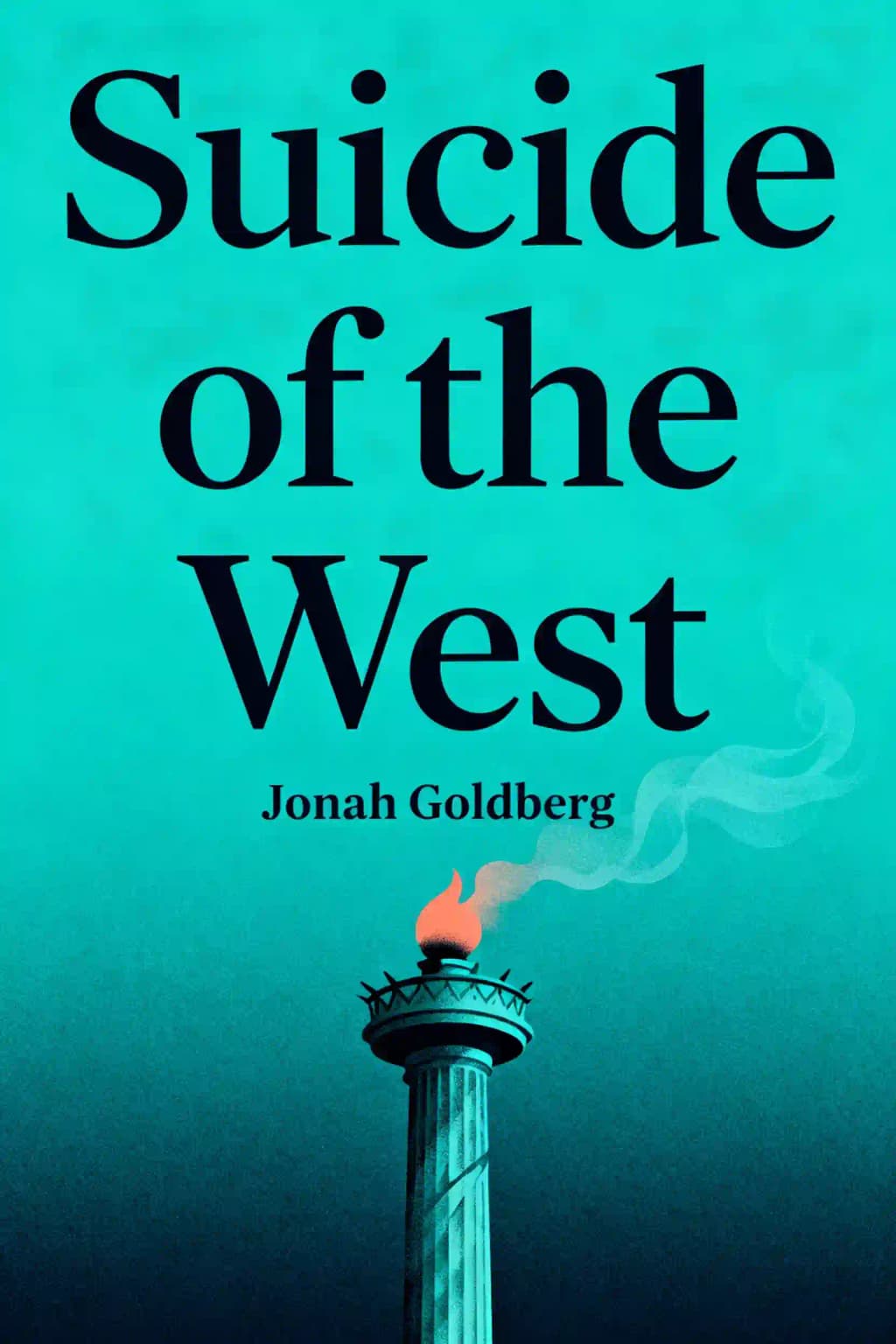
What if I told you that for 250,000 years, humanity lived in grinding poverty and violence, and then suddenly-in just the last 300 years-everything changed? This transformation, which author Jonah Goldberg calls "the Miracle," represents the most profound shift in human history. Imagine an alien checking on humans every 10,000 years. For 23 consecutive visits, they'd see virtually no change in how we lived. Then suddenly, on the 24th visit, they'd find us with smartphones, skyscrapers, and space stations. This book, a cultural phenomenon that's been praised by intellectuals across the political spectrum and frequently cited in discussions about Western civilization, explores how this miracle happened-and warns that we're in danger of throwing it all away. The book's urgent message has resonated with readers seeking to understand why modern society feels increasingly fragile despite unprecedented prosperity. As we face growing tribalism and institutional decay, Goldberg's analysis offers a compelling framework for understanding our precarious moment in history.
Capítulo 2
Our Inner Tribesman: The Constant Battle Against Human Nature
Human nature hasn't changed, despite our radically transformed world. While the Miracle began just 300 years ago-merely six human lifetimes-our evolutionary programming remains essentially identical to that of our ancestors who wandered African savannas or toiled in ancient Mesopotamian fields. We're still running Stone Age software on space-age hardware.
From our genes' perspective, we weren't designed to live with today's wealth, rights, and freedoms. Our natural condition isn't merely poor-it's tribal. For most of human history, we lived in small wandering groups where politics, religion, and economics were entirely personal, face-to-face interactions. Our coalition instinct helped forge alliances based on loyalty and reciprocity, but all meaning was tribal.
The Miracle's secret lies in holding this tribal tendency in check. While it's natural to prefer family and friends and see strangers as dangerous Others, higher social organization expands the definition of "us" to permit larger cooperation. Liberalism and capitalism-both unnatural systems-created the Miracle by teaching us to see strangers as having innate dignity and rights, or even as potential customers.
Money was one of history's greatest liberating inventions, reducing violence by offering commerce as an alternative. A bigoted grocer's self-interest encourages him to overlook differences when selling to customers he might otherwise despise. Trade builds trust, encourages equality, and creates objective metrics to judge people by their work rather than identity.
Yet capitalism has a fatal flaw: it doesn't feel like cooperation, despite being the most cooperative system ever created. Liberalism refuses to give people direction from above, relying on civil society to provide belonging. When this fails, human nature rushes in as tribalism. This isn't new-it began with modernity itself, as even early colonists were seduced by tribal life.
The pull of the tribe affects everyone, especially intellectuals. Our alienation toward liberal democratic capitalism is romanticism-the primacy of feelings that the modern world lacks meaning. When we feel the world is unfair, we blame others: Jews, capitalists, globalists. All rebellions against the liberal order are fundamentally romantic and reactionary.
But there isn't a better way-we're standing at history's end. No other system creates wealth. We can get richer and solve problems, but we cannot improve upon the Miracle's core assumptions. Every other economic system merely redistributes wealth rather than creating it.
Capítulo 3
The State: A Myth We All Agree Upon
How did humanity transition from hunter-gatherers to states? Social contract theories suggest humans voluntarily sacrificed freedoms for security, but these theories are fundamentally wrong-there never was an actual social contract. Instead, the first "social contract" was an offer people couldn't refuse, imposed by what economist Mancur Olson called "the stationary bandit."
Hammurabi's code served as operating software for vast cooperation networks, establishing clear rules about violence, commerce, and social status across his empire. While considered a milestone in human progress, the code was hardly "progressive" by modern standards-it regulated slavery, established "eye for an eye" justice, and codified harsh punishments.
Despite its brutality, the code represented significant advances: it regulated violence (making predictable punishment preferable to arbitrary violence), standardized commerce (roughly a third of its 282 edicts pertained to trade and property), and formalized social hierarchy.
The code's genius lay in universalizing informal rules and unwritten customs, reflecting existing cultural norms rather than simply replacing them. Written law-both civil and religious-worked within the confines of human nature, embedding deep reservoirs of knowledge gained through discovery and trial and error.
The state remains fundamentally "a myth agreed upon"-it exists because people believe it does. When states collapse, the only real evidence is that people stop acting as if they exist. Similarly, our entire civilization rests on stories we tell ourselves-about money, rights, religion, and authority. These "fictions" serve as civilization's software, allowing vast populations to cooperate.
Religion provided crucial social cohesion throughout history, as demonstrated when Holy Roman Emperor Henry IV walked barefoot through snow for three days seeking papal forgiveness. For 99% of human history since the first city-states, monarchy was humanity's default arrangement, with kings positioned as father figures-a pattern that persisted even in supposedly modern authoritarian regimes from Stalin to Hitler to Putin.
Capítulo 4
A Glorious Accident: The Birth of Capitalism
Where does the Miracle come from? No one really knows. The sudden explosion of prosperity beginning in Europe in the 1700s defies easy explanation. Whether called the Great Enrichment, Great Divergence, or simply the Miracle, scholars agree it started in the West but disagree on why. The most compelling explanation is that England did it-a "damp island" whose inhabitants stumbled upon the revolutionary idea that government should be subject to law rather than vice versa.
England was gloriously, fantastically weird. Five crucial factors made it so: the development of a cohesive nation-state; a healthy civil society with competing institutions; island geography providing natural protection from invasion; religious pluralism allowing innovation; and most importantly, a unique common law system making the state subject to the people. The Netherlands competed with England as capitalism's birthplace, but the two nations were deeply enmeshed, spurring each other's development through competition.
English democracy's roots stretch deep into antiquity. Kings met with lords in the open, promising to uphold duties as servants of their people-a practice dating back to at least the 600s. Unlike elsewhere in Europe, English feudalism developed a strong concept of private property. While peasants in most of Europe didn't truly own their land, in England landowners could "alienate" their property-selling it or leaving it to people other than their children-a right deeply rooted in common law by the early 1500s.
Capitalism's relentless rationality corrodes not just harmful traditions but valuable social institutions as well. As Schumpeter observed, the "capitalist tide" clears away customs indiscriminately-destroying both oppressive practices and essential social bonds. The free market needs "extra-rational" customs and traditions to survive, yet simultaneously undermines them. Capitalism emerged from specific cultural values-thrift, delayed gratification, honesty, individual sovereignty-derived from Christianity, custom, history and family. These foundations aren't products of mere reason but of deeper commitments.
This creates an opening for intellectuals, artists, bureaucrats and idea-workers to undermine the existing system. Their motivation isn't purely economic but psychological-they seek status and resent those with undeserved higher standing. These critics typically emerge from the bourgeois and wealthy classes themselves, taking prosperity for granted while resenting its creators.
Capítulo 5
Reason Versus the Search for Meaning: The Eternal Battle
The history of political philosophy represents competing narratives about human nature. The two most significant creation myths of the modern West-those of Locke and Rousseau-remain in perpetual conflict, with Rousseau currently gaining the upper hand. Almost every political argument boils down to this divide: Locke championed individual sovereignty, God-given rights, property rights, and equality before law; Rousseau elevated the group over the individual, believed property was original sin, and saw economic inequality as the source of all social ills.
John Locke, born in 1632 to a prosperous Puritan family, studied at Oxford before becoming tutor and physician to the Earl of Shaftesbury, a prominent Whig leader. Through Shaftesbury, Locke gained political experience and developed his ideas during England's tumultuous religious-political conflicts, particularly the Exclusion Crisis that sought to prevent Catholics from inheriting the throne. Locke wrote his Two Treatises of Government during this period but dared not publish them for nearly a decade, fearing execution. He fled to the Netherlands in 1683, returning only after the Glorious Revolution of 1688.
The Glorious Revolution cemented a new English story about liberty while simultaneously breaking with the feudal past. William of Orange's invasion was presented as preserving "ancient constitution" and liberties. Though William and Parliament members had their own ambitions, what endured was the narrative that the English were preserving their ancient rights. As Edmund Burke would later note, "The Revolution was made to preserve our ancient, indisputable laws and liberties." This revolution grounded England's embryonic democracy not in abstract principles but in a nationalistic story of Englishness.
Locke's Second Treatise, published in 1689, provided philosophical justification for English liberty while containing radical universal principles. His creation myth began with "all the world was America"-a state without property. For Locke, property rights started with self-ownership, from which all other rights derived. He argued that men voluntarily create government to protect property (and thus life), with rights existing prior to government. Through his labor theory of property, Locke explained how mixing labor with natural resources creates ownership and drives human advancement.
Rousseau envisioned a new society where collective salvation would fill the emptiness in our souls. His brilliant intellectual updating of tribal instinct bound citizens to the community through a new civil religion. In his ideal society, every citizen would find meaning only through the group, which would become the object of religious faith.
Rousseau looked to militarized Sparta as a model, proposing social planners who would apply ancient concepts of civil religion to modern society. This civil religion was thoroughly totalitarian-those who refused its dogmas would be banished, and those who accepted but violated them would face death for "the worst of all crimes, that of lying before the law."
The competing philosophies of Rousseau and Locke represent the fundamental tension in Western civilization: between seeing our escape from the past as glorious improvement versus viewing our created world as corrupting because it's artificial. This divide runs through the human heart-some on the left are more Lockean than they realize, while some on the right are more Rousseauian than they admit.
Capítulo 6
They Put It in Writing: The American Miracle
The Founding Fathers' declaration that "all Men are created equal" with "unalienable Rights" wasn't actually self-evident. Unlike gravity or fire, natural rights cannot be easily demonstrated-they require a leap of faith. America's first glorious achievement was asserting these principles in writing, universalizing ideas that the English had introduced but initially applied only to themselves.
Critics often point out the Founders' hypocrisy in denying rights to slaves, women, and the propertyless. But this judges the past by present standards rather than recognizing how they advanced "the wheel of history." The Declaration of Independence evolved from English notions of rights-just as "An Englishman's home is his castle" became the Fourth Amendment protection against unreasonable searches, English custom evolved into American inalienable rights.
Jefferson himself acknowledged the Declaration wasn't original but "an expression of the American Mind." Historian Pauline Maier discovered some ninety declarations written by various groups before Jefferson's version. Initially, the important part was the break with England-only in the 1790s did it begin to be celebrated as a founding document.
Unlike Locke, who never persuasively explained why majority rule couldn't become tyrannical, the Founders created a system of divided powers specifically designed to prevent any faction from gaining lasting concentrated power. Madison's famous passage in the Federalist Papers acknowledges that government itself is "the greatest of all reflections on human nature" and that "ambition must be made to counteract ambition." The Constitution and Bill of Rights placed certain fundamental liberties beyond political reach, establishing that individual rights come from God, not government-marking the essential difference between Lockeanism and Rousseauism.
The Constitution's most important quality may be its most prosaic: being written down and difficult to change. This creates ownership for all citizens and establishes "path dependence" for resolving political disputes. Unlike the French revolutionaries who, influenced by Rousseau, sought to create a whole new system of meaning and believed in the perfectibility of man through science, the American founders took a more modest approach. They rejected the perfectibility of man, believing government should account for human nature and channel it productively.
America's revolutionary character emerged partly from physical and psychological alienation from England. Many colonists were "Second Sons"-younger brothers denied ancestral lands through primogeniture, who carried a sense of injustice across the Atlantic. This demographic accident proved significant: educated, ambitious men who weren't firstborn became officers, priests, doctors, lawyers and businessmen in the New World.
In America, the corporation was democratized, becoming available to anyone who followed simple registration steps and paid a small fee-unlike the Old World where incorporation was a special privilege tied to politics and status. States actively competed for businesses rather than businessmen begging for incorporation rights. This overthrew the old triumvirate of class, guild, and throne that had made economic advancement an act of rebellion.
Capítulo 7
Aristocrats Unchained: The Elites
The American founders recognized arbitrary power as liberty's enemy, rejecting the Platonic and Rousseauian notion that certain men could be trusted with unchecked authority. Even with Washington's admired character, they placed enormous checks on presidential power. Adams particularly feared aristocracy's return, arguing that "every government is an aristocracy in fact" and that the "great Secret of Liberty is to find means to limit their Power." He saw the Senate as a constitutional "cage" to contain aristocratic tendencies without eliminating their useful qualities.
Adams was right-aristocracies are natural. In every complex society, elites inevitably emerge, as German sociologist Robert Michels demonstrated with his "Iron Law of Oligarchy." Even democratic organizations eventually become ruled by a few who gain power through specialized knowledge and resource allocation. The relevant question isn't how to avoid elites but what kind of elites we should have and how to keep them accountable to law, liberty and the common good.
The founders feared concentrated power falling into the hands of a few despite constitutional safeguards. Adams particularly worried that a "natural aristocracy" might climb the ladder of merit only to pull it up behind them. Venice's Great Council of 1171 served as a historical example for the founders, initially creating an inclusive republican system with checks and balances that brought in fresh blood through merit. The council nominated new members annually and created legitimacy among newly wealthy merchants, establishing early forms of divided government.
This system fostered remarkable economic innovation, including new legal business forms, contracts, and modern banking. However, by 1286, established elites had enough of creative destruction threatening their profits and power. They made council membership hereditary, created the Libro d'Oro listing recognized nobility, eliminated term limits, and effectively closed off politics to outsiders. Soon after, they banned economic innovations that allowed entrepreneurs to get rich, nationalized trade for elite benefit, and heavily taxed commerce. Venice's decline followed this aristocratic coup.
Capítulo 8
The Birth of the Living Constitution and the Death of Liberty
The Progressive Era emerged from a sense of spiritual emptiness and economic insecurity. A new group of American philosophes-progressives influenced by German social science-sought to refound America on principles that would create a new society filling the "holes in the American soul." Their core assumptions were that government should be guided by science rather than politics, and that the economy should be regulated by a modern administrative state.
Unlike the Founders who embraced Scottish Enlightenment thinking, these new thinkers were products of German universities where Marx, Hegel, and Herder's ideas flourished. They believed economic facts were relative, the state expressed the spirit of the people, and the state had an obligation to forge a new general will. Richard Ely, founder of the "Wisconsin School" of progressivism, used evolution and relativity concepts to wage war on capitalism.
Darwinism provided scientific credibility to nationalism while undermining natural rights, promoting the view that society was an organic whole with the state as its brain. The "social gospel" movement reinterpreted Christianity as a collective enterprise, with the state as God's instrument for social righteousness. Eugenics, seen as cutting-edge science, promoted state interference to select "the really fittest" humans.
Woodrow Wilson exemplified the progressive contempt for the Constitution, calling it outdated Newtonian mechanics unsuited for a Darwinian world. "Living political constitutions must be Darwinian in structure and practice," he insisted. Wilson and other progressives like John Dewey rejected natural rights as "mythological social zoology," arguing that social expediency should determine individual freedoms. These self-appointed experts sought to replace constitutional governance with an administrative state run by "disinterested" social scientists drawing legitimacy from their "special knowledge" rather than from "We the People."
Capítulo 9
The Shadow Government: The Administrative State
The administrative state represents the fruit of the second American Revolution, where progressives sought to replace the "Newtonian" constitutional order with a "Darwinian" paradigm run by administrators claiming legitimacy from their superior insight rather than from the people. Wilson found it bewildering that reformers should have to consult with voters when they had "scientific" facts on their side. This new regime would be governed by "disinterested" social scientists drawing legitimacy from their "special knowledge."
In the early Trump administration, Steve Bannon named "deconstruction of the administrative state" as one of his three priorities-a concept that puzzled journalists but excited intellectual conservatives. This "fourth branch" operates outside the constitutional order, with bureaucrats making rulings without voter feedback or oversight from elected officials.
Congress has largely abdicated its legislative responsibility, outsourcing lawmaking to regulatory agencies. The Affordable Care Act alone contains over 2,500 references to the HHS Secretary, with hundreds of instances where the Secretary "shall" or "may" take regulatory action. This grants enormous arbitrary power to unelected officials.
The administrative state has created a parallel justice system where citizens face administrative law judges employed by the very agencies prosecuting them-with no jury, lower standards of evidence, and limited rights. As legal historian Philip Hamburger argues, this system revives the "prerogative power" of kings that the Constitution was designed to prevent, creating a "state within a state" that consolidates legislative, executive and judicial powers.
Since 1960, the Code of Federal Regulations has ballooned from 22,877 pages to over 174,545 pages by 2012. Despite civil service reforms intended to reduce corruption, the bureaucracy has evolved into a protected class with lifetime tenure, insulated from accountability to voters or elected officials. Even whistleblowers who expose wrongdoing face punishment while those responsible for failures often escape consequences.
Government bureaucrats enjoy extraordinary job security-a 2010 study found federal workers in Washington D.C. had a job security rate of 99.74 percent, with death being the primary threat to employment at many agencies. As Hayek observed, even the smallest functionary wielding state power has more coercive authority over citizens than the wealthiest private individual.
Capítulo 10
Nationalism, Populism, and Identity Politics: Tribalism Today
The chapter opens by examining how the administrative state has created a system that disadvantages those without resources to navigate its complexity, setting the stage for exploring modern tribalism.
Occupational licensing exemplifies this problem-while only 5% of workers needed government permission to work in the 1950s, today 29% require licenses, creating barriers particularly harmful to low-skilled and entry-level workers. Even simple services like hair braiding require thousands of hours of training and significant fees in many states, recreating guild-like protections that limit economic mobility.
The Institute for Justice has documented countless low-income professions now requiring expensive licenses-from carpenters to makeup artists-that historically provided paths to middle-class life. Internet rating systems like Yelp now provide consumer protection that once justified licensing, yet the requirements persist. The taxi industry exemplifies this guild system-New York City medallions were worth $16.6 billion in 2013 until Uber and Lyft broke the cartel, demonstrating how innovation benefits society despite creating losers.
The chapter concludes by examining how attempts to suppress economic innovation inevitably restrict liberty. The author argues that "economic liberty is ultimately inseparable from liberty" and that socialist societies must "forbid capitalist acts between consenting adults."
The author identifies a "rising tide of protectionism" as symptomatic of a broader "moment of ingratitude" toward both capitalism and democracy. In this climate of resentment, people fail to distinguish between different causes of their discontent-blaming the state for capitalism's faults and capitalism for the state's failures. This confusion fuels tribal coalitions determined to overthrow those they blame for their problems.
This tribal backlash provides the context for Donald Trump's victory, the rise of the "alt-right," Marine Le Pen's ascendance, Brexit, and the global crusade against "globalism." Meanwhile, progressives search through "the wreckage they created" for the ideals they themselves undermined when in power.
Capítulo 11
Godzilla, Rock & Roll, and the Romantic Spirit: Pop Culture Politics
This chapter examines how romanticism-a reaction against Enlightenment rationalism-permeates and defines our shared culture, particularly through popular entertainment. Despite scholarly difficulty in defining romanticism precisely, the author argues it represents humanity's emotional and spiritual counteroffensive against mechanistic thinking.
The author argues that romanticism wasn't merely an era but an ongoing reaction against rationalism that never ended. While the Enlightenment separated previously fused elements of human understanding (science, magic, religion, superstition), these elements didn't disappear-they simply became "smaller icebergs" in human consciousness.
Despite scientific advances, our brains remain programmed with evolutionary adaptations that prioritize survival through emotional responses, superstitions, and group meaning-making. Popular culture provides our clearest window into this romantic dimension, reflecting our craving for unity of meaning and enchantment in an increasingly rationalized world.
Rock and roll embodies romanticism's core themes: defiance of authority, true love regardless of consequences, nostalgia for an imagined better past, youth superiority, contempt for selling out, alienation, authenticity, paganism, and the supremacy of personal feelings.
Rock positions itself outside "the system," claiming higher authority based on feelings that defy rational calculation. Its champions often place it on par with spiritual forces-John Lennon famously declared the Beatles "more popular than Jesus," while U2's The Edge called rock "a life force."
The pervasive theme in post-Enlightenment art that the modern world is fundamentally wrong, inauthentic, or oppressive continues to dominate cinema and television. This romantic sentiment-that contemporary life is unnatural and fake-has been central since the Enlightenment, from romantic poets fighting mechanization to films like "The Matrix" depicting technology parasitically feeding off humanity.
Capítulo 12
The Family's Losing War Against Barbarism
The family stands as civilization's most crucial mediating institution-the primary converter of natural-born barbarians into decent citizens. Before we belong to any community, faith, class or nation, we belong to a family that shapes our fundamental character. Healthy families form the keystone of civil society, with their involvement essential to thriving schools, towns, religious institutions and civic traditions. As Schumpeter noted, capitalism isn't merely economic choice but "a scheme of values, an attitude toward life, a civilization" that begins in the family. Yet this civilization-building engine is breaking down.
Monogamy is natural-but not imperative. It's an evolutionary tendency easily overridden by culture, law or opportunity. While 85 percent of human societies historically permitted polygyny (one man, many wives), monogamous marriage produces better societal outcomes. Societies practicing monogamy demonstrate greater economic productivity, political democracy, social stability, and women's rights. This occurs partly because monogamous societies create more stakeholders-more men invested in their own families rather than competing desperately for mates.
Since the 1960s, marriage has undergone profound transformation from an institutional model to a self-fulfillment model. Marriage among elites remains stable, with college-educated Americans following the traditional sequence of degree, marriage, then children. Meanwhile, marriage rates have plummeted among working classes. Economic inequality increasingly correlates with marital status, with up to 40% of inequality growth attributable to changing marriage patterns.
The family serves as the gateway to civilization, literally civilizing barbarians by imprinting children with language, customs, values, and societal expectations. While other institutions contribute to this process, the foundational work begins at home. The family's role is especially evident in activities requiring parental guidance and patience, like baseball, which demands explanation and dedicated time that single parents often cannot provide.
Capítulo 13
The Perils of Populism: The Trumpian Era
Civilization exists through conversation. Change the conversation, and you change the world. The Miracle happened because of words-capitalism and democracy are "talk, talk, talk all the way down" as Deirdre McCloskey puts it. Our ability to communicate concepts propelled humans up the food chain, and what can be created by conversation can be destroyed by it too.
The bourgeois worldview that elevated liberty, commerce, and individual autonomy bubbled up from below, not trickled down from above. Once rights were won, they steadily became more universal because the conversation could only move in that direction. Even dictators had to claim democratic legitimacy through sham elections.
In the early 21st century, Western elite rhetoric grew increasingly hostile to democracy, free speech, and capitalism. The seductive notion that authoritarian societies develop better than democratic ones resurfaced-a persistent fantasy especially appealing to those who imagine themselves on the ruling council.
Public opinion reflects this shift. Most millennials no longer consider democracy "essential," with support for liberty literally dying out. Only 32% of millennials consider civil liberties "absolutely essential." Free speech faces particular erosion among the young, with 40% of 18-34 year-olds supporting bans on speech offensive to minorities. On college campuses, the majority favor speech codes, and 30% of liberal students believe the First Amendment is outdated.
Donald Trump represents a unique phenomenon in American politics-not a fascist or ideologue like European far-right leaders, but something distinctly American yet equally concerning. Unlike figures such as Le Pen or Orban, Trump isn't immersed in nationalist ideology or any coherent political philosophy.
Trump's political style is defined by his inability to separate criticism from personal attacks, his encouragement of violence against protesters, his admiration for autocrats like Putin, and his willingness to use any venue-from Boy Scout jamborees to military addresses-to advance his personal interests or settle scores.
Populism isn't a doctrine but an orientation that elevates "the people" while actually speaking for only a subset of them. It shares with nationalism a romantic glorification of the group-those who are part of "us," "we," or "the movement." These self-proclaimed victims simultaneously claim moral superiority and a more rightful claim to power.
Capítulo 14
The American Experiment at Risk: Things Fall Apart
The American experiment stands at risk as institutions of civil society retreat like bleaching coral reefs. Trump's rise wasn't an aberration but a symptom of long-developing trends, reflecting not a change in human nature but a breakdown in how we organize society.
Immigration has become a flashpoint in America's tribal polarization. While economic arguments dominate elite discourse, cultural concerns often drive popular opposition. Wealthy Americans typically encounter only two types of immigrants: hardworking laborers who provide services, and highly educated professionals like themselves. Neither threatens their economic position or cultural comfort, allowing them to support immigration policies whose costs fall on others.
Harvard sociologist Robert Putnam found that increased diversity correlates with community breakdown-people "hunker down," withdraw from civic engagement, and trust neighbors less regardless of race. Homogeneous communities typically have higher social trust and social capital, as shared language, customs and history facilitate cooperation without government intervention. This explains why social democracy functions more smoothly in traditionally homogeneous Scandinavian countries.
America's foreign-born population has reached historic highs, with significantly different composition than previous waves. Unlike the Ellis Island era when institutions actively promoted assimilation, today powerful educational and political forces actively discourage it, treating even the concept of a "melting pot" as offensive. This institutional resistance to assimilation intensifies social friction.
As civil society weakens, partisan identity increasingly fills the void. Political parties have transformed from loose coalitions into tribal identities as fundamental as race or gender. Politics becomes zero-sum: if they win, we lose. Social media amplifies this tribalism, as people demonstrate tribal loyalty by publicly denigrating opponents. Studies show people experience pleasure when rivals suffer and pain when allies do-pure tribalism wired into human nature.
Capítulo 15
Decline Is a Choice
The author examines how our educational system produces "idiots" in the Greek sense-clever or even brilliant people who lack basic civic knowledge. These students, despite attending elite institutions, often cannot name basic American historical documents or explain fundamental concepts of governance. They are "a reserve army of ingratitude" who don't appreciate the civilization they inherit and sometimes actively seek to dismantle it in the name of fighting perceived injustices.
The privileged children of elites live in unprecedented comfort, with others preparing their food, cleaning their spaces, and protecting them from not just physical violence but challenging ideas. Having never known another reality, they naturally want to make society as sheltered as their own experience.
The author contrasts Orwell's and Huxley's dystopian visions, suggesting Huxley's fear-that we would become a trivial culture controlled by pleasure rather than pain-is becoming reality. The primacy of feeling over reason has become our organizing principle. As religion's influence has waned, popular culture has become the primary conveyor of meaning, focused almost entirely on human feelings rather than higher principles.
We increasingly worship ourselves rather than anything transcendent. When people stop looking to God for meaning, they inevitably seek it in crowds, tribes, and collective movements. The crowd provides a "blessed moment when no-one is greater or better than another," satisfying our tribal instincts but potentially leading to mob behavior unless moral leadership intervenes.