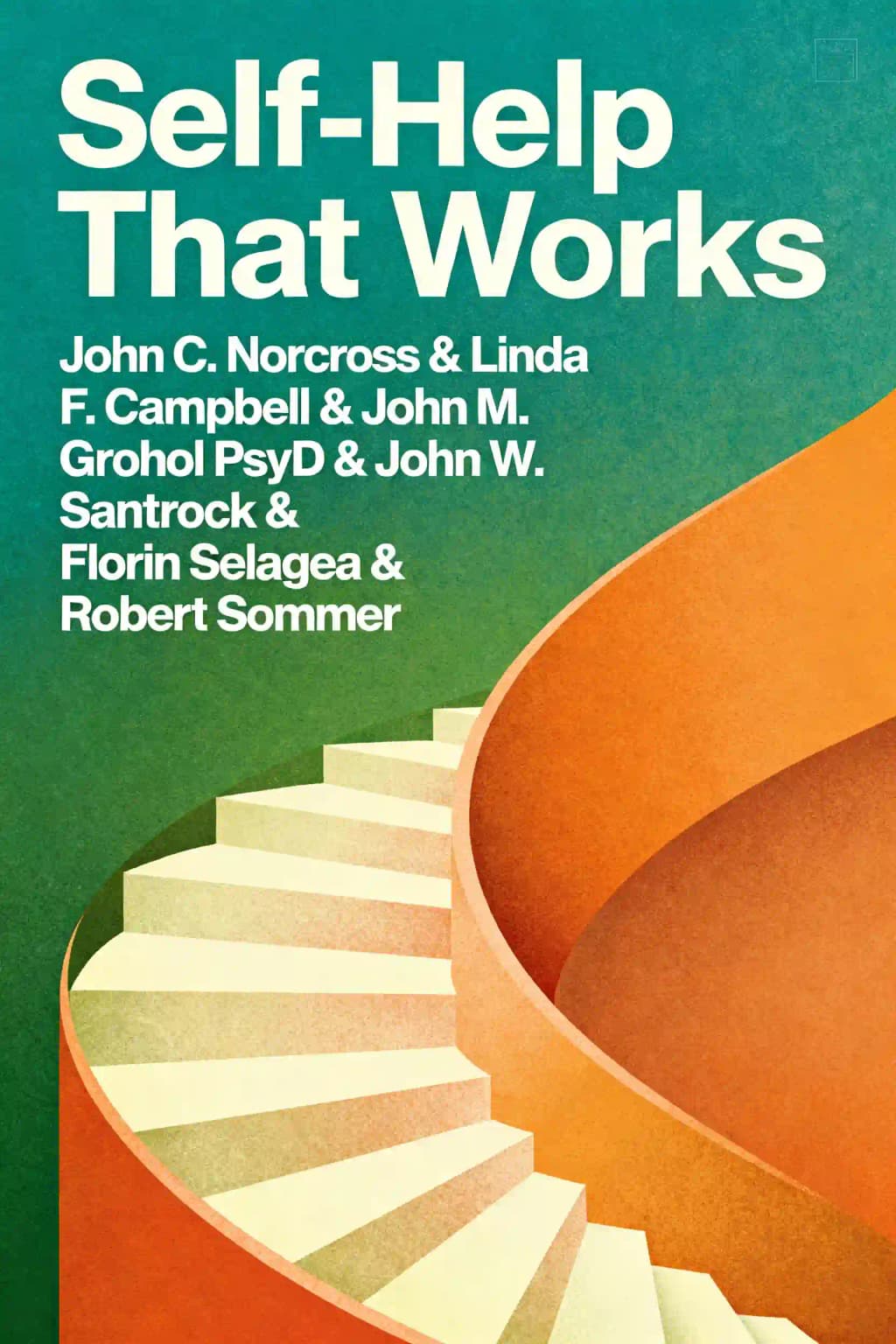
In a field flooded with unproven advice, "Self-Help That Works" evaluates over 2,000 resources backed by 5,000 mental health professionals. Featured on Today Show and CBS Sunday Morning, Norcross's evidence-based approach is transforming how we pursue genuine personal growth.
John C. Norcross, co-author of Self-Help That Works, is a distinguished clinical psychologist, behavior change expert, and Distinguished Professor at the University of Scranton.
With over 400 publications and 23 books, including the bestselling Changeology and Changing for Good, Norcross bridges academic rigor with practical self-help strategies. His work emphasizes evidence-based psychotherapy and integrative approaches, informed by decades of clinical practice and research.
A past president of the American Psychological Association’s Division of Psychotherapy, Norcross has appeared on Good Morning America, CBS Sunday Morning, and TEDx stages, cementing his reputation as a trusted voice in mental health. His acclaimed Psychotherapy Relationships That Work and Systems of Psychotherapy are widely used in clinical training programs.
Self-Help That Works distills decades of research into actionable advice, validated by its adoption in universities and therapy practices globally. The book has been translated into multiple languages and cited as a definitive guide to effective self-improvement strategies.
Self-Help That Works is an evidence-based guide to selecting effective self-help strategies for mental health, wellness, and personal growth. It evaluates over 2,000 resources—books, films, online programs, and support groups—across 41 behavioral disorders and life challenges, emphasizing scientifically validated approaches like cognitive-behavioral therapy and mindfulness.
This book is ideal for individuals seeking reliable self-help recommendations and mental health professionals integrating evidence-based strategies into treatment. It helps readers navigate overcrowded self-help markets by offering research-backed insights and practical steps for issues like stress management, relationship building, and nonchemical addictions.
Yes, it’s a critical resource for avoiding ineffective or harmful self-help trends. The authors combine 5,000+ mental health professionals’ expertise with 12 national studies, providing actionable frameworks for tailoring strategies to individual needs, such as goal-setting and boundary management.
Key concepts include evidence-based strategy selection, balancing cognitive-behavioral techniques with mindfulness, and prioritizing community support. The book structures self-help into three phases: understanding basics, applying scientific principles, and implementing personalized plans through real-life examples.
It outlines criteria for evaluating resources, such as alignment with peer-reviewed research and adaptability to individual challenges. The authors contrast proven methods (e.g., stress-reduction exercises) with common pitfalls like unscientific “quick fixes”.
The book critiques misleading claims in popular self-help media, emphasizing risks of unvalidated advice. It advocates for transparency in resource selection and warns against overreliance on self-diagnosis without professional guidance.
It provides tailored recommendations for conditions like chronic pain, autism, and bullying, integrating clinical insights with structured self-care practices. Strategies include:
Yes, it offers step-by-step guidance for applying techniques like mindfulness meditation, stress management, and goal-setting. Real-world examples illustrate how users overcome setbacks through disciplined practice and community engagement.
Unlike anecdotal guides, it relies on empirical research and expert consensus. The revised edition expands coverage of modern issues like LGBTQ+ challenges and digital addiction, differentiating it from classics like Atomic Habits.
New chapters address autism, bullying, chronic pain, happiness, and nonchemical addictions. Updated evaluations include online programs and apps, reflecting 2025’s digital self-help landscape.
Prioritize scientifically validated methods, tailor strategies to personal needs, and embrace ongoing learning. Emphasize skill-building (e.g., mindfulness) over temporary fixes, and leverage community support for sustained growth.
It synthesizes clinical studies and meta-analyses to rank self-help resources by efficacy. For example, mindfulness and cognitive-behavioral techniques are highlighted for reducing anxiety, while unproven fads are critically examined.
Siente el libro a través de la voz del autor
Captura ideas clave en un instante para un aprendizaje rápido
Self-help is not just feel-good fluff.
Sometimes, the most productive thing we can do is simply be present in the moment.
Small moments are the building blocks of a strong relationship.
Small, consistent changes can lead to remarkable results over time.
Change is possible, but it rarely happens overnight.
Desglosa las ideas clave de Self-Help That Works en puntos fáciles de entender para comprender cómo los equipos innovadores crean, colaboran y crecen.
Pregunta cualquier cosa, elige tu estilo de aprendizaje y co-crea ideas que realmente resuenen contigo.

Creado por exalumnos de la Universidad de Columbia en San Francisco
"Instead of endless scrolling, I just hit play on BeFreed. It saves me so much time."
"I never knew where to start with nonfiction—BeFreed’s book lists turned into podcasts gave me a clear path."
"Perfect balance between learning and entertainment. Finished ‘Thinking, Fast and Slow’ on my commute this week."
"Crazy how much I learned while walking the dog. BeFreed = small habits → big gains."
"Reading used to feel like a chore. Now it’s just part of my lifestyle."
"Feels effortless compared to reading. I’ve finished 6 books this month already."
"BeFreed turned my guilty doomscrolling into something that feels productive and inspiring."
"BeFreed turned my commute into learning time. 20-min podcasts are perfect for finishing books I never had time for."
"BeFreed replaced my podcast queue. Imagine Spotify for books — that’s it. 🙌"
"It is great for me to learn something from the book without reading it."
"The themed book list podcasts help me connect ideas across authors—like a guided audio journey."
"Makes me feel smarter every time before going to work"
Creado por exalumnos de la Universidad de Columbia en San Francisco

Obtén el resumen de Self-Help That Works como PDF o EPUB gratis. Imprímelo o léelo sin conexión en cualquier momento.
In today's world, we're inundated with self-help advice from every corner. Books, websites, apps, and social media influencers all promise life-changing solutions. But how do we separate the wheat from the chaff? How do we know which resources are truly effective and which might be potentially harmful? This is where our book comes in. We've sifted through over 2,000 self-help resources and gathered insights from nearly 5,000 mental health professionals to bring you a curated guide of what actually works. Our goal is to empower you with evidence-based strategies that can make a real difference in your life.
Let's start by addressing a common misconception: self-help is not just feel-good fluff. When done right, it's grounded in solid psychological research. Take cognitive behavioral therapy (CBT), for instance. This approach, which focuses on changing negative thought patterns, has been proven effective for managing anxiety and depression. One book we highly recommend in this area is "The Anxiety and Phobia Workbook" by Edmund Bourne. It provides practical CBT techniques that readers can apply to manage panic and fear. For example, it teaches how to identify and challenge irrational thoughts that fuel anxiety. One reader shared how the book helped her overcome a debilitating fear of flying by systematically addressing her catastrophic thinking patterns.
Another powerful tool in the self-help arsenal is mindfulness. Jon Kabat-Zinn's "Wherever You Go, There You Are" is a standout resource in this category. It introduces readers to the practice of mindfulness meditation, which has been shown to reduce stress and improve overall well-being. One of the book's key teachings is the concept of "non-doing." Kabat-Zinn explains that sometimes, the most productive thing we can do is simply be present in the moment. This might involve sitting quietly and observing our breath or paying full attention to a mundane task like washing dishes. While it might seem counterintuitive, this practice of presence can lead to profound shifts in our relationship with stress and anxiety.
Self-help isn't just about individual growth; it's also about improving our relationships with others. In this realm, John Gottman's "The Seven Principles for Making Marriage Work" stands out as a game-changer. Gottman's research has identified key predictors of relationship success, such as the ability to turn towards your partner's bids for connection. For instance, if your partner comments on a beautiful sunset, do you engage with them or brush off the comment? These small moments, Gottman argues, are the building blocks of a strong relationship. One couple we interviewed credited this book with saving their marriage. By implementing Gottman's principles, such as creating shared meaning and managing conflict constructively, they were able to rebuild trust and intimacy in their relationship.
When it comes to career development and achieving personal goals, we've found that books focusing on habit formation and productivity tend to be the most effective. James Clear's "Atomic Habits" is a prime example. Clear's central argument is that small, consistent changes can lead to remarkable results over time. He introduces the concept of "habit stacking," where you attach a new habit to an existing one. For example, if you want to start meditating, you might decide to do it right after brushing your teeth in the morning. One reader shared how this approach helped her finally establish a consistent exercise routine. By committing to just five minutes of movement after her morning coffee, she gradually built up to a full workout routine that she's maintained for over a year.
While self-help books and resources can be incredibly valuable, it's important to remember that we don't have to go it alone. Support groups and community resources can play a crucial role in personal growth and healing. For those dealing with addiction, for instance, we highly recommend the Alcoholics Anonymous program and its cornerstone books, including "Twelve Steps and Twelve Traditions." The power of this approach lies not just in the steps themselves, but in the community and accountability it provides. One recovering addict we spoke to described how the AA community became his lifeline. The regular meetings, sponsor relationship, and opportunity to help others in their recovery journey provided a structure and purpose that was crucial to his sobriety. In conclusion, effective self-help is about finding the right tools and approaches for your unique situation. It's about combining scientifically-backed strategies with personal insight and, often, community support. Remember, change is possible, but it rarely happens overnight. Be patient with yourself, stay consistent, and don't be afraid to reach out for help when you need it. Whether you're looking to manage anxiety, improve your relationships, boost your career, or simply live a more fulfilling life, there are evidence-based resources out there that can help. Our hope is that this book will serve as your guide, helping you navigate the world of self-help with confidence and discernment. Thank you for joining me on this journey through "Self-Help That Works." May you find the resources and inspiration you need to create positive change in your life.


