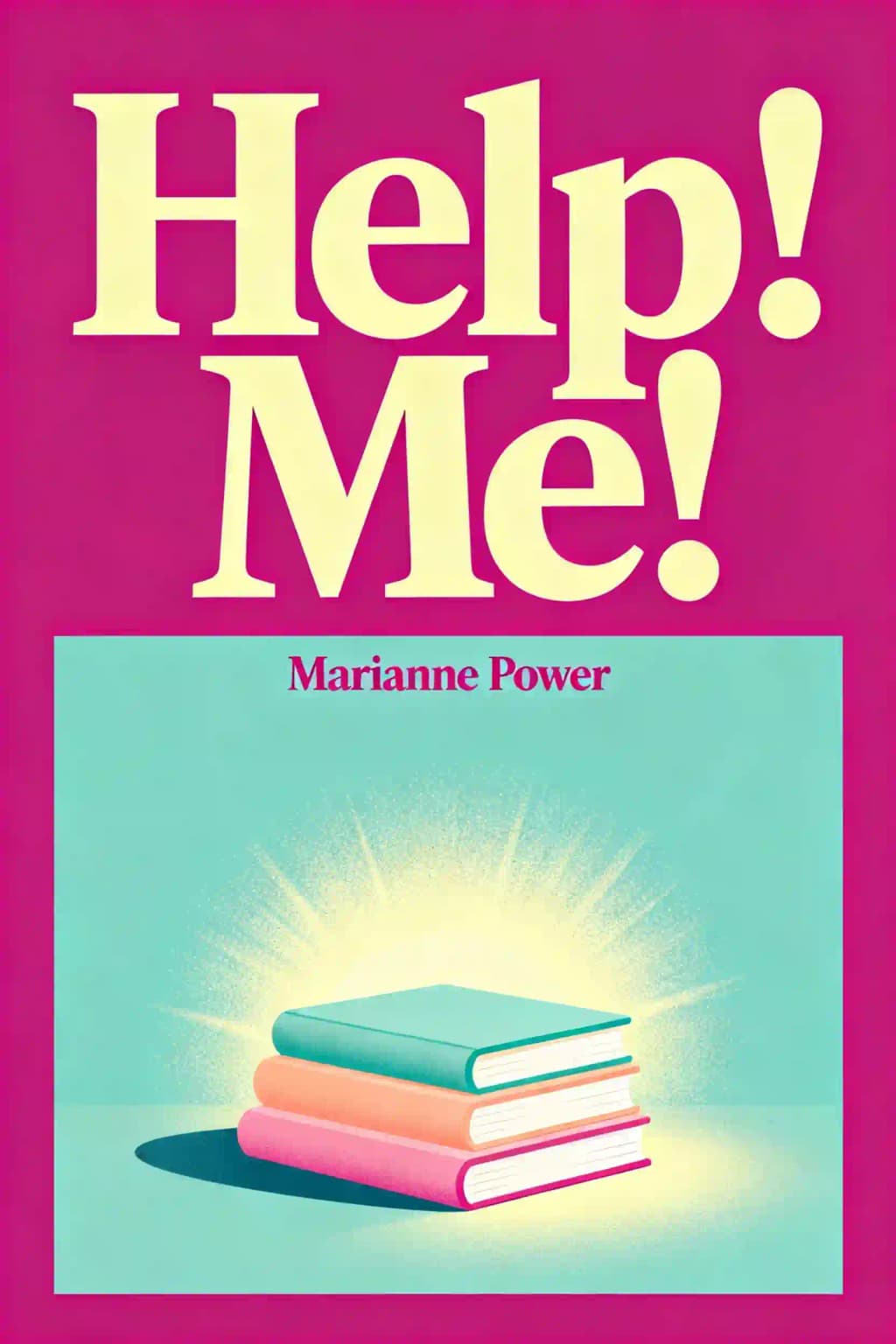
One woman's hilarious journey testing a self-help book each month for a year. Endorsed by Fearne Cotton as "thought-provoking!" and translated into 23 languages worldwide. What happens when you follow every piece of advice - even walking on fire?
Marianne Power is the bestselling author of Help Me!: One Woman’s Quest to Find Out If Self-Help Really Can Change Your Life, a memoir blending humor and introspection. It chronicles her year-long experiment following self-help advice.
A London-based journalist with a background in features editing for the Irish Daily Mail and freelance writing, Power’s work explores themes of self-discovery, mental health, and the pitfalls of perfectionism. Her candid storytelling, rooted in her own struggles with anxiety and life dissatisfaction, resonates with readers globally.
Help Me!, published in 25 languages, combines sharp wit with raw vulnerability, dissecting the self-help industry while grappling with universal questions about identity and fulfillment. The book’s TV adaptation rights were swiftly acquired, cementing its cultural impact. Power’s writing has been featured in major outlets like the Daily Mail, and her insights continue to spark conversations about authenticity in the age of personal optimization.
Help Me! is Marianne Power's memoir detailing her year-long experiment following one self-help book each month to transform her life. From skydiving to rejection therapy, she tests advice from titles like The Secret and The Power of Now, uncovering both humor and heartbreak. The journey reveals the pitfalls of chasing perfection and the importance of self-acceptance, blending candid storytelling with sharp insights into the self-help industry.
This book appeals to self-help skeptics, memoir enthusiasts, and anyone grappling with anxiety or dissatisfaction. It’s ideal for readers seeking a humorous yet raw exploration of personal growth, offering cautionary wisdom about the limits of quick fixes. Fans of Elizabeth Gilbert’s Eat Pray Love or Brené Brown’s vulnerability-focused works will find Power’s voice relatable.
Yes—Power’s blend of wit, vulnerability, and critical reflection makes Help Me! a standout. While showcasing self-help’s temporary highs, she exposes its emotional toll, providing a balanced perspective on resilience and authenticity. The book’s honesty about failure and mental health struggles resonates deeply, making it both entertaining and thought-provoking.
Power experiments with 12 books, including:
Power critiques the industry’s obsession with “perfect lives,” arguing that relentless positivity can amplify insecurity. Her experiments show how rigidly following advice led to debt, strained relationships, and burnout. The book underscores the need for balance—self-improvement shouldn’t come at the cost of self-compassion.
Key takeaways include:
Yes—Power’s obsessive adherence to self-help rules exacerbates anxiety and self-doubt. She confronts panic attacks, existential crises, and a sense of failure, ultimately seeking therapy. Her journey underscores the risks of treating self-help as a cure-all without professional support.
Unlike purely inspirational memoirs, Help Me! offers a nuanced critique. It parallels Year of Yes by Shonda Rhimes in humor but diverges by highlighting self-help’s darker side. Power’s focus on unintended consequences sets it apart, making it a cautionary companion to more optimistic guides.
Notable lines include:
While not a prescriptive guide, Power’s story validates struggles with anxiety, offering solidarity. Her realization that self-help isn’t a substitute for professional care makes it a relatable resource for those navigating similar challenges.
Power’s tone is conversational, darkly funny, and unflinchingly honest. She balances self-deprecating anecdotes with reflective insights, creating a narrative that feels like a candid chat with a close friend.
In an era of AI-driven wellness apps and curated social media personas, Help Me! remains a timely reminder of the dangers of commodified self-improvement. Its themes of authenticity and mental health resonate amid growing skepticism toward “optimization culture.”
Siente el libro a través de la voz del autor
Convierte el conocimiento en ideas atractivas y llenas de ejemplos
Captura ideas clave en un instante para un aprendizaje rápido
Disfruta el libro de una manera divertida y atractiva
"I'm never doing that again."
People hate the rich.
Imperfect thoughts are the cause of all humanity's ills.
Find me funny! Like me! Love me!
Money is to be thrown around and never kept.
Desglosa las ideas clave de Help Me! en puntos fáciles de entender para comprender cómo los equipos innovadores crean, colaboran y crecen.
Experimenta Help Me! a través de narraciones vívidas que convierten las lecciones de innovación en momentos que recordarás y aplicarás.
Pregunta cualquier cosa, elige tu estilo de aprendizaje y co-crea ideas que realmente resuenen contigo.

Creado por exalumnos de la Universidad de Columbia en San Francisco
"Instead of endless scrolling, I just hit play on BeFreed. It saves me so much time."
"I never knew where to start with nonfiction—BeFreed’s book lists turned into podcasts gave me a clear path."
"Perfect balance between learning and entertainment. Finished ‘Thinking, Fast and Slow’ on my commute this week."
"Crazy how much I learned while walking the dog. BeFreed = small habits → big gains."
"Reading used to feel like a chore. Now it’s just part of my lifestyle."
"Feels effortless compared to reading. I’ve finished 6 books this month already."
"BeFreed turned my guilty doomscrolling into something that feels productive and inspiring."
"BeFreed turned my commute into learning time. 20-min podcasts are perfect for finishing books I never had time for."
"BeFreed replaced my podcast queue. Imagine Spotify for books — that’s it. 🙌"
"It is great for me to learn something from the book without reading it."
"The themed book list podcasts help me connect ideas across authors—like a guided audio journey."
"Makes me feel smarter every time before going to work"
Creado por exalumnos de la Universidad de Columbia en San Francisco

Obtén el resumen de Help Me! como PDF o EPUB gratis. Imprímelo o léelo sin conexión en cualquier momento.
It began with a hangover Sunday. Marianne Power, a 36-year-old London freelance writer, found herself surrounded by empty wine bottles and Kardashians on TV, feeling hopelessly behind her milestone-collecting peers. Despite outward success, inside she felt lost and irrelevant. This crisis sparked an audacious experiment: she wouldn't just read self-help books as she had for years - she would live them, following every instruction to the letter. One book a month for a year, systematically fixing her flaws. By year's end, she'd be perfect! What started as a neat twelve-month plan spiraled into a sixteen-month emotional rollercoaster that would turn her life inside out and challenge everything she believed about happiness and self-improvement.
The experiment began with Susan Jeffers' "Feel the Fear and Do It Anyway," leading to the most random fear-fighting to-do list imaginable: stand-up comedy, watching horror films, skydiving, and posing nude as a life model. Each experience pushed her further outside her comfort zone. Surprisingly, nude modeling left her feeling empowered, while a spin class with "people with rock-hard calves pedaling furiously in expensive Lycra" proved more humiliating than being naked in front of strangers. Her comedy debut came after a weekend course in a Paddington pub basement. Despite her lifelong hatred of public speaking, she found herself under the spotlight, telling jokes about her month of fear-fighting. To her amazement, they laughed - not uncontrollably, but genuine laughter. The experience filled her with unprecedented pride. Yet when she finally jumped from a plane - falling through minus-fifteen-degree air at 150 miles per hour - rather than feeling exhilarated, she landed furious: "I'm never doing that again." Little did she know that falling out of the sky would seem like a walk in the park compared to what was coming next.
Marianne's formative money memory was her father's cruel game of throwing cash in the air - "keep what you catch, but if it touches the floor it's gone" - only to deny them keeping it. This explained her later financial chaos: money was for throwing away, not keeping. A financial health quiz confirmed her troubled relationship with money, scoring 6/39. Her debt totaled 15,109.60: 6,000 to her sister, 7,000 business overdraft, and 2,109.60 on her current account. Her statements revealed constant "financial energy leaks": daily coffees, restaurants, beauty treatments, designer clothes, and untraceable cash withdrawals. Her spending stemmed from deep insecurity - buying clothes because she felt unattractive, squandering money because she felt incompetent. Seeking solutions, she turned to "The Secret" and its promise of effortless manifestation through the "law of attraction." Following its Ask-Believe-Receive formula, she visualized incoming checks and created a fake 100,000 "Universe check." Her friend Sarah questioned the book's logic, noting its troubling suggestion that war victims simply weren't "thinking positively enough." Creating a Vision Board proved revealing - she struggled to identify genuine desires beyond superficial wants. She refocused on happiness over materialism, and within days, received assignments matching elements on her board. While the manifestation showed promise, that 100,000 check remained elusive.
Marianne's childhood rejection by playground peers left her avoiding similar situations for years. To overcome this fear, she embraced "Rejection Therapy" - deliberately seeking daily rejection through sixteen planned scenarios. Starting with asking for free coffee, she progressed to bolder challenges with her sister Helen: playing a stranger's double bass, pulling her own pint, and joining unknown groups. Each attempt surprisingly led to acceptance. Her ultimate test came in approaching an attractive man at a coffee shop. Despite initial hesitation, she connected with him, leading to wine and a goodnight kiss. Though he was returning to Athens, he wanted to see her again. This experience revealed her key insight: she hadn't faced much actual rejection because she'd been "failing by default" - rejecting herself before others had the chance.
By October, Marianne's self-help journey had taken a severe toll. She developed a persistent illness with fever and cough, but rather than accepting her doctor's simple virus diagnosis, she searched for deeper emotional meanings - a common trap in self-help thinking. Her obsession had become all-consuming; inspirational quotes replaced friends' updates on social media, and relationships suffered. Despite following Stephen Covey's principles religiously - quitting alcohol, exercising, and practicing daily kindness - everything seemed to go wrong. Her technology failed, her writing suffered, and the pressure to live perfectly only deepened her self-loathing, leading to dark thoughts of suicide. The crisis peaked during a night out with her sister Helen, who bluntly advised her to seek medical help and consider antidepressants. Following this wake-up call, she retreated to Ireland, spending three days in bed, haunted by feelings of failure.
After a quiet holiday season, Marianne realized her self-help journey hadn't created the perfect version of herself she'd imagined. Following a therapist's recommendation, she read Eckhart Tolle's "The Power of Now." Tolle described how most people live with an endless critical voice that judges and complains, focused on past regrets or future anxieties rather than the present moment. Observing her own mental chatter, she discovered relentless internal criticism - the "fat record" at dawn, the "lazy record" at breakfast, work-related self-doubt all day, and drinking guilt at night. While watching TV and berating herself about pasta, she had an epiphany: she was attached to her problems. Tolle explains that our ego - the false identity built from our thoughts - craves specialness, even through misery. By month's end, she experienced unexpected peace. On her morning walks, she noticed everything: sounds, sensations, trees. She discovered that happiness lies not in striving but in embracing each moment - savoring the process rather than the outcome, the sound of laughter, the simple pleasure of toast.
Standing before the mirror, Marianne practiced Louise Hay's affirmation: "I love and approve of myself." She examined her body without the usual harsh criticism - the drooping breasts, the belly that showed her "long-term relationship with cheese on toast and wine," the unshaven legs and stretch marks. Instead of berating herself, she smiled and repeated the affirmation. Her journey seemed disastrous: mounting debt, decreased productivity, weight gain, magical thinking about the Universe providing, and a lost friendship. Yet at the Hoffman Process therapy retreat, sharing her flaws with strangers became transformative, showing her she was accepted as she was. She grew tired of trying to eradicate her "bad bits," striving for perfection, forcing positivity when she felt grumpy, and feeling guilty about simple pleasures. After sixteen months, she could look in the mirror and be okay with what she saw. But it was time to step away from her reflection, both real and metaphorical, and embrace life as it came - imperfections and all. Sometimes the greatest self-help is accepting that you don't need to be helped at all.