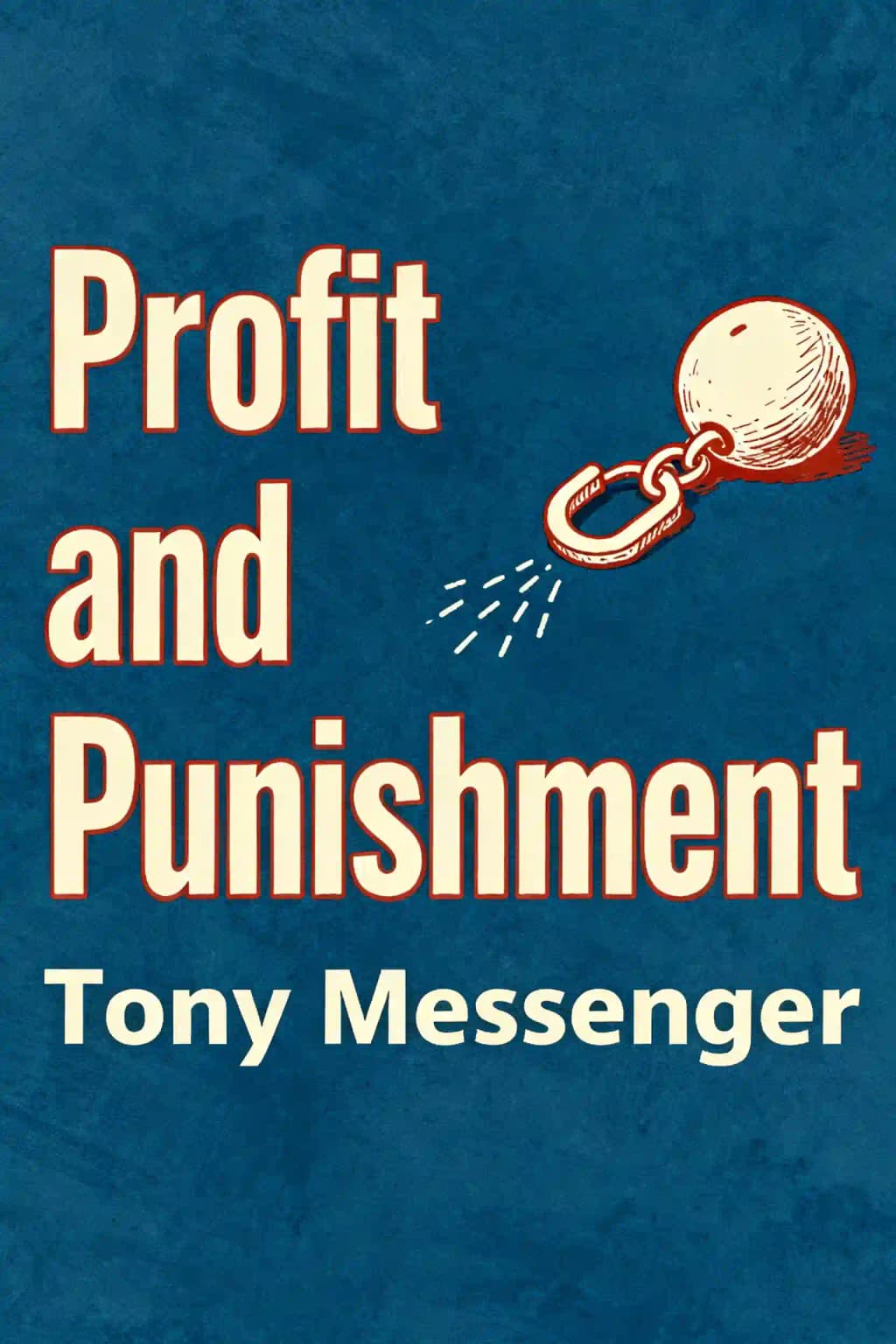
Profit and Punishment
How America Criminalizes the Poor in the Name of Justice
Resumen de Profit and Punishment
Pulitzer Prize-winner Tony Messenger exposes America's modern debtors' prisons, where minor offenses trap the poor in cycles of debt and jail time. What's the cost of justice? Former Senator Claire McCaskill calls it "the most comprehensive look at poverty criminalization" driving bipartisan reform.

Temas clave en Profit and Punishment
- criminalization of poverty
- modern debtors prisons
- judicial revenue collection
- court fee reform
- systemic wealth inequality
Citas de Profit and Punishment
Profit and Punishment...has become required reading in law schools.
How ridiculous is it that we're going to take away a person's ability to work because they haven't made enough money to pay a fine or fee?
Personajes en Profit and Punishment
- Tony MessengerAuthor and Pulitzer Prize-winning journalist
- Brooke BergenMissouri woman jailed over debt from a shoplifting
- Kendy KillmanOklahoma mother trapped in the court fee system
- Keilee FantSt. Louis woman jailed for unpaid traffic tickets
- Sasha DarbyForklift driver who waived counsel due to fees
Sobre el Autor
Sobre el autor de Profit and Punishment
Tony Messenger, Pulitzer Prize-winning journalist and author of Profit and Punishment: How America Criminalizes the Poor in the Name of Justice, is a leading voice on systemic inequities in the U.S. criminal justice system.
As the metro columnist for the St. Louis Post-Dispatch, Messenger has spent decades investigating how court fines and fees disproportionately punish low-income communities, work that earned him the 2019 Pulitzer Prize for Commentary. His book expands on this groundbreaking reporting, blending investigative rigor with human stories to expose modern debtors’ prisons and their devastating societal impacts.
A Missouri Honor Medal recipient and finalist for the 2015 Pulitzer, Messenger’s columns on Ferguson’s racial justice struggles and rural judicial abuses have driven policy reforms. A frequent speaker at criminal justice conferences and universities, his findings are cited in national debates about poverty and legal reform.
Profit and Punishment builds on his Pulitzer-winning columns, which sparked legislative changes in Missouri and renewed scrutiny of predatory court practices nationwide.
Descargar resumen de Profit and Punishment
Obtén el resumen de Profit and Punishment como PDF o EPUB gratis. Imprímelo o léelo sin conexión en cualquier momento.
Preguntas Frecuentes Sobre Este Libro
Profit and Punishment by Tony Messenger exposes how America’s justice system criminalizes poverty through excessive fines, fees, and court costs, trapping low-income individuals in cycles of debt and incarceration. The Pulitzer Prize-winning book combines personal narratives, legal analysis, and data to reveal systemic exploitation, such as $50 billion in unpaid court debts and modern-day debtors' prisons.
This book is essential for policymakers, criminal justice reformers, social activists, and anyone seeking to understand systemic inequities. It offers critical insights for legal professionals, journalists, and educators addressing poverty-driven incarceration.
Yes. Messenger’s Pulitzer-winning investigative rigor and gripping storytelling make it a vital read. It’s praised for exposing lesser-known injustices, such as “taxation by citation,” where municipalities fund budgets through predatory fines.
The book shares stories like Bergen and Killman, whose minor offenses led to insurmountable debts, job loss, and jail time. Messenger contextualizes these accounts with data, such as $50 billion in outstanding court debts, showing how fees perpetuate poverty.
Key reforms include mandatory ability-to-pay hearings, abolishing “pay-to-stay” jail fees, and legislative action to end profit-driven fines. Messenger highlights successful cases, like ACLU lawsuits, that challenge unconstitutional debtors' prisons.
Modern debtors' prisons jail individuals for unpaid court fines, violating constitutional rights. These facilities, as described in Missouri and other states, deepen poverty by forcing inmates into further debt for their incarceration.
Messenger combines firsthand accounts of affected individuals, legal precedents (e.g., 1983’s Bearden v. Georgia), and systemic data. His Pulitzer-winning journalism provides credibility to critiques of exploitative court practices.
Some may argue the book focuses heavily on extreme cases, though Messenger counters by contextualizing these examples within national trends. Others note limited coverage of grassroots reform efforts already underway.
While not the central theme, the book underscores how fines disproportionately harm marginalized communities, exacerbating racial disparities in incarceration and poverty cycles.
- Cycle of Debt: Minor fines spiral into lifelong poverty due to interest and penalties.
- Legal Exploitation: Courts prioritize revenue over justice, often violating due process.
- Reform Models: Ability-to-pay assessments and fee abolition can disrupt the cycle.
Unlike broader criminal justice critiques, Messenger’s work zooms in on legal financial obligations (LFOs), offering a niche focus on economic exploitation within courts. It complements works like The New Jim Crow by highlighting fiscal injustice.
- “The poor aren’t punished because they commit crimes; they commit crimes because they’re punished.”
- “Fines should be a consequence of crime, not a life sentence.”
These lines encapsulate the book’s critique of profit-driven justice.