Capítulo 1
America's Self-Made Poverty Machine
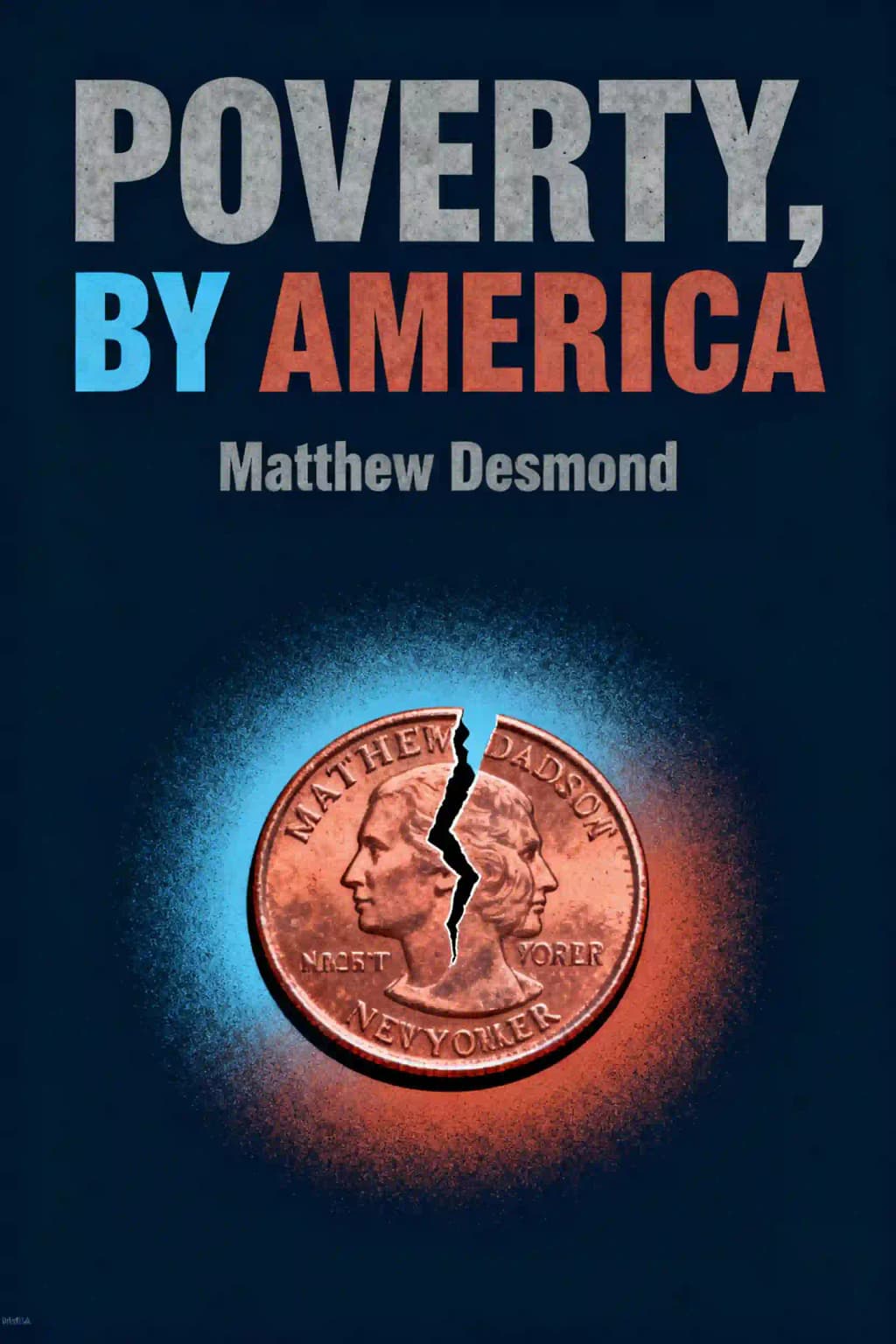
In a nation with enough wealth to end poverty tomorrow, 11 million American children still go to bed hungry. Matthew Desmond, Pulitzer Prize-winning author of "Evicted," shatters the comfortable myths we tell ourselves about why poverty persists. The truth? Poverty isn't a failure of individuals - it's a deliberate economic choice that benefits the affluent. Through meticulous research and unforgettable storytelling, Desmond reveals how tax codes, housing policies, and wage suppression create a system where the rich extract billions from the poor annually. When "Poverty, By America" was published, it sparked uncomfortable conversations in Congress and corporate boardrooms alike, with its radical yet evidence-based solutions. What makes this book revolutionary isn't just its diagnosis but its actionable blueprint for change. You'll finish these pages not just understanding how poverty is manufactured, but equipped with specific ways you can help dismantle the machine - whether you're a policy maker, business leader, or concerned citizen. This isn't just another book about inequality; it's your invitation to finally solve America's most unnecessary crisis.
Capítulo 2
The Human Face of Systemic Failure
Poverty in America manifests in ways both visible and invisible, creating a complex web of challenges that trap individuals in cycles of deprivation. Consider Crystal Mayberry, whose story Desmond follows closely. Born to a mother struggling with addiction, Crystal bounced between foster homes before aging out of the system at 18. Despite receiving disability benefits for mental health challenges, she faces a relentless cycle of evictions and homelessness. Her criminal record-largely for petty offenses related to survival, such as shoplifting food and trespassing in abandoned buildings for shelter-prevents her from accessing stable housing, while her lack of education limits employment opportunities to minimum wage jobs with irregular hours.
Crystal's experience reveals how poverty functions as more than simple financial hardship. It operates as an accumulation of disadvantages that compound over time, creating what sociologists call "concentrated disadvantage." When poverty becomes geographically concentrated, it intensifies, creating neighborhoods where schools struggle with high turnover rates and limited resources, jobs disappear as businesses relocate, and environmental hazards multiply-from lead paint in aging buildings to higher rates of air pollution from nearby industrial zones. Research shows that children growing up in these areas are significantly more likely to experience adverse health outcomes, lower educational achievement, and reduced lifetime earnings.
The traditional poverty measure, developed by Mollie Orshansky in the 1960s, fails to capture this complexity. Based on the cost of a minimum food budget multiplied by three, this outdated formula ignores how housing costs have outpaced other expenses and how geography dramatically affects the cost of living. For example, someone officially "above poverty" in San Francisco making $30,000 annually might be homeless, while someone with the same income in rural Mississippi might manage basic shelter. Modern attempts to update this measure, such as the Supplemental Poverty Measure (SPM), provide a more nuanced view by considering regional cost variations and non-cash benefits, but even these improved metrics struggle to capture the full scope of economic hardship.
What makes American poverty particularly perplexing is its persistence despite our nation's wealth. Unlike global absolute poverty, where people lack access to clean water or basic nutrition, American poverty exists alongside abundance. In fact, the United States wastes approximately 40% of its food supply annually while 34 million Americans experience food insecurity. This paradox extends to housing, where vacant properties often outnumber homeless individuals in major cities. It represents not a lack of resources but a failure of distribution-a political choice rather than an economic necessity. The gap between the nation's productive capacity and the lived reality of its poorest citizens highlights how policy decisions, from tax structures to social program funding, actively shape the persistence of poverty.
This systemic nature of poverty becomes evident in the intergenerational transmission of disadvantage. Studies show that children born into the bottom quintile of income distribution have only a 7.5% chance of reaching the top quintile, while those born into the top quintile have a 40% chance of staying there. These statistics reveal how individual stories like Crystal's are not merely personal tragedies but manifestations of deeper structural inequities in American society.
Capítulo 3
The Stagnation Paradox: Why Progress Bypassed the Poor
Perhaps the most puzzling aspect of American poverty is its remarkable consistency over time. Despite technological revolutions, economic growth, and various anti-poverty initiatives, the poverty rate has hovered between 10.5% and 15.1% for half a century. This stagnation demands explanation, especially when contrasted with our progress in other areas.
Consider this contradiction: while Americans now have access to technologies unimaginable fifty years ago-smartphones, internet, advanced medical treatments-the fundamental economic security of the poorest Americans hasn't improved. Material conditions have changed-today's poor households typically have refrigerators, televisions, and microwaves-but the experience of economic insecurity remains.
Why haven't we made more progress? The conventional wisdom suggests we've simply spent less on fighting poverty. But the data tells a different story. Since 1980, federal spending on means-tested programs has increased by 150% per capita, adjusted for inflation. We're spending more, not less, yet poverty persists.
This paradox becomes clearer when we examine where the money goes. Much of our increased spending flows into healthcare costs that have risen dramatically, while direct cash assistance has declined. Programs like Temporary Assistance for Needy Families (TANF) have been gutted, with states diverting funds meant for poor families to other purposes. In Mississippi, for example, millions in welfare funds were channeled to build a volleyball stadium and pay speaking fees to retired athletes while rejecting 98% of applicants for direct assistance.
The system has become remarkably effective at generating profits from poverty while failing to reduce it. Consider the labyrinthine process of applying for disability benefits, which often requires hiring attorneys who take substantial cuts from eventual payments. Or housing subsidies that primarily benefit developers and landlords rather than making housing more affordable. What looks like anti-poverty spending often functions as corporate welfare, maintaining rather than reducing poverty.
Capítulo 4
The Decline of Worker Power and Rise of Exploitation
The deterioration of labor unions represents one of the most significant shifts in American economic life over the past half-century. Once a powerful force securing living wages and decent working conditions, unions have been systematically weakened through both internal failures and external attacks.
The turning point came in 1981 when President Reagan fired 11,000 striking air traffic controllers, sending a clear message that the government would no longer protect workers' collective bargaining rights. This watershed moment emboldened corporations to adopt aggressive anti-union tactics with little fear of consequences. The results were dramatic: union membership plummeted from 35% of private-sector workers in the 1950s to less than 7% today.
As union strength declined, income inequality soared. From 1979 to 2020, productivity increased by 61.8%, but hourly compensation for typical workers rose by only 17.5%. Where did the gains go? Primarily to executives and shareholders. CEO compensation has grown 1,322% since 1978, while typical worker compensation has risen just 18%. Without unions to ensure workers received their fair share of productivity gains, the benefits flowed upward.
Today's labor market is increasingly characterized by what economists call the "fissured workplace"-where companies classify workers as independent contractors rather than employees to avoid providing benefits or stable wages. The gig economy exemplifies this shift, with platforms like Uber and DoorDash creating the illusion of entrepreneurship while shifting risks to workers who lack basic protections.
The human cost of these changes becomes clear in places like Emeryville, California, where Julio, a hotel worker, saw his life transform after a living wage ordinance raised his pay. With higher wages, he could afford to see a doctor for chronic health issues, spend more time with his children, and even save a little money. His experience illustrates how poverty wages create cascading problems that extend far beyond simple financial hardship.
Capítulo 5
The Hidden Welfare State for the Affluent
One of the most persistent myths in American politics is the division between "makers" and "takers"-the notion that some Americans pay taxes while others merely receive benefits. The reality is far more complex and reveals a welfare state that disproportionately benefits the affluent while remaining largely invisible to them.
Consider the mortgage interest deduction, which costs the federal government over $30 billion annually. This tax benefit flows overwhelmingly to high-income households with expensive homes and large mortgages. Similarly, tax-advantaged retirement accounts like 401(k)s and IRAs provide substantial benefits to higher earners who can afford to contribute the maximum amounts. These programs constitute what political scientist Suzanne Mettler calls the "submerged state"-government benefits that operate through the tax code rather than direct spending.
The scale of this hidden welfare state is enormous. In 2018, the federal government spent approximately $1.1 trillion on social programs for low-income Americans. During the same period, it provided about $1.5 trillion in tax benefits, with most flowing to middle and upper-income households. Yet these tax benefits aren't typically perceived as government assistance by their recipients.
This perception gap has profound political consequences. When President Obama proposed scaling back 529 college savings plans-which primarily benefit affluent families-the backlash was immediate and fierce. The proposal was quickly abandoned, illustrating how vigorously the affluent defend their benefits while often criticizing assistance for the poor.
The psychology behind this contradiction is revealing. Tax breaks feel like keeping what's rightfully yours, while direct benefits feel like receiving something you haven't earned. This framing obscures how both constitute government policy choices about resource allocation. By structuring benefits for the affluent through the tax code, we've created a two-tier welfare system: visible, stigmatized programs for the poor and invisible, normalized benefits for the wealthy.
Capítulo 6
The Economics of Exploitation: How the Poor Pay More
Poverty isn't just about having less-it's about paying more for basic necessities. This paradoxical reality, where those with the least resources face the highest costs, represents one of the most insidious aspects of American poverty.
Banking offers a clear example. While middle and upper-income Americans enjoy free checking accounts and credit cards with rewards, low-income Americans often pay exorbitant fees for basic financial services. Overdraft fees, which generated $15.5 billion for banks in 2019, fall disproportionately on those living paycheck to paycheck. Check-cashing services charge steep percentages to those without bank accounts, while payday lenders trap borrowers in cycles of debt with annual percentage rates that can exceed 400%.
Housing follows a similar pattern. Poor renters typically spend over half their income on housing, compared to about 30% for middle-income households. They're also more likely to face eviction, with all its associated costs: lost security deposits, moving expenses, damaged credit, and disrupted lives. The poorest Americans often pay the highest effective rents per square foot because they can only afford weekly or monthly rentals without the capital for security deposits or longer leases.
Even food costs more in poor neighborhoods, where full-service grocery stores are scarce and convenience stores charge premium prices. A gallon of milk might cost 50% more at a corner store than at a suburban supermarket. Transportation to distant grocery stores adds additional costs in both money and time.
This exploitation isn't accidental-it's structural. Financial institutions have developed sophisticated models to extract maximum profit from those with the least financial cushion. Landlords in poor neighborhoods often achieve higher returns on investment than those in affluent areas, despite (or because of) minimal maintenance and high turnover. These economic arrangements don't just reflect poverty; they actively deepen and perpetuate it.
Capítulo 7
Reimagining the Safety Net: Investing in Poverty's End
What would it actually cost to eliminate poverty in America? The answer is surprisingly modest: approximately $177 billion annually-less than 1% of the nation's GDP and roughly one-quarter of what we spend on national defense. This figure represents the poverty gap-the amount needed to bring every poor household up to the poverty line.
But where would this money come from? One compelling source is the estimated $1 trillion lost annually to tax avoidance by corporations and wealthy individuals. Through sophisticated strategies involving offshore accounts, pass-through businesses, and various loopholes, the wealthiest Americans effectively opt out of much of their tax responsibility. Closing these loopholes could generate more than enough revenue to end poverty.
Critics often argue that higher taxes on the wealthy would stifle economic growth, but historical evidence suggests otherwise. During the 1950s and 1960s, when top marginal tax rates exceeded 70%, the American economy experienced some of its strongest and most broadly shared growth. Countries like Denmark and Sweden maintain higher tax rates today while achieving comparable or better economic outcomes than the United States.
Beyond funding, we need to reimagine how safety net programs operate. The pandemic response demonstrated that we can act boldly when we choose to. Programs like the expanded Child Tax Credit temporarily cut child poverty by nearly half, while emergency rental assistance prevented an eviction crisis during the economic shutdown. These successes weren't accidents-they resulted from policy choices that prioritized direct assistance with minimal bureaucratic barriers.
A reimagined safety net would combine the best aspects of targeted and universal approaches. Universal programs like Medicare for All would provide a foundation of security for everyone, while targeted supplements would ensure those with the greatest needs receive additional support. This hybrid approach avoids the stigma and administrative complexity of purely means-tested programs while preventing benefits from flowing primarily to those who need them least.
Capítulo 8
Empowering the Poor Through Economic Dignity
Ending poverty requires more than just increasing incomes-it demands restoring dignity and agency to people's economic lives. This means addressing the deep-rooted power imbalances that allow exploitation to flourish in multiple spheres: employment, housing, financial services, and personal autonomy. True economic empowerment requires a comprehensive approach that tackles these interconnected challenges.
Labor market reforms represent a crucial starting point. While raising the minimum wage to a living wage would immediately improve millions of lives, this alone is insufficient. Workers need both better wages and stronger collective bargaining rights to achieve lasting economic security. Sectoral bargaining-where workers across an entire industry negotiate collectively-has proven remarkably effective in countries like Denmark, where fast food workers earn $22 per hour with benefits, and Germany, where industry-wide agreements cover 56% of workers. Studies show that sectoral bargaining reduces wage inequality and improves job quality without harming employment. Adapting these models to the American context would transform low-wage work, particularly in industries like retail, food service, and domestic care where exploitation is rampant.
Housing represents another critical arena for empowerment, with stable housing being fundamental to economic security. The USDA's 502 Direct Loan Program has demonstrated remarkable success, helping over 2.1 million rural Americans become homeowners with default rates lower than conventional mortgages. This program's success stems from its combination of affordable terms, careful underwriting, and ongoing support services. Expanding similar approaches to urban areas could create pathways to homeownership for millions currently trapped in exploitative rental markets. Community land trusts, which have grown from 160 to over 250 in the last decade, have proven especially effective at maintaining long-term affordability while building community wealth. Similarly, tenant-owned cooperatives in cities like New York have demonstrated that collective ownership can provide both stability and wealth-building opportunities for low-income residents.
Financial inclusion requires a dual approach: protecting consumers from predatory practices while expanding access to fair financial services. Postal banking, successfully implemented in countries like Japan and New Zealand, could provide an alternative to check cashers and payday lenders in the 60 million Americans living in banking deserts. Research shows that postal banking could save low-income households an average of $2,000 annually in fees while generating revenue for the Postal Service. Meanwhile, stronger regulation of overdraft fees (which generated $15.47 billion in 2019) and high-interest loans would prevent the worst forms of financial exploitation. States like Illinois that have capped loan interest rates at 36% have seen predatory lenders exit without reducing credit access.
Reproductive autonomy forms another essential component of economic empowerment, with research showing that access to family planning services increases women's labor force participation by 20% and earnings by 40%. Delaware's Contraceptive Access Now initiative demonstrates the powerful impact of comprehensive approaches - by ensuring women received their preferred birth control method and removing cost barriers, the program reduced unintended pregnancies by 15% in just three years. Similar programs in Colorado and Washington state have shown comparable results while generating significant public savings. These initiatives demonstrate how practical interventions can expand women's economic options without imposing external control, allowing them to make choices that align with their own goals and values.
The intersection of these various forms of economic empowerment creates a multiplier effect. When people have stable housing, fair wages, access to financial services, and control over their personal lives, they can invest in education, start businesses, and build long-term wealth. This comprehensive approach to economic dignity doesn't just reduce poverty - it creates the conditions for sustained prosperity and self-determination.
Capítulo 9
Breaking Down Walls of Segregation and Exclusion
America's geography of opportunity remains profoundly unequal. Children born in certain zip codes face dramatically different life prospects than those born just miles away, with these disparities largely following lines of race and class. This segregation isn't natural or inevitable-it results from specific policies that can and should be changed.
Exclusionary zoning laws represent one of the most powerful mechanisms maintaining segregation. By prohibiting multi-family housing, requiring large lot sizes, or imposing other restrictions, affluent communities effectively wall themselves off from economic diversity. These policies artificially restrict housing supply, driving up prices and preventing lower-income families from accessing high-opportunity neighborhoods with good schools, safe streets, and abundant jobs.
The consequences are severe. Children who grow up in high-poverty neighborhoods face higher rates of asthma, lead exposure, and other health problems. They attend schools with fewer resources and experience more community violence. These environmental factors shape their development and future prospects in ways that individual effort alone cannot overcome.
Successful integration efforts demonstrate what's possible. Montgomery County, Maryland's inclusionary zoning ordinance requires developers to include affordable units in new housing developments. The result? Low-income children attending well-resourced schools and achieving better educational outcomes. In New Jersey, the Mount Laurel doctrine has created affordable housing in high-opportunity suburbs, with studies showing significant improvements in mental health, economic security, and children's well-being for families who moved from high-poverty to mixed-income communities.
Breaking down these walls requires challenging the scarcity mindset that treats good schools, safe neighborhoods, and economic opportunity as zero-sum resources. The reality is that integration benefits everyone-reducing crime, improving social cohesion, and even boosting property values over time. What's scarce isn't opportunity itself but the political will to share it equitably.
Capítulo 10
From Scarcity to Abundance: Reimagining America Without Poverty
The persistence of poverty in America reflects not an inevitable economic reality but a series of choices-choices that can be unmade and remade. Moving from our current state to a poverty-free society requires shifting from a mindset of artificial scarcity to one of shared abundance.
This transformation begins with recognizing how the myth of scarcity serves those in power. When resources seem limited, competition feels natural and exclusion justified. But America's fundamental reality is one of unprecedented wealth-we have more than enough to ensure everyone's basic needs are met. The question isn't whether we can afford to end poverty but whether we can afford not to, given its enormous costs in human potential, healthcare spending, criminal justice, and lost productivity.
Imagining a poverty-free America means envisioning communities where housing is affordable and secure for everyone; where work pays living wages with dignity and benefits; where quality healthcare, education, and childcare are universal rights rather than market commodities; and where financial systems serve people rather than exploiting them. It means creating systems that distribute opportunity more equitably across geography, race, and class.
This vision isn't utopian-elements of it exist already, both in America's past and in contemporary examples from around the world. The post-war period saw broadly shared prosperity through strong unions, progressive taxation, and public investment. Countries like Denmark and Finland demonstrate how robust social supports can coexist with dynamic economies and high living standards.
The path forward requires both systemic change and personal commitment. Policy reforms-from inclusive zoning to labor law reform to progressive taxation-must create the structural conditions for shared prosperity. But equally important is a shift in our individual and collective values, recognizing that our fates are interconnected and that extreme inequality harms everyone, including the affluent.
Poverty in America persists not because we lack solutions but because too many benefit from its continuation. Changing this reality demands confronting these interests and building a movement powerful enough to overcome them. The stakes couldn't be higher-not just for the 38 million Americans currently living in poverty, but for our collective future as a democratic society committed to genuine opportunity for all.





![[PDF] Understanding Public Policy - Deshbandhu College](/_next/image?url=https%3A%2F%2Fd1y2du6z1jfm9e.cloudfront.net%2Fassets%2Fpodcast%2Fpurple.png&w=1024&q=50)


