Capítulo 1
Designing the Digital Future: Where Products and People Meet
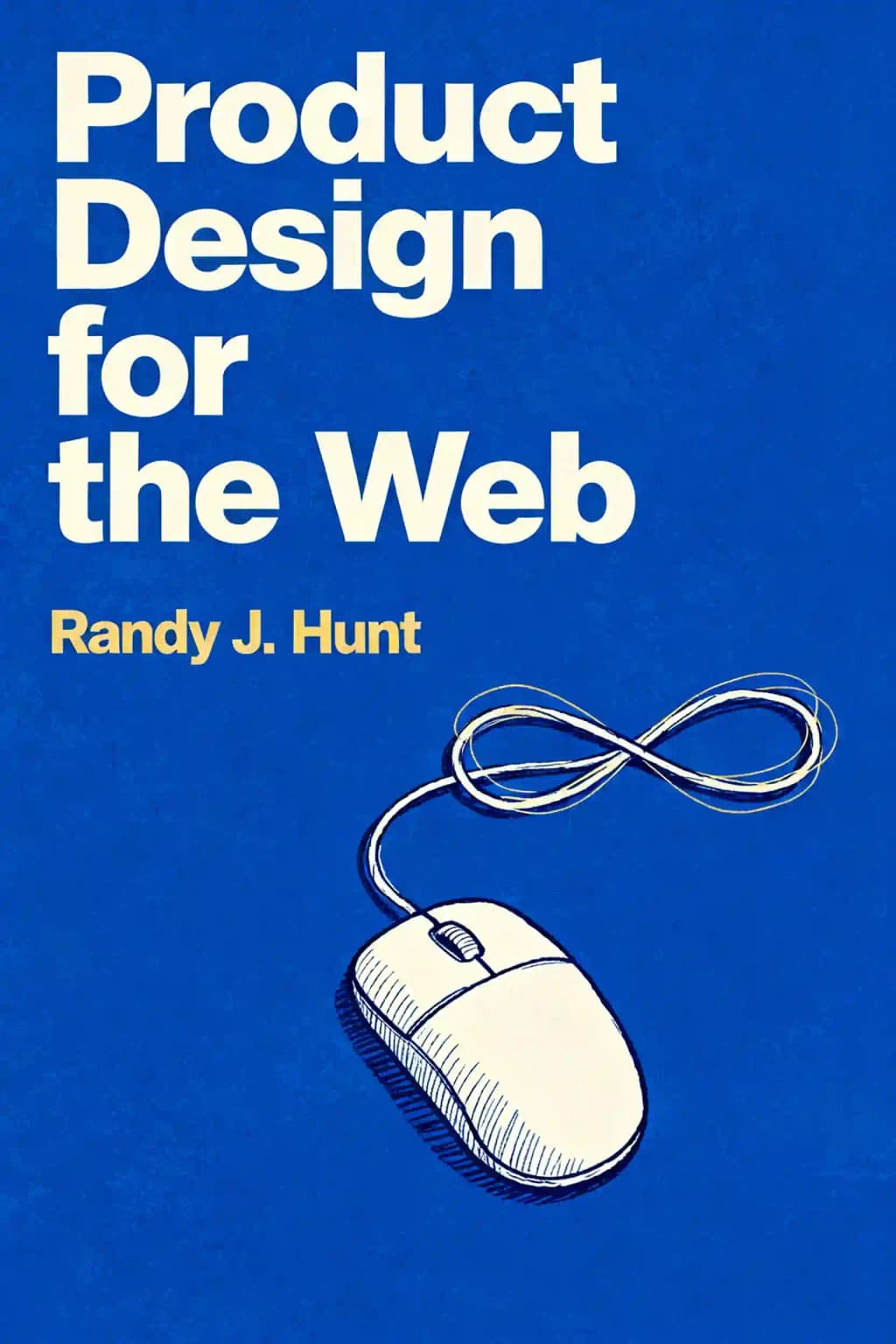
When Randy J. Hunt joined Etsy in 2010, he was one of the first web designers at a company that had already facilitated $180 million in merchandise sales the previous year. Surprisingly, this thriving marketplace had zero web designers on staff before his arrival. As Hunt navigated his new role, he kept hearing references to "the product" without understanding what it meant. This confusion led to a journey of discovery that would ultimately reshape how he approached digital design. "Product Design for the Web" emerged from this experience, quickly becoming required reading in design schools and tech companies alike. The book's practical approach resonated with designers transitioning from static websites to interactive products, with even Apple's design team reportedly using it as onboarding material for new hires. Hunt's philosophy-that digital products should be living, evolving entities rather than static creations-fundamentally changed how companies approach web design in our increasingly connected world.
Capítulo 2
What Makes a Product a Product?
Consider your favorite local pizza place. Their website likely displays their menu, hours, and location-a digital brochure that customers visit occasionally for specific information. This is a website, not a product. However, the content management system the restaurant owner uses to update that website? That's a product. The distinction lies in how we interact with each.
Products encourage repeated, frequent use while websites might only be visited occasionally. Products enable two-way data flow-both delivering and receiving content-whereas websites typically only pass information in one direction. Product interfaces are designed for participation and creation, not just navigation and consumption. They often require user accounts to store personalized information that persists over time. While websites present relatively static "pages," products feature dynamic "flows" with multiple states and conditions. Finally, products extend beyond the browser, connecting to email, text messages, mobile apps, and even real-world interactions.
Products themselves can be categorized by their connectivity needs. Stand-alone products provide complete value independently, like a simple weather app that uses your location to deliver forecasts. Ecosystem products gain value through connections to other people, products, or devices-importing contact lists or pushing notifications based on others' actions. Platform products support and enable features for other products, often invisible to general users. Many mature products evolve through all these categories, as Facebook has done by functioning as a personal photo archive (stand-alone), a social network (ecosystem), and a foundation for third-party applications (platform).
While native apps differ from browser-based web products in distribution and technical requirements, they should be conceptualized similarly. Your customers likely use both, and their experience matters more than technical distinctions. By treating native apps as web products-making them easy to change, quick to evolve, and able to iterate naturally-we maintain a cohesive product experience across platforms.
Capítulo 3
The Multidisciplinary Nature of Product Design
Product design sits at a powerful intersection of multiple disciplines, adding clarity by anchoring various practices into something tangible that people can use. The magic happens where these disciplines overlap and blur, creating insights that wouldn't emerge from any single perspective.
At its core, product design aims to create experiences that are both understandable and meaningful. User experience design implies designing a user's total experience, making product design essentially UX design (though the inverse isn't true). The interface (UI) is what people interact with directly, while interaction design (IxD) determines behaviors and responses. A superior product creates an understandable experience by setting appropriate expectations and fulfilling them, while delivering meaningful experiences that solve problems and, ideally, delight users.
Information architecture involves observing and analyzing complex information sets, then designing systems to better organize them. How you organize information affects many aspects of your product: users' understanding of the experience, their access to different parts, database structure, performance optimization priorities, and the product's perceived ability to deliver on its value proposition.
Product management serves as the glue in product development, balancing three critical elements: business needs (revenue model, strategic goals), technical constraints (development realities, engineering challenges), and user experience (empathizing with users' needs). There's inherent tension between these concerns-users rarely care about engineering constraints or business objectives, yet products must be reliable while satisfying business goals that support ongoing development.
Visual design determines what the product looks like, while interaction design focuses on behavior-what happens when elements are clicked and how similar elements should trigger similar behaviors. Together, these disciplines shape user behavior through thoughtful interface design and interaction patterns.
Engineers write the code that makes products work, selecting implementation strategies that determine how the product functions. Their knowledge of technical possibilities and limitations is essential for the product's ultimate form, often leading to solutions that designers or product managers might never have considered.
Writing is crucial yet often underrated in product design. Products contain substantial text in navigation elements, button labels, feature names, form labels, and error messages. Sometimes the best design improvement isn't visual or interactive but simply better button text or form labels.
Even the most well-engineered, beautifully designed product needs users to be successful. Product marketing makes people aware of your product and helps them understand why they should invest their time in it, focusing specifically on features and functionality-what they do, why they're valuable, and why people should care.
Research should happen before, during, and after building a product, with each stage offering different insights. The notion that designers can't wear multiple hats is a myth-talented designers often have clustered sets of related skills that make them powerful product creators who can plan, design, build, and market digital products effectively.
Capítulo 4
Designing for Flow, Not Pages
Instead of thinking in terms of pages, product designers should design for flow-a concept that implies movement, unpredictable pathways, and the passage of time. Like water in a stream that moves around obstacles at varying speeds before reaching its destination, users experience digital products over time, not in a single instant. Flow extends beyond specific mediums or devices, encompassing both online interactions and offline activities.
The goal is to craft an experience that never reaches a dead end, as dead ends represent missed opportunities. When a flow reaches its natural conclusion-like a completed sign-up or checkout-we should see this not as an end but as an opportunity to connect to another experience. For example, after a customer places an order, instead of simply saying "thank you," offer product recommendations, relevant articles, or community connections.
To maintain focus while exploring limitless flow possibilities, connect dead ends to your product's existing core flows. Think of filling glasses with water-when one fills to the top, place another below to catch the overflow. Natural conclusions like completed transactions should be viewed as touchpoints in an ongoing experience.
A flow can extend over a very long time-weeks, months, or even years. This temporal dimension affects design decisions, potentially favoring stable, proven technologies over cutting-edge ones to ensure longevity. The key is opening your thinking to everything that might happen between now and the end of what could be a very long experience.
The design process involves discovering connection points between parts of the product experience. Think of these connections as dots-when you reach the end of one flow, find another dot to connect to it. By linking these dots, you create a continuous experience without dead ends. The designer's job is to guide users across these connection points by clearly communicating the benefit of continuing.
Capítulo 5
The Invisible Features That Make or Break Products
When users interact with your product, they immediately notice visible elements like colors, typography, and buttons. However, equally crucial are the invisible features that significantly impact emotional response and trust. These unseen elements shape perceptions about quality and reliability, forming impressions that quickly cement opinions about your product and the people behind it.
Performance directly reflects product quality and is measured against user expectations. Like test-driving a high-performance car, users expect digital products to operate with powerful ease and responsiveness. A slow website or app feels "wrong" and creates immediate negative impressions, even before users fully engage with your product.
Speed is critical to perceived performance. Design considerations must include hardware limitations (server response, device compatibility) and software quality. Consider optimization techniques like caching frequently-used information, using Content Delivery Networks, optimizing images for different devices, reducing database requests, and refactoring inefficient code. However, sometimes too much speed can be problematic-for important transactions like purchases, a deliberate pace with visual feedback builds user confidence.
Reliability means consistent functionality-a product that works predictably, remains bug-free, doesn't crash, and fully loads every time. Buttons should respond reliably, and touch gestures should feel natural and appropriately responsive without capturing accidental actions. Consistency over time is equally important-users want familiar functionality, but products must also evolve. Too-frequent changes can suggest unreliability, while changes after long periods of stability can be jarring.
A strong community creates an impression of reliability and support-like seeing a long line outside a restaurant suggests excellent food. Your internal community includes customer service, business partners, and product creators. Find authentic ways to showcase this team in the product experience. The external community consists primarily of your growing customer base. Make their engagement visible by sharing collective achievements or highlighting positive reviews and social media mentions.
Support means providing accessible resources, people, and information to address problems. Great support creates positive emotional connections-like when a store offers a refund without requiring a receipt. Support systems must address various scenarios: product bugs, customer confusion, order changes, and countless other issues. Beyond merely having support, you must make it visible through marketing and product interfaces. Simple offers like "Need support? Just ask!" build confidence even when never used.
Security builds user confidence by demonstrating respect for their information and privacy. This includes preventing fraud, protecting personal data, and securing financial and medical records. Users want to feel their information is safe and that real humans-not just automated systems-are monitoring security. Security directly relates to a sense of control; without it, users won't commit to your product.
Capítulo 6
Effectiveness Trumps Cleverness Every Time
The guiding principle of product design should be intent-both yours and your users'. Every other consideration is secondary. Effective design should always be prioritized over clever design. During the creative process, designers often want to surprise and delight users with inventive elements, interaction patterns, naming schemes, or symbols. However, when cleverness obscures the product's purpose, that initial impression of innovation quickly fades, sometimes within moments of first use.
Cleverness can work against a product's intent in several ways. Unclear naming creates unnecessary cognitive hurdles for users-descriptive language should be favored over suggestive or metaphoric terms, especially for core features. New terminology should only emerge from established user behavior, like "retweet" which was adopted after the Twitter community created it.
Designers often create newness for its own sake, missing opportunities to build on users' existing knowledge. Pressure to market products as "new and improved" can push designers toward gimmicky features that frustrate users. Personality mismatches occur when design elements don't align with the product's purpose-a serious medical app shouldn't feel childlike. And clever interaction patterns like swipe gestures work well in some contexts but become confusing when applied inappropriately.
The designer's role is to reduce solutions to ideas that are familiar and understandable while ensuring the product works as intended. Every design choice should pass through a strict usability filter: Does this help the user? Does it improve their experience? Does it waste time and energy? Sometimes the best design is no design at all-designers tend to solve problems by over-designing features, when standard solutions that users already understand might work perfectly well.
For web product designers, satisfaction often comes in reverse-seeing people successfully use something you've created brings pride in how well it works. This feedback isn't momentary but continues throughout the product's lifecycle. Web products are never done, providing constant opportunities for new feedback, testing, and creative ideas.
Clever design elements can work when they support the product's intent rather than competing with it for attention. They're most effective when the context is clear and when they appear where personality is least disruptive-like in marketing messages or at the beginning of a user flow.
Capítulo 7
Positive Reinforcement: The Path to User Engagement
Product designers must fundamentally respect the people who use their products. Designs should reward users for engaging with products in intended ways, not punish them. Like the carrot-and-stick metaphor, positive motivation (the carrot) encourages users to move forward willingly, while negative experiences (the stick) create resistance. Effective design provides clear, attainable goals that users can understand and aspire to reach, while removing obstacles to their success.
Designers shape user behavior through their product decisions. Like training that uses positive reinforcement, products should guide users with rewards for desired behaviors rather than punishments for mistakes. This approach increases the likelihood that users will love the product and recommend it to others.
Keep carrots out in front by leading users to desired answers. Show examples of intended actions at the start of their experience, before they've had a chance to be rewarded. For instance, a photo organization app might immediately display buttons for selecting people to identify, accessing the photo library, and verifying suggestions-providing a clear path to success without requiring users to read lengthy instructions.
Design choices can imply what actions users should take without explicit instructions. Visual cues like pulsing buttons draw attention and encourage interaction. The sophistication of your audience determines whether you need both implicit and explicit cues-from emphasizing desired actions through design and language to removing all possible actions except the desired one.
Show explicit examples of successful outcomes rather than just staging the experience. For a photo app, displaying other users' organized libraries demonstrates the product's potential. Offer multiple examples to accommodate demographic diversity and prevent exclusionary feelings while showing different ways the technology can be used.
Offer encouragement and feedback when users take desired actions, especially in multi-step processes. Progress bars, simple messages like "Almost done!", and social feedback loops provide small rewards that orient users and create satisfaction. These dopamine-releasing rewards create feelings of satisfaction that users will subconsciously crave again.
Use simple rewards to encourage repeat behavior. Social notifications that require returning to the site, game mechanics like status levels with increasing benefits, exclusive information access, and public recognition of achievements all drive engagement. Making advantages visible introduces social and competitive elements that motivate users to fully utilize features.
Capítulo 8
Ship Early, Ship Often: The Power of Iteration
Traditional creators perfect their products before revealing them to the world, an approach stemming from the non-malleability of physical resources. Web product design, however, offers nearly complete malleability-changes can be made frequently. This approach advocates embracing early, frequent iterations to benefit users by creating "living products" that evolve with the changing world.
A large quantity of lead bullets has a greater impact than one silver bullet-many smaller gestures have a much greater cumulative effect than one grand gesture. The creative process is living and breathing, growing the best products through constant iteration and collaboration. When we make things frequently, present designs to peers and customers, then tweak and rethink, we build better products through this collaborative process.
Feedback from collaboration is a gift. Ideas aren't precious commodities to save for a big reveal-they're cheap and easy; implementation is what's valuable. Sharing should happen as often as every few hours, creating an environment of continuous collaboration that reduces the need for interim deliverables and large-batch approvals.
Make the minimal investment needed to communicate an idea. Elaborate Photoshop renderings or detailed sketches can suffocate the process-invest just enough to convey the essence. A simple five-minute sketch shared with an engineer could save you two weeks of wasted effort on an impossible design. At this stage, focus on functionality, not polish-share ideas, test them, take them apart, and rebuild them quickly.
Early feedback validates your efforts and prevents wasted time on unwanted features. "False doors" can test product ideas-like posting a "Pizza: $2.50 per slice" sign in a potential storefront with a "coming soon" notice to gauge interest. For web products, you might add a button for a future feature with a "coming soon" popup to measure interest before building it.
Regular, small corrections are less painful than large, demoralizing changes. These tiny adjustments should be almost undetectable to users, who should never feel they're having completely different experiences from day to day. For example, when introducing a new "most important" button in an email product, placing it second or third initially before moving it to the top position allows users to gradually adapt rather than disrupting their muscle memory.
Small changes function as damage control. If something goes wrong, the result and required fix are likely to be similarly small. It's far easier to address minor glitches than recover from catastrophes. With frequent, small changes, problems are easily detected, identified, and fixed. When monitoring metrics like daily sign-ups, pattern disruptions become immediately obvious. Because you're making regular changes, you can confidently identify what changed just before the problem began.
Capítulo 9
The Continuous Cycle of Reinvention
Rather than considering a product complete after improvements, designers should regularly reset their thinking and approach the same goals from fresh angles. Like annual vacations that fulfill similar goals (relaxation, exploration) but with different approaches each year, product design should follow a "rinse and repeat" pattern. This process helps break mental patterns and discover solutions that wouldn't emerge through linear iteration.
Maintaining clear goals throughout the design process is essential. Goals can be quantitative (increase registrations to 5%) or qualitative (adding a new feature). When addressing problems like low registration rates, don't guess at solutions-gather data through questionnaires to understand both registering and non-registering users. Each improvement creates a new context that requires fresh analysis and approaches.
Methodically repeating the design process with gradual improvements is like using a whetstone to sharpen a blade. Patience and constant refinement transform the product into something more powerful and effective than any single design iteration could achieve. The key is avoiding linear thinking by truly "rinsing" between iterations to enable completely fresh approaches to the same goals.
The process continues indefinitely-identify needs, validate, prototype, build, communicate, test, release, measure, and repeat. While change for change's sake is worthless and irritating, change that brings clear benefits makes everyone happier. Even if something doesn't appear "broken," the product can always be refined with new features or reduced resource demands.
To maintain happiness: always listen to customers (both compliments and complaints), recognize that customers often can't articulate what they want, and help people experience necessary change as comfortably as possible. Software testing ensures your product is free of bugs and technical problems. Every product release or revision should undergo testing to identify and fix problems before reaching customers.
Capítulo 10
People-Centered Design: The Heart of Great Products
Despite the complexity of balancing technical requirements, design elements, and marketing concerns, ultimately products succeed or fail based on how well they match people's needs, social nature, intellectual levels, and experiences. Products derive their value from human connections-whether social platforms connecting friends, fitness trackers helping individuals achieve personal goals, or daily writing tools supporting creative habits.
Before building products, designers must answer fundamental questions: Who would use this product? What do they want to know? When would they want to know it? Where would they use it? Why choose this over alternatives? How would they use it? These questions help designers understand the human context before diving into technical solutions.
Working like sociologists, designers should directly engage with users as valuable resources. Ask them what makes the product better, what works well, and how they discuss the product with others. For non-users, explore their perceptions, needs, and current product choices to understand potential improvements.
Observation is crucial because what people say they do often differs from what they actually do. By watching users in their natural environments, designers can understand where products fit into users' lives, what other products they use simultaneously, and identify additional opportunities to provide value.
Designers should value all feedback, solicited or unsolicited, positive or negative. Listen to customer stories about their product aspirations, monitor blogs for mentions, track support issues, and analyze discussions about competing products to gain comprehensive insights about user needs.
Users often discover unexpected ways to use products that can inspire new features. Twitter's hashtags and retweets began as user innovations before becoming official features. These real-world examples show how non-technical users can guide product evolution if designers pay attention to emergent behaviors.
More than designing answers or engineering solutions or creating marketing plans, the one thing you must remember in developing a product is the people who will use it. Everything goes back to them. If you ask people for product ideas, they may be limited by what they already know. But if you ask about their goals and problems, they'll tell you exactly what you need to know. People must be part of the design process; if they are not, the process is incomplete.
In product design, being tool-agnostic is crucial as new and potentially better tools constantly emerge. Your tools should serve your process, not dictate it. Solutions are shaped by tool choices, but tools should always remain secondary to the product itself. The right tool is simply the one that best fits the job at hand, allowing you to work quickly, confidently, and comfortably.