Capítulo 1
The Prince of Darkness: Potemkin's Extraordinary Rise in Catherine's Russia
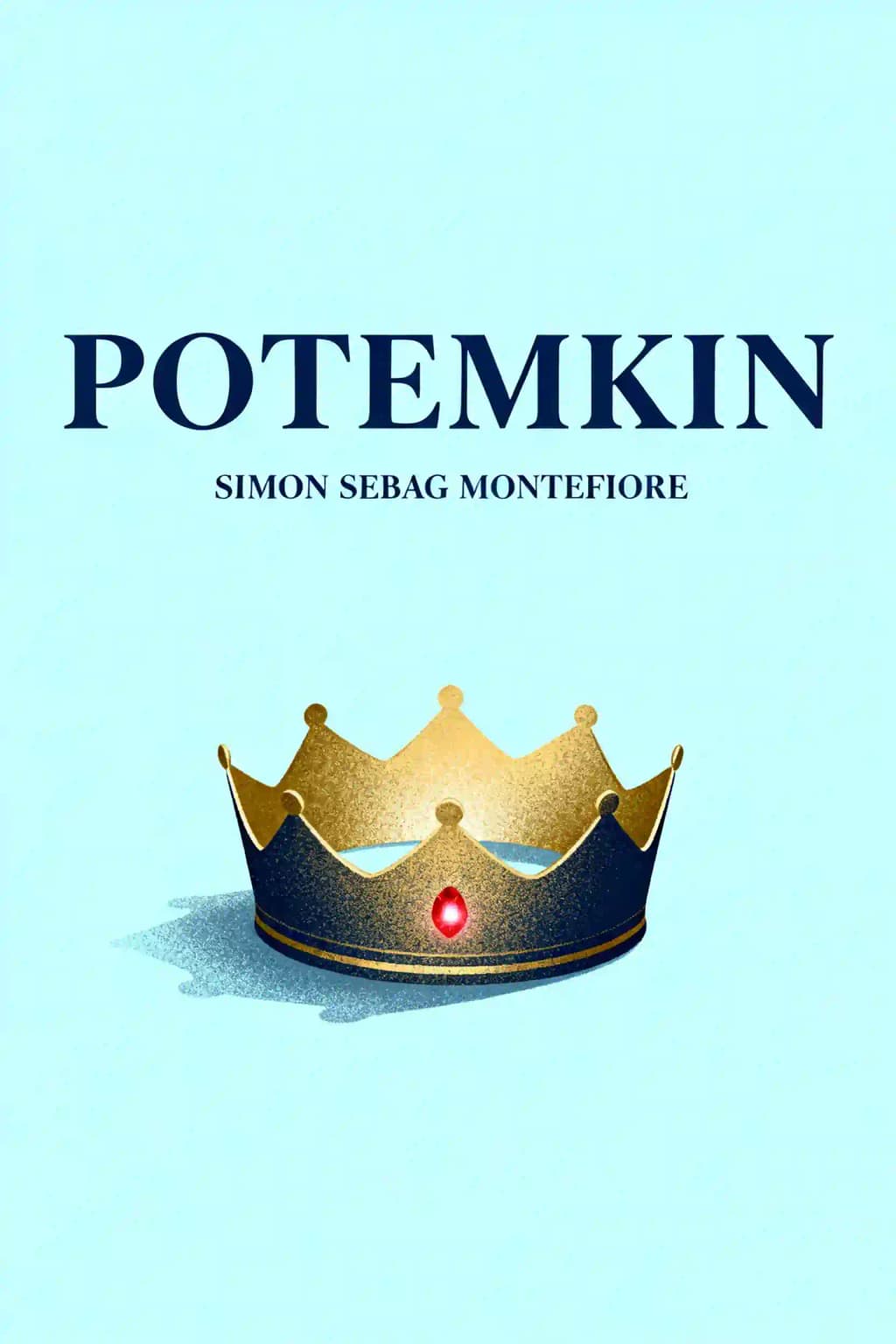
Simon Sebag Montefiore's "Potemkin" has captivated readers worldwide since its publication, becoming a favorite among history enthusiasts and political leaders alike. This masterful biography has been cited by figures ranging from Hillary Clinton to Vladimir Putin, who reportedly keeps a copy on his nightstand. The book's enduring appeal lies in its exploration of one of history's most fascinating power couples-Catherine the Great and her lover, advisor, and co-ruler Grigori Alexandrovich Potemkin.
What makes this story so compelling is how it transcends mere historical account to reveal a deeply human tale of ambition, love, and statecraft. In an age where political partnerships are carefully managed public relations exercises, the raw passion and strategic brilliance of Catherine and Potemkin's relationship feels almost mythological. Their letters-filled with pet names like "Golden Cockerel" and "Twin Soul"-reveal a partnership that was simultaneously romantic and geopolitical, forever changing the map of Europe and establishing Russia as a great power. As we explore their extraordinary story, we discover not just the origins of modern Russia, but timeless insights into how love and power can intertwine to reshape the world.
Capítulo 2
The Making of a Statesman: Potemkin's Early Years
Born in 1739 in the provincial village of Chizhovo near Smolensk, Grigori Potemkin emerged from relatively modest noble origins to become one of history's most influential statesmen. His childhood, spent in the rustic environment of the Russian countryside, provided him with a unique foundation that would later inform his approach to governance and diplomacy.
Young Grigori was raised primarily by women after his father's early death, developing both leadership qualities and a deep understanding of the feminine perspective that would serve him well in Catherine's court. His mother, Daria, recognized her son's exceptional intelligence and ambition, moving the family to Moscow to secure better educational opportunities. There, Potemkin thrived academically, displaying remarkable aptitude for languages, theology, and classical studies.
What distinguished Potemkin from his peers was his extraordinary ability to connect with people across social strata. In the village, he had danced with peasants and absorbed their folklore; at university, he impressed professors with his voracious reading habits and quick mind. This chameleon-like quality-being equally at ease with commoners and intellectuals-would become his signature strength.
"I was always meant for greatness," he once confided to a friend, "whether commanding armies or leading prayers." This dual fascination with military and religious life reflected the two dominant paths for ambitious Russian nobles, and Potemkin refused to choose between them, instead pursuing both with characteristic intensity.
His first encounter with the imperial court came when he was selected as one of twelve top students to meet Empress Elizabeth. The splendor of St. Petersburg-with its grand avenues and palaces rising from the swamps-made an indelible impression on the provincial youth. Here was a world of unimaginable luxury and intrigue, where fortunes could be made or lost on a sovereign's whim. Imagine stepping from a muddy village into a glittering wonderland of marble and gold, where even the servants wore finer clothes than provincial nobles.
"The contrast between the magnificence of the palaces and the primitive conditions just outside the city limits struck me as the perfect metaphor for Russia itself," he later remarked-a nation simultaneously aspiring to European refinement while remaining rooted in ancient traditions and vast, untamed wilderness.
Capítulo 3
Revolution and Opportunity: Catherine's Rise to Power
The political landscape of Russia transformed dramatically in 1762 when Empress Elizabeth died, leaving her nephew Peter III to inherit the throne. Peter, with his childish behavior and Prussian sympathies, quickly alienated the court and military. His wife, the German-born Princess Sophie of Anhalt-Zerbst-now Catherine-recognized the precariousness of her position and began cultivating allies among the Imperial Guards, including the powerful Orlov brothers.
Potemkin, now a young officer in the Horse Guards, found himself at the center of this political maelstrom. Though not yet in Catherine's inner circle, he observed with keen interest the machinations that would lead to one of history's most audacious power grabs. When Catherine launched her coup against Peter in June 1762, Potemkin didn't hesitate to declare his loyalty to her cause.
The coup itself unfolded with remarkable speed. Catherine, dressed in the uniform of the Preobrazhensky Guards, rode through St. Petersburg rallying troops to her side. Peter, vacationing at Oranienbaum, found himself outmaneuvered and isolated. Within days, he was forced to abdicate and was later killed under mysterious circumstances-officially from "hemorrhoidal colic," though few believed this convenient explanation.
What role did Potemkin play in these momentous events? While not among the primary conspirators, he demonstrated his characteristic boldness. According to one account, when Catherine rode past during the coup, Potemkin noticed her uniform lacked a sword-knot. Without hesitation, he tore the decoration from his own sword and presented it to her-a small but symbolic gesture that caught the empress's attention.
"In revolutions, one must commit fully or not at all," Potemkin later reflected. "There is no middle ground between triumph and the scaffold." This pragmatic approach to power would define his political philosophy throughout his career.
The aftermath of the coup saw Catherine rewarding her supporters lavishly. Though Potemkin received only modest recognition initially, he had positioned himself on the winning side of history. More importantly, he had made himself known to Catherine-a woman with an eye for talent and a penchant for charismatic men.
For the next decade, Potemkin would orbit Catherine's court, gradually increasing his influence while developing the skills and connections that would eventually make him indispensable. He served on religious commissions, fought in military campaigns against the Turks, and carefully studied the empress from afar. Like a chess grandmaster planning many moves ahead, he was preparing for the moment when opportunity and preparation would intersect.
Capítulo 4
The Monk's Gambit: Potemkin's Dramatic Rise
By early 1774, Potemkin had established himself as a decorated military hero following Russia's victories against the Ottoman Empire, but he remained frustrated by his inability to secure the position he most coveted-that of Catherine's favorite. The empress had cycled through several lovers since her coup, most recently settling on Alexander Vasilchikov, a handsome but unremarkable young man who posed no political threat to her established advisors.
Potemkin, never one for half-measures, decided on a dramatic strategy. In January 1774, he abruptly disappeared from court, retreating to the Alexander Nevsky Monastery where he declared his intention to become a monk. This theatrical withdrawal was calculated to force Catherine's hand-either she would summon him back, confirming his importance to her, or his gamble would fail spectacularly.
The monastery became the stage for Potemkin's most audacious performance. He grew his beard wild, engaged in fervent prayer, and adopted the appearance of a man torn between worldly ambition and spiritual calling. When visitors came, he alternated between religious ecstasy and melancholy reflections on his unrequited love for the empress.
What was going through Potemkin's mind during this self-imposed exile? His letters reveal a complex mixture of genuine spiritual questioning and calculated political maneuvering. "My soul is divided," he wrote to a confidant, "between heaven's call and the earthly paradise of her favor." Yet behind this romantic language lay a shrewd understanding of Catherine's psychology-she could not resist a man who appeared indifferent to her power.
The gambit worked brilliantly. Concerned about Potemkin's state of mind and perhaps intrigued by his dramatic gesture, Catherine sent her trusted lady-in-waiting, Countess Bruce, to investigate. The messages she carried back to the empress only heightened Catherine's interest. Soon, imperial couriers were delivering passionate letters between the monastery and the Winter Palace.
"Return to me, my troublesome friend," Catherine wrote, "for how can I govern an empire when my thoughts are constantly with you in your cell?" The language of these letters quickly escalated from friendly concern to unmistakable passion.
By February, Potemkin had abandoned his monastic pretensions and returned triumphantly to court. Within days, he had displaced Vasilchikov as Catherine's lover and begun his meteoric rise to power. The speed of his ascent astonished even the most jaded courtiers. By April, he had been named General-Adjutant, appointed to the Imperial Council, and made a Count of the Russian Empire.
What made this relationship different from Catherine's previous affairs was its blend of genuine emotional connection and political partnership. "In him, I have finally found a man who understands both my heart and my empire," Catherine confided to her secretary. For Potemkin, who had studied Catherine for years, the opportunity to shape Russian policy alongside her represented the fulfillment of his grandest ambitions.
Capítulo 5
Love and Empire: The Passionate Partnership
The relationship that blossomed between Catherine and Potemkin in 1774 transcended conventional categories. They were lovers, certainly, but also intellectual companions, political partners, and eventually, something akin to family. Their letters-thousands of which survive-reveal an intimacy that was both emotional and strategic, filled with pet names, sexual innuendo, and detailed discussions of imperial policy.
"My golden cockerel," Catherine would write, "I cannot sleep for thinking of your embrace." In the same letter, she might transition seamlessly to seeking his advice on military appointments or diplomatic negotiations with European powers. This blending of the personal and political reflected their unique understanding that love and empire were inseparable in their world.
The physical passion between them was intense but relatively brief in the context of their relationship. By 1776, the romantic aspect had evolved into something more complex. Potemkin remained Catherine's closest advisor and confidant, but both recognized the political necessity of her taking younger lovers. Remarkably, Potemkin often selected these men himself, ensuring they would pose no threat to his position.
"Our souls are married forever," Potemkin wrote to Catherine during this transition, "even as circumstances require other arrangements." This unconventional arrangement reflected both their pragmatism and the depth of trust between them. What other royal favorite in history would willingly select his own replacements?
Their partnership transformed Russia's position in Europe. Together, they expanded the empire southward, annexing the Crimea and establishing new cities like Sevastopol and Odessa. They defeated the Ottoman Empire, extended Russian influence into the Caucasus, and began the "Greek Project"-an ambitious plan to drive the Turks from Constantinople and establish a revived Byzantine Empire under Russian protection.
At home, they collaborated on administrative reforms, cultural initiatives, and the management of court politics. Catherine trusted Potemkin's judgment implicitly, writing once: "You see with my eyes and hear with my ears; we think as one mind." This was not mere flattery-major imperial decisions were rarely made without consultation between them, even when thousands of miles separated them.
What made their partnership so effective was the complementary nature of their talents. Catherine possessed political wisdom, diplomatic finesse, and a progressive intellectual vision. Potemkin contributed military expertise, administrative energy, and a deep understanding of Russia's diverse peoples. Together, they embodied the enlightened absolutism that characterized the most successful European monarchies of the era.
Yet their relationship was not without conflict. Potemkin's moods could swing from exuberant creativity to dark depression. Catherine sometimes grew frustrated with his procrastination and financial extravagance. "You build cities while I count pennies," she complained during one budget dispute. Nevertheless, these disagreements never seriously threatened their fundamental bond.
Capítulo 6
The Prince of Taurida: Potemkin's Southern Empire
By 1783, Potemkin had consolidated his position as Catherine's most trusted advisor and the second most powerful person in the Russian Empire. His attention increasingly turned southward, toward the newly acquired territories along the Black Sea coast-lands he viewed as his personal fiefdom and the cornerstone of Russia's imperial future.
The annexation of Crimea (then called Taurida) in 1783 marked a turning point in Potemkin's career. This strategic peninsula, home to the remnants of the Crimean Khanate and gateway to the Black Sea, became the canvas on which he would paint his grandest visions. Catherine recognized his special connection to the region by granting him the title "Prince of Taurida" and extraordinary powers to develop these territories as he saw fit.
"The south will be Russia's gateway to the world," Potemkin declared, envisioning a transformation that would rival Peter the Great's creation of St. Petersburg. With characteristic energy, he launched simultaneous projects across the vast territory: founding new cities, establishing naval bases, recruiting settlers from across Europe, and developing agriculture suited to the southern climate.
The city of Kherson rose first, designed as a shipbuilding center and commercial port. Despite skepticism from critics who questioned building a major port so far from the sea, Potemkin persisted, personally supervising construction and recruiting foreign experts to establish shipyards. By 1787, Russian warships built in Kherson were patrolling the Black Sea, demonstrating the success of his vision.
Sevastopol followed, developed as a naval base with natural advantages that Potemkin immediately recognized. "Here will be the key to the Black Sea," he wrote to Catherine after visiting the site. His instinct proved correct-Sevastopol would remain Russia's principal naval base in the region for centuries to come.
Perhaps most ambitious was Ekaterinoslav (literally "Catherine's Glory"), intended as the southern capital of the empire. Potemkin planned it on a monumental scale, with wide boulevards, grand public buildings, and a cathedral that would rival St. Peter's in Rome. Though never fully realized in his lifetime, the city (now Dnipro in Ukraine) reflected his characteristic blend of practical governance and theatrical grandeur.
Potemkin's approach to colonizing these territories was remarkably progressive for its time. He offered religious tolerance to Old Believers, Jews, and Muslims; provided generous land grants to attract settlers; and developed innovative agricultural techniques suited to the steppe environment. Under his direction, vineyards were planted in Crimea, silk production was established, and experimental farms tested new crops.
The human dimension of this colonization was complex. While Potemkin genuinely believed in creating prosperous, multi-ethnic communities, his methods could be ruthless. Native Tatars were sometimes displaced, and the demands placed on settlers and serfs could be harsh. Yet by the standards of eighteenth-century imperialism, his governance was notably enlightened, emphasizing economic development and cultural accommodation rather than mere military occupation.
By 1787, when Catherine undertook her famous journey to inspect the southern provinces, Potemkin had achieved remarkable results. Foreign ambassadors accompanying the imperial party expressed astonishment at the rapid development they witnessed. The French ambassador wrote: "In four years, Prince Potemkin has done what would require twenty years in any other country."
Capítulo 7
The Potemkin Villages: Myth and Reality
No aspect of Potemkin's legacy has generated more controversy than the notorious "Potemkin villages"-the alleged facades erected to impress Catherine during her 1787 tour of the southern provinces. According to this enduring legend, Potemkin constructed portable settlements that were disassembled and rebuilt ahead of the imperial entourage, creating an illusion of prosperity where none existed.
This story, which gave rise to the term "Potemkinsche Dorfer" (Potemkin villages) as a synonym for deceptive appearances, originated with foreign diplomats who accompanied Catherine's journey. The Saxon envoy Georg von Helbig, who harbored a personal grudge against Potemkin, was particularly instrumental in spreading these tales throughout European courts.
But what's the historical truth behind this compelling myth? The evidence suggests a more nuanced reality. Potemkin certainly engaged in what we might today call "impression management." Villages along the route were undoubtedly spruced up, local officials were instructed to ensure everything appeared in order, and celebrations were orchestrated to showcase regional prosperity. Some temporary structures were indeed built to house the imperial entourage and provide entertainment venues.
However, the core accusation-that Potemkin created entirely fake settlements-appears largely unfounded. The cities Catherine visited, like Kherson and Sevastopol, were real and functioning. The agricultural colonies and military establishments she inspected continued to operate long after her departure. Foreign merchants and travelers who visited the region independently confirmed substantial development had occurred.
"I have built real cities, not facades," Potemkin protested when rumors of deception reached him. "If some preparations were made for Her Majesty's comfort, is this not the duty of any host?" His indignation reflected a genuine pride in his accomplishments, which he felt were being unfairly diminished by political rivals.
Why, then, has the myth persisted so powerfully? Partly because it contains elements of truth-Potemkin was indeed a master of spectacle and presentation. The lavish entertainments he arranged for Catherine's journey included illuminations, fireworks, and theatrical performances that transformed the landscape into a kind of imperial pageant.
More significantly, the myth served the political interests of Potemkin's numerous enemies, both Russian and foreign. For domestic rivals, it provided a way to undermine his extraordinary influence with Catherine. For European powers concerned about Russian expansion, it offered a means to dismiss the empire's growing strength as mere illusion.
The irony is that by focusing on alleged deception, Potemkin's critics missed the truly remarkable achievement: in less than a decade, he had transformed a sparsely populated frontier into a developing region with new cities, naval bases, and agricultural settlements. The real story was not what Potemkin falsified, but what he genuinely accomplished.
Today, "Potemkin village" remains a powerful metaphor for superficial appearances masking emptiness-a linguistic legacy that would have infuriated the man himself. Perhaps the final word should belong to Catherine, who knew the region both before and after Potemkin's work: "He has created gardens from deserts and built cities where once only wild beasts roamed."
Capítulo 8
The Man Behind the Myth: Potemkin's Character
To understand Potemkin fully, we must look beyond his political achievements and romantic relationships to examine the complex, contradictory character of the man himself. Contemporary accounts describe a figure of overwhelming physical presence-tall and powerfully built, with penetrating eyes that could shift from warmth to intimidation in an instant. Even after losing an eye in a court brawl, he maintained a magnetic charisma that few could resist.
Potemkin's daily routine defied conventional patterns. He often rose late, receiving visitors while still in bed, dressed in an elaborate dressing gown. These morning audiences became legendary, with petitioners and diplomats alike finding themselves discussing matters of state while Potemkin soaked in a bath or had his hair dressed. "The prince makes a ceremony of informality," observed one French diplomat, recognizing how this apparent casualness actually emphasized Potemkin's power-only someone truly secure in their position could so flagrantly ignore protocol.
His intellectual capacity was extraordinary. Fluent in multiple languages, he could discuss Orthodox theology one moment and military tactics the next. He maintained a vast library that traveled with him even on campaigns, and visitors were often surprised to find him reading ancient Greek texts or the latest French philosophical works. Yet this erudition coexisted with earthy humor and a taste for crude jokes that shocked more refined courtiers.
Potemkin's emotional life was equally complex. Subject to dramatic mood swings, he could move from exuberant creativity to profound melancholy within hours. During depressive episodes, he might lock himself away for days, refusing visitors and neglecting affairs of state. Only Catherine seemed able to pull him from these dark periods, either through tender letters or by sending trusted friends to distract him.
"My soul is like the Black Sea," he once wrote, "sometimes calm and reflecting heaven's light, sometimes lashed by storms no sailor can navigate." This volatility, which might today suggest bipolar disorder, was both his greatest weakness and a source of his creative energy.
His appetites were legendary-for food, wine, women, and material splendor. Potemkin's table was renowned for combining refined French cuisine with simple Russian dishes he remembered from childhood. He collected diamonds with passionate intensity, often carrying loose gems in his pockets to handle when anxious. His sexual conquests were numerous, though he maintained a surprising discretion about his affairs.
Yet alongside these indulgences existed genuine religious devotion. Potemkin regularly attended Orthodox services, fasted during prescribed periods, and engaged in theological discussions with leading churchmen. This spiritual dimension was no mere pose; even in private letters, he expressed sincere faith and concern for his soul's salvation.
Perhaps most revealing was Potemkin's relationship with money. Though he accumulated enormous wealth through Catherine's generosity, he spent lavishly and often gave away fortunes on impulse. When a merchant once presented him with a particularly beautiful diamond, Potemkin not only paid the asking price but added a substantial bonus "for bringing me such joy." This combination of acquisitiveness and generosity reflected his fundamental approach to life-experiencing everything to the fullest while sharing his good fortune with others.
What emerges from these contradictions is not a simple character but a man of Renaissance breadth-intellectual and sensual, strategic and impulsive, worldly and spiritual. As one contemporary observed: "In Prince Potemkin, one finds not a single personality but a dozen, each authentic in its moment."
Capítulo 9
War and Glory: Potemkin's Military Triumphs
The Second Russo-Turkish War (1787-1792) provided the stage for Potemkin's greatest military achievements and cemented his reputation as a strategic genius. When Ottoman forces declared war in August 1787, seeking to reclaim territories lost in the previous conflict, Potemkin was prepared. As Commander-in-Chief of Russia's southern armies, he had spent years strengthening defenses, training troops, and developing the Black Sea Fleet.
The early phases of the war demonstrated Potemkin's strategic vision. Rather than launching immediate offensive operations, he implemented a careful defensive strategy, preserving his forces while allowing the Ottomans to exhaust themselves against Russian fortifications. Critics at court, including some of Catherine's advisors, mistook this patience for indecision or cowardice. "While Potemkin hesitates, Russia's honor bleeds," complained one rival general.
Catherine, however, trusted her partner's judgment. "I know my lion," she wrote to him, "who appears to sleep but watches always through half-closed eyes." Her confidence was rewarded when Potemkin's strategy began to bear fruit. The successful defense of Kinburn, where Russian forces under Alexander Suvorov repelled a major Ottoman landing, marked the turning point.
With the defensive phase complete, Potemkin shifted to offense, personally leading the siege of Ochakov in late 1788. This fortress city, located at a strategic point where the Dnieper River meets the Black Sea, was considered nearly impregnable. The siege stretched through the brutal Russian winter, with Potemkin refusing to withdraw despite harsh conditions that decimated his army.
On December 17, 1788, after months of preparation, Potemkin ordered the final assault. The battle was extraordinarily bloody, with Russian forces suffering heavy casualties as they stormed the walls. When victory finally came, Potemkin wept at the cost-thousands of his men lay dead in the snow. "Glory is purchased with blood," he wrote to Catherine, "and today I have paid a terrible price."
The capture of Ochakov represented Potemkin's finest hour as a military commander. He had conceived the strategy, maintained morale through a difficult siege, and personally directed the successful assault. Catherine rewarded him with honors, including a magnificent jewel-encrusted sword worth a fortune.
The war continued with further Russian successes. The naval victory at Fidonisi demonstrated the effectiveness of the Black Sea Fleet that Potemkin had created from nothing. The capture of Bender, another key Ottoman fortress, extended Russian control along the northern Black Sea coast. Throughout these campaigns, Potemkin displayed a remarkable ability to coordinate land and naval operations, a skill few commanders of his era possessed.
Beyond tactical brilliance, Potemkin's military leadership revealed his deep connection with common soldiers. Unlike many aristocratic generals, he shared the hardships of campaign life, often sleeping in the same conditions as his men. He reformed the Russian military uniform, replacing impractical Prussian-style clothing with more comfortable designs suited to the Russian climate. His concern for provisions and medical care reduced the disease that typically killed more soldiers than combat.
"A general who does not love his soldiers will never be victorious," Potemkin instructed younger officers. "For men fight not for empires but for commanders who value their lives." This philosophy, revolutionary for its time, helped create the fierce loyalty that characterized his armies.
By 1790, Potemkin had achieved his major military objectives. The Ottoman threat to Russia's southern territories had been eliminated, and the empire's position on the Black Sea was secure. The spectacular assault on Ismail, led by Suvorov but planned by Potemkin, provided a final exclamation point to the campaign-though its extreme brutality troubled even hardened military men.
Capítulo 10
The Final Dance: Potemkin's Last Years
By early 1791, Potemkin reached the height of his power, his military victories having secured Russia's southern frontier. His final visit to St. Petersburg was marked by the legendary "Potemkin Feast" at the Tauride Palace, an unprecedented display of opulence and theatrical grandeur.
The celebration transformed the palace into a spectacular venue, with six thousand guests experiencing illuminated winter gardens, a mirrored ballroom reflecting thousands of candles, and a 300-piece orchestra. At the evening's pinnacle, Potemkin knelt before Catherine, who adorned him with her diamond-studded Order of St. George, despite the presence of her new favorite, the young Platon Zubov.
This extravagant display masked Potemkin's declining position. His health was failing, and the 22-year-old Zubov actively worked to diminish his influence at court. Though Potemkin dismissed Zubov's political maneuverings, he recognized the young man's hold over the aging empress.
Returning south, Potemkin secured his diplomatic legacy through the Treaty of Jassy, which confirmed Russia's gains and established the Dniester River as the new border, cementing Russia's position as a Black Sea power. However, his health deteriorated rapidly, likely due to malaria complicated by pneumonia.
On October 5, 1791, Potemkin died on the steppes between Jassy and Nikolaev, choosing to spend his final moments under the open sky of the territory he had conquered. He was 52 years old. Catherine was devastated, secluding herself and writing, "I am crushed by an irreparable loss... My pupil, my friend, almost my idol, Prince Potemkin of Taurida, has died!"
His body was interred in Kherson's cathedral, though rumors persisted that his death was another "Potemkin illusion." In reality, this extraordinary figure, who had lived at the extremes of power and passion, had simply exhausted his remarkable vitality.
Capítulo 11
Legacy of the Prince: Potemkin's Enduring Impact
The death of Potemkin marked the end of an era in Russian history. With him disappeared not only Catherine's most trusted advisor but also the embodiment of her most ambitious imperial visions. Though she would rule for another five years, the empress never found another partner who combined Potemkin's strategic brilliance, administrative energy, and personal devotion.
The immediate aftermath of his death revealed the extent of his influence. The vast southern territories he had governed fell into administrative confusion without his guiding hand. Projects he had initiated-cities, naval bases, agricultural colonies-continued, but often without the coherent vision he had provided. Catherine appointed a series of governors to replace him, but none possessed his unique combination of qualities.
Potemkin's material legacy was substantial. The cities he founded-Sevastopol, Kherson, Nikolaev, Ekaterinoslav, Odessa-grew into major urban centers that transformed the economic and strategic landscape of the Black Sea region. The naval fleet he created became a permanent feature of Russian military power. The multi-ethnic communities he established, including settlements of Greeks, Armenians, and Jews, contributed to the cultural diversity of southern Russia and Ukraine.
His personal fortune, estimated at over 40 million rubles (equivalent to billions in today's currency), was divided among his nieces and their husbands, creating several of the wealthiest families in the Russian Empire. The Branicki, Golitsyn, and Engelhardt families, all related to Potemkin through his sisters, used this inheritance to establish themselves as major landowners and political figures throughout the nineteenth century.
Yet perhaps Potemkin's most significant legacy lay in the realm of ideas-specifically, his conception of Russia's destiny as a Black Sea power with legitimate claims to the Byzantine inheritance. This "Greek Project," though never fully realized, established a geopolitical orientation that would influence Russian foreign policy for generations. The Crimean War of the 1850s, the Russo-Turkish conflicts of the late nineteenth century, and even aspects of Soviet policy in the region all reflected ambitions that Potemkin had first articulated.
His reputation underwent dramatic fluctuations after his death. During the conservative reign of Catherine's son Paul I, who despised his mother's favorites, Potemkin was officially denigrated. The Tauride Palace was converted into barracks, and his achievements were deliberately minimized in official histories. Later rulers, however, recognized his contributions more positively. Nicholas I described him as "a great Russian patriot whose vision we still strive to fulfill."
In European historiography, Potemkin long suffered from the persistence of the "Potemkin village" myth, which reduced him to a skilled deceiver rather than a serious statesman. Only in recent decades have historians reassessed his career based on primary sources rather than hostile anecdotes. This scholarly reevaluation has revealed a far more substantial figure-a visionary administrator, military innovator, and diplomatic strategist whose accomplishments went far beyond courtly intrigue.
For modern Russia, Potemkin remains a complex symbol. His territorial acquisitions in Crimea and southern Ukraine-regions now contested between Russia and Ukraine-give his legacy contemporary political resonance. Russian nationalists celebrate him as an empire-builder who secured vital access to warm-water ports. Ukrainian historians often present a more critical perspective, emphasizing the colonial nature of his settlement projects.
Perhaps the most personal aspect of Potemkin's legacy lies in his relationship with Catherine. Their partnership-simultaneously romantic, intellectual, and political-established a template for power-sharing that had few parallels in autocratic systems. Though never formally married, they functioned effectively as co-rulers, demonstrating that even absolute monarchy could accommodate a form of partnership at its highest levels.
"We are bound not by laws or ceremonies," Catherine once wrote to him, "but by something rarer and more precious-a perfect understanding of each other's minds." This meeting of complementary intellects, ambitions, and temperaments produced one of history's most effective political collaborations, transforming Russia from a peripheral European power into an empire that would shape global affairs for centuries to come.
Capítulo 12
The Enigma Remains: Understanding Potemkin Today
More than two centuries after his death, Grigori Potemkin remains an enigmatic figure who defies simple categorization. Was he a brilliant statesman or a master of illusion? A visionary empire-builder or an exploitative colonizer? A genuine partner to Catherine or an opportunistic courtier? The evidence suggests he was all these things simultaneously-a man of profound contradictions who embodied the complexities of his age.
What makes Potemkin particularly fascinating for contemporary readers is how thoroughly he challenges our modern tendency to separate personal and political life. In an era when we expect clear boundaries between romantic relationships and governance, Potemkin's career demonstrates a premodern integration of these spheres. His love for Catherine was inseparable from his service to Russia; his personal ambitions were fulfilled through imperial expansion; his private passions informed his public policies.
Consider his development of Crimea, where his appreciation for classical culture and Orthodox spirituality shaped concrete decisions about urban planning and religious institutions. Or his military reforms, which reflected his personal experience of soldiers' needs rather than abstract strategic theory. For Potemkin, there was no meaningful distinction between serving his own interests and those of the empire-they were fundamentally aligned through his relationship with Catherine.
This integration extended to his management style, which mixed formal authority with intensely personal connections. He could be simultaneously the stern prince issuing commands and the affectionate "Papa" caring for his subordinates' welfare. Foreign visitors often noted this distinctive approach, with the French ambassador observing: "The prince governs through a strange mixture of fear and love