Capítulo 1
When Pain Becomes Poetry: The Cultural Phenomenon That Changed Modern Literature
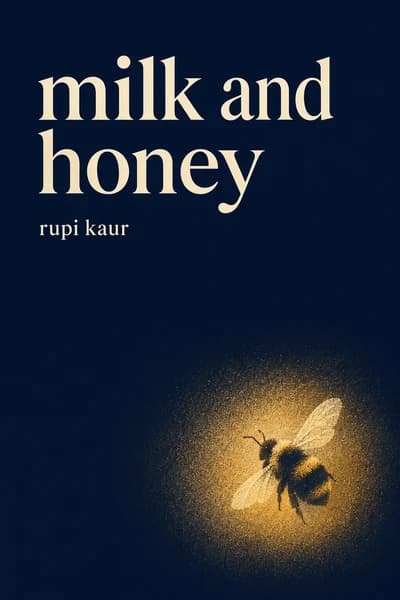
Imagine discovering a book that speaks directly to your deepest wounds, one that puts into words the experiences you thought were yours alone to bear. This is precisely what millions found in Rupi Kaur's groundbreaking collection "milk and honey." Since its release, this slim volume of poetry has sold over 3 million copies worldwide, been translated into more than 30 languages, and spent over 100 weeks on the New York Times bestseller list-a virtually unheard-of achievement for poetry. Celebrities from Emma Watson to Ariana Grande have praised its raw honesty, while critics have credited Kaur with revolutionizing contemporary poetry by making it accessible to a generation raised on social media. What began as a self-published collection by a young Indian-Canadian woman became a cultural touchstone that changed how we think about trauma, healing, and the power of sparse, unadorned words to connect us across our differences.
Capítulo 2
The Language of Trauma: How Suffering Shapes Identity
The journey begins in darkness, where trauma carves its initial marks. "milk and honey dripped from my lips as i answered cause people have not been kind to me." This opening confession establishes the central paradox-how sweetness can emerge from suffering, how kindness can be born from its absence.
The poems in this first section speak to experiences rarely given voice in mainstream literature. A five-year-old girl receives her first unwanted kiss, the beginning of a pattern where her body becomes territory to be claimed rather than a sacred space of her own. The violation escalates through childhood and adolescence, culminating in sexual assault that leaves permanent psychological scars. These aren't abstract explorations-they're visceral accounts of lived experience, rendered in language so spare it feels like exposed nerve endings.
What makes these poems so powerful is their refusal to look away from uncomfortable truths. They explore how patriarchal family structures perpetuate trauma across generations. Daughters learn to make themselves small, to occupy less space, to silence their voices. Mothers sit quietly at dinner tables while fathers dominate conversations. Love becomes twisted into something unrecognizable-fear disguised as protection, control masquerading as care.
The body itself becomes a battleground in these poems. It's simultaneously a site of violation and a source of strength, a place where memory lives in muscle and bone. "my body is a museum of natural disasters," one poem declares, capturing how trauma transforms physical existence into something that must be survived rather than simply lived.
Yet beneath the pain runs a current of fierce resilience. These aren't poems of defeat but of witness. By naming experiences often kept hidden in shame, they perform an act of reclamation. The very act of writing becomes resistance against silencing. When words are put to experiences designed to render victims speechless, something powerful happens-the first tentative steps toward healing begin to emerge.
What would happen if we all spoke our truths this plainly? If we acknowledged how many of us carry similar wounds beneath carefully constructed exteriors? These poems suggest that our collective silence serves only those who inflict harm, while our voices-however trembling-might save us.
Capítulo 3
The Geography of Desire: Mapping Intimacy Through Words
How do we move from trauma to connection? The transition feels impossible until suddenly it isn't. The collection's second section explores the territory of desire with the same unflinching honesty applied to pain, revealing how vulnerability can transform into its own kind of strength.
These poems celebrate physical intimacy with refreshing directness: "the very thought of you has my legs spread apart like an easel with a canvas begging for art." There's no coyness here, no euphemism-just the raw acknowledgment of desire as a creative force, something that makes art of our bodies and our connections. The imagery connects sexuality to artistic expression, suggesting that both emerge from the same wellspring of human creativity.
Beyond physical desire, these poems map emotional intimacy with equal precision. They explore how presence can transform us: "you've touched me without even touching me" and "it's your voice that undresses me." True connection transcends the physical-it's about being truly seen, truly heard by another person. The poems suggest that this recognition is perhaps the most profound intimacy we can experience.
What makes love sustainable beyond initial attraction? These poems suggest it's shared understanding of struggle. "i need someone who knows struggle as well as i do," one poem declares, pointing to the importance of emotional compatibility beyond surface attraction. The ideal lover isn't perfect but perfectly attuned-someone who can read the unspoken language of another's pain and respond with compassion rather than confusion.
Even conflict becomes a site of connection in "how we make up," which explores how arguments and passion intertwine in intimate relationships. Physical reconnection becomes a form of communication that transcends verbal conflict-bodies expressing what words cannot. This isn't presented as a solution to relationship problems but as an acknowledgment of how complex human connections can be, how they operate on multiple levels simultaneously.
Throughout these poems runs a current of wonder-that despite trauma, despite fear, despite all reasons to remain closed, the heart still opens. Connection remains possible. This isn't presented as a miracle but as a natural human resilience, our persistent desire to reach toward one another across the chasms of our individual experiences.
Capítulo 4
When Love Unravels: The Anatomy of Heartbreak
What happens when connection fails us? When love becomes another form of pain? The third section examines the dissolution of relationships with unflinching clarity, refusing easy consolations or simplified narratives about moving on.
These poems challenge passive acceptance of relationship endings: "it's us you fool. we're the only ones that can bring us back together." They place agency squarely in human hands rather than attributing breakups to fate or circumstance. At the same time, they warn against misinterpreting intentions: "don't mistake salt for sugar if he wants to be with you he will." This tension between agency and acceptance runs throughout-the recognition that while we can't control others' feelings, we can control our responses to them.
The aftermath of relationships receives particular attention, especially the hollowness of words not backed by actions: "he only whispers i love you as he slips his hands down the waistband of your pants." These poems expose how intimacy can be weaponized, how declarations of love can become manipulative rather than genuine expressions of feeling. They examine the bitter residue left by absence: "the next time you have your coffee black you'll taste the bitter state he left you in," showing how everyday experiences become reminders of loss.
Self-worth emerges as the crucial factor in decisions to leave: "i didn't leave because i stopped loving you i left because the longer i stayed the less i loved myself." This reframes leaving not as abandonment but as self-preservation, a necessary act of care for oneself when relationships become destructive. Yet the poems also acknowledge the lingering presence of past loves: "even when you undress her you are searching for me," capturing how relationships continue to shape us long after they've ended.
The physical manifestation of emotional pain receives vivid treatment: "the night after you left i woke up so broken the only place to put the pieces were the bags under my eyes." This embodied understanding of heartbreak-how it lives in sleepless nights, in exhausted bodies-gives these poems their visceral impact. They describe the particular frustration of incomplete endings: "you leave but you don't stay gone," that liminal space where relationships neither fully end nor truly continue.
The section culminates in practical wisdom with "to do list (after the breakup)," offering both raw honesty and gentle guidance. This poem acknowledges the messy reality of healing-that it isn't linear, that it involves both moments of strength and moments of weakness, that it requires both self-compassion and firm boundaries. By providing this roadmap, the collection offers not just commiseration but direction, suggesting that while heartbreak may be inevitable, being permanently broken by it is not.
Capítulo 5
Reclaiming the Self: The Revolution of Self-Acceptance
After trauma, after love, after heartbreak-what remains? The final poetic section offers a pathway from pain to recovery through verses that feel like gentle hands guiding you home to yourself. This isn't about forgetting pain but about integrating it into a larger understanding of who you are and who you might become.
The poet acknowledges lingering doubts while questioning whether writing itself is "healing or destroying me." This meta-reflection reveals the complicated relationship between creativity and pain-how expressing suffering can simultaneously relieve and reinforce it. Yet the overall movement is toward healing, toward a self that exists beyond its wounds.
Self-reliance emerges as a central theme: "accept that you deserve more than painful love" and "loneliness is a sign you are in desperate need of yourself." These aren't platitudes but hard-won insights, suggesting that the antidote to painful relationships isn't necessarily better relationships but a stronger relationship with oneself. Loneliness is reframed not as absence but as opportunity-a signal that we've neglected our primary responsibility to know and care for ourselves.
Body acceptance receives particular attention: "i like the way the stretch marks on my thighs look human." In a culture obsessed with physical perfection, this simple declaration feels revolutionary. The poems redefine beauty beyond conventional standards, celebrating the body not for its appearance but for its resilience, its capacity to carry us through life despite everything it endures. "you were a dragon long before he came around" reminds readers of inherent power that exists independent of others' recognition.
The connection between self-love and how others treat us receives direct address: "how you love yourself is how you teach others to love you." This places responsibility not on changing others but on changing our relationship with ourselves, suggesting that our internal standards create external patterns. Yet the poems also emphasize the importance of community, particularly female solidarity: "my heart aches for sisters more than anything." Healing happens not just individually but collectively, through recognition of shared struggles and mutual support.
Throughout these poems runs a current of gratitude-for survival, for growth, for the capacity to feel deeply despite pain. They suggest that healing isn't about returning to some imagined state before trauma but about moving forward into something new, something that incorporates past experiences without being defined by them. The final poems affirm what matters most: "nothing even matters except love and human connection," bringing the collection full circle from isolation to reconnection, from wounding to wholeness.
Capítulo 6
The Power of Minimalism: How Form Reflects Content
One of the most striking aspects of this collection is its sparse, minimalist style. The poems contain no capital letters, minimal punctuation, and often just a few words per line. Each word carries immense weight in this stripped-down format, making every syllable and line break deliberate. This isn't merely aesthetic choice-it's form perfectly matched to content, creating an immediacy that more ornate poetry might miss. Like Japanese haiku or ancient Greek fragments, these poems demonstrate how reduction can amplify meaning.
The stripped-down language mirrors the raw emotional states the poems describe. When discussing trauma, elaborate metaphors would create distance; instead, the direct language places readers inside the experience. Lines like "she was red earth / wet with rain" demonstrate how simple imagery can carry complex emotional resonance. The lack of capitals creates a sense of intimacy, as if reading private journal entries rather than formal published work. It also serves as subtle resistance against conventional hierarchies-in a collection dealing with power imbalances, even grammar becomes a site of rebellion. This democratic approach to language echoes poets like e.e. cummings while serving a distinct political purpose.
The white space surrounding these brief poems serves a crucial function too. It creates room for readers to insert their own experiences, to find themselves in the gaps between words. Like negative space in visual art, these silences become as meaningful as the words themselves. This participatory quality explains why so many readers feel personally addressed by these poems-they're designed to create space for projection and identification. The brevity forces readers to slow down, each page becoming a meditation rather than merely text to consume.
Simple language doesn't mean simple ideas. Complex emotional states are distilled to their essence, creating aphoristic statements that feel both personal and universal. Phrases like "the heart / has no surface" demonstrate how everyday words can be arranged to express profound philosophical concepts. This accessibility has led some literary critics to dismiss the work, but such criticism misses how deliberately crafted this apparent simplicity is. The poems achieve what many more technically complex works don't-they communicate emotional truths directly to readers without requiring specialized knowledge or vocabulary. Each poem feels like a carefully polished stone, smooth on the surface but dense with meaning.
The accompanying illustrations, simple line drawings, extend this minimalist approach visually. Using basic elements like circles, dots, and flowing lines, they echo the economy of the text while adding layers of meaning. They don't illustrate the poems so much as complement them, providing visual breathing space while reinforcing key themes. Like ancient cave paintings or Japanese brush strokes, these drawings reduce complex emotions to essential forms. Together, words and images create an integrated experience that feels both ancient in its wisdom and thoroughly modern in its presentation, proving that sometimes less truly is more.
Capítulo 7
Beyond Individual Healing: The Politics of Pain and Recovery
While deeply personal, these poems extend beyond individual experience into powerful social critique. They meticulously examine how patriarchal structures create conditions for trauma, how cultural silence enables abuse, and how healing requires not just personal work but fundamental systemic change. The collection demonstrates how personal pain often reflects broader societal wounds.
The poems addressing family dynamics reveal how gender roles are enforced from childhood, with stark examples of how girls learn to make themselves smaller while boys are encouraged to expand. They show how mothers often become complicit in their own silencing, modeling behavior that daughters then internalize - from apologizing unnecessarily to minimizing their achievements and desires. These patterns aren't presented as individual family dysfunctions but as deeply embedded cultural narratives repeated across societies and generations, manifesting in everything from dinner table conversations to career choices.
Sexual violence is portrayed not as isolated incidents but as part of a continuum of male entitlement to female bodies that begins with seemingly minor violations - unwanted touches, dismissive comments, boundary violations - and escalates to assault. The poems trace this progression through everyday experiences: catcalls on street corners, inappropriate workplace comments, dates that turn coercive. By connecting these experiences, the poems challenge the artificial separation between "normal" male behavior and criminal acts, suggesting they emerge from the same underlying assumptions about ownership and access to women's bodies.
The healing section extends this political awareness by emphasizing solidarity among women, showing how recovery happens in circles of shared understanding. It suggests that individual recovery happens faster and more completely when supported by community, particularly communities of those with shared experiences. Through support groups, friendships, and mentoring relationships, women find strength in collective healing. The emphasis on sisterhood points toward collective resistance rather than just personal resilience, showing how individual healing contributes to broader social change.
The love poems contain radical political dimensions in their frank female desire and agency. They present women as active participants in their own sexuality, making choices and expressing desires without shame. By portraying women as sexual subjects rather than objects, they challenge traditional narratives about passive female sexuality. The breakup poems similarly emphasize women's right to leave situations that diminish them, to prioritize self-preservation over relationship maintenance, presenting this as both a personal and political act of self-determination.
Throughout the collection runs a complex thread of immigrant experience - the particular challenges of navigating cultural expectations from both home and adopted countries, of finding voice between languages and traditions. This perspective manifests in poems about family gatherings, cultural celebrations, and moments of cultural disconnect. While never explicitly foregrounded, this perspective deeply informs the work's nuanced understanding of belonging, displacement, and the creation of identity across cultural boundaries, adding another layer to its exploration of power and resistance.
Capítulo 8
The Alchemy of Pain: Transforming Suffering into Beauty
The title "milk and honey" refers to substances that symbolize nourishment and sweetness across many cultures. The collection's central alchemy is precisely this-the transformation of bitter experiences into something sustaining, even sweet. Not through denial or toxic positivity, but through honest confrontation and integration.
This transformation happens first through language itself. By finding precise words for previously inexpressible experiences, the poems perform an alchemical act-converting formless suffering into structured expression. This doesn't diminish pain but makes it bearable by giving it shape, by bringing it from the realm of the unspeakable into shared human understanding.
The progression through the collection's four sections charts this transformative journey. From raw trauma through love, heartbreak, and finally healing, we witness a self being unmade and remade. This isn't presented as a linear process but as cyclical-healing isn't a destination but an ongoing practice, one that incorporates setbacks and returns to pain.
The poems suggest that suffering itself contains potential value-not that it's necessary or should be sought, but that when unavoidable, it can yield insights unavailable through other means. They propose that those who have suffered deeply may develop particular capacities for empathy, resilience, and appreciation of life's sweetness precisely because they know its opposite so intimately.
This isn't spiritual bypassing or glorification of suffering. The poems never suggest trauma is worth its cost or that victims should be grateful for their wounds. Instead, they document a deeply human process of meaning-making-our persistent effort to incorporate even our worst experiences into a life narrative that allows for continued growth and connection.
Perhaps the most profound alchemy occurs in the relationship between writer and reader. Private suffering, when transformed into art that resonates with others, creates connection across difference. Individual pain becomes a bridge rather than a barrier, creating communities of understanding that might not otherwise exist. This may be the collection's most enduring achievement-not just articulating one person's journey but creating pathways for countless others to navigate their own.
Capítulo 9
A Letter to Readers: The Sacred Contract Between Writer and Audience
The collection concludes with a deeply personal address to readers that acknowledges the profound transaction that has taken place: "you have made it to the end. with my heart in your hands. thank you." This recognition of mutual vulnerability - the writer's act of emotional exposure and the reader's willingness to receive these intimate revelations - creates a moment of genuine connection that transcends the physical barrier of the page. The simplicity of the language here belies the complexity of trust this exchange represents.
The letter expresses heartfelt gratitude for how readers have served as witnesses to transformation, helping the poet "become the woman i wanted to be. but was too afraid to be." This acknowledgment illuminates how creative expression requires not just the courage to share but also the presence of receptive audiences who validate and honor that sharing. The reciprocal relationship transforms both parties - the writer finding voice through the act of expression, and readers discovering reflections of their own experiences in the shared words. This dynamic creates a powerful cycle of validation and understanding that extends beyond the immediate text.
The gentle blessings offered throughout the letter - hoping readers "may always see goodness in people" and "practice kindness" - carry particular weight because they emerge from a place of hard-won wisdom. Having traversed difficult emotional terrain together, these wishes feel authentic rather than trite, suggesting that maintaining openness despite intimate knowledge of life's hardships represents a conscious, courageous choice rather than blind optimism. The blessings acknowledge both the difficulty and the importance of remaining vulnerable in a world that often encourages the opposite.
The final encouragement to stay "grounded. rooted. our feet planted firmly onto the earth" masterfully brings the collection full circle to physical embodiment. After extensively exploring how trauma can separate us from our bodies and how healing often requires a return to physical presence, this closing image reinforces connection on multiple levels - to self, to others, and to the tangible world that sustains us all. The metaphor of rootedness suggests both stability and growth, implying that healing is both an achievement and an ongoing process.
This direct address effectively transforms what could have remained a monologue into an invitation for dialogue, encouraging readers to carry these conversations forward into their own lives and creative expressions. It acknowledges that truly impactful books continue to resonate and evolve within readers' minds and hearts long after the final page is turned, generating new insights and possibilities through continued reflection and application.
In this final gesture of connection, the collection achieves its most ambitious aim - not merely documenting one individual's journey from trauma to healing, but creating a universal template that others might follow in their own unique ways. It offers not a prescriptive path but rather an example of the courage required to face pain honestly and the determination needed to move through it toward wholeness, however that might manifest for each individual reader. The letter serves as both a conclusion and an opening, closing one conversation while inviting countless others to begin.